
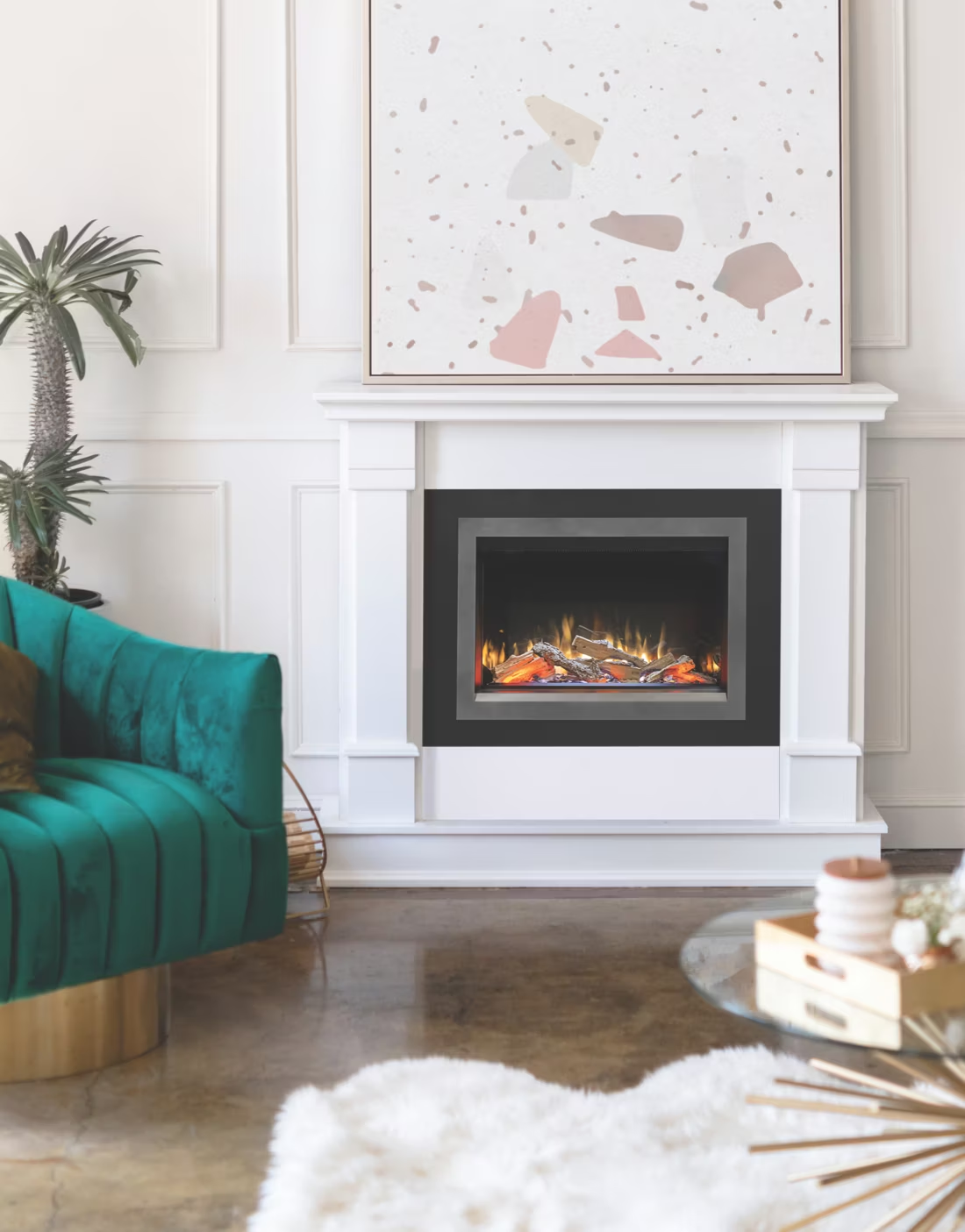
Add electric warmth to Luce County's long, cold winters.
No chimney, no venting, no gas line—just plug-in or hardwired zone heat for additions, camps, and rooms that need a boost when Newberry's winter sets in. Find the right unit and connect with a trusted local dealer.
Every Project Starts From One of These Five Situations
Clean heat for the coldest corner of the Upper Peninsula.
Luce County sits in ASHRAE Climate Zone 7—the same brutal-winter category as International Falls, Minnesota—and with a year-round population of just over 1,100 spread across a mostly forested, rural stretch of the Eastern Upper Peninsula, homes here range from year-round residences in Newberry to seasonal hunting camps and cabins near Tahquamenon Falls State Park. Oak, maple, birch, and ash cordwood have been the backbone of home heating in this county for generations, and that tradition hasn't gone anywhere. Electric fireplaces fill a different, more specific role here: supplemental zone heat, ambiance, and low-maintenance warmth for spaces where running a wood stove or extending a propane line doesn't make sense.
Because Zone 7 winters push whole-home heating loads higher than resistance electric heat can economically handle, most Luce County homeowners aren't installing an electric fireplace as their only heat source—they're adding one to a bedroom, sunroom, finished basement, or seasonal camp that's only occupied part of the year and doesn't justify a full wood or propane setup. Cloverland Electric Cooperative serves most of the county, and co-op members considering an electric fireplace should factor per-kWh rates into any expectation of daily running cost, especially if the unit will run for long stretches during a February cold snap.
Three steps. No salesperson until you're ready.
Tell us about your project
Your zip code, your situation, and the fuel you're leaning toward—or let the answers point you to one.
See what's actually available
The brands dealers within 100 miles genuinely carry—real options, never a catalog mirage.
Get your dealer & Project Guide
A trusted local dealer, plus the free Project Guide & Parts List that names every component of the job.
Frequently Asked Questions
How much does an electric fireplace installation cost in Luce County?
A freestanding or wall-mounted electric fireplace that plugs into a standard household outlet typically runs $150 to $1,200 for the unit itself, with little to no installation cost beyond mounting hardware. A built-in electric insert or a unit that needs a dedicated 240-volt circuit—common for larger, higher-output models meant to actually heat a room in Luce County's climate—runs $2,000 to $5,000 once an electrician handles the wiring and any surround or mantel work. Because most Luce County homes and camps are on rural electric service through Cloverland Electric Cooperative, an electrician familiar with co-op service drops can also flag whether your panel has capacity for a hardwired unit before you buy one.
Will an electric fireplace actually heat a room in this climate?
It can, but with real limits. A quality 1,500-watt electric fireplace puts out roughly 5,000 BTU—enough to comfortably supplement heat in a well-insulated bedroom, addition, or single room in the 200-400 square foot range. It is not designed to replace a furnace, wood stove, or propane system in a Zone 7 winter where overnight lows regularly sit well below zero. Most Luce County buyers are using electric fireplaces for a specific room that runs cold, a seasonal camp that only needs light heat during shoulder-season visits, or pure ambiance in a home already heated by wood or propane.
Do I need an electrician, or can I install it myself?
A plug-in electric fireplace that runs off a standard 120-volt outlet requires no professional installation—you mount it and plug it in. A built-in insert or a larger unit specified for a dedicated 240-volt circuit needs a licensed electrician to run the circuit and make the connection, which is the more common setup for anyone trying to get meaningful heat output rather than just visual flame effect. Given how spread out Luce County is, it's worth asking a local dealer or electrician upfront whether they service your specific road before scheduling—travel time to remote camps near Tahquamenon Falls or the county's northern reaches can affect scheduling and cost.
What's the difference between an electric fireplace, insert, and stove?
An electric fireplace is typically a built-in or wall-mounted unit designed to look like a framed fireplace, often with a mantel or surround. An electric insert is sized to slide into an existing masonry fireplace opening, giving an old, unused wood fireplace a clean, no-venting heat source. An electric stove is a freestanding unit styled to look like a wood or gas stove, useful for camps and cabins where you want stove aesthetics without a chimney. For Luce County's many seasonal properties, inserts and freestanding stoves are popular because they require zero venting and can be shut off completely when the camp is unoccupied over winter.
Do I need a permit to install an electric fireplace in Luce County?
A standard plug-in electric fireplace generally doesn't require a permit since it involves no new wiring or gas work. A hardwired unit on a new dedicated circuit typically does require an electrical permit, which in Luce County is handled through the Luce County Building Department. Because a licensed electrician pulling the permit is standard practice for this kind of work anyway, most homeowners never have to deal with the paperwork directly.
What's the best electric fireplace for a cold Upper Peninsula home?
Look for units with a stated heating capacity in the 400-1,000 square foot range and a thermostat with multiple heat settings rather than a single high/low switch—that gives you more control for a Zone 7 home where you're using it to take the edge off a specific room rather than heat a whole floor. Infrared-style electric inserts hold heat slightly better in larger rooms than standard fan-forced models. If the fireplace is going into a seasonal camp near Tahquamenon Falls that sits empty for stretches of winter, a simple plug-in unit you can unplug when you leave is often more practical than a hardwired installation you're paying an electrician to maintain.
Will my electric fireplace work during a power outage?
No—and this matters more in Luce County than in most places. Electric fireplaces require grid power to run, and rural Cloverland Electric Cooperative lines serving the county's more remote roads can be slower to restore after a heavy lake-effect snow event or ice storm than lines in denser areas. If you're relying on heat during winter outages, wood remains the more dependable backup across this county, which is part of why so many homes maintain a wood stove or fireplace even after adding electric heat elsewhere in the house.
How much does it cost to run an electric fireplace day to day?
A typical 1,500-watt electric fireplace running on high draws about 1.5 kWh per hour. At Cloverland Electric Cooperative's residential rates, running one for several hours a day adds a noticeable but manageable amount to a monthly bill—generally far less than heating the same space with baseboard electric heat, since most electric fireplaces are used for zone heating a single room rather than continuous whole-home use. Running one 24/7 through a Luce County winter would be considerably more expensive than supplemental use during the coldest evening hours.
Electric vs. wood—which is right for my Luce County home?
Wood, cut from the oak, maple, birch, and ash common throughout the county, remains the more practical primary or backup heat source here—it works without power during outages and has a long track record in Zone 7 winters. Electric fireplaces win on convenience: no wood handling, no chimney, no ash, and the ability to flip a switch for instant heat or pure ambiance in a room a wood stove doesn't reach. Many Luce County homeowners run both—wood as the workhorse for cold nights and power outages, electric for a bedroom, addition, or seasonal camp that doesn't need full heating infrastructure.
Can I put a TV above my fireplace?
Yes—with an asterisk. Fireplaces are hot and TVs don't like heat. Either put a mantel between them to deflect rising warmth, or choose a fireplace with heat-management technology that creates a cool zone on the wall above—the wall stays around 125 degrees, barely warm, while the room still gets full heat. If you like clean lines and don't want a mantel, heat management is the answer.
Do electric fireplaces actually produce heat?
Yes—most put out around 4,800–5,000 BTUs from a standard outlet, which comfortably warms a bedroom, office, or den as a comfort-zone heater. What they won't do is carry a whole house the way wood, gas, or pellet can. Think of electric as ambiance-first with honest supplemental heat: flames on with no heat in July, flames plus warmth in January.
What is an in-home preview and do I need one?
It's a visit where a hearth professional measures your space, confirms the model you picked actually works in your home, and walks the specs—framing, gas line, venting, finish work—before anything is ordered. Some details you just can't know until you see the house. Never make a down payment without one; it's the single most-skipped step that burns buyers.
How much should I budget for a fireplace?
For an average home—covering the fireplace, the vent pipe, and basic installation—a budget between $3,900 and $5,500 gives you a lot of options across wood, gas, and pellet. By the time you add finish work, gas line, and electrical, the average complete installation lands between $5,000 and $12,000 all-in. In a remodel or new build, a good rule is to put about 2.5% of the total project cost toward the fireplace.
Find your electric fireplace in Luce County.
Tell us a bit about your home or camp and we'll match you with the right electric fireplace or insert—and connect you with a trusted local dealer who'll hand over a free Project Guide & Parts List for your Luce County project.eyebrowfix
Find Your Fireplace →