
Keep Your Family Warm and Safe—No Matter What
Most homes on Cedar Crest's South Shore streets heat with natural gas or electric. For the right home—an old Cape with an existing masonry fireplace, or a household planning for the next Nor'easter outage—a wood stove or insert still makes sense. Here's how to do it right.
Every Project Starts From One of These Five Situations
A small coastal town built on natural gas, not cordwood.
Cedar Crest sits at just 16 feet of elevation along Plymouth County's South Shore, in a climate zone (5A) with a winter low average of 22°F and a winter cold tally of about 5,309 on the usual scale for measuring how much heating a winter demands—noticeably milder than inland New England wood-heat country and nowhere near the cordwood culture of a place like Burlington, VT, where that same tally runs closer to 7,900. This is a built-out coastal town of about 2,460 people, and the default heating path here is natural gas, with NSTAR Electric Company covering the rest.
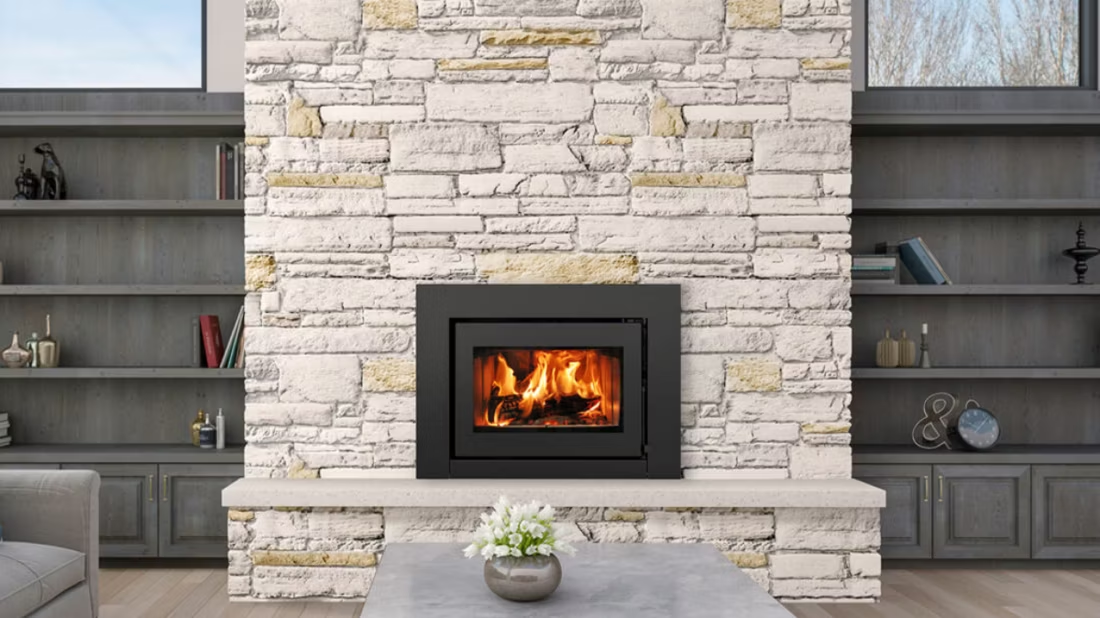
Wood isn't a mainstream heating fuel in Cedar Crest the way it is in rural, forested parts of the state—there's no national forest land in Plymouth County and no public cutting-permit program the way you'd find out west or in northern Maine, so this isn't a self-cut-firewood kind of place. Still, some homeowners here install a wood stove or insert into an existing masonry fireplace common in the area's older Colonial and Cape-style homes, mostly for ambiance, occasional cool-evening use, or as backup heat when a South Shore Nor'easter knocks out NSTAR power for a day or two. If that's your reason, a local dealer who actually installs wood-burning equipment in this area—not just a big-box quote—is worth finding.
Three steps. No salesperson until you're ready.
Tell us about your project
Your zip code, your situation, and the fuel you're leaning toward—or let the answers point you to one.
See what's actually available
The brands dealers within 100 miles genuinely carry—real options, never a catalog mirage.
Get your dealer & Project Guide
A trusted local dealer, plus the free Project Guide & Parts List that names every component of the job.
Frequently Asked Questions
Is wood heat actually common in Cedar Crest?
No, and it's worth being upfront about that. Most homes in Cedar Crest and the surrounding Plymouth County towns heat primarily with natural gas, with NSTAR Electric Company covering the rest. Wood stoves and inserts show up here as a secondary or aesthetic choice—often in older homes with an existing masonry fireplace, or households that want a non-electric heat source on hand for winter storm outages. If you're looking for a wood-heavy hearth culture, you'll find that further inland or north; Cedar Crest isn't that kind of town.
What does a wood stove or insert installation cost in Cedar Crest?
Because demand is low here, pricing varies more from home to home than it would in a wood-heavy market. As a general range for coastal Massachusetts, converting an existing masonry fireplace to a wood insert typically runs $3,500-$7,500, while a freestanding stove with new Class A chimney venting can run $6,000-$10,000 if there's no existing flue to reuse. Get a firm number from an in-home consultation—with fewer local installers doing this work regularly, the estimate you get should come from someone who's actually done a wood install in this area, not a generic quote.
Where do I get firewood if there's no national forest nearby?
There's no U.S. Forest Service land in Plymouth County, and Myles Standish State Forest, the largest public tract nearby, doesn't run a public firewood-cutting permit program the way western national forests do. Practically, that means firewood in Cedar Crest comes from local tree services and cordwood dealers, typically selling seasoned oak, maple, birch, and ash by the half or full cord with delivery. If you're planning to burn regularly, ask about moisture content—properly seasoned hardwood (under 20% moisture) matters even more in a milder climate zone like 5A, where you're not running the stove hot enough, often enough, to burn off wet wood efficiently.
Can I convert my existing fireplace into a wood stove insert?
Yes, and for Cedar Crest this is usually the more practical path than a freestanding stove. Many of the older Colonial and Cape-style homes on the South Shore already have a masonry fireplace that was built for looks and mild ambiance rather than efficient heat. An insert uses that existing chimney (typically with a stainless liner) and turns an open, heat-losing fireplace into a sealed, much more efficient unit. It also avoids the cost of running new Class A chimney pipe through a roof, which is the biggest line item on a from-scratch wood stove install.
Do I need a permit to install a wood stove in Cedar Crest?
Yes—any new wood-burning appliance install needs a building permit through your local building department, and the stove itself needs to meet current EPA emissions standards. Because wood installs are infrequent here compared to gas and electric work, it's worth confirming directly with your town's building office what they'll want to see (clearance documentation, chimney liner specs, etc.) before your installer schedules the work. A dealer who regularly does wood installs in Plymouth County towns will already know the drill; one who mostly sells gas fireplaces may not.
What's the best wood stove for a Cedar Crest home?
Given the mild winter low average of 22°F here compared to true wood-heat climates, most Cedar Crest households don't need a stove built to hold a fire 20+ hours through single-digit nights. A mid-size, non-catalytic stove from a New England-familiar brand like Jotul or Vermont Castings is usually the right fit for supplemental heat or ambiance in a main living room. If backup heat during power outages is the priority, look for a model that doesn't rely on a blower fan to move heat effectively—radiant cast iron stoves keep working fine without electricity, which matters when a Nor'easter takes NSTAR service down.
How often should my chimney be inspected if I only use my stove occasionally?
Even light or occasional-use wood stoves need an annual CSIA-standard inspection—creosote can build up from just a handful of fires, especially if the wood wasn't fully seasoned or the fires were kept low and smoldering (common with occasional-use, ambiance-focused burning). Plan on a sweep and inspection once a year before the season's first fire, typically in the fall. If you're only burning a handful of times each winter, ask your chimney sweep whether your usage pattern calls for anything different than a full-time burner's schedule.
Wood vs. gas—which makes more sense for a Cedar Crest home?
Gas is the default here for a reason: natural gas service is standard across Cedar Crest, installation and running costs are predictable, and there's no wood handling or ash cleanup. Wood makes sense in a narrower set of cases—homes with an existing fireplace worth using, households that want a non-electric backup heat source for storm season, or anyone who simply wants the ambiance of a real fire. If your main goal is efficient, low-maintenance primary heat, gas is almost certainly the better fit for this town. If it's backup heat or atmosphere, wood still has a place.
Is a wood stove worth it just for power-outage backup?
For some households on the South Shore, yes. Nor'easters regularly knock out NSTAR power in Plymouth County for a day or more, and a gas furnace with an electric igniter and blower motor won't run without electricity even if the gas is still flowing. A wood stove or insert, especially a simple radiant cast-iron model without a fan, keeps producing heat regardless of grid status. If that's your main reason for considering wood, say so when you talk to a local dealer—it changes which stove and venting setup makes sense compared to one chosen purely for ambiance.
What does it take to replace an existing fireplace?
Fireplaces are like icebergs—bigger behind the wall than in front of it. Replacement means removing the surrounding tile or stone (the finish material laps onto the fireplace face), pulling the old unit, setting the new one in the same enclosure, and re-finishing the wall. A hearth professional can determine what's behind your wall without demolition during an in-home preview.
Do I have to leave the stove door cracked open to start a fire?
On many stoves, yes—a new fire needs extra air, and cracking the door a couple inches is how most stoves get it. But some modern stoves offer an automatic startup air system: engage it when you light, and timed air jets feed the fire for the first 20 minutes with the door fully shut, then close automatically. It's mechanical—like an egg timer, no electricity—and it means you can load it, light it, and walk away.
Can I install a fireplace myself?
If you're putting a fire in your house on purpose, it's best to work with an expert. Unless you're genuinely experienced in framing, gas line, vent pipe, and the national code on clearances to combustibles, have a professional do it—and ideally the same company that sells you the fireplace, so warranty, service, and liability all live under one roof.
Can a fireplace actually lower my heating bill?
Yes—by creating a comfort zone. A furnace heats every square foot of the house just to warm the one room you're in; a gas fireplace on low burns roughly a sixth of the gas a typical furnace does. Set the furnace around 55–60 degrees as a baseline, then heat the rooms your family actually uses. Families who heat this way commonly save $20–$60 a month.
Nearby Dealers
Hearth shops serving Cedar Crest and the surrounding area. Every listing shows whether it is a WhyFire partner, a dealer we have verified as authorized for the brands we recommend, or a local business carrying hearth products. No manufacturer pays for placement. How we verify dealers →
August West Chimney Co. & Fireplace Conc
The Fireplace Store @ Aspinwall Plumbing - Marshfield
Plymouth Fireplace
South Shore Fireplace Inc
Backyard Living
Flue Brothers Chimney Sweeps
Woodstove & Fireplaces Unlimited
Eurosweep
Hearth Heating, Inc
Find your wood fireplace in Cedar Crest.
Tell us about your home and how you'd use a wood stove or insert—ambiance, backup heat, or both—and we'll match you with a local dealer who actually installs wood-burning equipment in Plymouth County, plus a free Project Guide & Parts List with the exact parts, including the vent kit, for your project.
Find Your Fireplace →