
Gas Heat Built for Cedar Crest's South Shore Winters.
Reliable, instant warmth for this small Plymouth County coastal community—propane-fed, storm-ready, and installed by a trusted local dealer.
Every Project Starts From One of These Five Situations
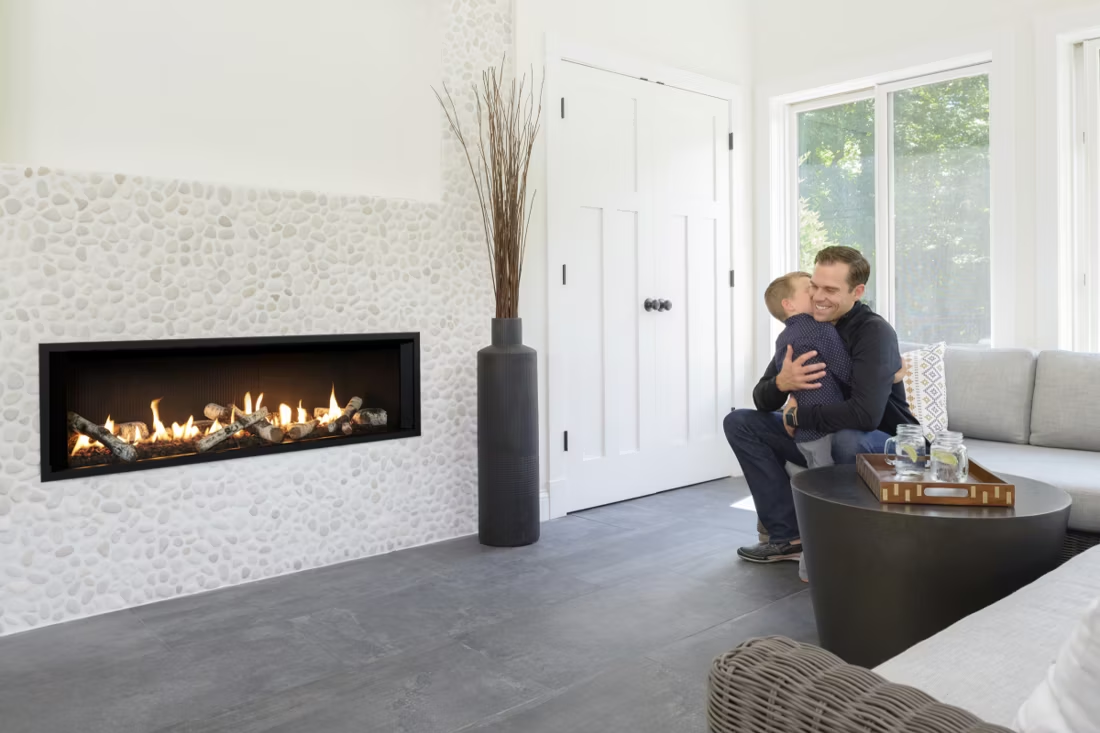
Clean, instant heat—no wood pile required.
Cedar Crest sits barely 16 feet above sea level on Plymouth County's South Shore, where winter lows average 22°F and the region logs a solid, sustained heating season—cold enough for real heat demand, if nowhere near the brutal stretches inland New England towns like Burlington, VT see. What makes heating here different is coastal exposure: nor'easters bring wind-driven cold snaps and the kind of power outages that make backup heat a genuine consideration for South Shore homeowners, not just a nice-to-have.
Cedar Crest isn't reached by piped natural gas mains, so propane is the standard fuel for gas fireplaces and inserts here, delivered and stored in an aboveground or buried tank on the property. Electric service comes from NSTAR at a residential rate of roughly $0.20/kWh—on the higher end for New England—which makes a propane fireplace's low standby cost and outage-proof ignition options genuinely useful, not just a convenience. Wood-burning installations are uncommon in Cedar Crest's tightly built, often seasonal coastal homes; where older masonry fireplaces exist, most homeowners convert them to gas rather than maintain a cordwood supply on a small lot.
Three steps. No salesperson until you're ready.
Tell us about your project
Your zip code, your situation, and the fuel you're leaning toward—or let the answers point you to one.
See what's actually available
The brands dealers within 100 miles genuinely carry—real options, never a catalog mirage.
Get your dealer & Project Guide
A trusted local dealer, plus the free Project Guide & Parts List that names every component of the job.
Frequently Asked Questions
How much does a gas fireplace installation cost in Cedar Crest?
A typical gas fireplace or insert installation in Cedar Crest runs $4,500 to $10,500. Because there's no natural gas main reaching this part of Plymouth County, most of that range depends on propane setup: a direct-vent insert into an existing chimney with a nearby propane tank sits toward the lower end, while a new freestanding fireplace requiring a fresh propane line run and a new tank installation—aboveground or buried—pushes toward the higher end. A trusted local dealer will walk your property and give a firm number after seeing your existing propane service, if any.
Can I convert an old masonry fireplace to gas?
Yes, and it's the most common gas project in Cedar Crest. Many of the older homes along this stretch of the South Shore were built with brick or stone fireplaces that see little regular use today. A gas insert dropped into that existing masonry opening, vented through a stainless liner run up the original chimney, typically runs $4,500 to $9,000 depending on the insert and whether new propane line work is needed. It keeps the historic look of the hearth while replacing an inefficient, rarely-used firebox with real, on-demand heat.
Do I need a propane tank, or is natural gas available?
Cedar Crest doesn't have natural gas mains, so propane is the fuel every local installer will plan around. Options include a 100-120 gallon aboveground tank (common for a single fireplace) or a larger 250-500 gallon tank, aboveground or buried, if you're also running a furnace, water heater, or range on propane. South Shore propane suppliers typically handle tank placement and delivery contracts separately from the fireplace installer, so budget for that as a second conversation alongside your hearth project.
Will my gas fireplace work if the power goes out?
For most units, yes. Nor'easters are the main reason South Shore homeowners ask this question—NSTAR outages here can stretch a day or more after a coastal storm. Fireplaces with IPI (intermittent pilot ignition) run on AA battery backup that kicks in automatically when line power drops. Valor fireplaces take a different approach: the pilot's thermocouple generates the small amount of electricity the unit needs, so there's no battery to remember or replace. Either way, ask your local dealer about the ignition system before you buy if storm-outage heat matters to your household.
What's the difference between a gas fireplace, insert, and stove?
A gas fireplace is a built-in unit framed into a wall—the right call for new construction or a remodel without an existing chimney. A gas insert slides into an existing masonry firebox and vents up the chimney you already have, which fits many of Cedar Crest's older coastal homes. A gas stove is freestanding, sitting on a small hearth pad, and works well in homes with tight floor plans or seasonal cottages where a full fireplace surround isn't practical. Given the smaller lot sizes and older housing stock common here, inserts and freestanding stoves are the two most frequently installed options.
Do I need a permit to install a gas fireplace in Cedar Crest?
Yes. Massachusetts requires a building permit through your local building department plus a separate gas-fitting permit, and the propane line work must be performed by a licensed gas fitter under the state's fuel gas code (248 CMR). Most hearth retailers coordinate both permits and the propane hookup as part of the installation, so you're not left managing multiple trades and inspections yourself.
Can I install a vent-free gas fireplace in Cedar Crest?
Effectively, no. Massachusetts' fuel gas code is one of the strictest in the country on unvented appliances, and vent-free (ventless) gas fireplaces are not permitted for installation in most residential settings in the state. That makes direct-vent gas fireplaces and inserts—which draw combustion air from outside and exhaust it back outside through a sealed pipe—the standard and really the only option local installers will offer in Cedar Crest. The upside: direct-vent units are also the safest and most efficient category, so you aren't giving anything up.
How often should a gas fireplace be serviced?
Plan on an annual inspection, ideally in early fall before heavy winter use starts. A technician will check the burner, pilot assembly, propane connections, and venting, and clean the glass. This matters more on the coast than it might inland—salt air can accelerate corrosion on vent caps and outdoor propane fittings, so a yearly look catches problems before they become a mid-winter outage. Local service providers typically charge $150 to $250 for a standard annual visit.
Should I consider a wood stove instead of gas?
For most Cedar Crest homes, gas is the more practical choice, and it's what nearly every local installer will steer you toward. New wood stove installations are uncommon here—the coastal lots run small, many properties are seasonal or second homes, and homeowners insurance on the South Shore can get complicated with an active solid-fuel appliance. Where older homes still have their original oak, maple, or ash-burning masonry fireplaces, most owners use them occasionally for ambiance rather than as a real heat source, or convert them to gas inserts. If you specifically want wood heat, it's possible, but expect fewer local installers to specialize in it compared to gas or propane work.
Is my gas fireplace wasting gas?
If it was installed more than 15 years ago, probably. Older gas fireplaces keep a standing pilot light burning all the time, and that little flame can cost a couple hundred dollars a year. Newer models use pilot-on-demand ignition—the pilot lights only when you use the fireplace and goes out when you turn it off.
What's the difference between an insert and a zero-clearance fireplace?
An insert is a fireplace that slides into a pre-existing wood-burning fireplace—if you don't have one, there's nothing to insert it into. A zero-clearance fireplace is built into a framed wall, which makes it the answer for remodels and new construction. Simple test: existing masonry fireplace means insert; blank or framed wall means zero-clearance.
Does a fireplace add value to my home?
On average, a fireplace adds back to the home about the same amount you spent installing it. Add the monthly savings from heating the rooms you actually use instead of the whole house—often hundreds of dollars a year—and the value case is strong before you even count what a fire does for how your family uses the room.
Can I install a fireplace myself?
If you're putting a fire in your house on purpose, it's best to work with an expert. Unless you're genuinely experienced in framing, gas line, vent pipe, and the national code on clearances to combustibles, have a professional do it—and ideally the same company that sells you the fireplace, so warranty, service, and liability all live under one roof.
Nearby Dealers
Hearth shops serving Cedar Crest and the surrounding area. Every listing shows whether it is a WhyFire partner, a dealer we have verified as authorized for the brands we recommend, or a local business carrying hearth products. No manufacturer pays for placement. How we verify dealers →
August West Chimney Co. & Fireplace Conc
The Fireplace Store @ Aspinwall Plumbing - Marshfield
Plymouth Fireplace
South Shore Fireplace Inc
Backyard Living
Flue Brothers Chimney Sweeps
Woodstove & Fireplaces Unlimited
Eurosweep
Hearth Heating, Inc
Find your gas fireplace in Cedar Crest.
Tell us about your home and your existing propane setup, and we'll match you with a trusted local dealer and send over your free Project Guide & Parts List—the exact parts, vent kit, and recommended installer for your Cedar Crest project.
Find Your Fireplace →