
Find the Right Fireplace for Your Corner of Plymouth County.
Wood, gas, pellet, and electric fireplace resources for every city and coastal town in Plymouth County—from Brockton to Duxbury. Find the right unit and connect with a trusted local hearth retailer.
Every Project Starts From One of These Five Situations
Coastal New England heating across Plymouth County, Massachusetts.
Plymouth County stretches from Boston's South Shore down to Cape Cod Bay, covering historic Plymouth—where the Mayflower landed in 1620—through inland mill towns like Brockton and Bridgewater and coastal communities like Duxbury, Marshfield, and Kingston. The climate here is milder than most of inland New England: Zone 5A, a winter low average of 21°F, and a winter heating load noticeably lighter than Burlington, VT or Minneapolis, MN, thanks to the moderating effect of Massachusetts Bay and Cape Cod Bay. Still, heating season typically runs from November through March, and cold snaps into the teens aren't unusual. The county's oak, maple, birch, and ash woodlots have fueled hearths here for generations—dense hardwoods that burn long and hot, a legacy that goes back to the Pilgrims themselves.
What you'll find on this hub: hearth retailers, service technicians, and fuel suppliers covering every town in the county—from the historic waterfront of Plymouth to the urban core of Brockton, the cranberry bogs around Carver and Middleborough, and the coastal towns of Marshfield, Duxbury, and Kingston. Pick your fuel below to drill into local dealers, typical installation costs, and the units that fit your home. Whether you're heating a saltbox near Plymouth Harbor or a colonial in Bridgewater, this is the starting point.
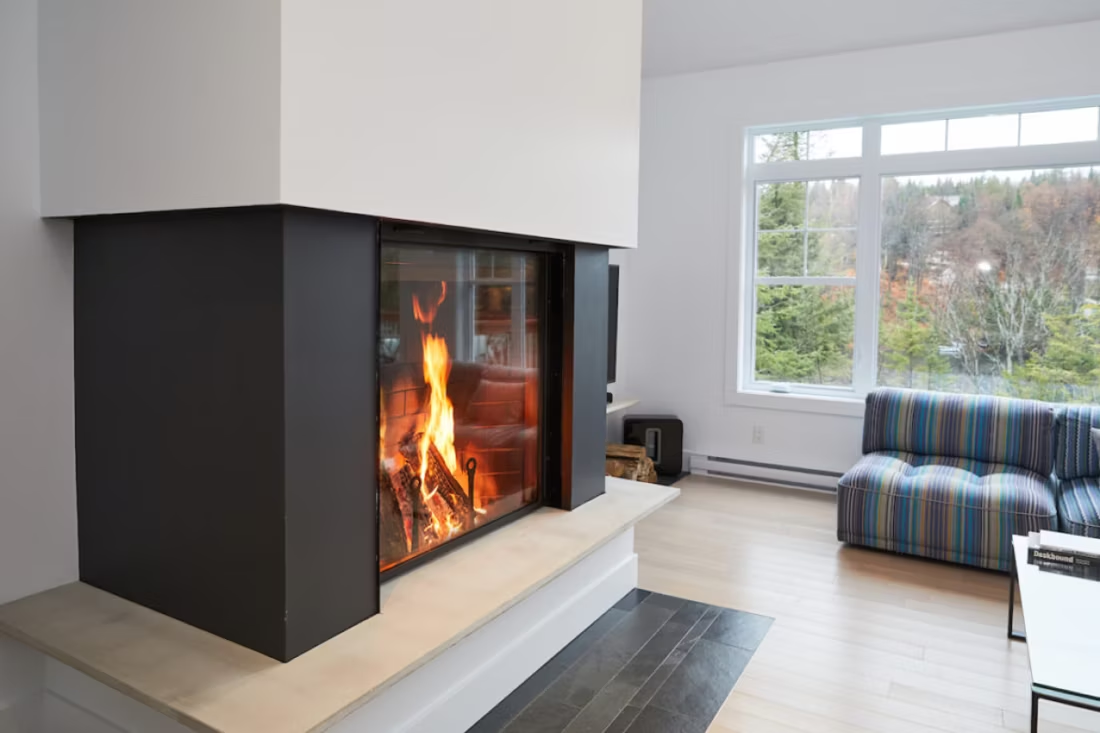
Four fuels. One honest answer for Plymouth County.
Three steps. No salesperson until you're ready.
Tell us about your project
Your zip code, your situation, and the fuel you're leaning toward—or let the answers point you to one.
See what's actually available
The brands dealers within 100 miles genuinely carry—real options, never a catalog mirage.
Get your dealer & Project Guide
A trusted local dealer, plus the free Project Guide & Parts List that names every component of the job.
Frequently Asked Questions
Which fuel works best in Plymouth County?
It depends on your home and priorities, but all four fuels have a real place here. Wood is a strong option given the county's oak, maple, birch, and ash woodlots—dense hardwoods that produce long, hot burns and have heated South Shore homes since colonial times; wood also keeps working during the nor'easter-driven power outages that hit coastal towns like Marshfield and Duxbury every winter. Gas is the convenience choice in towns with natural gas service from Eversource or National Grid—mostly the more built-up areas around Brockton, Plymouth, and the Route 3 corridor—while propane covers rural and coastal pockets without gas mains. Pellet is a solid middle ground: New England Wood Pellet is milled right here in Massachusetts, and pellet stoves handle the county's moderate winters (a winter heating load milder than Burlington, VT) without the daily wood-splitting labor. Electric is mostly supplemental—good for a bedroom, a den, or a coastal cottage that only needs occasional heat. Most Plymouth County homes end up pairing a primary fuel—wood or pellet—with gas or electric in secondary rooms.
Do I need a permit to install a fireplace in Plymouth County?
Yes, in almost every case. Massachusetts doesn't route building permits through county government—Plymouth County's 27 cities and towns each issue their own permits through their local building department, whether that's Plymouth, Brockton, Bridgewater, or Marshfield. New wood stoves and inserts need to meet current EPA 2020 NSPS emissions standards, gas installations require a separate gas permit and licensed gas-fitter for the line work, and pellet stoves typically need a mechanical permit for the venting. Electric fireplaces usually skip the permit process unless you're hardwiring a built-in unit into a new circuit. Most local hearth retailers pull the permit as part of the installation, so homeowners rarely have to deal with the paperwork directly.
Are there air quality restrictions on wood burning in Plymouth County?
Not the kind you'd see in a smoke-prone basin or a non-attainment area—Plymouth County doesn't have the winter inversion or air-quality-advisory issues that affect places like inland Oregon or Idaho. The coastal breeze off Massachusetts Bay and Cape Cod Bay generally keeps wood smoke from settling into towns the way it can in inland valleys. That said, Massachusetts DEP still expects new wood-burning appliances to meet EPA 2020 NSPS standards, and towns can and do respond to individual nuisance-smoke complaints under local ordinances. If you're installing a new wood stove or insert, sticking with an EPA-certified unit is standard practice regardless—it burns cleaner, uses less wood, and avoids any neighbor disputes over smoke.
Can one local hearth retailer handle all four fuel types?
Many can, but coverage varies. Larger hearth retailers along the Route 3 corridor and around Brockton tend to carry wood, gas, and pellet units with working showroom displays, and most add electric fireplaces as a lower-margin, easy add-on. Smaller shops closer to the coast—serving towns like Duxbury, Marshfield, and Kingston—sometimes specialize more narrowly, focusing on gas and electric for vacation and second homes, or on wood and pellet for year-round residents who want a real primary heat source. If you're cross-shopping fuels, ask upfront which units a dealer keeps on the floor versus special-orders—a working display makes a real difference when you're trying to judge flame appearance and heat output in person.
How does service work across a spread-out county like Plymouth?
Plymouth County runs about 30 miles from the urban core of Brockton down to the tip of Plymouth near Cape Cod Bay, plus inland towns like Bridgewater and Middleborough and the coastal string of Duxbury, Marshfield, and Kingston. Most chimney sweeps and gas or pellet technicians are based centrally—often around Brockton or Plymouth—and travel to the rest of the county, sometimes with a modest trip fee for the coastal or inland edges. Fall (September–November) is the busiest season for chimney sweeps and pellet stove tune-ups ahead of winter, so scheduling early beats waiting for a mid-January emergency call, especially after a nor'easter knocks out power and everyone suddenly needs their wood stove working.
What's the typical cost range for fireplace installation across all fuel types in Plymouth County?
Costs vary by fuel and by how much existing infrastructure you already have. Wood stove or insert installation: roughly $4,000–$8,500 for a typical retrofit, more if new chimney or hearth work is needed. Gas fireplace, insert, or stove: roughly $4,500–$10,000, with the lower end for homes already on natural gas service and the higher end for propane tank setups or longer gas line runs. Pellet stove or insert: roughly $4,000–$7,000 installed. Electric fireplace: $200–$3,000 for the unit itself, plus $300–$1,000 in labor for anything beyond a simple plug-in—most wall-mount and insert installs fall in that range. Labor costs in the Boston metro and South Shore market run a bit higher than the New England average, so budget toward the upper end of each range. See the county + fuel pages above for retailer-specific pricing.
Can a fireplace actually lower my heating bill?
Yes—by creating a comfort zone. A furnace heats every square foot of the house just to warm the one room you're in; a gas fireplace on low burns roughly a sixth of the gas a typical furnace does. Set the furnace around 55–60 degrees as a baseline, then heat the rooms your family actually uses. Families who heat this way commonly save $20–$60 a month.
How much should I budget for a fireplace?
For an average home—covering the fireplace, the vent pipe, and basic installation—a budget between $3,900 and $5,500 gives you a lot of options across wood, gas, and pellet. By the time you add finish work, gas line, and electrical, the average complete installation lands between $5,000 and $12,000 all-in. In a remodel or new build, a good rule is to put about 2.5% of the total project cost toward the fireplace.
Can I install a fireplace myself?
If you're putting a fire in your house on purpose, it's best to work with an expert. Unless you're genuinely experienced in framing, gas line, vent pipe, and the national code on clearances to combustibles, have a professional do it—and ideally the same company that sells you the fireplace, so warranty, service, and liability all live under one roof.
What is an in-home preview and do I need one?
It's a visit where a hearth professional measures your space, confirms the model you picked actually works in your home, and walks the specs—framing, gas line, venting, finish work—before anything is ordered. Some details you just can't know until you see the house. Never make a down payment without one; it's the single most-skipped step that burns buyers.
Stove and Fireplace Dealers in Plymouth County
Listings include WhyFire partner dealers, dealers we have verified as authorized for the brands we recommend, and established local businesses that carry hearth products. Every listing shows which one it is. The ones marked Preferred run on WhyFire's software, so they can show you real pricing and book your appointment right here. No manufacturer pays for placement. How we verify dealers →
August West Chimney Co. & Fireplace Conc
Plymouth Fireplace
Woodstove & Fireplaces Unlimited
South Shore Fireplace Inc
The Fireplace Store @ Aspinwall Plumbing - Marshfield
Flue Brothers Chimney Sweeps
Backyard Living
Mr. Chimney Woodstoves & Fireplaces
Acushnet Alternative Heating
Hearth Heating, Inc
Eurosweep
Stonewood Products
Mr. Chimney's Stove Shoppe
Get matched with a Plymouth County hearth dealer.
Tell us about your home and we'll match you with a trusted local dealer and send a free Project Guide & Parts List—the exact parts, including the vent kit, and the dealer we recommend for your fuel and your town.
Find Your Fireplace →