
Pellet Heat in College Park: A Niche Option, Not the Norm.
College Park runs on gas furnaces, heat pumps, and Pepco electric service—pellet stoves are a small niche here. If one still makes sense for your home, we'll connect you with a dealer who actually stocks and installs them.
Every Project Starts From One of These Five Situations
College Park's winters don't ask much of a heating system—and pellet stoves fill a narrow gap.
College Park sits at just 68 feet of elevation in Prince George's County, in climate zone 4A with about 4,568 heating degree days and an average winter low of 25°F. That's a mild-to-moderate mixed-humid climate—nothing close to the 9,000-plus HDD winters of a place like Duluth, MN, where a stove has to carry the whole house through months of sub-zero nights. Most College Park homes, including the dense mix of townhomes and single-family houses near the University of Maryland campus, are already heated adequately by gas furnaces or Pepco-served electric heat pumps, and that's where the vast majority of local heating dollars go.
Because of that, pellet stoves are genuinely uncommon in College Park—we're not going to pretend otherwise. Regional pellet brands like Energex, Hamer Pellet Fuel, and Greene Team Pellet Fuel are sold throughout the Mid-Atlantic, but you won't find many local hearth shops built around pellet product the way you would in a colder, more rural region. That said, a small number of College Park homeowners do install a pellet stove—usually for supplemental heat in an addition or finished basement, backup warmth during a Pepco outage, or simply the ambiance of a real flame without the hassle of splitting and stacking cordwood. If that's you, the trick is finding one of the few dealers in the DC metro who actually carries and services pellet equipment, rather than assuming any big-box fireplace showroom will.
Three steps. No salesperson until you're ready.
Tell us about your project
Your zip code, your situation, and the fuel you're leaning toward—or let the answers point you to one.
See what's actually available
The brands dealers within 100 miles genuinely carry—real options, never a catalog mirage.
Get your dealer & Project Guide
A trusted local dealer, plus the free Project Guide & Parts List that names every component of the job.
Frequently Asked Questions
How much does a pellet stove installation cost in College Park?
Because pellet stoves are a small slice of the College Park hearth market, hyper-local pricing data is thin, but installed costs across the DC metro typically run in the $3,500 to $6,500 range for a freestanding stove with a horizontal vent kit through an exterior wall—on the lower end of what you'd pay for a comparable wood stove, since pellet units don't need a full masonry chimney. Pellet inserts into an existing fireplace tend to land a bit higher once venting and a liner are factored in. Get a firm quote from a dealer who actually stocks pellet equipment rather than a general contractor pricing it off a catalog.
Why are pellet stoves so uncommon in College Park?
Two things work against them here. First, the climate: at 4,568 heating degree days and winter lows averaging 25°F, most College Park homes don't need a dedicated wood-pellet heat source to stay comfortable—gas furnaces and Pepco electric heat pumps handle it fine. Second, the housing stock: a lot of College Park is townhomes, condos, and student-adjacent rentals near the University of Maryland, where hopper storage, pellet bag delivery, and venting through a shared wall are all more complicated than in a detached rural home. Pellet stoves work best in houses with a garage or basement to store bags and a straightforward exterior wall to vent through—that combination is less common here than it is farther out in rural Maryland.
Where can I buy pellet fuel near College Park?
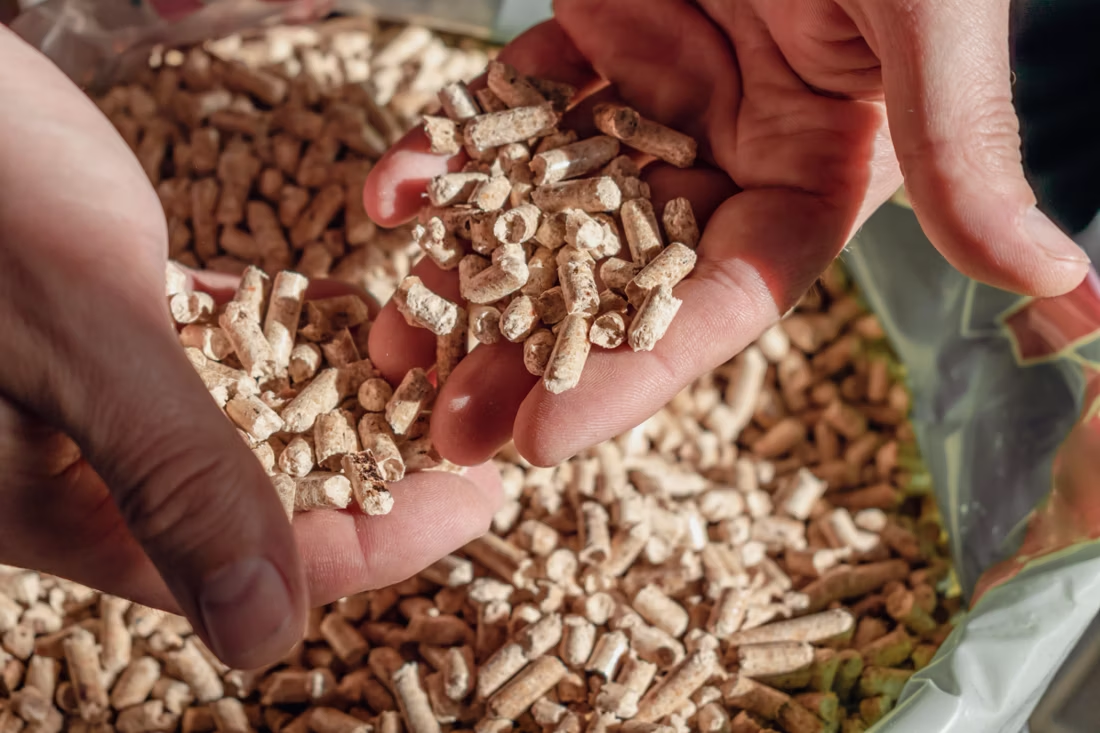
Bagged pellets from brands like Energex, Hamer Pellet Fuel, and Greene Team Pellet Fuel show up seasonally at farm-and-feed stores, Tractor Supply locations, and some home improvement retailers throughout the DC-Baltimore corridor, though selection in College Park proper is limited compared to more rural parts of Maryland. Most owners plan ahead and buy a season's supply (roughly one to two tons for a supplemental-use stove) in early fall before pellets sell out during the first cold snap. A local dealer who sells you the stove can usually point you to whoever restocks reliably each year.
What's the difference between a pellet stove and a wood stove for a College Park home?
A wood stove burns cordwood, needs a full chimney or Class A vertical venting, and runs without electricity—genuinely useful during storm-related outages, but it demands a wood supply and regular chimney sweeping. A pellet stove burns compressed hardwood pellets, vents horizontally through a small pipe in an exterior wall, and needs electricity to run the auger and combustion blower. For College Park's mild winters and mostly suburban lots, a pellet stove is the lower-maintenance, easier-to-vent option—but it goes dark in a power outage unless you add a battery backup, which matters given how often storms roll through the DC area in summer and winter alike.
Do I need a permit to install a pellet stove in College Park?
Yes. New solid-fuel appliance installations, including pellet stoves, generally require a permit through the Prince George's County Department of Permitting, Inspections and Enforcement (DPIE), covering the appliance clearance, venting, and hearth pad. A reputable local installer will pull this permit as part of the job. Because pellet installs are relatively rare in the county compared to gas fireplace work, it's worth confirming your installer has actually handled a pellet permit before and knows DPIE's specific documentation requirements.
Is a pellet stove a good fit for a townhouse or student rental near the University of Maryland?
It can work, but with real caveats. Pellet stoves need a spot for the appliance itself, clearance to combustibles, a place to route a horizontal vent through an exterior wall, and dry storage for pellet bags—none of which is guaranteed in a shared-wall townhouse or a rental with an HOA. If you own a detached or semi-detached home with a basement or garage for pellet storage, it's a realistic supplemental-heat option. If you're renting or in a tightly managed community near campus, check your lease or HOA covenants before pursuing it—many restrict solid-fuel appliances outright.
What happens to a pellet stove during a power outage?
Pellet stoves need electricity to run the auger that feeds pellets into the firebox and the blower that pushes heat into the room—no power, no fire, unlike a wood stove that burns regardless of the grid. If backup heat during a Pepco outage matters to you, ask a dealer about battery backup systems or an inverter setup sized for a pellet stove's draw (typically 100-400 watts). Some homeowners in this situation choose a wood stove instead specifically because it needs no electricity, but that trades away the convenience and cleaner burn a pellet stove offers day to day.
Pellet vs. gas—which makes more sense in College Park?
For most College Park homes, gas wins on convenience and cost predictability—instant on-off operation, no fuel storage, and no ash to manage, which is a big part of why gas fireplaces and inserts are standard here while pellet units remain a niche choice. Pellet stoves make more sense as a supplemental or backup heat source for a homeowner who specifically wants a real flame, lower fuel costs than propane, or a hedge against rising Pepco electric rates (currently around $0.1874 per kWh). If your priority is a low-maintenance primary heat source for daily living space, gas is the more common and more supportable choice locally; if you want a secondary heat source with some independence from utility pricing, pellet is worth a serious look.
Where can I find a dealer who actually installs pellet stoves near College Park?
This is the real bottleneck—plenty of DC-metro hearth shops focus almost entirely on gas fireplaces and inserts, and only a handful carry and service pellet equipment well. That's exactly the gap Find My Fireplace exists to close: rather than guessing which showroom actually stocks pellet stoves and vent kits versus one that will special-order something they've never installed, we match you with a trusted local dealer who genuinely works with pellet appliances in the Prince George's County area, so the sizing, venting, and permit work get done right the first time.
What's the difference between an insert and a zero-clearance fireplace?
An insert is a fireplace that slides into a pre-existing wood-burning fireplace—if you don't have one, there's nothing to insert it into. A zero-clearance fireplace is built into a framed wall, which makes it the answer for remodels and new construction. Simple test: existing masonry fireplace means insert; blank or framed wall means zero-clearance.
Why is my open fireplace making my house colder?
Open fireplaces suck—literally. As the fire burns, it consumes air your furnace already paid to heat and pulls it out through the chimney, so the house is actually colder after the fire goes out than before you lit it. An insert fixes this: it seals the chimney, puts fixed glass across the front, and turns that hole in your house into a real heat source.
Can I install a fireplace myself?
If you're putting a fire in your house on purpose, it's best to work with an expert. Unless you're genuinely experienced in framing, gas line, vent pipe, and the national code on clearances to combustibles, have a professional do it—and ideally the same company that sells you the fireplace, so warranty, service, and liability all live under one roof.
Does a fireplace add value to my home?
On average, a fireplace adds back to the home about the same amount you spent installing it. Add the monthly savings from heating the rooms you actually use instead of the whole house—often hundreds of dollars a year—and the value case is strong before you even count what a fire does for how your family uses the room.
Nearby Dealers
Hearth shops serving College Park and the surrounding area.
Pellet Brands Stocked Around College Park
Manufacturers will point you to the nearest stocking dealer.
Find your pellet stove near College Park.
Tell us about your home and we'll send your free Project Guide & Parts List—the vent kit and parts your project needs, plus a match with a local dealer who genuinely installs pellet equipment near College Park.
Find Your Fireplace →