
Heat Your Rowhouse or Condo Without a Chimney.
No venting, no gas line, no masonry work—just plug in or wire up real supplemental heat for your College Park home. Find the right unit and connect with a trusted local dealer.
Every Project Starts From One of These Five Situations
Simple heat for a campus town of rowhomes and rentals.
College Park sits in climate zone 4A with a fairly long, moderate heating season and winter lows that average around 25°F—real winter, but nothing close to the sub-zero stretches homeowners deal with in a place like Burlington, VT. The housing stock here is a mix of early-1900s bungalows in Old Town, brick rowhomes near the University of Maryland, and the garden apartments and mid-rise condos that have filled in around the Metro and campus over the last two decades.
A lot of that housing either has no chimney at all or has a fireplace opening that a landlord doesn't want touched with gas lines or masonry work. That's where electric wins: a plug-in insert or a hardwired built-in unit needs no venting and no combustion air, which makes it one of the few heat-appliance upgrades a renter or condo owner can actually get approved. Pepco (Potomac Electric Power Co) serves College Park at a residential rate around $0.1874 per kWh, which is higher than the national average—so most local installs are sized as zone heat for a bedroom, den, or living room rather than a whole-home heating strategy.
Three steps. No salesperson until you're ready.
Tell us about your project
Your zip code, your situation, and the fuel you're leaning toward—or let the answers point you to one.
See what's actually available
The brands dealers within 100 miles genuinely carry—real options, never a catalog mirage.
Get your dealer & Project Guide
A trusted local dealer, plus the free Project Guide & Parts List that names every component of the job.
Frequently Asked Questions
How much does an electric fireplace installation cost in College Park?
A plug-in insert that slides into an existing fireplace opening—common in the Old Town bungalows—typically runs $300 to $900 installed, since it just needs a standard outlet. A hardwired wall-mount or built-in unit that requires a dedicated 20-amp circuit runs closer to $1,200 to $3,000 once an electrician is involved, more if the panel needs upgrading. Because there's no chimney, liner, or gas line to deal with, electric is consistently the least expensive hearth upgrade available to College Park homeowners and landlords alike.
Do I need a permit to install an electric fireplace in College Park?
A simple plug-in unit generally doesn't require a permit—it's treated like any other appliance on an existing circuit. A built-in or wall-mounted unit that needs a new dedicated circuit typically does require an electrical permit through the Prince George's County Department of Permitting, Inspections, and Enforcement (DPIE), and the wiring has to be pulled by a licensed electrician. If you rent—which a large share of College Park does, given the University of Maryland population—check your lease before any hardwired install; most landlords are fine with plug-in units but want sign-off on anything that touches the electrical panel.
What's the difference between a plug-in electric fireplace and a built-in unit?
A plug-in insert or freestanding stove-style unit runs off a standard household outlet, can be moved if you relocate, and is the go-to choice for apartments and rentals near campus. A built-in or wall-mount unit is recessed into a wall or cabinetry, often needs its own circuit, and gives a cleaner, more permanent look—better suited to homeowners doing a remodel than to a two-year lease. Both use the same resistive-heat or infrared technology; the difference is really about installation type and how permanent you want it to be.
Will an electric fireplace actually heat my room?
Most electric fireplaces are rated for 400 to 1,500 watts of heat output, which comfortably warms a bedroom, den, or open living area of a few hundred square feet—plenty for the zone heating most College Park households want on top of their existing furnace or heat pump. With a fairly long, moderate heating season here, an electric unit works well as supplemental heat during shoulder-season cold snaps or as a way to keep one room comfortable without running the whole system, but it isn't sized to replace central heat on its own.
Should I get electric or gas for my College Park home?
If your home already has a natural gas line and you own the property, a gas insert or fireplace delivers more heat output and a more traditional flame—a reasonable option for College Park's older single-family homes. But a large share of College Park's housing is rented or under HOA rules that make adding a gas appliance a nonstarter, and Pepco's electric rate, while not cheap, still makes a plug-in unit far simpler to get approved and installed than running new gas line and venting. For renters, condo owners, and anyone who wants a weekend install instead of a permitted gas project, electric is usually the practical answer.
Are wood or pellet stoves an option in College Park?
Not really, and it's worth saying plainly: wood and pellet stoves are rare in College Park. The housing stock is dominated by rentals, condos, and townhomes near the University of Maryland where there's often no chimney to work with, and many leases and HOA agreements prohibit solid-fuel appliances outright. A handful of older Old Town bungalows still have a working masonry fireplace, but new wood stove or pellet stove installations are uncommon here—electric and gas cover the overwhelming majority of hearth projects in this market.
Will my electric fireplace work during a power outage?
No—an electric fireplace needs power to run the heating element and any fan, so it goes dark along with everything else during a Pepco outage. College Park sees occasional outages from summer thunderstorms and winter nor'easters, so if backup heat during outages matters to you, an electric-only setup isn't the right primary plan; some homeowners pair an electric unit for daily convenience with a battery backup or a small generator for outage coverage, rather than relying on the fireplace itself.
What's the best electric fireplace type for a College Park apartment or rowhome?
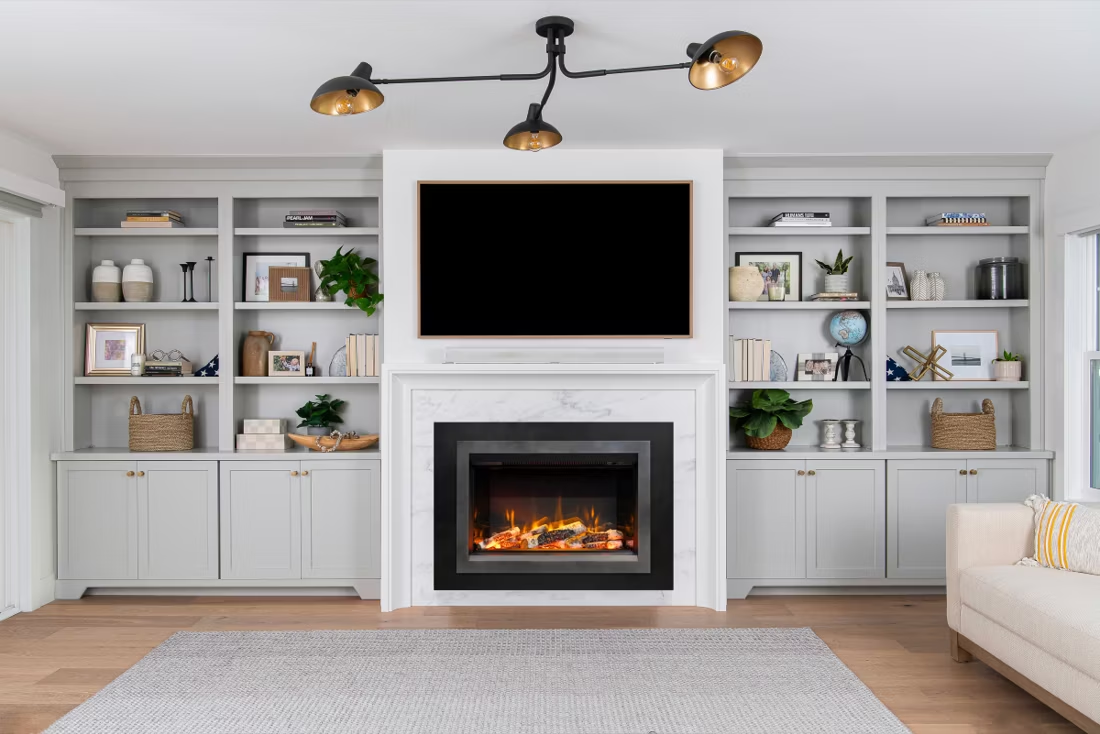
For apartments and rentals near campus, a freestanding stove-style unit or a mantel package with a plug-in insert is the easiest approved option—no wiring changes, no landlord sign-off needed beyond an outlet. For an Old Town bungalow with an existing but unused wood-burning fireplace, an electric insert sized to the firebox opening is a popular retrofit: it covers the old opening, needs no chimney work, and gives a homeowner or landlord a safe, low-maintenance upgrade instead of dealing with masonry repair.
Can I put an electric insert into my existing fireplace opening?
Yes, and it's one of the more common projects local dealers see in College Park's older housing stock. An electric insert is measured to fit the existing firebox opening, plugs into a nearby outlet (or is wired to a dedicated circuit for higher-output models), and requires no liner, no chimney sweep, and no gas line. It's an especially good fit for landlords who want to retire an old wood-burning fireplace's liability without the cost of a full masonry rebuild or gas conversion.
Can I put a TV above my fireplace?
Yes—with an asterisk. Fireplaces are hot and TVs don't like heat. Either put a mantel between them to deflect rising warmth, or choose a fireplace with heat-management technology that creates a cool zone on the wall above—the wall stays around 125 degrees, barely warm, while the room still gets full heat. If you like clean lines and don't want a mantel, heat management is the answer.
How much does an electric fireplace cost to run?
With the heater on, a typical unit draws about 1,500 watts—at average electric rates that's roughly 20 cents an hour. Run the flame effect alone and it costs pennies; the flames are LED-driven and use about as much power as a light bulb. There's no pilot light, no fuel delivery, and essentially no maintenance.
How much should I budget for a fireplace?
For an average home—covering the fireplace, the vent pipe, and basic installation—a budget between $3,900 and $5,500 gives you a lot of options across wood, gas, and pellet. By the time you add finish work, gas line, and electrical, the average complete installation lands between $5,000 and $12,000 all-in. In a remodel or new build, a good rule is to put about 2.5% of the total project cost toward the fireplace.
What is an in-home preview and do I need one?
It's a visit where a hearth professional measures your space, confirms the model you picked actually works in your home, and walks the specs—framing, gas line, venting, finish work—before anything is ordered. Some details you just can't know until you see the house. Never make a down payment without one; it's the single most-skipped step that burns buyers.
Nearby Dealers
Hearth shops serving College Park and the surrounding area.
Electric Service in College Park
An electric fireplace's heater draws about 1,500 watts—pennies per hour at local rates.
Potomac Electric Power Co
Find your electric fireplace in College Park.
Tell us a bit about your home and we'll put together a free Project Guide & Parts List for your College Park electric fireplace project, then match you with a trusted local dealer who can install it right.
Find Your Fireplace →