
Keep Your Family Warm and Safe—No Matter What
With an average winter low around 44°F and just a short, mild heating season each year, wood isn't how Houma and the bayou communities heat their homes. But for hurricane backup, camp houses, and homeowners who simply want a real fire, it still has a place. We'll connect you with a local dealer who can tell you honestly whether it's the right fit.
Every Project Starts From One of These Five Situations
A subtropical parish where central air, not a woodstove, carries the winter.
Terrebonne Parish sits in climate zone 2A on Louisiana's Gulf Coast, with an average winter low near 44°F and only a short, mild heating season overall—roughly a sixth of the winter heating load that a place like Duluth, MN or Burlington, VT racks up in a single season. Houma, Chauvin, Dulac, Gray, and Schriever might see a handful of nights dip near or below freezing each winter, and that's about it. A wood stove built to hold a 20-hour overnight burn at single-digit temperatures has no real job to do here. For the overwhelming majority of homes in the parish, central HVAC and gas fireplaces handle heating needs, and a wood-burning unit is something homeowners choose rather than something the climate demands.
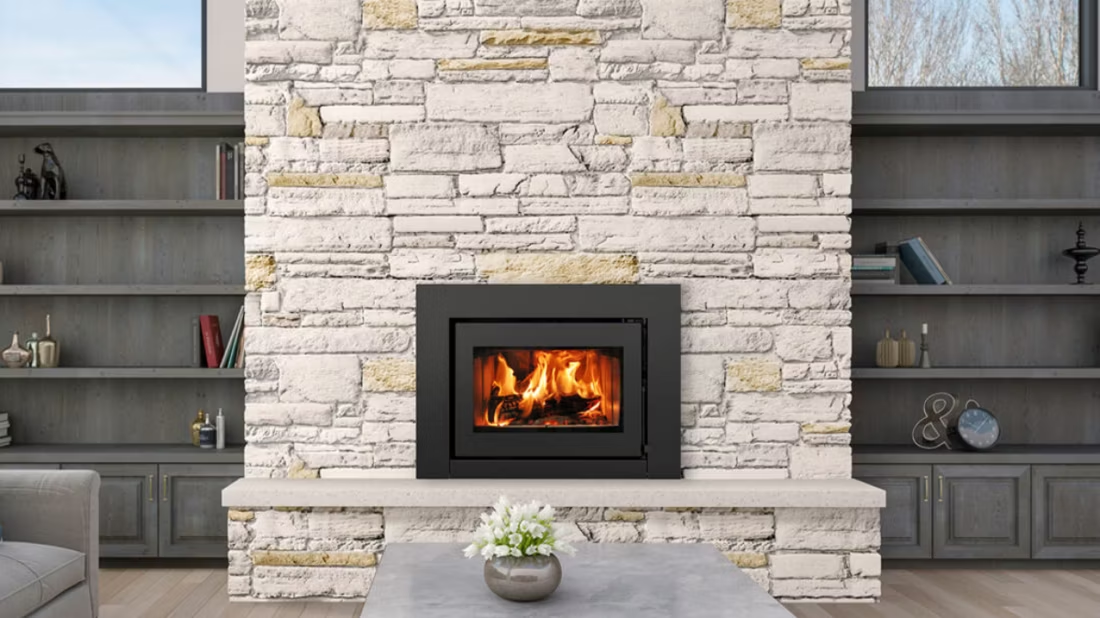
That said, wood still shows up in Terrebonne Parish for specific reasons. After major storms—Ida, Barry, and others that have hit south Louisiana hard—extended power outages are common, and a wood-burning fireplace or stove is one of the few heat sources that doesn't depend on the grid. Camp houses and hunting camps out toward the marsh, where electric service can be thin or seasonal, are another place wood still makes practical sense. And some homeowners simply want the look and feel of a real masonry or factory-built wood fireplace as a focal point, even if it's lit only a few nights a year. Local species like oak and pecan (both good, dense firewood) and cypress (abundant from bayou land clearing, though it burns fast and isn't the most efficient choice) are all available regionally if you go this route.
Three steps. No salesperson until you're ready.
Tell us about your project
Your zip code, your situation, and the fuel you're leaning toward—or let the answers point you to one.
See what's actually available
The brands dealers within 100 miles genuinely carry—real options, never a catalog mirage.
Get your dealer & Project Guide
A trusted local dealer, plus the free Project Guide & Parts List that names every component of the job.
Frequently Asked Questions
Does it actually make sense to install a wood-burning fireplace in Terrebonne Parish?
For most homes, no—not as a primary or even meaningful supplemental heat source. With an average winter low of 44°F and only a short, mild heating season overall, the parish simply doesn't get cold enough often enough to justify the investment on heating grounds alone. Where it does make sense: hurricane preparedness (wood heat and cooking that doesn't need electricity), camp houses along the bayou with limited utility service, and homeowners who want a real wood-burning fireplace purely for ambiance and occasional use. If your goal is efficient winter heating, a gas fireplace or your existing HVAC system is almost always the better fit for a Houma-area home.
What does a wood fireplace or stove installation cost in Terrebonne Parish?
Costs vary widely depending on whether you're adding a factory-built wood-burning fireplace to new construction, converting an existing masonry fireplace, or installing a freestanding stove for a camp house. Because wood installations are uncommon here, pricing isn't as standardized as it is for gas work in the parish, and Class A chimney venting through a home without an existing masonry chimney adds real cost. The best way to get an accurate number is an in-home consultation with a local dealer—that's exactly what our free Project Guide & Parts List is built to set up, with a parts list and vent kit specific to your home.
Why would anyone install a wood stove in a place that barely freezes?
The most common reason in Terrebonne Parish isn't daily heating—it's resilience. South Louisiana sees hurricane-related power outages that can stretch for days or longer, and a wood stove or fireplace keeps working when the grid doesn't, providing both heat and a way to cook. The second most common reason is camp houses and hunting camps in the marsh and bayou areas outside Houma, where utility hookups are limited or seasonal. Outside of those two cases, most homeowners here who want a wood-burning look go with a factory-built fireplace used occasionally rather than a heavy-duty cold-climate stove.
What wood species are available locally if I do install a wood-burning unit?
Oak and pecan are the two best options widely available around Terrebonne Parish—both are dense hardwoods that burn hot and long, which matters if you're relying on wood for hurricane backup heat rather than just ambiance. Cypress is abundant given the parish's swamp geography and often comes up during land clearing, but it burns faster and produces less sustained heat than oak or pecan, so it's better suited to kindling or short evening fires than an all-night burn. Given how infrequently most local units get used, well-seasoned oak or pecan is worth sourcing even if it takes a bit more effort to find than cypress.
Do I need a permit to install a wood-burning fireplace in Terrebonne Parish?
Yes—new wood-burning fireplace or stove installations typically require a building permit through Terrebonne Parish Consolidated Government's permitting office, covering structural, clearance, and venting requirements. Because these installs are uncommon in the parish, it's worth confirming with a local dealer that the installer is familiar with the current permitting process rather than assuming a contractor who mostly does gas or HVAC work has handled a wood venting inspection recently. A qualified local installer will pull the permit as part of the job.
What's the difference between a decorative wood fireplace and a stove meant for backup heat?
A decorative factory-built wood fireplace is designed primarily for the visual and ambiance of a real fire—it can put out real heat but isn't optimized for long, unattended burns. A wood stove, by contrast, is built around firebox efficiency and burn time, and a mid-size stove can genuinely heat a room or two for an extended stretch, which matters if you're counting on it during a multi-day power outage after a storm. If your priority in Terrebonne Parish is hurricane resilience rather than looks, a stove—even a modest one—will outperform a decorative fireplace for actual heat output per piece of wood burned.
Is a wood stove a good hurricane backup option for a Houma-area home?
It can be, with some caveats. A wood stove doesn't need electricity to produce heat or a flat surface to cook on, which is a genuine advantage after a storm knocks out power for days—something Terrebonne Parish has experienced repeatedly. The tradeoffs: you need dry, seasoned wood stored ahead of hurricane season (not always practical in a humid Gulf Coast climate), and the stove needs to be installed and vented correctly well before a storm, not as an emergency measure. For homes without an existing chimney, retrofitting venting adds cost and time. A generator paired with a gas fireplace is a more common backup solution in the parish, but a properly installed wood stove is a legitimate no-electricity alternative worth discussing with a local dealer.
How often does a rarely-used wood fireplace need chimney inspection in Terrebonne Parish?
Even a fireplace that only gets lit a handful of times a year should be inspected annually—the CSIA's standard recommendation doesn't change based on usage frequency, since Gulf Coast humidity can affect masonry and metal chimney components even when they're not actively venting a fire. Before hurricane season or before the first cool snap each year, whichever comes first for your household, is a reasonable time to schedule it. This matters more, not less, for occasionally-used units, since problems can go unnoticed for a full year between fires.
Wood vs. gas—which makes more sense for a Terrebonne Parish home?
For nearly all Houma-area homes, gas is the more practical choice. Gas fireplaces deliver instant heat with the flip of a switch, work well as a design centerpiece in a living space, and—with the right ignition system—can even operate during power outages using battery backup, without any wood storage or ash cleanup. Wood requires sourcing and drying oak or pecan firewood in a humid climate, offers heat output the parish rarely needs, and mainly earns its keep as a no-electricity option during extended hurricane outages or at a camp house off the grid. If you want year-round convenience and ambiance, go gas. If your priority is a heat source that works with zero utility dependence during storm season, wood is worth a serious look—just go in with clear eyes about how often it'll actually get used.
What's the difference between an insert and a zero-clearance fireplace?
An insert is a fireplace that slides into a pre-existing wood-burning fireplace—if you don't have one, there's nothing to insert it into. A zero-clearance fireplace is built into a framed wall, which makes it the answer for remodels and new construction. Simple test: existing masonry fireplace means insert; blank or framed wall means zero-clearance.
Why won't my new wood stove get going like my old one?
New wood stoves are 70%+ efficient, so far less heat goes up the flue—which also means less draft to get a fire established. The rule: build a genuinely hot fire for about 45 minutes before you choke it down. Skip that and you get smoke in the room, creosote in the chimney, and a fire that never takes off. Most performance complaints trace straight back to this.
What is an in-home preview and do I need one?
It's a visit where a hearth professional measures your space, confirms the model you picked actually works in your home, and walks the specs—framing, gas line, venting, finish work—before anything is ordered. Some details you just can't know until you see the house. Never make a down payment without one; it's the single most-skipped step that burns buyers.
Does a fireplace add value to my home?
On average, a fireplace adds back to the home about the same amount you spent installing it. Add the monthly savings from heating the rooms you actually use instead of the whole house—often hundreds of dollars a year—and the value case is strong before you even count what a fire does for how your family uses the room.
Stove and Fireplace Dealers in Terrebonne County
Listings include WhyFire partner dealers, dealers we have verified as authorized for the brands we recommend, and established local businesses that carry hearth products. Every listing shows which one it is. The ones marked Preferred run on WhyFire's software, so they can show you real pricing and book your appointment right here. No manufacturer pays for placement. How we verify dealers →
Antique Brick Company
The Brick Yard
Backyard Living Furniture
Economy Brick Sales
Find your wood fireplace fit in Terrebonne Parish.
Tell us about your home, your reason for wanting a wood-burning fireplace or stove—ambiance, camp house, hurricane backup—and we'll match you with a trusted local dealer and send you a free Project Guide & Parts List with the exact parts, vent kit, and installation plan for your Terrebonne Parish property.
Find Your Fireplace →