
Keep Your Family Warm and Safe—No Matter What
With mild winters and lows averaging 44°F, Houma doesn't need wood heat to survive winter. But for hurricane backup, camp cabins, and bayou ambiance, some homeowners still want one done right.
Every Project Starts From One of These Five Situations
Bayou Country Doesn't Need Wood Heat—But Some Homes Still Want It.
Houma sits at just 4 feet of elevation along Bayou Terrebonne in Louisiana's climate zone 2A, one of the mildest heating climates in the country. Houma's winter heating need is only a fraction of what a place like Duluth, MN or Fargo, ND sees in a single hard winter—those cities face long, brutally cold heating seasons. Winter lows here average 44°F, and hard freezes are the exception, not the pattern. That's exactly why we list wood as not-applicable for most Houma homes: a wood stove sized for a Northern Plains winter would be wildly oversized and impractical here.
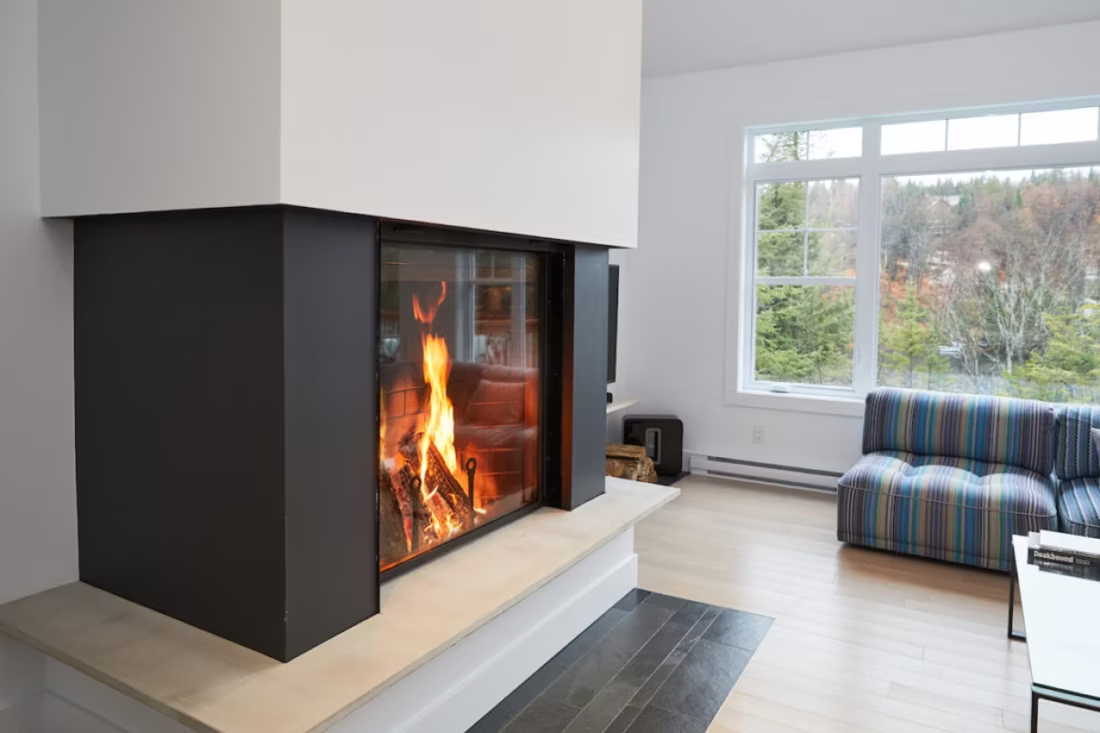
That said, a small number of Terrebonne Parish homeowners do install wood stoves or fireplaces—usually for reasons that have little to do with daily heating. Hurricane season brings real, extended power outages from Entergy Louisiana's grid, and a wood stove is one of the few heat sources that works with zero electricity. Others want a wood-burning unit for a camp or weekend cabin on the bayou, or simply for the ambiance of a real fire on the handful of genuinely cold nights each winter. Local hardwoods like oak and pecan burn well for that occasional use; cypress, while iconic to the region, tends to burn fast and sooty and is better suited to kindling or campfire aesthetics than sustained heat.
Three steps. No salesperson until you're ready.
Tell us about your project
Your zip code, your situation, and the fuel you're leaning toward—or let the answers point you to one.
See what's actually available
The brands dealers within 100 miles genuinely carry—real options, never a catalog mirage.
Get your dealer & Project Guide
A trusted local dealer, plus the free Project Guide & Parts List that names every component of the job.
Frequently Asked Questions
Does a wood stove even make sense in Houma's climate?
For most homes, no—not as a primary or even significant secondary heat source. Houma's mild winters, with lows averaging 44°F, mean the home's heating load is minimal most years, nothing like the demands of a cold-climate city. Where wood does make sense in Houma is as a specialty install: hurricane-season power backup, a hunting or fishing camp, or a homeowner who simply wants the look and feel of a wood fire a handful of nights a year. If that's your use case, a smaller EPA-certified stove sized for occasional burns is the right call, not a large cold-climate model.
Why would anyone install a wood stove in a place with mild winters?
The most common reason we hear from Terrebonne Parish homeowners is storm resilience. After hurricanes like Ida, parts of Houma went without Entergy Louisiana power for a week or more, and a wood-burning stove or fireplace is one of the only heat sources that doesn't depend on the grid or a fuel delivery. It won't run your AC, but on a cool post-storm night with no power, it's real heat and a place to boil water. Beyond that, camps and weekend cabins along the bayou, and homeowners who simply want the ambiance of a wood fire, make up most of the rest of the demand.
What kind of firewood is available locally in Houma?
Oak and pecan are the two hardwoods most commonly available and burned in the Houma area—both are dense enough to produce solid heat and a long-lasting bed of coals. Cypress is everywhere in the bayou landscape and often available cheaply or for the cutting, but it's a softer, resinous wood that burns fast and can be sooty, so it's better used for kindling, camp fires, or occasional ambiance burns than as your main fuel. If you're installing a stove for genuine backup heat, plan to source and season oak or pecan rather than relying on cypress alone.
How much does a wood stove or fireplace installation cost in Houma?
Because most Houma installs are smaller units for occasional or backup use rather than full-time heating systems, costs tend to run on the lower-to-middle end of the national range—typically $3,000 to $7,500 for a freestanding EPA-certified wood stove with Class A chimney venting through an exterior wall or roof. Converting an existing masonry fireplace to a wood-burning insert usually runs a bit higher once liner and venting work is factored in. A local dealer can confirm exact pricing once they've seen your home and venting path.
Do I need a permit to install a wood stove in Houma?
Yes—new wood-burning appliance installations require a building permit through the Terrebonne Parish Consolidated Government, which also reviews the work for compliance with the parish's hurricane-zone building codes covering wind load and, in some areas, flood elevation requirements for exterior venting and chimney penetrations. Most hearth retailers who install wood stoves in the parish handle the permit application as part of the job, so you typically won't need to file it yourself.
Are there air quality restrictions on wood burning in Houma?
No—Houma and Terrebonne Parish currently have no air quality non-attainment designations or routine wood-smoke restrictions, unlike some Western cities that impose winter burn curtailments. The one exception to watch for is temporary local burn bans that Terrebonne Parish officials sometimes issue after a hurricane, related to debris burning rather than home heating appliances—those don't apply to a properly installed wood stove or fireplace.
What's the best type of wood-burning unit for occasional, hurricane-backup use?
For Houma's use case—occasional burns plus reliable heat during power outages—a smaller freestanding EPA-certified wood stove is usually the better fit over a large cold-climate catalytic model built for 20-hour overnight burns. A stove in the 1,000-to-1,500-square-foot heating range is plenty for most Houma homes, and unlike a gas fireplace with electronic ignition, a wood stove lights and burns with zero electricity—a real advantage when Entergy Louisiana's grid is down after a storm. A local dealer can help you size a unit appropriately for a home that won't be burning it daily.
How often does a chimney need inspection in Houma's humid climate?
Annual inspection is still the right baseline, even for a stove used only occasionally, per Chimney Safety Institute of America guidance. Houma's high humidity and coastal salt air add a wrinkle Northern climates don't deal with as much: metal chimney components and chase flashing can corrode faster near the coast, and moisture intrusion into a wood-framed chimney chase can invite termites or rot between burns. If your stove sits unused for months at a time between hurricane season and the occasional cold snap, an inspection before each winter is worth the cost to catch any moisture or pest issues early.
Should I get a wood stove or a gas fireplace in Houma?
For most Houma homes, gas is the far more practical everyday choice—natural gas and propane service are widely available in Terrebonne Parish, and a gas fireplace gives you instant, thermostat-controlled heat without sourcing or storing firewood in a humid climate where seasoned wood can be hard to keep dry. Wood's real advantage is that it works without electricity, which matters specifically for hurricane-season backup heat. Some Houma homeowners end up with both: gas for daily ambiance and convenience, wood or a small stove set aside specifically for storm outages.
Why won't my new wood stove get going like my old one?
New wood stoves are 70%+ efficient, so far less heat goes up the flue—which also means less draft to get a fire established. The rule: build a genuinely hot fire for about 45 minutes before you choke it down. Skip that and you get smoke in the room, creosote in the chimney, and a fire that never takes off. Most performance complaints trace straight back to this.
Why is my open fireplace making my house colder?
Open fireplaces suck—literally. As the fire burns, it consumes air your furnace already paid to heat and pulls it out through the chimney, so the house is actually colder after the fire goes out than before you lit it. An insert fixes this: it seals the chimney, puts fixed glass across the front, and turns that hole in your house into a real heat source.
How much should I budget for a fireplace?
For an average home—covering the fireplace, the vent pipe, and basic installation—a budget between $3,900 and $5,500 gives you a lot of options across wood, gas, and pellet. By the time you add finish work, gas line, and electrical, the average complete installation lands between $5,000 and $12,000 all-in. In a remodel or new build, a good rule is to put about 2.5% of the total project cost toward the fireplace.
What is an in-home preview and do I need one?
It's a visit where a hearth professional measures your space, confirms the model you picked actually works in your home, and walks the specs—framing, gas line, venting, finish work—before anything is ordered. Some details you just can't know until you see the house. Never make a down payment without one; it's the single most-skipped step that burns buyers.
Nearby Dealers
Hearth shops serving Houma and the surrounding area. Every listing shows whether it is a WhyFire partner, a dealer we have verified as authorized for the brands we recommend, or a local business carrying hearth products. No manufacturer pays for placement. How we verify dealers →
Antique Brick Company
The Brick Yard
Backyard Living Furniture
Economy Brick Sales
Find your wood fireplace in Houma.
Tell us about your home and how you'd actually use a wood stove—daily ambiance, a camp, or hurricane backup—and we'll send a free Project Guide & Parts List with the right unit, vent kit, and a trusted local dealer in Terrebonne Parish.
Find Your Fireplace →