
Keep Your Family Warm and Safe—No Matter What
With winter lows averaging 44°F, Schriever doesn't need wood heat to survive the season—but some homes still want a real fire for ambiance or as backup when hurricane season knocks out the power.
Every Project Starts From One of These Five Situations
A fire for ambiance, not survival.
Schriever sits four feet above sea level in Terrebonne Parish's bayou country, in climate zone 2A, where the entire winter is mild and short, adding up to a modest heating season overall. Compare that to a place like Duluth, MN or Burlington, VT, where a single cold week can rack up more winter heating load than Schriever sees all season. Central heat pumps and electric resistance systems from providers like Entergy Louisiana handle nearly all of the modest heating load here, and there's no real climate argument for a wood stove as a primary heat source.
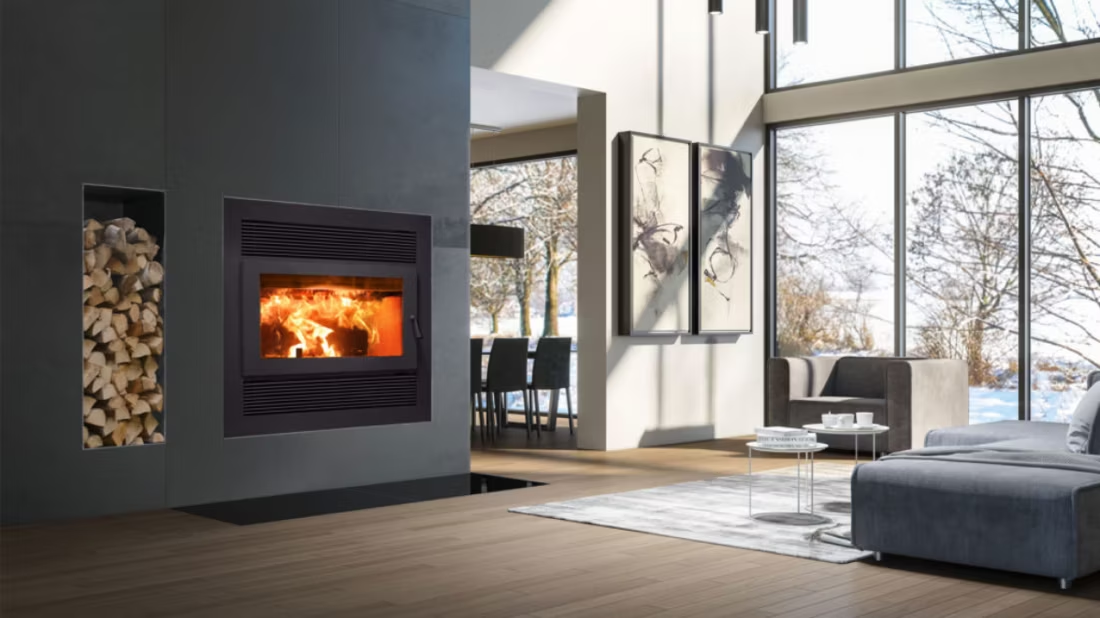
That doesn't mean wood fireplaces have disappeared. Some Schriever homeowners keep an existing masonry fireplace or add a small wood-burning insert for the occasional January cold snap, the smell and glow of a real fire around the holidays, or as no-electricity-required backup heat when a hurricane takes the grid down for days. Local firewood tends to be oak, pecan, and cypress—often salvaged from storm-damaged trees—though the Gulf Coast humidity means dry, elevated storage is essential to keep it from rotting or drawing termites before it ever reaches the firebox.
Three steps. No salesperson until you're ready.
Tell us about your project
Your zip code, your situation, and the fuel you're leaning toward—or let the answers point you to one.
See what's actually available
The brands dealers within 100 miles genuinely carry—real options, never a catalog mirage.
Get your dealer & Project Guide
A trusted local dealer, plus the free Project Guide & Parts List that names every component of the job.
Frequently Asked Questions
Does it actually make sense to install a wood stove in Schriever?
For most homes, no—not as a primary heat source. With winter lows averaging 44°F and only a modest heating season each year, electric heat and mini-splits already cover the region's modest heating needs efficiently and cheaply. Where a wood stove or insert does make sense is as a secondary system: backup heat during hurricane-season outages, or a real fire for a den or camp house where ambiance matters more than BTUs. Be honest with yourself about which need you're solving before you invest in one.
What does a wood fireplace or insert cost to install near Schriever?
Because wood-burning demand is low in this part of Terrebonne Parish, most hearth dealers here focus their inventory on gas and electric units, and wood stoves or inserts are often special-order. Expect a wider quote range as a result—commonly $3,500 to $8,000 for a basic freestanding stove or insert with venting, and more if your home has no existing chimney and needs new Class A pipe run through the roof. A dealer serving the Houma-Thibodaux area can give you a firm number once they've seen your fireplace or wall setup.
Can a wood stove serve as backup heat during a hurricane power outage?
Yes, and it's the strongest practical argument for one in Schriever. Unlike a pellet stove, which needs electricity to run its auger and blower, a properly installed wood stove or fireplace insert can produce real heat with zero grid power—useful when Entergy Louisiana, South Louisiana Electric Cooperative, or the local co-op takes days to restore service after a storm. If backup heat is your main reason for considering wood, prioritize a model that doesn't rely on a blower fan to move meaningful heat into the room.
What firewood is available locally, and how should I store it?
Oak, pecan, and cypress are the most common species around Terrebonne Parish, and a lot of local firewood comes from storm-damaged or downed trees after hurricane season rather than commercial cutting operations. The bigger issue here isn't supply—it's storage. Gulf Coast humidity means wood left on the ground or under a loose tarp can start rotting or drawing termites within a season. Stack it on a raised rack, keep it covered on top with the sides open for airflow, and season it longer than you would in a drier climate before burning it.
Do I need a permit to install a wood stove in Schriever?
Most new wood-burning installations require a building permit through the Terrebonne Parish Consolidated Government, primarily to confirm proper clearances and venting through the roof or wall. It's a straightforward process compared to jurisdictions dealing with wildfire smoke or winter inversions—Terrebonne Parish has no air quality non-attainment designation, so there's no curtailment schedule or burn-ban season to navigate here. A local installer will typically handle the permit paperwork as part of the job.
Are there any air quality restrictions on burning wood in Schriever?
No—Terrebonne Parish doesn't have the winter inversion or non-attainment issues that trigger burn curtailments in places like the Pacific Northwest or interior mountain West. There are no mandatory no-burn days tied to air quality here. The main practical limits are courtesy-related—smoke drifting toward neighbors in a dense subdivision—rather than any regulatory restriction.
Should I get a wood stove or just rely on an electric fireplace for extra warmth?
For most Schriever homes, an electric fireplace or space heater is the more sensible choice for everyday supplemental warmth—installation runs a few hundred dollars, there's no chimney or venting to maintain, and at local residential rates (roughly 11 to 13 cents per kWh depending on whether you're served by Entergy Louisiana, South Louisiana Electric Cooperative, or the parish utility), running one on a cool evening costs pennies. Wood only pulls ahead if your real priority is heat that works when the grid doesn't—which, in hurricane country, is a legitimate reason some homeowners choose it anyway.
Where can I find a dealer who installs wood stoves near Schriever?
Because full-time wood-burning demand is thin this close to the coast, dedicated wood-stove specialists are harder to find right in Schriever—most are based farther out in Houma, Thibodaux, or the greater New Orleans area and serve Terrebonne Parish as part of their coverage territory. Whoever installs your unit should be comfortable with humid-climate venting details (corrosion-resistant chimney components matter more here than inland) and pulling the parish building permit. We match you with a trusted dealer who actually covers Schriever rather than one who'll quote the job and disappear.
Wood vs. gas—which fits a Schriever home better?
For nearly all Schriever homes, gas is the more practical everyday choice—it lights instantly, needs no fuel storage, and doesn't demand humidity-proof firewood management. A gas fireplace or insert, run on propane where natural gas isn't available, handles ambiance and mild-winter supplemental heat with far less upkeep. Wood only makes sense if you specifically want a fire that runs without electricity during hurricane outages, or you simply prefer the experience of a real wood fire over a gas flame. Some homeowners here end up with both—gas for daily use, a small wood setup for backup and character.
Why is a fireplace insert so efficient?
An insert does two things: it seals the chimney completely, so you stop losing air you already paid to heat, and it radiates warmth into the room through the firebox and glass. Most add a heat-exchange fan that pulls cool room air underneath, wraps it around the hot firebox, and pushes it back out warm. Your home is more efficient before you've even lit the first fire.
Why won't my new wood stove get going like my old one?
New wood stoves are 70%+ efficient, so far less heat goes up the flue—which also means less draft to get a fire established. The rule: build a genuinely hot fire for about 45 minutes before you choke it down. Skip that and you get smoke in the room, creosote in the chimney, and a fire that never takes off. Most performance complaints trace straight back to this.
Can a fireplace actually lower my heating bill?
Yes—by creating a comfort zone. A furnace heats every square foot of the house just to warm the one room you're in; a gas fireplace on low burns roughly a sixth of the gas a typical furnace does. Set the furnace around 55–60 degrees as a baseline, then heat the rooms your family actually uses. Families who heat this way commonly save $20–$60 a month.
How much should I budget for a fireplace?
For an average home—covering the fireplace, the vent pipe, and basic installation—a budget between $3,900 and $5,500 gives you a lot of options across wood, gas, and pellet. By the time you add finish work, gas line, and electrical, the average complete installation lands between $5,000 and $12,000 all-in. In a remodel or new build, a good rule is to put about 2.5% of the total project cost toward the fireplace.
Nearby Dealers
Hearth shops serving Schriever and the surrounding area. Every listing shows whether it is a WhyFire partner, a dealer we have verified as authorized for the brands we recommend, or a local business carrying hearth products. No manufacturer pays for placement. How we verify dealers →
The Brick Yard
Antique Brick Company
Economy Brick Sales
See if a wood fireplace makes sense for your Schriever home.
Tell us about your home and how you'd actually use it—ambiance, hurricane backup, or both—and we'll send a free Project Guide & Parts List with the right equipment, vent kit, and a trusted local dealer who covers Schriever.
Find Your Fireplace →