
Keep Your Family Warm and Safe—No Matter What
With winter lows averaging 43°F and only 1,342 heating degree days a year, most St. James Parish homes run on gas or electric heat. For the historic hearths of River Road and homeowners who simply want a wood fire on a cold front, we'll connect you with a local installer who knows what actually works here.
Every Project Starts From One of These Five Situations
A climate where wood heat is the exception, not the rule.
St. James Parish sits in climate zone 2A along the Mississippi River between Baton Rouge and New Orleans—sugarcane fields, petrochemical plants, and plantation-era towns like Vacherie, Convent, Lutcher, and Gramercy strung along River Road. With only about 1,342 heating degree days a year and winter lows that average 43°F, the parish's heating math looks nothing like a place such as Duluth, Minnesota, where homeowners lean on a wood stove for weeks of subzero nights. Here, a cold front that drops into the 20s for a night or two is the exception, not a season-long reality—which is why gas and electric systems, not wood, carry the heating load in most parish homes.
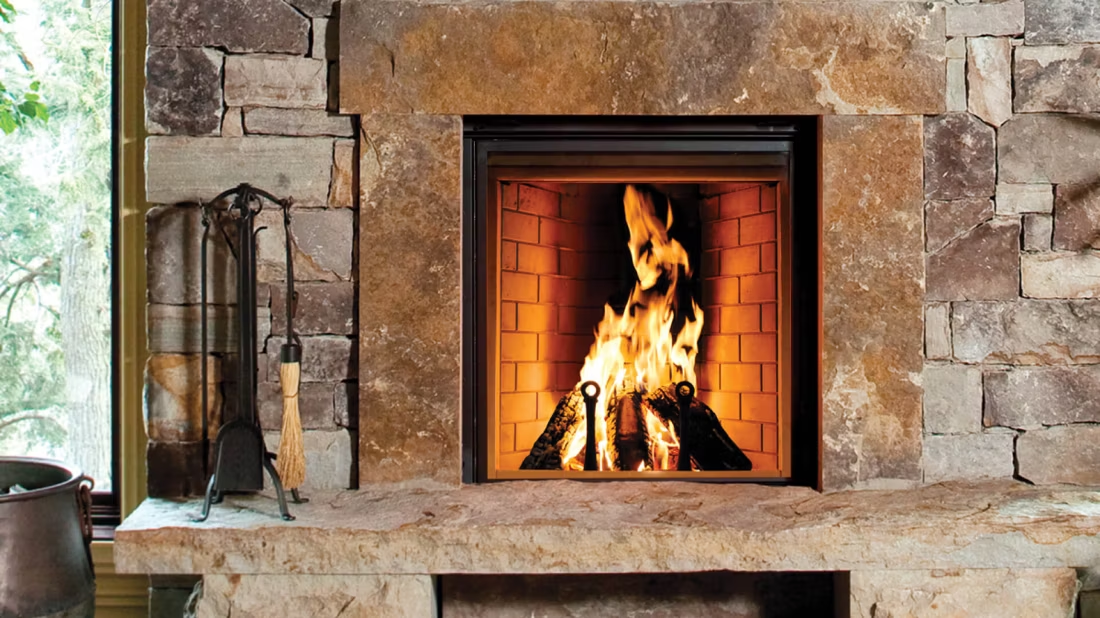
That said, wood hasn't disappeared from the parish entirely. Many of the older homes along River Road—plantation houses and Creole cottages in Vacherie and Convent especially—were built with masonry fireplaces meant to burn local oak, pecan, or cypress, and homeowners restoring those properties often want the hearth working again, even if it's lit a handful of nights a year. With no air quality restrictions or winter inversion concerns in St. James Parish, there's no regulatory barrier to burning wood here the way there is in some Western non-attainment counties—it's simply a matter of finding an installer who still does this kind of work in a market where gas dominates the calls.
Three steps. No salesperson until you're ready.
Tell us about your project
Your zip code, your situation, and the fuel you're leaning toward—or let the answers point you to one.
See what's actually available
The brands dealers within 100 miles genuinely carry—real options, never a catalog mirage.
Get your dealer & Project Guide
A trusted local dealer, plus the free Project Guide & Parts List that names every component of the job.
Frequently Asked Questions
How much does a wood stove or fireplace installation cost in St. James Parish?
Because wood-burning installs are uncommon in St. James Parish, most work is done by hearth companies based out of Gonzales, LaPlace, or the greater Baton Rouge and New Orleans metro who occasionally take on a wood project alongside their regular gas and electric business. Expect a range similar to the broader Gulf South market—roughly $3,500 to $8,500 depending on whether you're restoring an existing masonry fireplace, installing a wood insert, or venting a new freestanding stove through a wall or roof. Homes without an existing chimney will sit at the higher end once Class A pipe and roof penetration are factored in.
Do I really need a full-size wood stove for a St. James Parish home?
Almost never. With average winter lows of 43°F and just 1,342 heating degree days a year, a large stove sized for primary heat is overkill—it will smolder, produce excess creosote, and run far hotter than the room needs. Most parish homeowners who install wood heat are after a small to mid-size stove or insert for occasional use during the handful of nights each winter that dip into the 20s and 30s, plus the ambiance of a real fire the rest of the season. A local installer can size a unit for supplemental, occasional-use burning rather than the all-winter workhorse sizing you'd see further north.
Where can I find a wood stove installer near St. James Parish?
Wood-burning specialists are thin on the ground in St. James Parish itself—most local hearth retailers focus their inventory on gas logs, gas inserts, and electric fireplaces, which reflects what actually sells here. For a wood stove, insert, or masonry fireplace restoration, plan on working with an installer who travels in from the Baton Rouge, Gonzales, or River Parishes area and handles wood installs as part of a broader hearth business. Ask specifically about NFI or CSIA certification for wood-burning work, since that's a smaller slice of what most local companies do day to day.
I have an old masonry fireplace in my River Road home—can it still be used for wood?
Often, yes, but it needs an inspection first. Many of the historic homes in Vacherie and Convent have original masonry fireboxes and chimneys built decades ago, and years of disuse, humidity, or minor settling can leave a flue unsafe to burn in without repair. A chimney sweep can run a Level 2 camera inspection to check the flue liner, mortar joints, and clearances. From there, either the original masonry can be brought back into safe service, or a wood-burning insert can be installed inside it—which also improves heat output dramatically over an open hearth designed more for looks than efficiency.
Do I need a permit to install a wood stove in St. James Parish?
Yes—new wood-burning installations require a building permit through St. James Parish Permits & Inspections, and any new stove sold must meet current EPA 2020 NSPS emissions standards regardless of how often it's likely to be used. There are no air quality curtailment periods or burn bans in the parish like you'd find in Western non-attainment counties, so once the install passes inspection, you're free to burn on your own schedule—including the occasional cold night when the rest of the region is watching a hard freeze warning.
What's the best wood stove for occasional use in a Gulf Coast climate?
For a St. James Parish home, skip the long-burn catalytic stoves built for holding a fire 20 hours through a Northern winter night—you don't need that here. A small to mid-size non-catalytic stove or a wood insert from a brand like Pacific Energy or Lopi is a better fit: easier to light for occasional use, less finicky about draft on a warm, humid Gulf Coast day, and sized right for supplemental heat rather than round-the-clock operation. If you're restoring a historic masonry fireplace, an insert is usually the more practical choice since it uses the flue you already have.
How often does my chimney need to be inspected if I only burn a few times a year?
Even light, occasional use warrants an annual check in St. James Parish's climate—not because of heavy creosote buildup, which is unlikely with infrequent burning, but because of Gulf Coast humidity. A flue that sits unused most of the year can develop moisture damage, mortar deterioration, or nesting animals between burns. An annual Level 1 inspection before the first cool front of the season catches those issues before they become a safety problem, and it's a quick, inexpensive check compared to the cost of repairing water-damaged masonry.
Where can I get firewood in St. James Parish?
Local supply is limited compared to wood-heavy regions, but it exists. Oak, pecan, and cypress are the common species cut locally, often from tree removal work or land clearing along River Road properties rather than dedicated firewood operations. Because demand is low, don't expect the seasoned-cord delivery infrastructure you'd find in a heavy wood-heat market—many parish homeowners buy smaller quantities from local sellers or arrange pickup directly from a tree service, and it's worth planning ahead of the first cold front rather than waiting until you need it.
Should I install wood heat or just go with gas in St. James Parish?
For most St. James Parish homes, gas is the more practical choice—it's the standard fuel here, lights instantly, needs no wood handling, and matches a climate where you might only want supplemental heat a handful of nights a year. Wood makes sense mainly for two situations: restoring a historic masonry fireplace on a River Road property where keeping the original hearth functional matters, or homeowners who simply want the experience and ambiance of a real wood fire regardless of how often the parish actually needs the heat. If backup heat during a power outage matters to you, wood has an edge since it needs no electricity—otherwise, gas is the fuel doing the real work in this climate.
Why is my open fireplace making my house colder?
Open fireplaces suck—literally. As the fire burns, it consumes air your furnace already paid to heat and pulls it out through the chimney, so the house is actually colder after the fire goes out than before you lit it. An insert fixes this: it seals the chimney, puts fixed glass across the front, and turns that hole in your house into a real heat source.
What's the difference between an insert and a zero-clearance fireplace?
An insert is a fireplace that slides into a pre-existing wood-burning fireplace—if you don't have one, there's nothing to insert it into. A zero-clearance fireplace is built into a framed wall, which makes it the answer for remodels and new construction. Simple test: existing masonry fireplace means insert; blank or framed wall means zero-clearance.
Can a fireplace actually lower my heating bill?
Yes—by creating a comfort zone. A furnace heats every square foot of the house just to warm the one room you're in; a gas fireplace on low burns roughly a sixth of the gas a typical furnace does. Set the furnace around 55–60 degrees as a baseline, then heat the rooms your family actually uses. Families who heat this way commonly save $20–$60 a month.
What is an in-home preview and do I need one?
It's a visit where a hearth professional measures your space, confirms the model you picked actually works in your home, and walks the specs—framing, gas line, venting, finish work—before anything is ordered. Some details you just can't know until you see the house. Never make a down payment without one; it's the single most-skipped step that burns buyers.
Find your wood fireplace in St. James Parish.
Tell us about your home—including whether you're restoring an existing masonry fireplace or starting from scratch—and we'll match you with a local dealer who still works with wood, plus a free Project Guide & Parts List with the exact parts, vent kit, and installer recommendation for your project.
Find Your Fireplace →