
Fireplace ambiance for a parish where winter barely knocks twice.
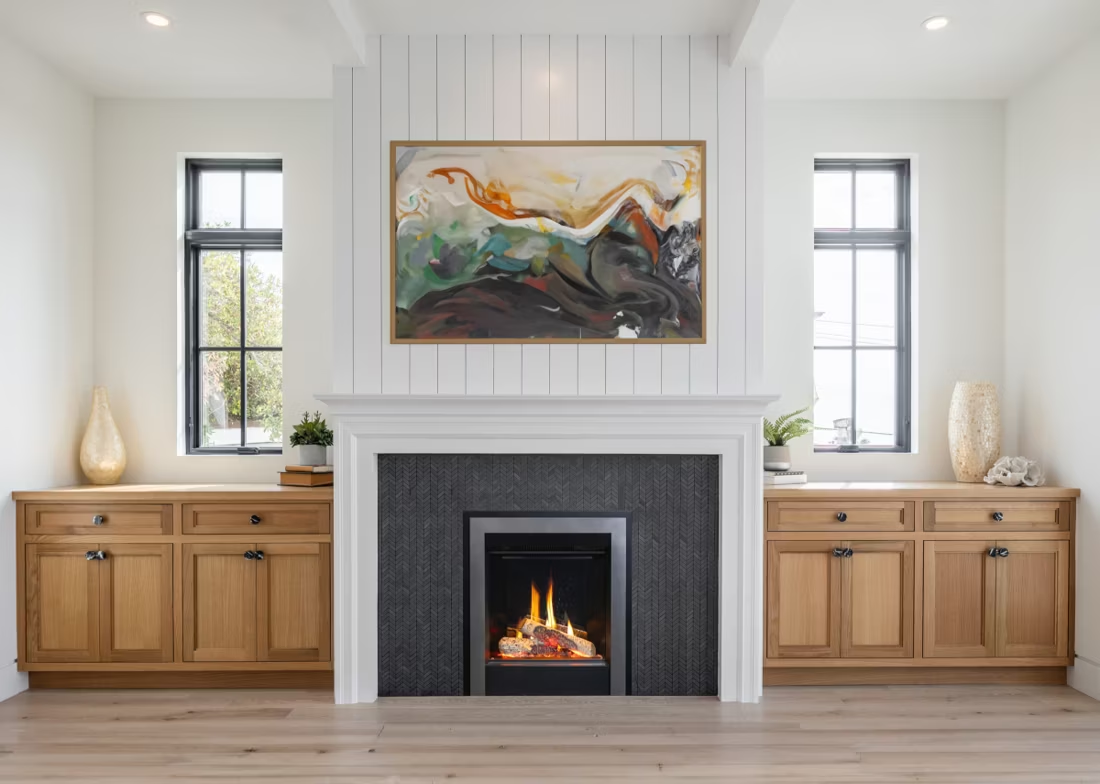
With only a short, mild heating season and winter lows averaging 43°F, St. James Parish homes—from Vacherie and Convent to Lutcher, Gramercy, and the town of St. James—rarely need serious heat. A no-vent electric fireplace or insert delivers the look and warmth on the nights you actually want it, matched with a local dealer who installs it right.
Every Project Starts From One of These Five Situations
In St. James Parish, the climate does most of the heating already.
St. James Parish sits along the Mississippi River between Baton Rouge and New Orleans, in a hot-humid Zone 2A climate where the winter heating load is a fraction of what a place like Fargo, ND or Duluth, MN racks up in a single winter. Homes along River Road in Vacherie—including the raised Creole cottages near Oak Alley—and in Convent, Lutcher, Gramercy, and St. James rarely see anything colder than the low 40s. A fireplace here is doing a different job than one in a cold-climate state: it's about ambiance and the occasional cold front, not carrying the house through a hard winter.
That's exactly why electric has become the practical standard for this parish. Wood and pellet stoves are not-applicable in any meaningful volume here—humidity and termite pressure make stored firewood a headache, and most of the parish's historic homes were never built around a working solid-fuel chimney. Gas fireplaces and propane inserts remain a solid standard option for homeowners who want more heat output during a January cold snap, but electric units need no venting, no fuel storage, and no combustion permit—just a licensed electrician and, in most cases, a standard outlet on Entergy Louisiana or South Louisiana Electric Cooperative Association (SLECA) service, whichever runs to your address.
Three steps. No salesperson until you're ready.
Tell us about your project
Your zip code, your situation, and the fuel you're leaning toward—or let the answers point you to one.
See what's actually available
The brands dealers within 100 miles genuinely carry—real options, never a catalog mirage.
Get your dealer & Project Guide
A trusted local dealer, plus the free Project Guide & Parts List that names every component of the job.
Frequently Asked Questions
How much does an electric fireplace installation cost in St. James Parish?
Plug-in freestanding electric fireplaces and stoves typically run $200 to $800 for the unit itself, with no professional installation required beyond plugging into an existing outlet. Built-in wall units or mantel packages that require a licensed electrician to run a dedicated circuit generally cost $1,500 to $4,000 installed, depending on the unit's size and how much wiring work is involved. Homes on Entergy Louisiana service and homes on SLECA cooperative service both handle standard 120V or 240V electric fireplace loads without issue, but your electrician should confirm panel capacity before a built-in install.
What's the difference between an electric fireplace, insert, and stove?
An electric fireplace is typically a built-in wall unit or a mantel-surround package designed for a living room focal point in newer construction. An electric insert is a drop-in unit sized to slot into an existing masonry firebox—a common fit for the older Creole cottages and raised homes around Vacherie and Convent that have a fireplace opening but no working chimney flue anymore. An electric stove is a freestanding cabinet styled to look like a traditional wood stove, useful when you want the aesthetic without venting or clearance requirements. For most St. James Parish homes with an unused masonry firebox, an insert is the simplest way to bring that fireplace back to life.
Do I need a permit to install an electric fireplace in St. James Parish?
A plug-in electric fireplace or stove that runs off an existing outlet generally doesn't require a permit. A built-in electric fireplace wired to a new dedicated circuit typically does require an electrical permit through the St. James Parish building permit office, and the work should be done by a licensed electrician familiar with local code. Because there's no combustion and no chimney or vent pipe involved, electric installs avoid the building-permit complexity that comes with gas or wood projects in the parish.
Will my electric fireplace work during a power outage?
No—an electric fireplace needs grid power to run, and that's worth planning around in a parish that has felt real hurricane-driven outages in recent years, including extended ones after storms like Ida. If backup heat during a storm-related outage matters to you, some homeowners pair an electric fireplace for everyday ambiance with a portable generator, or choose a propane unit for one room as a fuel-independent backup. For day-to-day use in normal weather, that limitation rarely comes up given how mild the parish's winters run.
What size or heat output do I need for my St. James Parish home?
With winter lows averaging 43°F and only a short, mild heating season each year, most St. James Parish homeowners don't need a unit built for serious heat output—this isn't a climate where you're fighting single-digit nights like you would in Bismarck, ND. A 1,500- to 4,600-BTU electric fireplace or insert is plenty to take the chill off a room during a January or February cold front, and most people here are choosing a unit primarily for the flame effect and ambiance. Larger heat settings matter more if you're heating a detached space like a camp or a garage conversion without central air conditioning's heat-pump backup.
Is an electric fireplace a good fit for St. James Parish's humidity?
Yes, and it's part of why electric has become the default choice here. There's no combustion, no flue, and no wood to store—which sidesteps the mold and mildew issues that come with keeping firewood in a subtropical, high-humidity parish, and avoids indoor air quality concerns some homeowners raise about vent-free gas units. A sealed electric unit doesn't interact with your home's humidity or air handling at all, which fits well with the sealed, air-conditioned building envelope most St. James Parish homes are built around.
Electric vs. gas—which is right for my home?
Gas fireplaces and propane inserts remain a standard option in St. James Parish and deliver more real heat output for the occasional hard cold front, which matters if you want a room to noticeably warm up rather than just glow. Electric skips the propane tank or gas line entirely, installs faster, and has no combustion byproducts to vent—which is why it's become the go-to for homeowners who want fireplace ambiance without adding a fuel system to the house. If you already have natural gas or propane at the property and want backup heat that works without electricity, gas is worth a look; if simplicity and low maintenance are the priority, electric is usually the better fit.
Why don't wood or pellet stoves make sense in St. James Parish?
Wood and pellet stoves are largely not-applicable in this parish, and it's worth being upfront about why. The humidity that comes with a Zone 2A river climate makes stored firewood prone to mold, and termite pressure discourages keeping woodpiles near the house. Most of the parish's historic Creole cottages and raised homes were built with decorative fireboxes rather than chimneys designed for regular solid-fuel burning, and there's minimal local demand or dealer support for wood or pellet appliances as a result. Interestingly, Louisiana pellet producers like Lignetics, Hamer Pellet Fuel, and Greenway Renewable Energy operate regionally—but their output goes mostly to export and industrial markets, not residential heating in parishes like this one, where the climate simply doesn't call for it.
What electrical service do I need for a built-in electric fireplace?
Most of St. James Parish is served by Entergy Louisiana, with South Louisiana Electric Cooperative Association (SLECA) covering some of the more rural sections of the parish. Either provider supplies standard 120V and 240V residential service that handles typical electric fireplace loads without upgrades. A plug-in unit just needs a standard outlet; a larger built-in wall unit may call for a dedicated 20-amp circuit, which your electrician can confirm your panel supports during an in-home consultation.
Can I put a TV above my fireplace?
Yes—with an asterisk. Fireplaces are hot and TVs don't like heat. Either put a mantel between them to deflect rising warmth, or choose a fireplace with heat-management technology that creates a cool zone on the wall above—the wall stays around 125 degrees, barely warm, while the room still gets full heat. If you like clean lines and don't want a mantel, heat management is the answer.
What fireplace styles should I know before shopping?
Four cover most of the market: screen-front traditional (mesh front, open feel, fits craftsman homes), traditional door set (the classic look you grew up with), modern linear (wide, low, the statement piece for entertaining), and clean face contemporary (no trim—your tile or stone runs right to the fire's edge). Walk in knowing those four terms and you're ahead of most buyers.
What is an in-home preview and do I need one?
It's a visit where a hearth professional measures your space, confirms the model you picked actually works in your home, and walks the specs—framing, gas line, venting, finish work—before anything is ordered. Some details you just can't know until you see the house. Never make a down payment without one; it's the single most-skipped step that burns buyers.
Can I install a fireplace myself?
If you're putting a fire in your house on purpose, it's best to work with an expert. Unless you're genuinely experienced in framing, gas line, vent pipe, and the national code on clearances to combustibles, have a professional do it—and ideally the same company that sells you the fireplace, so warranty, service, and liability all live under one roof.
Find your electric fireplace in St. James Parish.
Tell us a bit about your home and we'll match you with a trusted local St. James Parish dealer and send over a free Project Guide & Parts List—the exact unit, mounting or insert parts, and electrical requirements for your space.
Find Your Fireplace →