
Find the Right Fireplace for St. James Parish's Mild Louisiana Winters.
Fireplace resources for St. James Parish's low-heating-demand climate—from Convent to Vacherie, Lutcher to Gramercy. Real talk on where wood and pellet still fit, and a connection to a trusted local hearth retailer.
Every Project Starts From One of These Five Situations
Warm, Humid Winters Along the Mississippi River.
St. James Parish sits along the Mississippi River between Baton Rouge and New Orleans, in a climate zone (2A) built for cooling load, not heating. The parish has a very short, mild heating season and an average winter low around 43°F—a fraction of the demand seen in a place like Fargo, ND, which has a long, brutal winter heating season lasting most of the year. That difference matters for what actually gets installed here: catalytic wood stoves and pellet hoppers built for 20-hour overnight burns just don't have a job to do in a parish where hard freezes are the exception, not the rule.
That said, the parish still has real hearth culture—it's just shaped by ambiance more than survival heat. The live oaks at Oak Alley Plantation in Vacherie are a reminder of how much oak grows in this part of Louisiana, and homeowners here who do burn wood are usually burning oak, pecan, or cypress in an open masonry fireplace on a rare cold front, not running a stove as a primary heat source. This hub covers gas and electric fireplaces—the two fuels that actually make sense for St. James Parish's climate—plus honest notes on where wood and pellet still show up, for every community from Convent to Paulina to Gramercy.
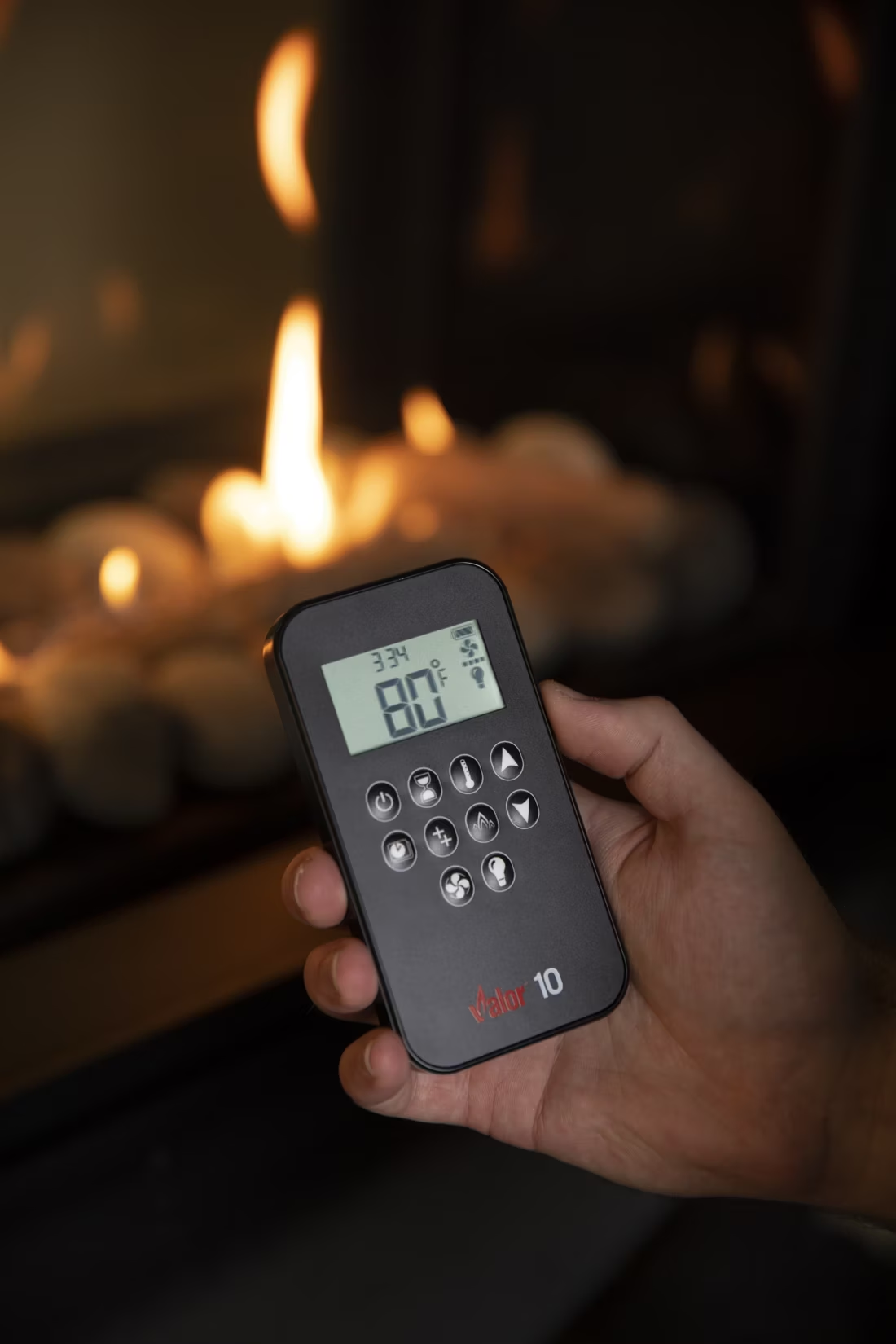
Four fuels. One honest answer for St. James County.
Three steps. No salesperson until you're ready.
Tell us about your project
Your zip code, your situation, and the fuel you're leaning toward—or let the answers point you to one.
See what's actually available
The brands dealers within 100 miles genuinely carry—real options, never a catalog mirage.
Get your dealer & Project Guide
A trusted local dealer, plus the free Project Guide & Parts List that names every component of the job.
Frequently Asked Questions
Which fuel actually makes sense for a home in St. James Parish?
Gas and electric are the two fuels that fit this climate. With an average winter low around 43°F and only a short, mild heating season each year, St. James Parish never generates the sustained cold that makes wood or pellet heat worth the investment—for comparison, Fargo, ND has a long, brutal winter heating season lasting most of the year. A direct-vent gas fireplace gives you real flame and instant heat on the handful of cold nights each winter without any of the maintenance a wood system demands in a humid climate. Electric fireplaces are a strong fit too—no venting required, no moisture concerns from an unused flue, and enough supplemental warmth for a bedroom or den. Wood fireplaces still exist in older homes and plantation-style properties near Vacherie, but they're used for atmosphere on the occasional cold front, not as a heating strategy.
Do I need a permit to install a fireplace in St. James Parish?
In most cases, yes. Gas fireplace and insert installations require a gas line permit and licensed gas-fitter work for the connection, plus a general building permit for the unit itself, handled through the parish permitting office. Electric fireplaces are typically permit-free for plug-in units, but a built-in electric fireplace that requires a new dedicated circuit needs an electrical permit. Any wood-burning masonry fireplace repair or new construction also goes through the parish building department. Most local hearth retailers pull these permits as part of the installation quote, so homeowners rarely have to navigate the paperwork alone.
Are wood-burning fireplaces still installed in St. James Parish?
Rarely as new installations, though plenty of existing homes have them. Given the parish's mild climate—average winter lows in the low 40s and a heating season that barely runs a few weeks a year—a wood stove or insert doesn't pencil out as primary heat the way it would somewhere like Duluth, MN. Where wood does show up is decorative: open masonry fireplaces in older River Road homes, often burning local oak, pecan, or cypress for a handful of cold-front evenings each winter. If you're restoring an existing wood fireplace rather than adding new heat capacity, a local retailer can still help with liner inspection, damper repair, and code compliance—it's just a different conversation than a heating-focused install.
What about pellet stoves—are they an option here?
Pellet stoves are uncommon in St. James Parish for the same reason wood stoves are—there's not enough sustained cold to justify the hopper-and-auger system as a heating appliance. Regional pellet brands like Lignetics, Hamer Pellet Fuel, and Greenway Renewable Energy do distribute into Louisiana, but that supply chain is serving demand further north and west in the state, not the River Parishes. If you're set on a pellet appliance for aesthetic reasons, it's worth talking to a local dealer first about whether a gas or electric unit would give you the same visual with far less maintenance in this humid climate.
Can one local retailer handle both gas and electric fireplaces?
Yes—most hearth retailers serving St. James Parish carry both gas and electric lines, since those are the two fuels with real local demand. That's actually an advantage for homeowners here: you can compare a direct-vent gas insert against a built-in electric unit side by side in the same showroom and get a straight answer about which fits your home's existing chimney, or lack of one. A retailer who also happens to stock wood-burning displays can speak to that niche too, but expect the bulk of their business—and their strongest installation experience—to be in gas and electric.
What's the typical cost range for fireplace installation in St. James Parish?
Gas fireplace, insert, or stove: roughly $4,000–$9,500 depending on whether new gas line work is required or an existing line is being tapped. Electric fireplace: $200–$2,800 for the unit itself, with $300–$1,000 in labor for anything beyond a plug-and-play install—that covers most wall-mount and insert projects. Wood fireplace repair or masonry work on an existing chimney: highly variable, often $1,500–$6,000 depending on liner condition and damper access. Because gas and electric make up the bulk of installations here, most local retailers can quote those two fuels quickly; wood-related work tends to be priced as a custom repair job.
Does a fireplace add value to my home?
On average, a fireplace adds back to the home about the same amount you spent installing it. Add the monthly savings from heating the rooms you actually use instead of the whole house—often hundreds of dollars a year—and the value case is strong before you even count what a fire does for how your family uses the room.
What is an in-home preview and do I need one?
It's a visit where a hearth professional measures your space, confirms the model you picked actually works in your home, and walks the specs—framing, gas line, venting, finish work—before anything is ordered. Some details you just can't know until you see the house. Never make a down payment without one; it's the single most-skipped step that burns buyers.
Can a fireplace actually lower my heating bill?
Yes—by creating a comfort zone. A furnace heats every square foot of the house just to warm the one room you're in; a gas fireplace on low burns roughly a sixth of the gas a typical furnace does. Set the furnace around 55–60 degrees as a baseline, then heat the rooms your family actually uses. Families who heat this way commonly save $20–$60 a month.
Can I install a fireplace myself?
If you're putting a fire in your house on purpose, it's best to work with an expert. Unless you're genuinely experienced in framing, gas line, vent pipe, and the national code on clearances to combustibles, have a professional do it—and ideally the same company that sells you the fireplace, so warranty, service, and liability all live under one roof.
Stove and Fireplace Dealers in St. James County
Listings include WhyFire partner dealers, dealers we have verified as authorized for the brands we recommend, and established local businesses that carry hearth products. Every listing shows which one it is. The ones marked Preferred run on WhyFire's software, so they can show you real pricing and book your appointment right here. No manufacturer pays for placement. How we verify dealers →
Economy Brick Sales
The Brick Yard
Antique Brick Company
Woodburners, Inc
Backyard Living Furniture
Lacox Propane Gas Co., Inc.
Acoustical Spec & Supply
Get Matched With a St. James Parish Hearth Dealer.
Tell us about your home and which fuel makes sense—gas or electric, for most of the parish—and we'll match you with a trusted local dealer and send a free Project Guide & Parts List: the exact parts, including the vent kit, for your project in St. James Parish.
Find Your Fireplace →