
See if a pellet stove makes sense for your Jefferson Parish home.
With winter lows averaging 46°F and a light winter heating load overall, most Jefferson Parish homes never need supplemental heat at all. If you're still curious about a pellet stove—for a camp, a den, or the rare hard freeze—we'll connect you with a trusted local dealer who can tell you honestly whether it fits.
Every Project Starts From One of These Five Situations
Jefferson Parish's mild winters leave little room for pellet heat.
Jefferson Parish sits in climate zone 2A, stretching from Metairie and Kenner through Gretna, Marrero, and down to Grand Isle on the Gulf. With a light winter heating load and an average winter low of 46°F, the parish sees a fraction of the heating demand of a true cold-climate city—Duluth, MN faces a winter heating load nearly ten times as heavy in a typical winter. Central gas furnaces and electric heat pumps handle the parish's mild cold snaps without trouble, which is why both wood and pellet heat are flagged as not-applicable for most homes here—there simply isn't enough sustained cold to justify a dedicated wood-pellet appliance as a primary heat source.
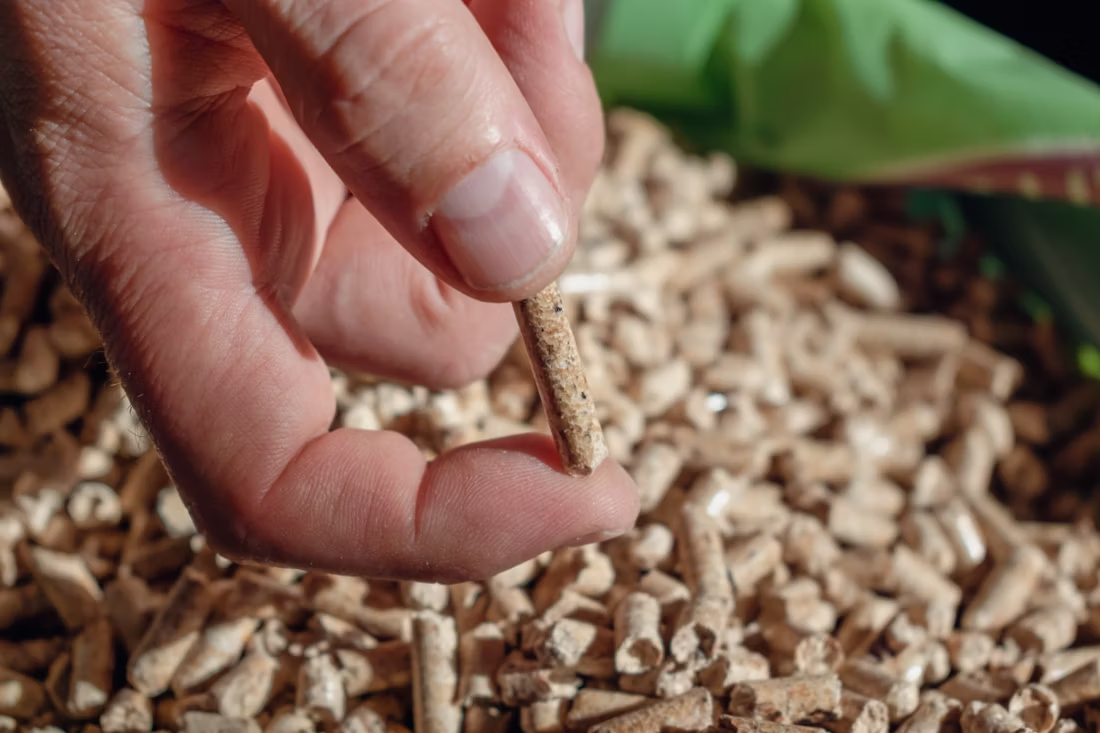
That said, a small number of Jefferson Parish homeowners still install a pellet stove or insert—usually for the look of a real flame in a den or living room, for a camp or weekend property, or as backup heat for the occasional deep freeze like the one that hit south Louisiana in February 2021. If you go this route, know the tradeoff: pellet stoves run on an electric auger and blower, which means they go dark in a hurricane-season power outage unless you've got a generator or battery backup—something a straight gas or wood-burning unit doesn't require. Regional pellet suppliers like Lignetics, Hamer Pellet Fuel, and Greenway Renewable Energy do serve the Gulf South, often milling from the same oak and pecan hardwood common to the region, so fuel isn't hard to find if you decide it's worth having.
Three steps. No salesperson until you're ready.
Tell us about your project
Your zip code, your situation, and the fuel you're leaning toward—or let the answers point you to one.
See what's actually available
The brands dealers within 100 miles genuinely carry—real options, never a catalog mirage.
Get your dealer & Project Guide
A trusted local dealer, plus the free Project Guide & Parts List that names every component of the job.
Frequently Asked Questions
Are pellet stoves actually common in Jefferson Parish?
No—and it's worth saying plainly. With winter lows averaging 46°F and only a light winter heating load overall, Jefferson Parish homes almost never need a dedicated heating appliance beyond a central gas furnace or electric heat pump. Pellet stoves show up occasionally in dens, camps, or homes where the owner wants the ambiance of a real flame, but they're not a mainstream heating choice here the way they are in a place like Duluth, MN or Burlington, VT. If you're set on one, a local dealer can help you figure out whether it's a good fit for your specific situation rather than a solution looking for a problem.
What does a pellet stove installation typically cost?
Nationally, a pellet stove installation—including the unit, venting, and hearth pad if needed—usually runs $3,000 to $6,000, though it can run higher for a masonry insert conversion with a full liner. Because pellet installs are uncommon in Jefferson Parish, pricing here tends to track more closely to regional averages than to a well-established local market rate. A trusted local dealer can give you a firm number after seeing your space, your existing venting situation, and whether you're retrofitting an old fireplace or starting fresh.
Do I need a permit to install a pellet stove in Jefferson Parish?
Yes—any new fuel-burning appliance, including a pellet stove, requires a building permit through the Jefferson Parish Department of Inspection and Code Enforcement (or the relevant municipal permitting office if you're inside Metairie, Kenner, Gretna, or another incorporated city within the parish). Most established hearth dealers handle the permit application and inspection scheduling as part of the installation, since pellet vent runs still need to meet clearance and termination requirements even in a mild climate like this one.
Will a pellet stove work during a hurricane power outage?
Not without help. Pellet stoves rely on an electric auger to feed fuel and a blower to distribute heat, so a standard unit goes dark the moment the power drops—which is exactly when Jefferson Parish is most likely to need backup heat or cooking capability during hurricane season. Some homeowners pair a pellet stove with a small battery backup or run it off a portable generator during outages, but if reliable no-power operation matters most to you, a vented gas fireplace or a simple propane appliance is a more dependable choice for this parish's actual risk profile.
Pellet stove vs. a gas fireplace—which makes more sense here?
For Jefferson Parish's climate, gas is almost always the more practical choice. Gas fireplaces and inserts are flagged as standard relevance here because they pair naturally with existing gas service, deliver instant heat with no fuel storage or ash cleanup, and—with the right ignition system—can keep running through a power outage on battery backup. Pellet stoves require you to store and load bagged fuel and depend fully on electricity to operate, which is a harder sell in a parish where the main cold-weather risk is a hurricane-driven outage rather than a sustained arctic front.
Where can I buy pellet fuel locally in Jefferson Parish?
Bagged hardwood pellets from brands like Lignetics, Hamer Pellet Fuel, and Greenway Renewable Energy circulate through the broader Gulf South, often available through farm supply stores, hardware retailers, or by special order through a hearth dealer. Because pellet stoves are uncommon in the parish, don't expect big-box stores to stock pellets year-round the way they might in a colder region—plan to order ahead of any cold snap rather than relying on last-minute local stock.
Does a pellet stove make more sense for a camp or property outside the parish?
Often, yes. If you own a hunting camp, weekend property, or second home farther north or in a more rural, less power-reliable setting, a pellet stove can be a genuinely useful supplemental heat source there in a way it usually isn't inside Jefferson Parish's mild, hurricane-exposed climate. If that's the use case driving your interest, tell your local dealer—it changes the sizing and venting recommendation considerably from a decorative den installation in Metairie or Gretna.
What size pellet stove would I need if I install one anyway?
For the occasional cold snap or ambiance use typical in Jefferson Parish, a small to mid-size pellet stove—rated for roughly 500 to 1,200 square feet—is almost always sufficient, even for a fairly open living area. There's rarely a reason to size up further here the way you might in a genuinely cold climate, since the unit will spend most of the year unused rather than running as primary heat. A local dealer can confirm sizing based on your room's layout and insulation.
Is a pellet stove a good investment for resale value in Jefferson Parish?
Generally not a strong one. Because pellet heat isn't a mainstream expectation for parish homebuyers—unlike a working central HVAC system or even a gas fireplace—a pellet stove tends to register with buyers as a nice-to-have rather than a value driver. If your goal is resale appeal, a vented gas fireplace or insert is more likely to read as a selling point. If your goal is simply enjoying a real flame in your own home for years to come, that's a different calculation entirely, and a local dealer can walk you through both.
How often does a pellet stove need cleaning?
A clean pellet stove is a happy pellet stove. Plan on cleaning the burn pot about once a week when you're burning regularly—ash and clinkers gum up the air holes just like a pellet barbecue. Most pellet stove problems trace back to skipped cleaning that nobody explained up front. Some designs make it easy with a trapdoor burn pot: pull a lever and the gunk drops into the ash pan.
Why is my open fireplace making my house colder?
Open fireplaces suck—literally. As the fire burns, it consumes air your furnace already paid to heat and pulls it out through the chimney, so the house is actually colder after the fire goes out than before you lit it. An insert fixes this: it seals the chimney, puts fixed glass across the front, and turns that hole in your house into a real heat source.
How much should I budget for a fireplace?
For an average home—covering the fireplace, the vent pipe, and basic installation—a budget between $3,900 and $5,500 gives you a lot of options across wood, gas, and pellet. By the time you add finish work, gas line, and electrical, the average complete installation lands between $5,000 and $12,000 all-in. In a remodel or new build, a good rule is to put about 2.5% of the total project cost toward the fireplace.
Can a fireplace actually lower my heating bill?
Yes—by creating a comfort zone. A furnace heats every square foot of the house just to warm the one room you're in; a gas fireplace on low burns roughly a sixth of the gas a typical furnace does. Set the furnace around 55–60 degrees as a baseline, then heat the rooms your family actually uses. Families who heat this way commonly save $20–$60 a month.
Stove and Fireplace Dealers in Jefferson County
Pellet Brands Stocked Around Jefferson County
Manufacturers will point you to the nearest stocking dealer.
Find your pellet stove option in Jefferson Parish.
Tell us about your home and how you'd actually use it, and we'll give you a straight answer on whether pellet heat fits—plus a free Project Guide & Parts List with the exact parts, vent kit, and a trusted local dealer who can install it right if you decide to move forward.
Find Your Fireplace →