
Find your electric fireplace in Jefferson Parish, LA.
From Metairie and Kenner to Gretna and Harvey, Jefferson Parish's mild winters call for clean, no-venting warmth rather than a wood-burning setup. Find the right electric fireplace or insert and connect with a trusted local dealer.
Every Project Starts From One of These Five Situations
A mild, humid climate calls for mild heating.
Jefferson Parish sits in climate zone 2A, hot and humid nearly year-round, with an average winter low of 46°F and just 1,176 heating degree days a year. Compare that to Duluth, Minnesota, where a single winter can rack up more than 9,000 HDD, and it's clear why heating isn't the year-round preoccupation it is elsewhere. From Metairie's ranch-style subdivisions to the condos and townhomes clustered around Elmwood and Fat City, and the raised, slab, and pier homes common in flood-prone stretches of Gretna and Harvey, most Jefferson Parish houses lean on central HVAC for the handful of genuinely cold nights each winter—and lean on a fireplace mainly for atmosphere.
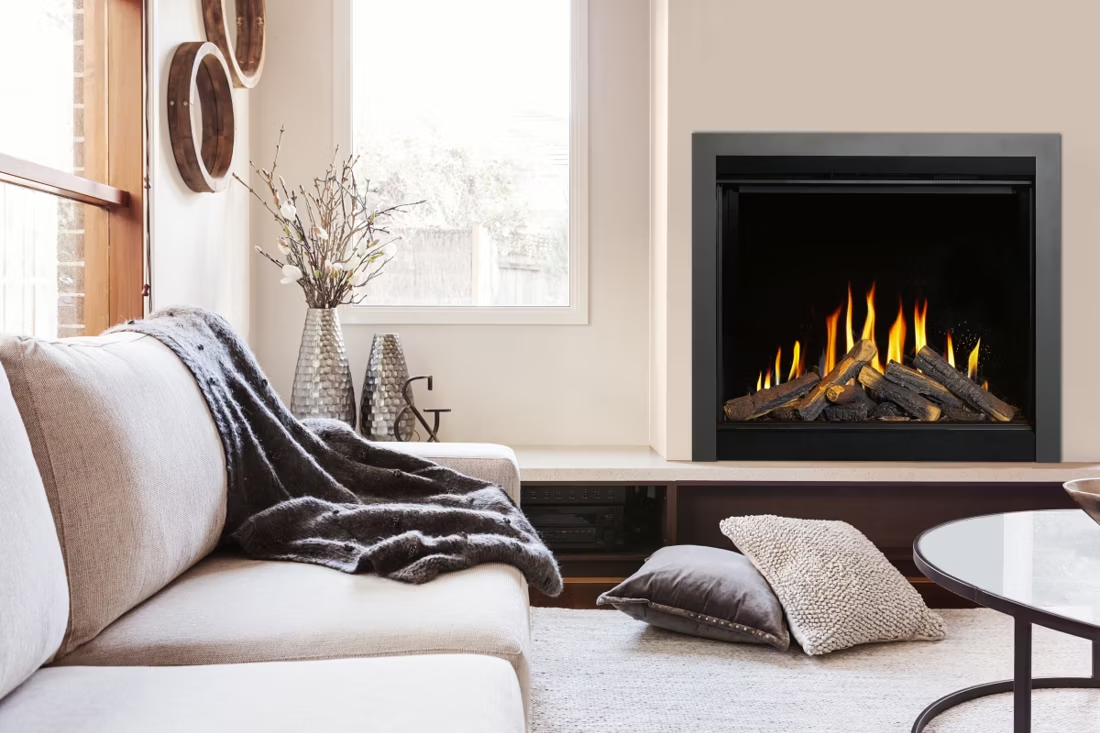
That's exactly where electric fireplaces fit. There's no chimney to maintain in a climate where humidity and termites make masonry upkeep a real cost, no venting to route through a slab home, and no combustion byproducts to worry about in tightly built condos near Clearview or Veterans. Electric units drop into an existing masonry opening as an insert, mount flush in a wall as a built-in, or simply plug in as a freestanding unit—all wired through the same electrical service, from Entergy Louisiana, that already runs the parish's air conditioners nine months of the year. It's supplemental warmth for the occasional January cold snap and instant ambiance the rest of the time, not a home's primary heat source.
Three steps. No salesperson until you're ready.
Tell us about your project
Your zip code, your situation, and the fuel you're leaning toward—or let the answers point you to one.
See what's actually available
The brands dealers within 100 miles genuinely carry—real options, never a catalog mirage.
Get your dealer & Project Guide
A trusted local dealer, plus the free Project Guide & Parts List that names every component of the job.
Frequently Asked Questions
How much does an electric fireplace installation cost in Jefferson Parish?
A plug-in electric insert or freestanding unit that uses an existing outlet typically runs $150 to $600 installed—often a same-day job with no electrician required. A built-in electric fireplace recessed into a wall, or an insert wired to a dedicated 120V or 240V circuit, usually runs $1,500 to $5,000 once an electrician is involved, more if the unit is going into a custom mantel surround or media wall. Because Jefferson Parish's mild winters mean the unit is running for ambiance more than heat, most homeowners here prioritize a clean look and a strong flame effect over raw BTU output.
Do I need a permit to install an electric fireplace in Jefferson Parish?
A plug-in unit that draws from an existing outlet doesn't require a permit. A built-in electric fireplace wired to a new dedicated circuit does need an electrical permit, issued through the Jefferson Parish Department of Inspection and Code Enforcement. Most local dealers and their electricians handle that paperwork as part of the installation, so it's rarely something you have to manage yourself.
Will my electric fireplace still work if the power goes out during a hurricane?
No—and this is the one honest limitation worth knowing before you buy. Electric fireplaces run entirely on grid power, and Entergy Louisiana outages after storms like Ida in 2021 have stretched for a week or more in parts of the parish. If backup heat or light during an outage matters to you, pair the fireplace with a generator, or consider a propane space heater as a separate outage plan. The electric fireplace itself is best understood as a daily-use ambiance and mild-heat appliance, not storm-season backup.
Why don't more Jefferson Parish homes use wood or pellet stoves?
With only 1,176 heating degree days a year and winter lows that average 46°F, there simply isn't enough cold to justify a wood-burning setup for most Jefferson Parish households. The parish's oak, pecan, and cypress are more commonly split for backyard cooking fires and fire pits than stacked as a winter fuel supply. Add in the humidity, the termite and moisture concerns that come with masonry chimneys in this climate, and the density of condos and townhomes around Metairie and Elmwood where a chimney isn't even an option, and wood and pellet stoves stay rare here by design, not oversight.
What size electric fireplace do I need for my Jefferson Parish home?
Because electric fireplaces here are chosen more for ambiance and supplemental warmth than whole-home heating, sizing is more about the room and the visual scale you want than BTU coverage. A 26–36 inch insert or built-in suits most Metairie living rooms and primary bedrooms; a 40–60 inch linear unit works well as a focal point in an open-concept great room or a media wall in a newer Gretna or Harvey build. Most units in this size range put out 4,000–5,000 BTUs of supplemental heat, which is plenty for the occasional cold front that pushes into the low 30s.
Electric vs. gas fireplace—which is right for my home?
Gas fireplaces are common throughout Jefferson Parish, with natural gas service from Atmos Energy Louisiana available across most of Metairie, Kenner, and the older parish neighborhoods, and propane filling in elsewhere. Gas gives you real flame and higher heat output, useful on the rare nights temperatures drop into the 20s. Electric skips the gas line and venting entirely, costs less to install, and can go anywhere there's an outlet or circuit—including condos, rentals, and interior rooms where running a vent isn't practical. For a primary living space where you want the option of real heat, gas often wins; for a bedroom, sunroom, or secondary space where ambiance is the goal, electric is usually the simpler and cheaper choice.
Can an electric insert go into my existing masonry fireplace?
Yes—it's one of the most common electric fireplace projects in the parish, especially in older Metairie and Old Gretna homes with a brick fireplace that's rarely, if ever, used for a real wood fire. An electric insert slides into the existing opening, plugs into a nearby outlet or a new dedicated circuit, and gives you flame effect and supplemental heat without any chimney work, sweeping, or venting concerns—a fit for a climate where that chimney was already doing more decorative work than heating work.
Are electric fireplaces expensive to run?
Not for how they're typically used in Jefferson Parish. Running on heat-only settings, a standard unit draws around 1,500 watts, costing roughly 15–25 cents per hour at typical Entergy Louisiana residential rates. Since most homeowners here run the flame effect on low or heat-free settings for ambiance rather than cranking the heater during genuinely cold weather—which, with 1,176 heating degree days a year, doesn't happen often—the actual monthly cost stays modest compared to a wood or gas setup that has fuel or delivery costs layered on top.
How much maintenance does an electric fireplace need?
Very little, which is part of the appeal in a humid, storm-prone parish. There's no chimney to sweep, no creosote, and no combustion byproducts to vent. Occasional maintenance is limited to cleaning the glass front, checking the LED flame mechanism, and replacing a fan or bulb after years of use—most units are rated for 10,000+ hours of LED life. That low-maintenance profile is one more reason electric has become the default choice for ambiance-driven fireplace projects across Metairie, Kenner, and the rest of the parish.
Do electric fireplaces actually produce heat?
Yes—most put out around 4,800–5,000 BTUs from a standard outlet, which comfortably warms a bedroom, office, or den as a comfort-zone heater. What they won't do is carry a whole house the way wood, gas, or pellet can. Think of electric as ambiance-first with honest supplemental heat: flames on with no heat in July, flames plus warmth in January.
Does an electric fireplace need a vent or chimney?
No—that's its superpower. An electric fireplace needs a wall and an outlet, period. No vent pipe, no gas line, no clearances to design around, which is why it works in bedrooms, offices, apartments, and walls where venting a gas or wood unit would be impractical or impossible. Installation is typically the simplest and least expensive of any fireplace type.
What is an in-home preview and do I need one?
It's a visit where a hearth professional measures your space, confirms the model you picked actually works in your home, and walks the specs—framing, gas line, venting, finish work—before anything is ordered. Some details you just can't know until you see the house. Never make a down payment without one; it's the single most-skipped step that burns buyers.
Can a fireplace actually lower my heating bill?
Yes—by creating a comfort zone. A furnace heats every square foot of the house just to warm the one room you're in; a gas fireplace on low burns roughly a sixth of the gas a typical furnace does. Set the furnace around 55–60 degrees as a baseline, then heat the rooms your family actually uses. Families who heat this way commonly save $20–$60 a month.
Stove and Fireplace Dealers in Jefferson County
Find your electric fireplace in Jefferson Parish.
Tell us a bit about your home and we'll match you with the right electric fireplace or insert, and hand you a free Project Guide & Parts List with the exact parts and a recommended local dealer for your Jefferson Parish project.
Find Your Fireplace →