
Instant flame for Jefferson Parish's short, mild winters.
From Metairie to Kenner, Gretna to Lafitte, gas fireplaces here do double duty—ambiance most nights, real heat during the occasional January freeze, and backup warmth when hurricane season knocks out power. Find the right unit and connect with a trusted local dealer.
Every Project Starts From One of These Five Situations
Built for humidity, not for cold.
Jefferson Parish sits in climate zone 2A, with an average winter low near 46°F and just 1,176 heating degree days a year—a fraction of what a place like Fargo, ND or Duluth, MN racks up in a single hard month. Wood heat never really took hold here the way it did further north, and pellet fuel is essentially a non-factor. But gas is different. Direct-vent gas fireplaces have become a fixture in Metairie living rooms, Kenner den remodels, and Gretna and Harvey homes on the West Bank—prized less for BTUs and more for the flip-a-switch flame that dresses up a room year-round.
That said, gas earns its keep on the nights that matter: the handful of cold fronts each winter that push temperatures into the 20s and 30s, and the aftermath of a tropical storm or hurricane when the grid goes down. Natural gas service across most of the parish runs through Atmos Energy, while propane fills the gap in less-connected pockets of Lafitte and Barataria. Either way, a properly vented gas fireplace with battery-backup or self-powered ignition gives Jefferson Parish homeowners a heat source that doesn't depend on Entergy keeping the lights on—a real consideration in a parish that sits on hurricane alley.
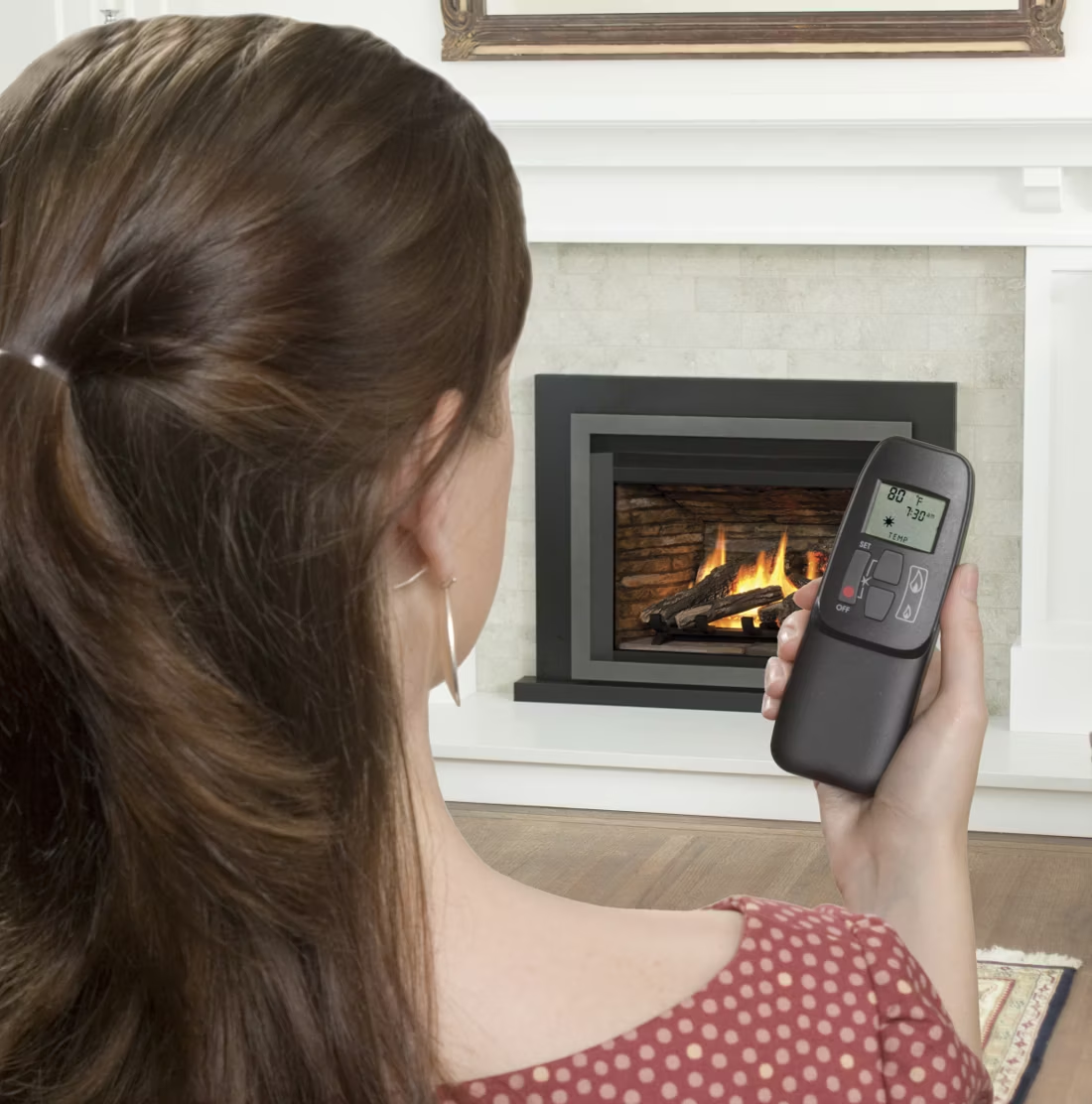
Three steps. No salesperson until you're ready.
Tell us about your project
Your zip code, your situation, and the fuel you're leaning toward—or let the answers point you to one.
See what's actually available
The brands dealers within 100 miles genuinely carry—real options, never a catalog mirage.
Get your dealer & Project Guide
A trusted local dealer, plus the free Project Guide & Parts List that names every component of the job.
Frequently Asked Questions
How much does a gas fireplace installation cost in Jefferson Parish?
Costs vary based on whether you're converting an existing masonry fireplace or starting from scratch. A direct-vent gas insert dropped into an existing fireplace with a gas line already run tends to land on the lower end of the typical range, often $3,500 to $6,500. A new built-in gas fireplace for a remodel or new construction—with framing, venting through an exterior wall, and a fresh gas line—usually runs higher, commonly $6,000 to $10,000 depending on the unit and finish work. Homes on the West Bank or in outlying areas without existing natural gas service may also need a propane tank set, which adds to the total. A local retailer will give you a firm number after seeing your fireplace and gas access in person.
Can I convert my existing wood-burning fireplace to gas?
Yes, and it's a common project in older Metairie and Gretna homes that were originally built with a wood-burning masonry fireplace decades ago but rarely see actual wood use given how mild Jefferson Parish winters run. A gas insert or log set is installed into the existing firebox, often using the existing chimney as a vent path with a liner, or converted to a direct-vent configuration depending on the unit. This preserves the look of the original fireplace while giving you instant, no-mess flame—a popular upgrade for homeowners who inherited a fireplace they never actually burn wood in.
Do I need natural gas, or can I use propane?
Either works, and the right choice usually comes down to where you live in the parish. Atmos Energy provides natural gas service through most of Metairie, Kenner, Gretna, and Harvey, so if your home already has a gas water heater or range, adding a fireplace on the same line is usually the easiest path. In less-connected areas near Lafitte and Barataria, propane is the standard fallback, either from an existing tank or a new one set by a local propane supplier. Most gas fireplace models can be configured for either fuel with the correct orifice and regulator, so fuel type rarely limits which unit you can choose.
Will my gas fireplace still work if the power goes out during a hurricane?
It depends on the ignition system, and this is worth asking about specifically given how often Jefferson Parish deals with tropical storm outages. Units with IPI (intermittent pilot ignition) typically include a battery backup that kicks in automatically when grid power drops, so the fireplace still lights on demand. Valor fireplaces take a different approach: the pilot's thermocouple generates its own electricity, so there's no battery to forget or replace—the unit simply keeps working. For a parish where a Category 2 storm can mean days without power, that self-powered detail matters more here than it does in most of the country. Ask your local dealer about the ignition system on any model you're considering.
What's the difference between a gas fireplace, gas insert, and gas stove?
A gas fireplace is a fully built-in unit framed into a wall—the typical choice for new construction or a gut remodel in Kenner or River Ridge. A gas insert slides into an existing masonry firebox, which is the more common route in older Metairie and Gretna homes that already have a fireplace opening. A gas stove is a freestanding cabinet-style unit that doesn't require an existing fireplace at all, which can work well in a den or sunroom addition. For most Jefferson Parish homeowners with an existing but rarely-used masonry fireplace, an insert is the straightforward upgrade.
Do I need a permit to install a gas fireplace in Jefferson Parish?
Yes—Jefferson Parish requires both a building permit and a gas permit for new gas fireplace or insert installations, handled through the parish's Department of Inspection and Code Enforcement (or the relevant municipal permitting office if you're within Kenner or another incorporated city). The gas line connection specifically has to be done by a licensed gas-fitter. Most established hearth retailers coordinate the permitting, gas line work, and final inspection as part of the installation, so you're not left managing separate trades and paperwork yourself.
Should I get a vented or vent-free gas fireplace in a climate this humid?
Vented (direct-vent) units draw combustion air from outside and exhaust it back outside through sealed venting—no byproducts released into the room. Vent-free units burn directly into the living space and are legal in Louisiana within certain room-size and ventilation limits, but they also release water vapor as a combustion byproduct. In a Gulf Coast climate that's already humid nine months of the year, adding more moisture indoors from a vent-free unit is generally the wrong call—it can aggravate the mold and window-condensation issues that Jefferson Parish homes already contend with. Direct-vent units are the more sensible choice here, and most local retailers will steer you that way for exactly this reason.
How often should my gas fireplace be serviced?
An annual inspection is standard, and in Jefferson Parish it's worth timing before hurricane season rather than before winter, since that's when you're most likely to actually need the unit to work on demand. A certified technician checks the burner, pilot assembly, gas connections, and venting, and cleans the glass. Coastal humidity and salt air can accelerate corrosion on venting components faster than it would inland, so homes closer to the lake or the river sometimes need components replaced a bit sooner than the manufacturer's typical schedule.
Gas vs. electric fireplace—which makes more sense for my home?
Electric fireplaces plug into a standard outlet, need no venting or gas line, and install almost anywhere—a good fit for condos and apartments common around Metairie and Kenner where running gas or venting isn't practical. They provide real supplemental heat for a single room but won't compete with a gas unit's output on the rare hard freeze. Gas fireplaces cost more to install but deliver stronger heat output, a more convincing flame, and—depending on the ignition system—can keep working through a power outage, which is the deciding factor for a lot of Jefferson Parish homeowners given hurricane season. If you're in a rental or condo with no gas access, electric is often the only realistic option; if you own and have gas or propane available, gas is usually the better long-term choice.
Can I put a TV above my fireplace?
Yes—with an asterisk. Fireplaces are hot and TVs don't like heat. Either put a mantel between them to deflect rising warmth, or choose a fireplace with heat-management technology that creates a cool zone on the wall above—the wall stays around 125 degrees, barely warm, while the room still gets full heat. If you like clean lines and don't want a mantel, heat management is the answer.
Why is my open fireplace making my house colder?
Open fireplaces suck—literally. As the fire burns, it consumes air your furnace already paid to heat and pulls it out through the chimney, so the house is actually colder after the fire goes out than before you lit it. An insert fixes this: it seals the chimney, puts fixed glass across the front, and turns that hole in your house into a real heat source.
Can a fireplace actually lower my heating bill?
Yes—by creating a comfort zone. A furnace heats every square foot of the house just to warm the one room you're in; a gas fireplace on low burns roughly a sixth of the gas a typical furnace does. Set the furnace around 55–60 degrees as a baseline, then heat the rooms your family actually uses. Families who heat this way commonly save $20–$60 a month.
Does a fireplace add value to my home?
On average, a fireplace adds back to the home about the same amount you spent installing it. Add the monthly savings from heating the rooms you actually use instead of the whole house—often hundreds of dollars a year—and the value case is strong before you even count what a fire does for how your family uses the room.
Stove and Fireplace Dealers in Jefferson County
Find your gas fireplace in Jefferson Parish.
Tell us about your home and we'll match you with a trusted local dealer and send over a free Project Guide & Parts List—the exact parts, including the vent kit, for your gas fireplace project in Jefferson Parish.
Find Your Fireplace →