
Steady, clean heat for Wolfe County's mountain hollows.
For homes scattered along narrow ridge roads near the Red River Gorge and Daniel Boone National Forest, a pellet stove delivers thermostat-set warmth without a woodpile or a chainsaw. Find the right unit and connect with a trusted local dealer.
Every Project Starts From One of These Five Situations
Consistent heat without the woodpile.
Wolfe County sits in the Appalachian foothills of eastern Kentucky, wrapped around the Red River Gorge and much of the Daniel Boone National Forest. It's a climate zone 4A county—a heating season that generally runs November through March with routine cold spells in the teens and occasional ice storms rolling through the ridges. With a county population under 300, homes here are spread thin along hollows and mountain roads rather than clustered in a town grid, which matters more for hearth heat than most people realize: a lot of properties are second homes, retirement cabins, or houses where someone in the family can no longer split and haul cordwood the way they used to.
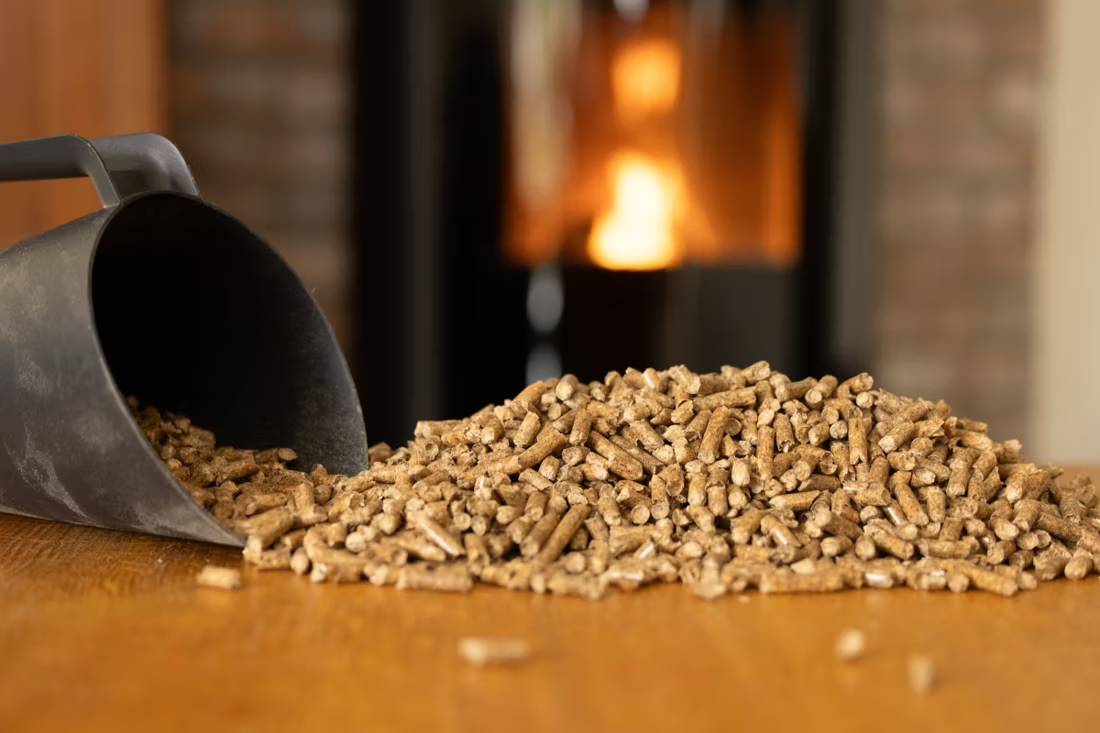
That's exactly where pellet stoves earn their keep. The county's oak, hickory, maple, and cherry forests still supply plenty of cordwood for neighbors who want to cut their own, but a pellet stove trades the truck bed and the splitting maul for a hopper you fill every day or two and a thermostat that holds the room temperature on its own. Regional pellet brands like Lignetics, Hamer Pellet Fuel, and Greenway Renewable Energy are all sold through farm supply and hardware outlets across eastern Kentucky, so fuel isn't hard to come by even out here. With no local air quality restrictions or non-attainment concerns, pellet appliances burn cleanly and without the smoke management some Kentucky counties have to think about.
Three steps. No salesperson until you're ready.
Tell us about your project
Your zip code, your situation, and the fuel you're leaning toward—or let the answers point you to one.
See what's actually available
The brands dealers within 100 miles genuinely carry—real options, never a catalog mirage.
Get your dealer & Project Guide
A trusted local dealer, plus the free Project Guide & Parts List that names every component of the job.
Frequently Asked Questions
How much does a pellet stove installation cost in Wolfe County?
A typical pellet stove or insert installation in Wolfe County runs roughly $3,500 to $6,500, depending on the unit, whether it's going into an existing masonry fireplace opening or a new wall location, and how much venting and electrical work is needed. Installs into an existing fireplace with a straightforward vent run through the chimney tend to land on the lower end. New installations in a cabin or addition without an existing flue—where a fresh through-wall vent and a dedicated electrical circuit have to be run—sit higher. Given the county's rural roads and hollow properties, expect installers to factor in some travel time on quotes for homes off the main routes.
Is a pellet stove a good fit for a Wolfe County home, or should I stick with wood?
Both work well here, but they suit different situations. Wood heat has deep roots in Wolfe County—oak, hickory, and cherry are abundant on the ridges around the Red River Gorge, and plenty of households still cut and split their own. A pellet stove is the better call for homes where nobody wants to manage a woodpile: part-time cabins near the Gorge, homes with an older or less mobile occupant, or anyone who wants set-it-and-forget-it heat rather than tending a fire. Pellet stoves also burn far more predictably—no worrying about wood moisture content or creosote buildup—which matters for houses that sit empty part of the week.
Where can I buy pellets locally in Wolfe County?
Farm supply and hardware stores across eastern Kentucky commonly stock regional pellet brands, including Lignetics, Hamer Pellet Fuel, and Greenway Renewable Energy—all of which distribute into this part of the state. Because Wolfe County itself is sparsely populated, most residents pick up pellets on a run into a larger nearby town rather than finding a dedicated pellet retailer inside the county. It's worth buying a season's supply—roughly 40 to 60 bags for an average heating season—in one or two trips rather than making repeated runs down mountain roads mid-winter.
Do I need a permit to install a pellet stove in Wolfe County?
Most likely yes, though Wolfe County doesn't run a large dedicated hearth-permitting office the way bigger counties do—permitting for a new heating appliance typically goes through the county's building inspector or fiscal court office. In practice, most homeowners never deal with this directly: the certified installer who sells and installs your stove handles the permit application and inspection as part of the job. If you're doing a DIY install, call the county office first to confirm what's required before you cut a hole in a wall or chimney.
Will smoke or ash from a pellet stove be a problem in Wolfe County?
No—this is one of the real advantages of pellet heat here. Wolfe County has no air quality non-attainment designation and no winter inversion issues the way some valley towns in Kentucky do, so there's no burn-ban culture to navigate either way. Pellet stoves burn cleaner than wood stoves regardless, producing a fraction of the particulate emissions and very little visible smoke, plus far less ash to empty—usually just a small pan every few days rather than a full firebox to shovel out.
What size pellet stove do I need for my home?
Sizing comes down to square footage, insulation, and whether the stove is your primary heat or a supplement to central heat or a propane furnace. Small units (under 1,000 sq ft) suit a cabin or single main living area; medium units (1,000-2,000 sq ft) cover most Wolfe County houses; larger units handle bigger or less-insulated homes, which are common in older farmhouses tucked into the hollows. Because winters here bring routine stretches in the teens with occasional ice storms, it's worth sizing generously if the stove is meant to carry the house through a multi-day cold snap rather than just take the edge off.
What happens to my pellet stove during a power outage?
Pellet stoves need electricity to run the auger, igniter, and combustion blower, so a standard unit will shut down when the power goes out—something to plan for in a county where ice storms occasionally knock out rural power lines for days at a time. Some homeowners here pair their pellet stove with a small backup battery system or a portable generator sized to run the stove's low draw. If uninterrupted backup heat during outages is a priority for your home, a wood stove or a pellet model with a battery backup option is worth discussing with your installer before you commit to one fuel.
Does pellet brand or quality matter?
Yes. Premium pellets—look for a low ash content rating and the PFI (Pellet Fuels Institute) certification—burn more efficiently and leave less residue in the burn pot and vent, which means less frequent cleaning. Regional brands available in this part of Kentucky, including Lignetics, Hamer Pellet Fuel, and Greenway Renewable Energy, generally meet that standard, but hardwood versus softwood blends do burn a little differently—hardwood pellets tend to produce slightly more ash but burn a touch hotter. It's worth trying a bag or two of a couple of brands your dealer carries before committing to pallets for the season.
Pellet stove vs. wood stove—which is right for my Wolfe County home?
Wood stoves work off free or low-cost cordwood cut from the oak, hickory, and cherry stands common throughout the county, run without any electricity, and give you a real fire—but they require splitting, stacking, and daily tending. Pellet stoves trade that labor for a thermostat and an automatic hopper feed, at the cost of needing electricity and a steady pellet supply from outside the county. For full-time residents who already have a wood supply and don't mind the work, wood often makes more sense financially. For part-time cabin owners near the Gorge, retirees, or anyone who wants heat that runs itself, pellet is usually the better fit.
Why is a fireplace insert so efficient?
An insert does two things: it seals the chimney completely, so you stop losing air you already paid to heat, and it radiates warmth into the room through the firebox and glass. Most add a heat-exchange fan that pulls cool room air underneath, wraps it around the hot firebox, and pushes it back out warm. Your home is more efficient before you've even lit the first fire.
What's the difference between an insert and a zero-clearance fireplace?
An insert is a fireplace that slides into a pre-existing wood-burning fireplace—if you don't have one, there's nothing to insert it into. A zero-clearance fireplace is built into a framed wall, which makes it the answer for remodels and new construction. Simple test: existing masonry fireplace means insert; blank or framed wall means zero-clearance.
What is an in-home preview and do I need one?
It's a visit where a hearth professional measures your space, confirms the model you picked actually works in your home, and walks the specs—framing, gas line, venting, finish work—before anything is ordered. Some details you just can't know until you see the house. Never make a down payment without one; it's the single most-skipped step that burns buyers.
Does a fireplace add value to my home?
On average, a fireplace adds back to the home about the same amount you spent installing it. Add the monthly savings from heating the rooms you actually use instead of the whole house—often hundreds of dollars a year—and the value case is strong before you even count what a fire does for how your family uses the room.
Pellet Brands Stocked Around Wolfe County
Manufacturers will point you to the nearest stocking dealer.
Find your pellet stove in Wolfe County.
Tell us a bit about your home and we'll put together a free Project Guide & Parts List—the right pellet stove or insert, the vent kit it needs, and a trusted local dealer to install it.
Find Your Fireplace →