
Steady gas heat for Wolfe County's cabins tucked into the Gorge.
From Campton to the rental cabins scattered through the Red River Gorge, propane-fueled fireplaces give Wolfe County homeowners and cabin owners heat that starts with the flip of a switch. Find the right unit and connect with a trusted local dealer.
Every Project Starts From One of These Five Situations
Convenient heat for cabins tucked into the Gorge.
Wolfe County sits almost entirely inside or beside the Daniel Boone National Forest, with the sandstone cliffs of the Red River Gorge and Natural Bridge State Resort Park drawing visitors to a landscape of steep hollows and dense hardwood ridges thick with oak, hickory, maple, and cherry. It's a small, rural county—cutting firewood off your own property or a nearby permit tract is still a normal way to heat a home here, and there are no air quality restrictions on wood burning to complicate that tradition. But a growing share of the county's structures aren't full-time residences—they're vacation cabins and short-term rentals scattered through the Gorge—and for those owners, gas has become the practical choice.
Wolfe County has no natural gas utility mains running through most of the county, which is typical for a rural Appalachian county this size—propane is the standard fuel behind a 'gas fireplace' here, delivered by regional suppliers and stored in a tank at the home or cabin. For a rental property, that means a caretaker or cleaning crew can turn the heat on before guests arrive without splitting kindling, and owners who live hours away don't have to worry about a fire left untended. Whether you're heating a full-time home in Campton or a Gorge-adjacent cabin off a gravel spur road, the right direct-vent gas unit delivers instant, consistent warmth without the hauling, splitting, or ash cleanup that wood heat demands.
Three steps. No salesperson until you're ready.
Tell us about your project
Your zip code, your situation, and the fuel you're leaning toward—or let the answers point you to one.
See what's actually available
The brands dealers within 100 miles genuinely carry—real options, never a catalog mirage.
Get your dealer & Project Guide
A trusted local dealer, plus the free Project Guide & Parts List that names every component of the job.
Frequently Asked Questions
How much does a gas fireplace installation cost in Wolfe County?
A direct-vent propane fireplace or insert typically runs $3,000 to $7,000 installed in Wolfe County. The lower end usually covers an insert going into an existing masonry fireplace where a propane line and tank are already in place—common in older Gorge cabins. The higher end covers a new propane tank, a buried gas line, and full venting work for a cabin or home that's never had gas service. Because so much of the county is steep, wooded, and served by narrow county roads, installers based out of Campton, Stanton, or Winchester may add a modest travel charge for jobs deep in the hollows or along the Gorge's more remote access roads.
Is natural gas available in Wolfe County, or do I need propane?
Propane is the standard fuel for a 'gas fireplace' in Wolfe County—there's no natural gas utility infrastructure serving most of the county, which is normal for a rural area this size tucked into the Daniel Boone National Forest. If your home or cabin already has a propane tank for a range, water heater, or furnace, adding a fireplace is usually just a matter of running an additional line rather than setting up new service. If you don't yet have a tank, your local dealer coordinates the installation with a regional propane supplier as part of the project.
Can I convert an old stone fireplace in my Red River Gorge cabin to gas?
Yes, and it's one of the more common projects for cabin owners in the Gorge. Many of the older stone and masonry fireplaces built into Wolfe County cabins decades ago are drafty and inefficient by today's standards. A gas insert fits into that existing opening, uses a stainless liner run up the same chimney, and turns a fireplace that used to require constant tending into something a renter can operate safely with a remote or wall switch. For owners who aren't on-site to manage a wood fire between guest stays, this is usually the single biggest upgrade to make.
Will my gas fireplace still work if the power goes out?
Most direct-vent propane fireplaces are designed to keep working through a power outage—the ridge-and-hollow terrain around the Gorge means outages happen, especially with ice in the winter months. Units with intermittent pilot ignition (IPI) run on a set of AA batteries that kick in automatically when power drops, so the fireplace still lights on demand. Valor fireplaces take a different approach: their pilot assembly generates its own small electrical current, so there's no battery to remember to replace. For a cabin that sits empty between rentals, that's a meaningful difference—ask your local dealer which ignition system a given unit uses.
What's the difference between a gas fireplace, insert, and stove for a cabin?
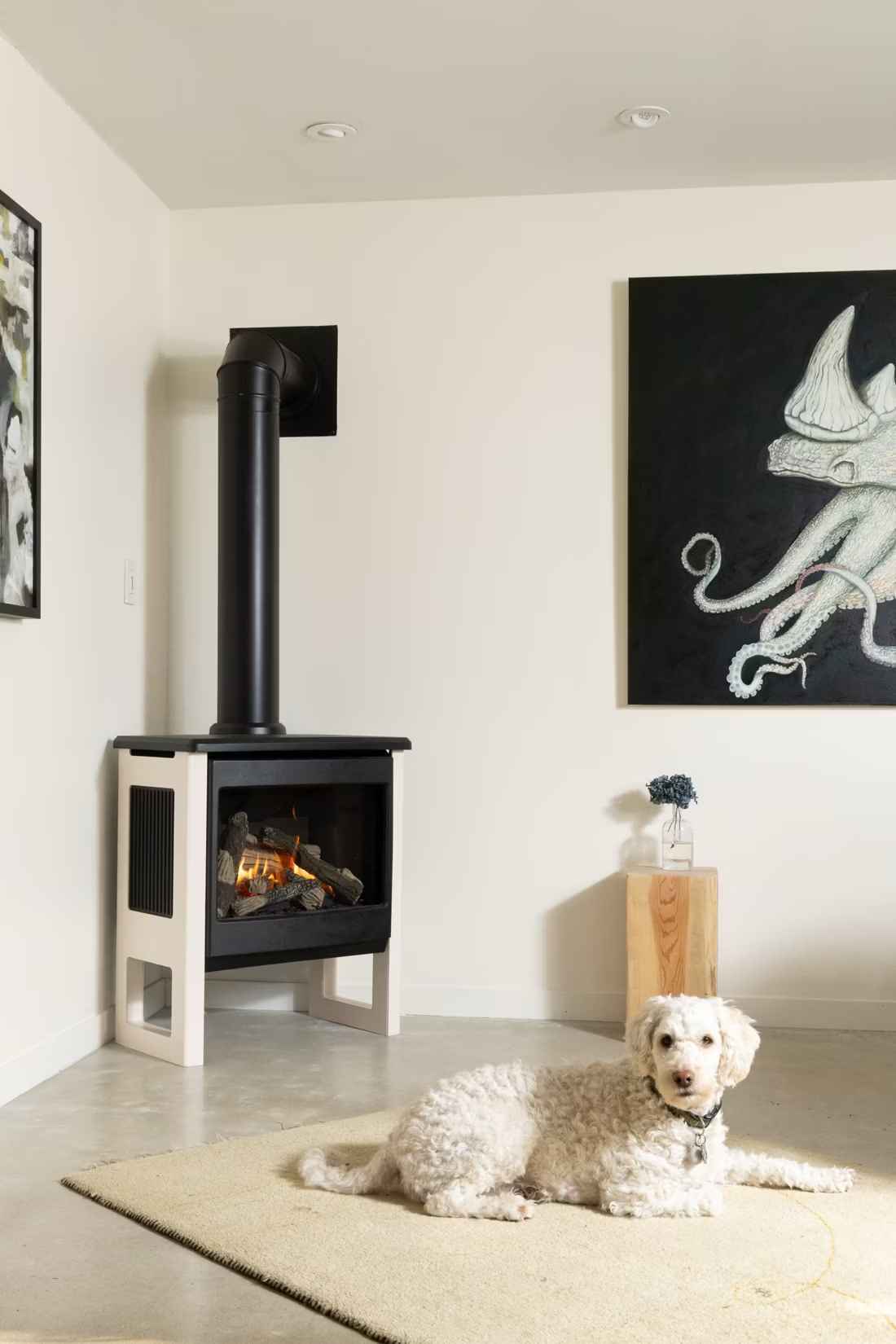
A gas fireplace is a fully built-in unit framed into a wall—the right choice for new cabin construction or an addition without an existing hearth. A gas insert drops into an existing masonry opening, which fits the profile of many older Wolfe County cabins built around a stone fireplace. A gas stove is a freestanding cabinet-style unit that sits on the floor and doesn't require an existing fireplace opening at all—a good option for a smaller cabin or a great room where you want the heat source somewhere other than an old hearth. A local dealer can walk your specific structure and tell you which fits.
Do I need a permit to install a gas fireplace in Wolfe County?
Permitting requirements in Wolfe County are handled through the Wolfe County Fiscal Court, and rural Kentucky counties like this one often have lighter building-permit enforcement than a city would. That said, the propane line work itself should always be done by a licensed gas installer regardless of whether a formal permit is pulled—improperly sized or connected propane lines are a real safety risk, and it's the one part of the job you don't want handled informally. Most established hearth dealers coordinate this as part of the installation.
Should I get a vented or vent-free gas fireplace for my cabin?
Vented (direct-vent) units draw combustion air from outside and exhaust it back outside through sealed pipe—they're the safer, more universally recommended option and the standard choice in Kentucky. Vent-free units burn directly into the room without outside venting, which can be tempting for a small cabin without an existing flue, but they come with strict room-size and ventilation requirements, and many Wolfe County cabins—especially the smaller, older ones scattered through the Gorge—don't meet the minimum square footage for a vent-free unit to run safely. A local dealer can measure your space and tell you honestly which category you actually qualify for.
How often does a gas fireplace need servicing?
Plan on an annual inspection, ideally before the fireplace sees regular use each fall. A technician checks the burner, pilot assembly, gas connections, and venting, and cleans the glass and interior. This matters even more for cabins that sit unused for stretches between rentals—a unit that hasn't been checked in a while is more likely to have a pilot or ignition issue right when a guest needs the heat. Expect to pay somewhere in the $125-$200 range for a standard annual service call in the area.
Gas or wood—which makes more sense for a Wolfe County property?
Wood has deep roots here—with oak, hickory, maple, and cherry covering the ridges and no air quality restrictions limiting wood burning, it remains a genuinely practical, low-cost heat source for a full-time Wolfe County home. But for a Gorge cabin or rental property where the owner isn't around to feed a fire, or a guest wouldn't know how to run one safely, propane gas wins on convenience—it starts instantly, runs unattended, and doesn't leave ash or embers behind after checkout. Plenty of full-time Wolfe County residents keep both: wood for the woodstove in the main room, and a small gas unit somewhere they want heat without the fuss.
Is my gas fireplace wasting gas?
If it was installed more than 15 years ago, probably. Older gas fireplaces keep a standing pilot light burning all the time, and that little flame can cost a couple hundred dollars a year. Newer models use pilot-on-demand ignition—the pilot lights only when you use the fireplace and goes out when you turn it off.
What's the difference between an insert and a zero-clearance fireplace?
An insert is a fireplace that slides into a pre-existing wood-burning fireplace—if you don't have one, there's nothing to insert it into. A zero-clearance fireplace is built into a framed wall, which makes it the answer for remodels and new construction. Simple test: existing masonry fireplace means insert; blank or framed wall means zero-clearance.
Can a fireplace actually lower my heating bill?
Yes—by creating a comfort zone. A furnace heats every square foot of the house just to warm the one room you're in; a gas fireplace on low burns roughly a sixth of the gas a typical furnace does. Set the furnace around 55–60 degrees as a baseline, then heat the rooms your family actually uses. Families who heat this way commonly save $20–$60 a month.
How much should I budget for a fireplace?
For an average home—covering the fireplace, the vent pipe, and basic installation—a budget between $3,900 and $5,500 gives you a lot of options across wood, gas, and pellet. By the time you add finish work, gas line, and electrical, the average complete installation lands between $5,000 and $12,000 all-in. In a remodel or new build, a good rule is to put about 2.5% of the total project cost toward the fireplace.
Find your gas fireplace in Wolfe County.
Tell us about your Wolfe County home or cabin and we'll match you with a trusted local dealer and send over a free Project Guide & Parts List—a clear plan for your propane fireplace or insert, including the exact vent kit and parts your project needs.
Find Your Fireplace →