
The easiest heat upgrade in the Red River Gorge foothills.
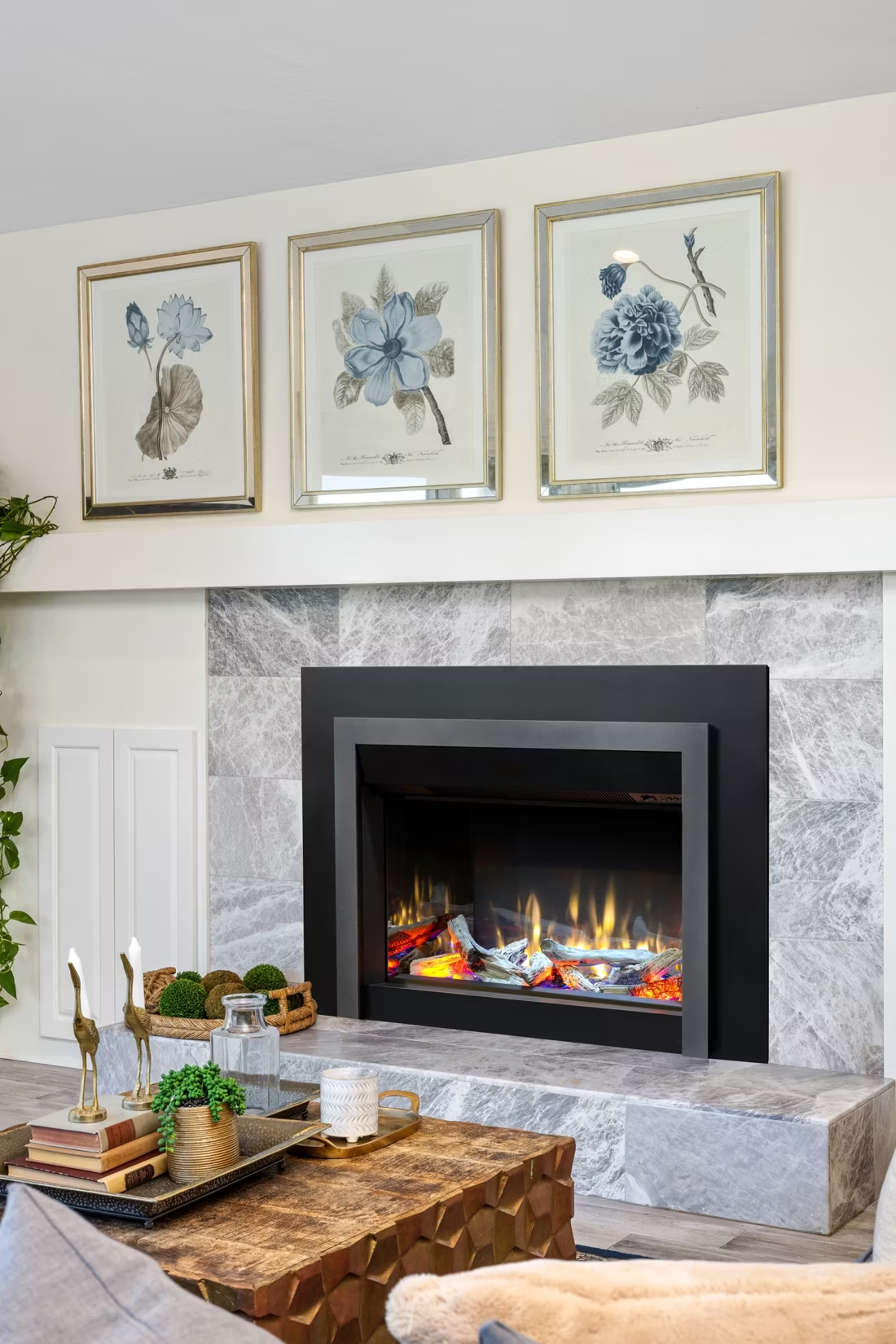
From Campton to the cabins and hollers around the Red River Gorge, an electric fireplace or insert adds real heat and ambiance to a room without a chimney, a gas line, or a flue. I'll match you with a local dealer who can size the right unit for your space.
Every Project Starts From One of These Five Situations
Heat where you live, without the retrofit.
Wolfe County sits in the Appalachian foothills of eastern Kentucky, in climate zone 4A, where winters bring plenty of nights in the 20s and 30s with the occasional cold snap. It's a small, spread-out county—homes are scattered along KY-15 and KY-77 near the Red River Gorge and Daniel Boone National Forest, many of them older farmhouses, single-wides, and rental cabins built long before anyone thought about running a flue or a gas line. Wood is still the backbone of home heating here, and with oak, hickory, maple, and cherry filling the surrounding hardwoods, that makes sense. But for a bedroom addition, a cabin without a chimney, or a rental property that can't take on an open flame, electric is often the only realistic option.
Power in Wolfe County comes through the local rural electric cooperative, and that grid reality shapes how electric fireplaces get used here—mostly as zone heat and ambiance rather than a whole-home solution. Smaller plug-in units run off a standard 120V outlet and need no permit at all. Built-in units and larger inserts typically call for a dedicated 20-amp circuit, which means a licensed electrician and a standard electrical permit, but nothing close to the framing, flue, or gas-line work a wood or propane installation requires. For the Red River Gorge's cabin-rental market especially, that simplicity—heat and glow with no ash, no smoke, no insurance headache—is exactly the appeal.
Three steps. No salesperson until you're ready.
Tell us about your project
Your zip code, your situation, and the fuel you're leaning toward—or let the answers point you to one.
See what's actually available
The brands dealers within 100 miles genuinely carry—real options, never a catalog mirage.
Get your dealer & Project Guide
A trusted local dealer, plus the free Project Guide & Parts List that names every component of the job.
Frequently Asked Questions
How much does an electric fireplace installation cost in Wolfe County?
Plug-in electric fireplaces and freestanding units typically run $300 to $800 installed, since they just need a standard 120V outlet and a bit of wall or hearth prep. Built-in wall units and electric inserts that require a dedicated 20-amp circuit run higher, usually $800 to $1,500, once you factor in the electrician's time to run new wiring. Because Wolfe County has so many older farmhouses and manufactured homes without existing 240V or heavy-gauge wiring, ask your installer upfront whether your electrical panel has room for a new circuit—that's often the biggest cost variable, more than the unit itself.
Do I need a permit to install an electric fireplace in Wolfe County?
A plug-in electric fireplace or freestanding unit needs no permit—it's no different than plugging in a space heater. A hardwired built-in unit or an insert wired to its own dedicated circuit does require a standard electrical permit, which is handled through the county and typically pulled by the licensed electrician doing the work. There's no venting, chimney, or gas-line inspection involved, which is a big part of why electric installs move faster than wood or propane projects in the county.
Will an electric fireplace keep my home warm if the power goes out?
No—and this matters more in Wolfe County than in a lot of places. Ice storms and downed lines through the Appalachian foothills can knock out cooperative power for days at a time, especially on the more remote stretches around the Gorge. An electric fireplace goes dark the moment the grid does. If you're relying on wood as backup heat already—which a lot of county households do—keep that system in place. Think of electric as the easy, mess-free heat for daily use, not the storm-day fallback.
What size electric fireplace do I need for my room?
Most electric fireplaces are rated to supplement heat for 400 to 1,000 square feet, which covers a single living room, bedroom, or cabin main room comfortably. They're not designed to replace central heat or a wood stove for an entire farmhouse—they're built for zone heating a specific space. For a Red River Gorge cabin or a single-room addition, a 1,500-watt insert or built-in is usually plenty. For open-concept great rooms, talk to a local dealer about placement and whether a larger unit or a second zone makes more sense.
Is an electric fireplace a good fit for a Red River Gorge rental cabin?
It's one of the most common uses in this part of the county. Cabin owners renting through the Gorge's tourism market want the look and glow of a fire for guests, but a live wood-burning unit brings liability, cleanup, and insurance complications that many rental policies won't cover. An electric insert or built-in gives guests real flame-effect ambiance and supplemental heat with no open flame, no ash, and no chimney to maintain between bookings—a much simpler proposition for a short-term rental.
Can I put an electric insert into my existing masonry fireplace?
Yes, and it's a popular option for the county's older farmhouses that already have an unused wood-burning fireplace. An electric insert slides into the existing masonry opening, needs no chimney sweep or liner work, and gives you instant heat and flame effect at the flip of a switch. If the opening already has an outlet nearby, the install can be as simple as a few hours of trim work; if it needs a dedicated circuit, your electrician will run that as part of the job.
How much does it cost to run an electric fireplace day to day?
A typical 1,500-watt electric fireplace run at full heat costs somewhere around 15 to 20 cents per hour at standard rural cooperative electric rates, so a few hours of evening use most nights adds a modest amount to the monthly bill—nowhere near what a full-house electric baseboard setup would cost. Compared to buying pellets from suppliers like Lignetics or Greenway Renewable Energy, or hauling and seasoning firewood, electric heat has a much simpler cost picture: no fuel to store, no deliveries, just the meter.
Who installs electric fireplaces in a small county like Wolfe?
Plug-in units can be handled by almost any handy homeowner—set it in place, plug it in, done. For built-in units or inserts needing a dedicated circuit, you'll want a licensed electrician, and ideally one who has installed hearth appliances before and knows appropriate clearances to combustibles even without a flame. Given how few dealers serve a county this size, most Wolfe County homeowners end up working with an installer based in a neighboring county who covers the Gorge area—worth asking about travel charges upfront.
Electric vs. pellet stove—which makes more sense for my home?
Pellet stoves, sold locally through brands like Hamer Pellet Fuel and Greenway Renewable Energy, burn hotter and can genuinely heat a room or small home, but they need electricity to run the auger and blower, plus a vent through the wall or roof and a hopper to keep loaded. Electric fireplaces need no venting at all and involve zero fuel handling, but they top out at supplemental heat—they won't carry a whole room through a hard cold snap the way a pellet stove can. For a low-maintenance ambiance upgrade in a living room or rental cabin, electric wins. For real supplemental heat in a farmhouse with drafty walls, pellet is usually the better call.
Can I put a TV above my fireplace?
Yes—with an asterisk. Fireplaces are hot and TVs don't like heat. Either put a mantel between them to deflect rising warmth, or choose a fireplace with heat-management technology that creates a cool zone on the wall above—the wall stays around 125 degrees, barely warm, while the room still gets full heat. If you like clean lines and don't want a mantel, heat management is the answer.
Do electric fireplaces actually produce heat?
Yes—most put out around 4,800–5,000 BTUs from a standard outlet, which comfortably warms a bedroom, office, or den as a comfort-zone heater. What they won't do is carry a whole house the way wood, gas, or pellet can. Think of electric as ambiance-first with honest supplemental heat: flames on with no heat in July, flames plus warmth in January.
Does a fireplace add value to my home?
On average, a fireplace adds back to the home about the same amount you spent installing it. Add the monthly savings from heating the rooms you actually use instead of the whole house—often hundreds of dollars a year—and the value case is strong before you even count what a fire does for how your family uses the room.
How much should I budget for a fireplace?
For an average home—covering the fireplace, the vent pipe, and basic installation—a budget between $3,900 and $5,500 gives you a lot of options across wood, gas, and pellet. By the time you add finish work, gas line, and electrical, the average complete installation lands between $5,000 and $12,000 all-in. In a remodel or new build, a good rule is to put about 2.5% of the total project cost toward the fireplace.
Find your electric fireplace in Wolfe County.
Tell me a bit about your home—farmhouse, cabin, or rental near the Gorge—and I'll match you with a local dealer and send over a free Project Guide & Parts List: the exact unit, wiring needs, and recommended installer for your space.
Find Your Fireplace →