
Steady, thermostat-controlled heat for Nicholas County winters.
From Carlisle to the farm roads around it, pellet heat gives Nicholas County homes a consistent, hands-off alternative to splitting oak and hickory. Find the right stove or insert and connect with a trusted local dealer.
Every Project Starts From One of These Five Situations
Consistent heat, without the woodpile.
Nicholas County is small—about 2,600 people spread across a rural stretch of the Bluegrass region—and winters here sit in climate zone 4A, with a solid winter heating season and average winter lows around 23°F. That's a real heating season, but not the brutal, sub-zero stretch you'd get in a place like Duluth or Fargo. It's the kind of cold where a household wants dependable heat for months at a time without babysitting a fire every few hours, which is exactly the gap pellet stoves fill for a lot of Carlisle-area homes.
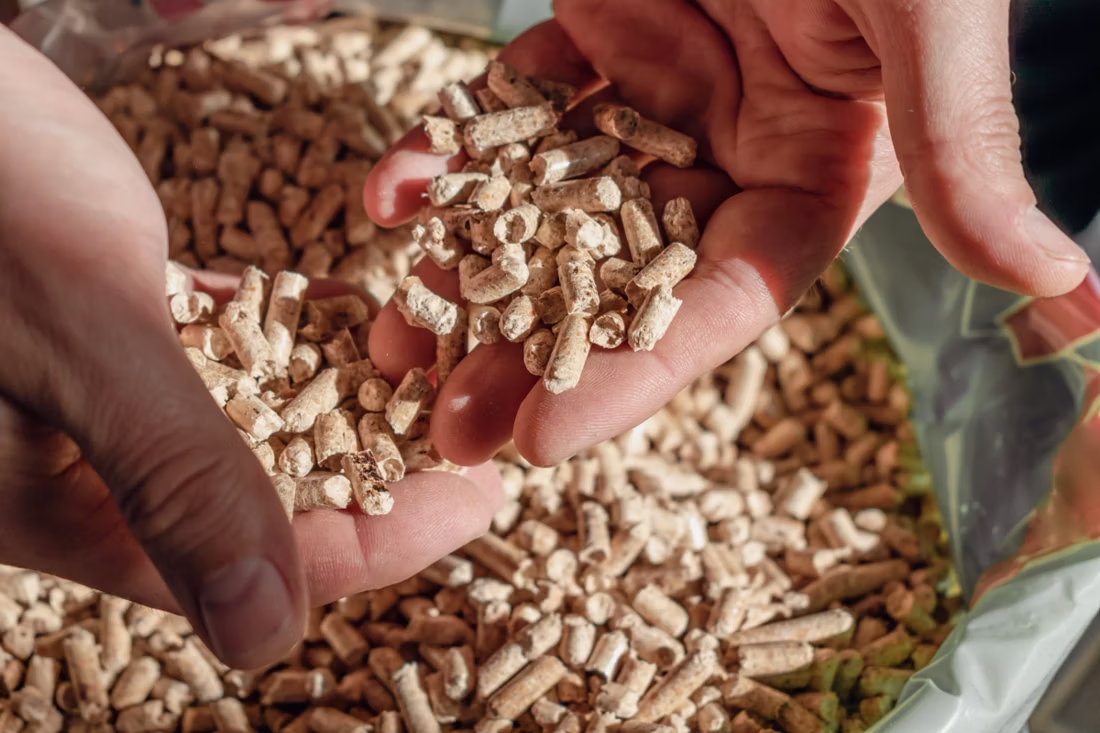
The county's forests are thick with oak, hickory, maple, and cherry—the same hardwoods locals have split for generations, and many still do, with Daniel Boone National Forest cutting permits running about $20 per cord from May through October. But a growing number of households are choosing bagged pellets instead: no splitting, no stacking, no chimney fire risk to manage, just a hopper you fill every day or two. Regional brands like Lignetics, Hamer Pellet Fuel, and Greenway Renewable Energy are sold through farm supply and hardware retailers across this part of Kentucky, so fuel is easy to keep stocked even out on the county roads.
Three steps. No salesperson until you're ready.
Tell us about your project
Your zip code, your situation, and the fuel you're leaning toward—or let the answers point you to one.
See what's actually available
The brands dealers within 100 miles genuinely carry—real options, never a catalog mirage.
Get your dealer & Project Guide
A trusted local dealer, plus the free Project Guide & Parts List that names every component of the job.
Frequently Asked Questions
How much does a pellet stove installation cost in Nicholas County?
Pellet stove and insert installations in this part of Kentucky typically run $3,000 to $6,500, depending on the unit, whether it vents through an existing wall or requires new penetration, and whether a hearth pad is needed for clearance. Because Nicholas County is rural, most installers are based out of Lexington, Mount Sterling, or Paris, so expect a modest trip charge folded into quotes for work out toward Carlisle and the surrounding township roads. Ask any local dealer for an in-home consultation before committing to a number.
Pellet stove vs. wood stove—which makes more sense here?
Nicholas County has abundant oak, hickory, maple, and cherry, and cutting your own firewood through a Daniel Boone National Forest permit costs about $20 a cord from May to October—hard to beat on raw fuel cost if you're willing to cut, split, and season it. Pellet stoves trade that labor for convenience: load a hopper of bagged fuel, set a thermostat, and let the auger do the rest. For households without the time, land, or equipment to process their own wood—or who simply want cleaner, more consistent heat—pellet is often the better fit. Many rural county residents keep a wood stove for backup and add a pellet unit for daily convenience.
What size pellet stove do I need for my home?
Most Nicholas County homes are older farmhouses or modest single-family houses, and sizing depends on square footage, ceiling height, and how tight the building envelope is. As a rough guide: a small pellet stove (up to 1,000 sq ft) suits a single large room or add-on, a medium unit (1,000–1,800 sq ft) covers most main living areas, and a larger insert or stove can handle a whole modest farmhouse if insulation is decent. Drafty older homes common in the county often need to size up slightly compared to the same square footage in a newer, tighter build. A local dealer can size your space accurately during an in-home visit.
Where can I buy pellet fuel near Nicholas County?
Regional brands including Lignetics, Hamer Pellet Fuel, and Greenway Renewable Energy are sold through farm supply stores, hardware retailers, and hearth dealers serving this part of Kentucky. Pricing moves with the season and supplier, but pellets in this region generally run somewhere in the low-to-mid $200s per ton, with better pricing available if you buy a season's supply early rather than mid-winter when demand spikes. Buying local also cuts down on delivery distance, which matters given how spread out Nicholas County's rural roads are.
Do I need a permit to install a pellet stove in Nicholas County?
Most new pellet stove and insert installations require a building permit, administered locally through the Nicholas County Fiscal Court's building office. Most hearth dealers handle the permitting paperwork as part of the installation, so homeowners rarely have to navigate it themselves. There are no air quality curtailment periods or burn restrictions in Nicholas County—the county has no listed air quality concerns—so once installed, pellet stoves here can run whenever you need heat.
Will my pellet stove work during a power outage?
Not without a backup power source. Pellet stoves rely on electricity to run the auger that feeds fuel and the blower that circulates heat, so a standard unit shuts down when the power drops. That matters in Nicholas County, where ice storms are a real winter risk and rural power lines can take longer to restore than in town. Some homeowners pair a pellet stove with a small battery backup or generator specifically for this reason, or keep a wood stove as a true off-grid backup. Ask a local dealer about battery backup options if outages are a concern for your property.
How much maintenance does a pellet stove need?
Less than a wood stove, but it's not zero. Expect to empty the ash pan every few days during regular use, clean the burn pot and glass weekly, and have the unit professionally serviced once a year—typically before the start of the heating season. Annual service includes cleaning the exhaust venting, checking the auger and blower motor, and inspecting gaskets and seals. Compared to the annual chimney sweep a wood-burning setup requires, pellet maintenance is more frequent but each task is quicker and doesn't require a certified chimney technician.
Does a pellet stove need a chimney?
No—this is one of the practical advantages for older Nicholas County farmhouses that don't have an existing masonry chimney. Pellet stoves vent through a small-diameter PL (pellet-listed) pipe that can run horizontally through an exterior wall rather than requiring a full vertical chimney. That makes installation simpler and often cheaper in homes that were never built with a fireplace, though homes with an existing masonry fireplace can also convert with a pellet insert that uses the existing chimney as a chase for the vent pipe.
Pellet vs. propane—which fits Nicholas County better?
Most of rural Nicholas County isn't on a natural gas line, so the real comparison locally is pellet versus propane rather than pellet versus piped natural gas. Propane offers instant, thermostat-controlled heat with no fuel handling, but tank fills are subject to propane market price swings and require occasional deliveries. Pellet stoves need more hands-on attention—filling the hopper, emptying ash—but fuel is typically cheaper per BTU and sold locally through farm supply outlets rather than delivered by a fuel truck. Many county homeowners choose based on whether they'd rather manage a hopper or a tank; both are legitimate options for a Nicholas County house.
What's the difference between an insert and a zero-clearance fireplace?
An insert is a fireplace that slides into a pre-existing wood-burning fireplace—if you don't have one, there's nothing to insert it into. A zero-clearance fireplace is built into a framed wall, which makes it the answer for remodels and new construction. Simple test: existing masonry fireplace means insert; blank or framed wall means zero-clearance.
Why is my open fireplace making my house colder?
Open fireplaces suck—literally. As the fire burns, it consumes air your furnace already paid to heat and pulls it out through the chimney, so the house is actually colder after the fire goes out than before you lit it. An insert fixes this: it seals the chimney, puts fixed glass across the front, and turns that hole in your house into a real heat source.
What is an in-home preview and do I need one?
It's a visit where a hearth professional measures your space, confirms the model you picked actually works in your home, and walks the specs—framing, gas line, venting, finish work—before anything is ordered. Some details you just can't know until you see the house. Never make a down payment without one; it's the single most-skipped step that burns buyers.
Can a fireplace actually lower my heating bill?
Yes—by creating a comfort zone. A furnace heats every square foot of the house just to warm the one room you're in; a gas fireplace on low burns roughly a sixth of the gas a typical furnace does. Set the furnace around 55–60 degrees as a baseline, then heat the rooms your family actually uses. Families who heat this way commonly save $20–$60 a month.
Pellet Brands Stocked Around Nicholas County
Manufacturers will point you to the nearest stocking dealer.
Find your pellet stove in Nicholas County.
Tell us a bit about your home and we'll match you with a trusted local dealer, plus a free Project Guide & Parts List—the exact parts, vent kit, and recommended installer for your Nicholas County pellet project.
Find Your Fireplace →