
Heating help for every home in Nicholas County.
Wood, gas, pellet, and electric fireplace resources for Carlisle and the farms and hollows that make up the rest of Nicholas County. Find the right unit and connect with a trusted local hearth retailer.
Every Project Starts From One of These Five Situations
Bluegrass hardwoods and moderate winters in Nicholas County, Kentucky.
Nicholas County is small—about 2,600 people spread across rolling bluegrass farmland and the wooded edges of the Daniel Boone National Forest to the south. At Climate Zone 4A and roughly 4,827 heating degree days, winters here are moderate compared to places like Duluth or Fargo—average lows sit in the low 20s—but the season still runs long enough that a working heat source matters, especially on county roads that can ice over before a plow gets out. Oak, hickory, maple, and cherry are the wood species that come off local farms and forest land, and a lot of households here still burn wood or seasoned hardwood in an insert or stove, either as primary heat on rural properties or as backup for when the power goes out during an ice storm.
What you'll find on this hub: hearth retailers, service technicians, and fuel suppliers who cover the whole county—Carlisle and the unincorporated communities scattered across Nicholas County's roughly 200 square miles. Pick your fuel below to see local dealers, typical installation costs, and recommended units for your project. Whether you're replacing an old firebox on a farmhouse or adding a pellet stove to a newer build, this is the starting point.
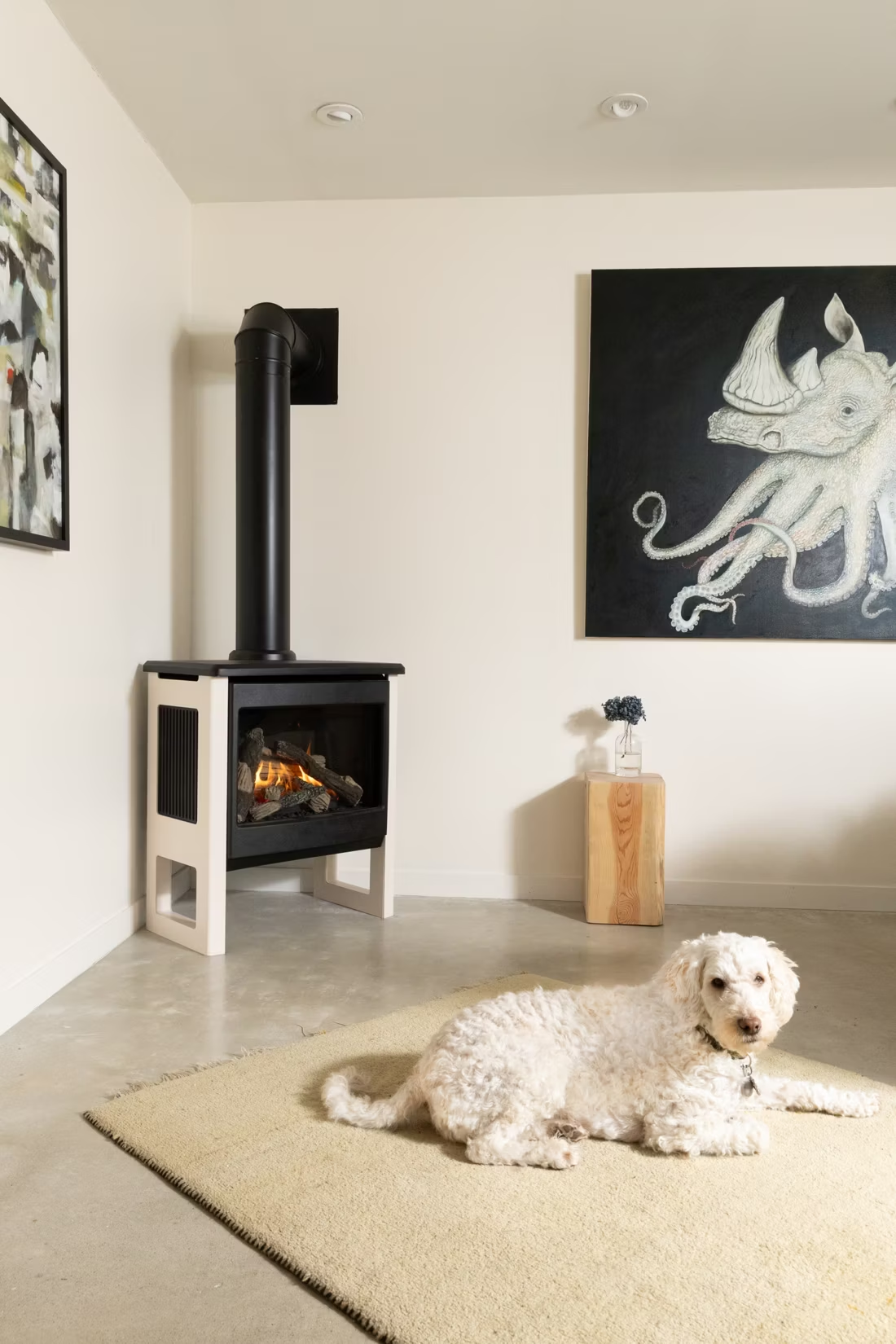
Four fuels. One honest answer for Nicholas County.
Three steps. No salesperson until you're ready.
Tell us about your project
Your zip code, your situation, and the fuel you're leaning toward—or let the answers point you to one.
See what's actually available
The brands dealers within 100 miles genuinely carry—real options, never a catalog mirage.
Get your dealer & Project Guide
A trusted local dealer, plus the free Project Guide & Parts List that names every component of the job.
Frequently Asked Questions
Which fuel works best for a home in Nicholas County?
It depends on your property and how often you lose power. Wood remains common on rural Nicholas County farms—oak and hickory are abundant locally, burn hot and long, and keep a house warm even if an ice storm takes down power lines, which happens most winters somewhere in the county. Since natural gas mains don't reach most of the county, gas fireplace owners here typically run on propane, which still offers instant heat and low-maintenance operation without the wood-splitting labor. Pellet stoves are a solid middle option if you want wood-like heat without cutting and stacking—Lignetics and Hamer Pellet Fuel are both distributed in the region. Electric fireplaces work well as supplemental heat for a single room or for ambiance, but at 4,827 heating degree days they're not typically someone's only heat source. Many Nicholas County households pair wood or propane as primary heat with electric or pellet for zones they use less often.
Do I need a permit to install a fireplace in Nicholas County?
In most cases, yes, for wood, gas, and pellet installations—new stoves, inserts, and any venting changes typically require a building permit, and gas or propane line work should go through a licensed installer regardless of permit status. Nicholas County doesn't have a standalone building department the way larger Kentucky counties do, so permitting often runs through the county's fiscal court office or, for certain work, the state fire marshal's office—a local retailer who's done installs in the county before will know the current process and can usually handle the paperwork for you. Electric fireplace installations generally skip the permit process unless you're hardwiring a built-in unit into a new circuit.
Are there air quality restrictions on wood burning in Nicholas County?
No—Nicholas County has no air quality non-attainment designations or wood-burning curtailment programs, unlike some western basin counties that deal with winter inversions. That said, a new wood stove installation should still meet current EPA emissions standards if you want it inspected and insured without hassle, and a properly sized, well-seasoned-wood-fed unit burns cleaner and more efficiently regardless of any local rule. If you're burning oak or hickory that hasn't dried at least six months to a year, expect more smoke and less heat output than the wood's potential.
Can one local hearth retailer handle all four fuel types in a county this size?
Some can, but with a county population under 3,000, don't expect a big local showroom carrying every brand in all four fuels. Retailers based in Paris, Mount Sterling, or Flemingsburg who travel into Nicholas County often carry three or four fuel types between wood, gas/propane, pellet, and electric, but their in-stock display units may be limited compared to what you'd find in a larger market. If you want to see working models of more than one fuel type side by side before deciding, it's worth calling ahead to confirm what's on the showroom floor versus what's special-order.
How does service work for rural Nicholas County properties?
Most chimney sweeps and gas or pellet technicians serving Nicholas County are based out of neighboring towns—Paris, Mount Sterling, Flemingsburg—and drive in for appointments, so expect a modest trip fee for rural addresses, especially those off the main highways toward the Daniel Boone National Forest boundary. Fall (September–October) is the easiest time to book annual service before the winter rush; if you wait until a cold snap hits, expect longer lead times. If your property is prone to losing power in ice storms, it's worth having a wood stove or propane unit as backup heat even if your main system is electric or gas.
What's the typical cost range for fireplace installation across all fuel types in Nicholas County?
Costs run in line with regional Kentucky and Bluegrass-area pricing, with some rural travel factored in. Wood stove or insert installation: roughly $4,000–$8,500 depending on chimney condition and whether new venting is needed. Gas or propane fireplace, insert, or stove: roughly $4,000–$9,500, with propane tank setup or line work affecting the low versus high end. Pellet stove or insert: roughly $4,000–$7,000 for a typical install. Electric fireplace: $200–$2,800 for the unit itself, plus $300–$1,000 in labor for anything beyond a plug-and-play placement. See the county + fuel pages above for cost detail tied to specific local retailers.
Can a fireplace actually lower my heating bill?
Yes—by creating a comfort zone. A furnace heats every square foot of the house just to warm the one room you're in; a gas fireplace on low burns roughly a sixth of the gas a typical furnace does. Set the furnace around 55–60 degrees as a baseline, then heat the rooms your family actually uses. Families who heat this way commonly save $20–$60 a month.
Wood, gas, pellet, or electric—how do I choose?
Match the fuel to your life, not the other way around. Wood: lowest fuel cost and total power-outage independence, but you're hauling and stacking. Gas: press a button, set a thermostat, no maintenance to speak of. Pellet: wood economics with automatic feeding, in exchange for weekly cleaning and a need for electricity. Electric: plugs in anywhere with honest supplemental heat. Nobody regrets the fuel that fits how they actually live.
Should the dealer who sells my fireplace also install it?
Ideally, yes. A fireplace project involves vent pipe, gas line, electrical, and often tile or stone. Hire three or four separate trades and you own the liability and the game of telephone between them. One company selling and installing means one accountable party, start to finish—ask about factory training, on-time completion records, and what happens if an inspection fails.
Can I install a fireplace myself?
If you're putting a fire in your house on purpose, it's best to work with an expert. Unless you're genuinely experienced in framing, gas line, vent pipe, and the national code on clearances to combustibles, have a professional do it—and ideally the same company that sells you the fireplace, so warranty, service, and liability all live under one roof.
Stove and Fireplace Dealers in Nicholas County
Listings include WhyFire partner dealers, dealers we have verified as authorized for the brands we recommend, and established local businesses that carry hearth products. Every listing shows which one it is. The ones marked Preferred run on WhyFire's software, so they can show you real pricing and book your appointment right here. No manufacturer pays for placement. How we verify dealers →
Barnhill Chimney Company
Clark Propane Plus
Vonderhaar's Factory Outlet
Hardymon Lumber
Wood Energy Warehouse
Housewarmings
Find your fireplace project in Nicholas County.
Tell us about your project and we'll match you with a trusted local dealer and send a free Project Guide & Parts List—the exact parts, including the vent kit, and the dealer we recommend for your home.
Find Your Fireplace →