
Reliable Heat, No Gas Line Required.
Nicholas County sees roughly 4,827 heating degree days a year and winter lows near 23°F—enough cold to want real zone heat in the rooms you use most, without waiting on a natural gas main that never reached most of the county. Find the right electric unit and connect with a trusted local dealer.
Every Project Starts From One of These Five Situations
Electric heat that follows lines already strung across Nicholas County.
Nicholas County is small—about 2,600 people spread across rolling Outer Bluegrass farmland around the county seat of Carlisle—and it's the kind of place where natural gas mains simply never got run down most rural roads. Homes here heat with electric heat pumps, propane, and wood cut from oak, hickory, maple, and cherry stands, often supplemented by whatever gives the fastest, cleanest heat in the room a family actually lives in on a 23°F January evening. Electric fireplaces fit that role well: no chimney, no venting, no propane tank to schedule a fill for.
Fleming-Mason Energy Cooperative serves electric power to nearly every farmhouse and homestead in Nicholas County, which means the infrastructure for an electric fireplace is already in place at the meter—adding one is a wiring project, not a utility-extension project. That makes electric a practical fit for converting an old masonry fireplace that's stopped getting used, finishing a converted barn or outbuilding, or adding heat to a room addition where running a chimney or gas line isn't realistic. At 4,827 HDD, it won't replace the furnace on the coldest stretch of winter, but it will carry a living room or bedroom through most of the season on its own.
Three steps. No salesperson until you're ready.
Tell us about your project
Your zip code, your situation, and the fuel you're leaning toward—or let the answers point you to one.
See what's actually available
The brands dealers within 100 miles genuinely carry—real options, never a catalog mirage.
Get your dealer & Project Guide
A trusted local dealer, plus the free Project Guide & Parts List that names every component of the job.
Frequently Asked Questions
How much does an electric fireplace installation cost in Nicholas County?
Most electric fireplace projects in Nicholas County run $500 to $2,500. A plug-in insert dropped into an existing masonry fireplace opening sits at the low end—often just the unit cost plus a small amount of trim work. A built-in wall unit that requires a dedicated 120V or 240V circuit run by a licensed electrician, drywall patching, and a mantel or surround runs higher, sometimes $2,500 to $4,000 for a larger great-room install. Because there's no chimney or venting to size, electric is consistently the least expensive of the four fuel types to install here.
What size electric fireplace do I need for my home?
Electric fireplaces are rated in BTUs for zone heating, not whole-home heating, so sizing is really about the room, not the square footage of the house. A 1,500-watt unit (roughly 5,000 BTU) comfortably supplements a bedroom or den in a typical Nicholas County farmhouse; larger great rooms or open-concept living areas usually call for a 30-inch to 50-inch linear unit paired with the home's existing heat pump or furnace for the coldest nights. Don't expect an electric fireplace to carry the whole house through a stretch near or below the 23°F average winter low—it's built to heat the room you're sitting in, efficiently and on demand.
Do I need a licensed electrician to install an electric fireplace?
Small plug-in inserts that run on a standard 120V outlet don't require an electrician—they work like any other appliance. But most built-in and larger units call for a dedicated circuit, and in a county the size of Nicholas, that electrical work should go through a licensed electrician working under Kentucky's state electrical inspection program, since the county doesn't run its own dedicated building department for this kind of work. The dealers who sell and install electric fireplaces locally typically coordinate that wiring step for you rather than leaving it to a handyman.
What's the difference between an electric fireplace, insert, and stove?
An electric fireplace is usually a built-in wall unit designed for new construction or a remodel. An electric insert is sized to slide into an existing masonry fireplace opening—a common move for older Nicholas County farmhouses with a fireplace that hasn't burned wood in years but still has a usable firebox. An electric stove is a freestanding cabinet-style unit that sits on the floor and can go virtually anywhere there's an outlet, no fireplace opening required. For a homeowner converting a disused hearth, the insert is almost always the right call; for a room with no fireplace at all, the stove is the simplest option.
Do I need a permit to install an electric fireplace in Nicholas County?
A simple plug-in unit generally doesn't require a permit since there's no combustion, venting, or gas line involved. If your installation requires a new dedicated circuit, that electrical work falls under Kentucky's state electrical inspection program rather than a local county permit desk, since Nicholas County doesn't maintain its own building inspection office. Your electrician or installing dealer can tell you whether your specific project triggers an inspection—most straightforward retrofits into an existing fireplace opening don't.
What's the best electric fireplace for a Nicholas County home?
For a farmhouse with an old masonry fireplace that's gone cold, a realistic-flame electric insert from a brand like Dimplex or Napoleon gives you usable heat back in that room without touching the chimney. For newer construction or a great room addition, a linear wall-mount unit with a supplemental heater rated for the room's square footage works well alongside the home's existing heat pump. Given that winter lows average 23°F and the heating season runs long at 4,827 HDD, treat the electric fireplace as a zone-heat and ambiance solution paired with your primary system—not a full replacement for it.
How much maintenance does an electric fireplace need?
Very little compared to wood or gas. There's no chimney to sweep and no annual combustion-safety inspection required. Maintenance is limited to occasionally dusting the blower vents, wiping down the glass, and replacing an LED bulb in the flame effect every several years if brightness fades. That low-maintenance profile is part of why electric inserts are popular in Nicholas County's older farmhouses—nobody has to keep an eye on creosote buildup in a chimney that hasn't been swept in years.
Will my electric fireplace work if the power goes out?
No—an electric fireplace stops working the moment the power does, which matters in rural Nicholas County where ice storms can knock out Fleming-Mason Energy Cooperative service for a day or more at a time. If backup heat during outages is a real concern for your household, many local homes pair an electric fireplace for everyday zone heat with a wood stove or fireplace fed by oak or hickory cut under a Daniel Boone National Forest cutting permit—giving you a fuel source that works with or without the grid.
Electric vs. wood or propane—which is right for my home?
Electric wins on convenience: flip a switch, no wood handling, no propane tank to monitor, and the lowest installation cost of any option. Wood, burned from local oak, hickory, or cherry, wins on backup reliability during outages and lower fuel cost if you're already cutting your own firewood. Propane sits in between—real heat output and often available as a backup during outages with the right unit, but it requires a tank and delivery contract since natural gas mains don't reach most of the county. Many Nicholas County households end up running an electric fireplace in the main living space for daily use and keeping a wood stove or propane heater as backup for when the power's out or temperatures drop hard.
Can I put a TV above my fireplace?
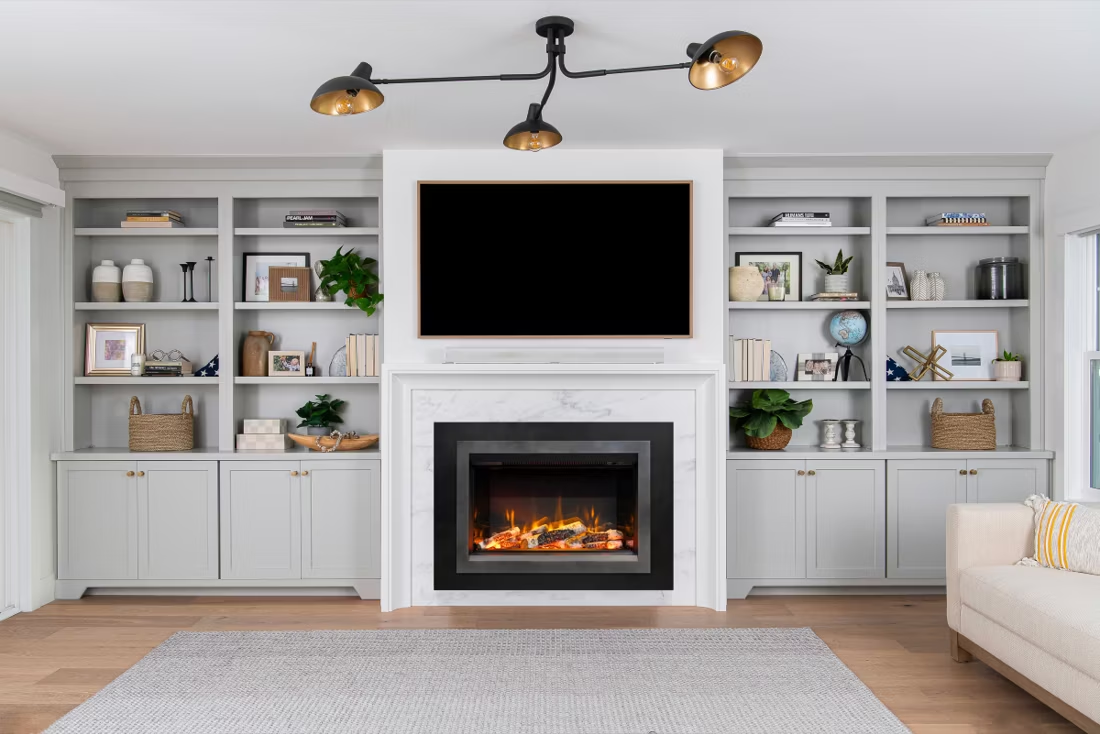
Yes—with an asterisk. Fireplaces are hot and TVs don't like heat. Either put a mantel between them to deflect rising warmth, or choose a fireplace with heat-management technology that creates a cool zone on the wall above—the wall stays around 125 degrees, barely warm, while the room still gets full heat. If you like clean lines and don't want a mantel, heat management is the answer.
What fireplace styles should I know before shopping?
Four cover most of the market: screen-front traditional (mesh front, open feel, fits craftsman homes), traditional door set (the classic look you grew up with), modern linear (wide, low, the statement piece for entertaining), and clean face contemporary (no trim—your tile or stone runs right to the fire's edge). Walk in knowing those four terms and you're ahead of most buyers.
Does a fireplace add value to my home?
On average, a fireplace adds back to the home about the same amount you spent installing it. Add the monthly savings from heating the rooms you actually use instead of the whole house—often hundreds of dollars a year—and the value case is strong before you even count what a fire does for how your family uses the room.
What is an in-home preview and do I need one?
It's a visit where a hearth professional measures your space, confirms the model you picked actually works in your home, and walks the specs—framing, gas line, venting, finish work—before anything is ordered. Some details you just can't know until you see the house. Never make a down payment without one; it's the single most-skipped step that burns buyers.
Find your electric fireplace in Nicholas County.
Tell us a bit about your home and we'll put together a free Project Guide & Parts List for your electric fireplace project—the right unit, the wiring it needs, and a trusted local dealer to install it.
Find Your Fireplace →