
Steady, Low-Maintenance Heat for Martin County Homes.
Consistent, thermostat-controlled warmth for the hollers and ridgelines of Martin County—without the daily woodpile chore. Get matched with a trusted local dealer who can size and install the right unit for your home.
Every Project Starts From One of These Five Situations
Consistent warmth without the woodpile.
Martin County sits in the Appalachian foothills of eastern Kentucky along the West Virginia border, a sparsely populated stretch of hollers and ridges centered on Inez. The oak, hickory, maple, and cherry forests that cover the county's hillsides have kept generations warm with cordwood and coal, and Zone 4A's long, damp winters still call for serious heat well past the region's first frost. Pellet stoves have found a real foothold here in recent years, offering families in this rural, low-density county a way to get steady, even heat without stacking, splitting, and hauling wood every week.
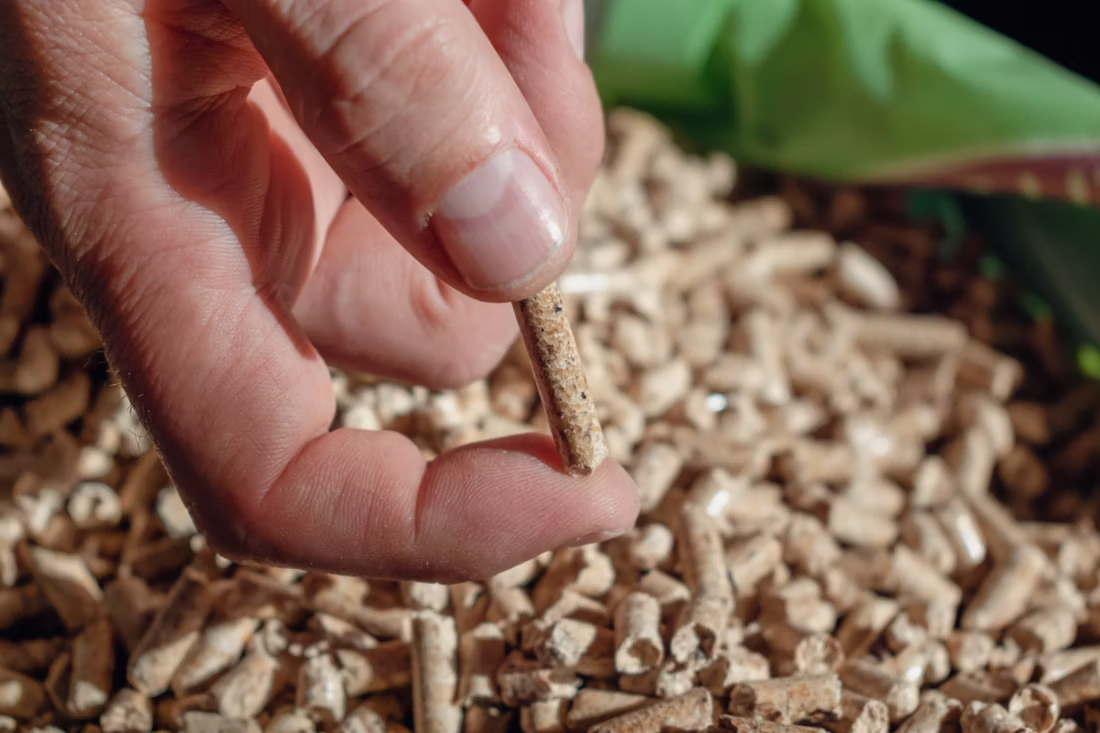
With no air quality nonattainment issues or winter burn restrictions on the books for Martin County, pellet appliances run without the curtailment worries that some western counties deal with—the main practical consideration here is electricity, since a pellet stove's auger and blower need reliable power, typically from the rural electric cooperative that serves most of the county's unincorporated areas. Regional pellet brands like Hamer Pellet Fuel and Greenway Renewable Energy are manufactured just across the West Virginia line from Appalachian hardwood—the same oak, hickory, and maple stock that grows on Martin County's own hillsides—alongside nationally distributed Lignetics bags carried at farm and hardware stores throughout the region.
Three steps. No salesperson until you're ready.
Tell us about your project
Your zip code, your situation, and the fuel you're leaning toward—or let the answers point you to one.
See what's actually available
The brands dealers within 100 miles genuinely carry—real options, never a catalog mirage.
Get your dealer & Project Guide
A trusted local dealer, plus the free Project Guide & Parts List that names every component of the job.
Frequently Asked Questions
How much does a pellet stove installation cost in Martin County?
Martin County doesn't have a large enough dealer network to generate published county-specific pricing, but pellet stove and insert installations across rural eastern Kentucky and neighboring West Virginia typically run in the $3,000 to $6,500 range, depending on the unit, whether a dedicated electrical circuit needs to be run, and whether the stove vents through an existing masonry chimney or requires new through-wall venting. Homes converting an old wood-burning fireplace to a pellet insert are usually on the lower end since the chimney chase is already in place. A local dealer will give you a firm number after seeing your home in person.
What size pellet stove do I need for my home?
Most freestanding homes on ridges and in hollers around Martin County fall into the small-to-medium range—units rated for 1,000 to 1,800 square feet handle a typical single-story farmhouse or ranch, while larger or poorly insulated homes, common in this county's older housing stock, may need a unit rated up to 2,500 square feet to keep up on the coldest Zone 4A nights. Homes using the pellet stove as sole heat, rather than as a supplement to an existing furnace, should size up rather than down. A local dealer can size your home accurately during an in-home visit, accounting for ceiling height, window count, and insulation.
Where can I find a certified pellet stove installer near Martin County?
Given Martin County's small population and rural footprint, most homeowners end up working with a hearth dealer based in a larger nearby market—commonly Pikeville, KY or the Huntington/Ashland, WV-KY area—who then travels into the county for installation. Look for a dealer whose technicians hold NFI (National Fireplace Institute) pellet certification, and ask directly whether they service Martin County regularly, since travel distance can affect both scheduling and the final invoice. Working with the same dealer who sells the stove for the install keeps warranty coverage and code compliance straightforward.
What's the difference between a pellet stove and a pellet insert?
A pellet stove is a freestanding, self-contained unit that sits on a hearth pad and vents through a wall or existing chimney—it can go almost anywhere in the home with the right clearances. A pellet insert is built to slide into an existing masonry fireplace opening, converting an old wood-burning hearth into a sealed, thermostat-controlled heat source. For the many older homes throughout Martin County with an existing fireplace already in place, an insert is usually the simpler and less expensive path since it reuses the chimney chase already there.
Do I need a permit to install a pellet stove in Martin County?
Outside the small city limits of Inez, most of unincorporated Martin County doesn't operate under a formal residential building permit process the way larger urban counties do, so many rural pellet installations proceed without a county-issued permit. That said, the electrical work for a dedicated circuit should still be done by a licensed electrician, and your homeowner's insurance carrier will typically require the unit to be UL-listed and installed to manufacturer clearance specifications regardless of local permitting. A reputable dealer will flag any permit or inspection requirement specific to your address before starting work.
What's the best pellet stove for Martin County's climate?
Zone 4A's mixed-humid winters—long, damp, and regularly dipping into the teens and single digits across the county's higher ridges—call for a standard mid-size pellet stove rather than anything oversized. Since Martin County sits close to two hardwood pellet producers, Hamer Pellet Fuel and Greenway Renewable Energy, both of which mill oak, hickory, and maple stock similar to what grows locally, homeowners here have reliable access to hardwood pellet blends without relying on long-haul shipping. A dealer can match stove BTU output to your home's square footage and insulation level, and hardwood pellets from either regional brand tend to run cleaner with less ash than some softwood blends.
Where can I buy pellet fuel near Martin County?
Regional brands Hamer Pellet Fuel and Greenway Renewable Energy, both manufactured just across the West Virginia border, are the most consistently available options for Martin County households, often stocked at farm supply and hardware stores throughout eastern Kentucky and southern West Virginia. Nationally distributed Lignetics bags are also widely carried and offer a fallback if regional supply tightens during peak winter demand. Buying several tons ahead of the coldest months is common practice in this rural county, since a single trip to restock isn't always convenient from the more remote hollers.
Will my pellet stove work during a power outage?
Not without a backup power source—pellet stoves rely on an electric auger to feed fuel and a blower to circulate heat, so a standard unit shuts down the moment power drops. This matters in Martin County, where rural electric cooperative service can see longer outage windows after ice storms or heavy snow than in more urban counties. Homeowners who want pellet heat as backup during outages should ask their dealer about a battery backup system or a small generator sized to run the stove's electrical draw, which is modest compared to central HVAC.
Pellet stove vs. wood stove—which is right for my home?
Wood stoves work without electricity, burn free or low-cost self-cut firewood from the oak, hickory, maple, and cherry stands common across Martin County's hillsides, and give the most heat per dollar for households willing to cut, split, and stack. Pellet stoves trade that self-sufficiency for convenience—load a hopper, set a thermostat, and get even, low-maintenance heat with far less ash and no chimney creosote buildup, but they depend on grid power and a steady pellet supply. For Martin County homes with reliable rural electric service and easy access to Hamer or Greenway pellet bags nearby, pellet often wins on convenience. For homes deep in the hollers where outages run long and firewood is essentially free, wood still holds its ground.
How often does a pellet stove need cleaning?
A clean pellet stove is a happy pellet stove. Plan on cleaning the burn pot about once a week when you're burning regularly—ash and clinkers gum up the air holes just like a pellet barbecue. Most pellet stove problems trace back to skipped cleaning that nobody explained up front. Some designs make it easy with a trapdoor burn pot: pull a lever and the gunk drops into the ash pan.
What's the difference between an insert and a zero-clearance fireplace?
An insert is a fireplace that slides into a pre-existing wood-burning fireplace—if you don't have one, there's nothing to insert it into. A zero-clearance fireplace is built into a framed wall, which makes it the answer for remodels and new construction. Simple test: existing masonry fireplace means insert; blank or framed wall means zero-clearance.
How much should I budget for a fireplace?
For an average home—covering the fireplace, the vent pipe, and basic installation—a budget between $3,900 and $5,500 gives you a lot of options across wood, gas, and pellet. By the time you add finish work, gas line, and electrical, the average complete installation lands between $5,000 and $12,000 all-in. In a remodel or new build, a good rule is to put about 2.5% of the total project cost toward the fireplace.
Does a fireplace add value to my home?
On average, a fireplace adds back to the home about the same amount you spent installing it. Add the monthly savings from heating the rooms you actually use instead of the whole house—often hundreds of dollars a year—and the value case is strong before you even count what a fire does for how your family uses the room.
Pellet Brands Stocked Around Martin County
Manufacturers will point you to the nearest stocking dealer.
Find your pellet stove in Martin County.
Tell us a bit about your home and we'll match you with a trusted local dealer serving Martin County, plus a free Project Guide & Parts List covering the right pellet stove or insert, venting, and everything needed for the install.
Find Your Fireplace →