
Wood, gas, pellet & electric fireplaces for Martin County, Kentucky.
From Inez to Warfield, Lovely to Beauty, this hub connects Martin County homeowners with the local dealers and technicians who actually install and service hearth equipment in these hills—no matter which fuel fits your home.
Every Project Starts From One of These Five Situations
Hardwood heat in the Appalachian coalfields.
Martin County sits deep in eastern Kentucky's Appalachian coalfields, a county of steep ridges, hollows, and a little over a thousand residents spread across its hills. The climate here (Zone 4A) is genuinely cold in the winter months without the brutal extremes of somewhere like Burlington, Vermont—but cold enough that a solid heat source matters for months at a stretch. What the county has in abundance is hardwood: oak, hickory, maple, and cherry grow thick on the ridgelines, and cutting your own firewood off family land is still a normal part of getting ready for winter here.
Because Martin County's population is small, you won't find a dozen hearth showrooms inside the county line—most retailers and technicians who actually service Inez, Warfield, Lovely, Beauty, and Tomahawk are based in nearby Paintsville (Johnson County) or Pikeville (Pike County) and travel in. This hub rolls up who covers Martin County across all four fuel types—wood, gas, pellet, and electric—plus the fuel suppliers and service techs who keep those systems running. Pick your fuel below for installation costs, unit recommendations, and the dealer that actually reaches your hollow.
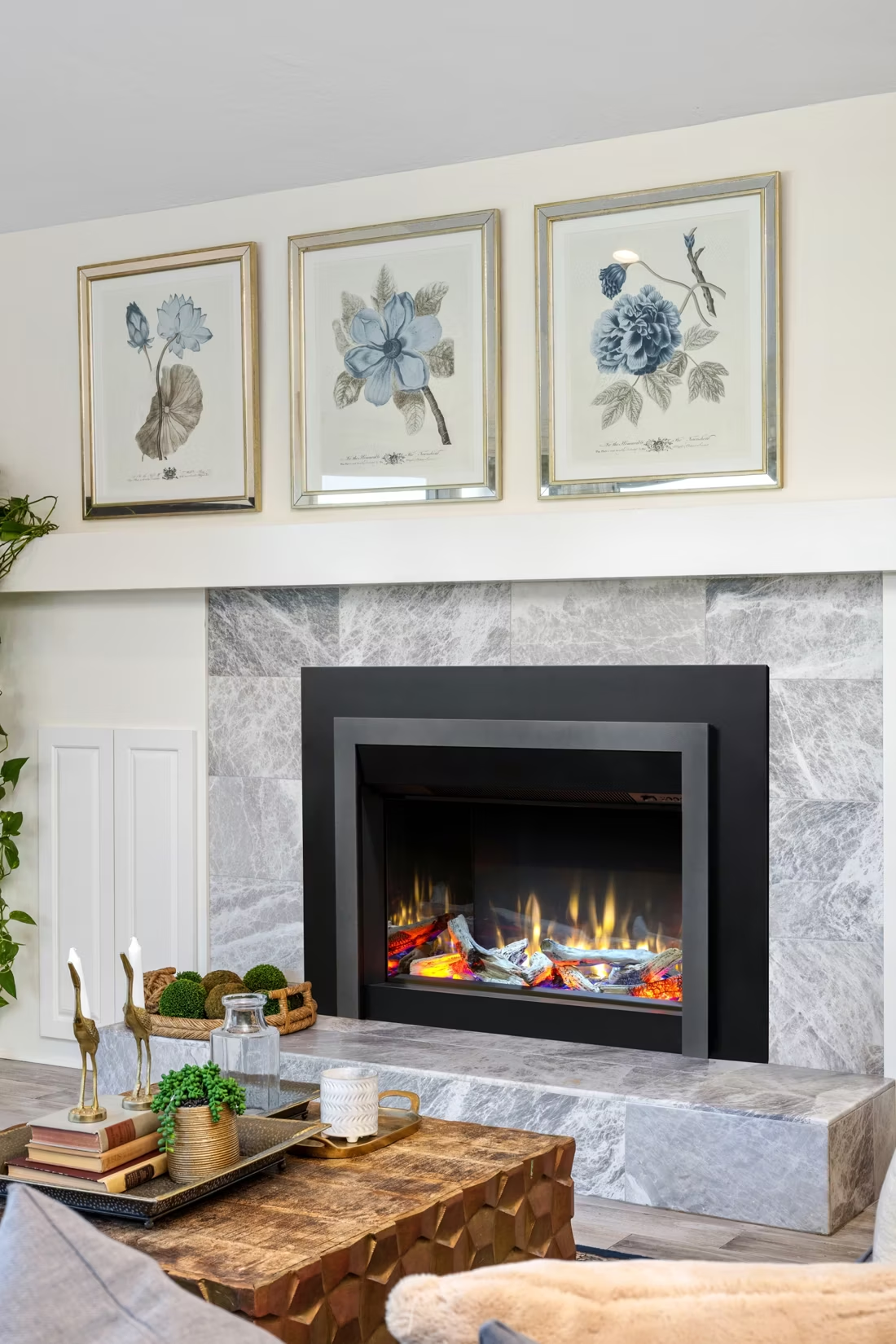
Four fuels. One honest answer for Martin County.
Three steps. No salesperson until you're ready.
Tell us about your project
Your zip code, your situation, and the fuel you're leaning toward—or let the answers point you to one.
See what's actually available
The brands dealers within 100 miles genuinely carry—real options, never a catalog mirage.
Get your dealer & Project Guide
A trusted local dealer, plus the free Project Guide & Parts List that names every component of the job.
Frequently Asked Questions
Which fuel works best in Martin County?
Wood is the natural fit here—oak and hickory are dense, plentiful, and many families already have access to their own timber, which keeps fuel costs at close to nothing beyond the labor of cutting and splitting. A cast-iron or steel wood stove burning seasoned hickory will hold heat through a cold Appalachian night without much trouble. Gas, almost always propane rather than piped natural gas in this part of the county, is the convenience option for homes that want instant heat without tending a fire. Pellet stoves are a solid middle ground—regional brands like Lignetics and Hamer Pellet Fuel are stocked locally, so fuel access isn't the obstacle it can be in more remote parts of the country. Electric fireplaces work well as supplemental heat in bedrooms or additions but aren't relied on as a primary heat source through a full Kentucky winter. Plenty of Martin County homes run wood or pellet as primary heat with a propane or electric unit for the rooms furthest from the woodstove.
Do I need a permit to install a fireplace in Martin County?
Generally, yes, for anything involving new venting, gas lines, or structural chimney work—wood inserts, gas fireplaces, gas stoves, and pellet inserts typically require a building permit, and propane installations need a licensed gas-fitter for the line work regardless of permitting. Martin County doesn't maintain a large planning department given its size, so permitting for rural installs usually runs through the county courthouse in Inez. Plug-and-play electric units generally don't require a permit unless you're hardwiring a built-in unit into a new circuit. Most established hearth retailers who serve the county—even the ones based out of Paintsville or Pikeville—will handle the permit paperwork as part of the installation quote, which saves a trip to the courthouse.
Are there air quality restrictions on wood burning in Martin County?
No—Martin County has no non-attainment designation, no winter inversion advisories, and no mandatory or voluntary burn curtailment periods on file. That's a meaningful difference from western counties where wood smoke can trigger yellow or red advisory days; here, there's no regulatory reason to hold off on a wood fire on a cold night. That said, burning well-seasoned hardwood—oak, hickory, and maple that's been split and dried at least six months to a year—still matters for chimney safety and for getting real heat output rather than smoke and creosote buildup.
Can one local hearth retailer handle all four fuel types?
It depends on which dealer covers your part of the county. Because Martin County itself has no large standalone hearth showroom, most homeowners end up working with a multi-fuel retailer out of Paintsville or Pikeville that carries wood stoves, gas or propane units, pellet stoves, and electric fireplaces under one roof—those larger dealers are worth checking first if you want to compare fuels side by side. Smaller local suppliers, meanwhile, tend to focus on firewood or pellets rather than full retail and installation. If you already know your fuel—say, a wood insert to replace an aging open fireplace—a wood-focused installer working out of a smaller shop may get to you faster than a bigger multi-fuel retailer with a longer route.
How does fireplace service work in rural parts of Martin County?
Nearly all technicians who service Martin County are based outside the county, in Paintsville or Pikeville, and drive in—so expect a modest travel fee tacked onto service calls, and expect to book ahead of the first cold week of the season rather than calling in December when everyone else is doing the same. Chimney sweeping is common practice here given how much wood heat is in use, and it's worth scheduling every year given how much creosote can build up from regular hardwood burns. Propane appliance service and pellet stove cleaning follow a similar pattern—plan for a fall appointment window before demand piles up.
What's the typical cost range for fireplace installation across all fuel types in Martin County?
Costs run a bit lower here than in higher cost-of-living regions, but venting and labor still make up the bulk of the bill. Wood stove or insert installation typically runs $3,500–$7,500, more if a full masonry chimney needs relining or rebuilding. Gas or propane fireplace, insert, or stove installation generally falls between $4,000–$9,000, with propane tank setup or line work adding to the lower end of that range. Pellet stove or insert installation usually lands around $4,000–$6,500. Electric fireplaces are the cheapest entry point—$200–$2,500 for the unit itself, with $300–$1,000 in labor if it's a built-in rather than a plug-and-play model. For a project-specific number, the county's fuel pages break this down further based on the dealer serving your area.
Wood, gas, pellet, or electric—how do I choose?
Match the fuel to your life, not the other way around. Wood: lowest fuel cost and total power-outage independence, but you're hauling and stacking. Gas: press a button, set a thermostat, no maintenance to speak of. Pellet: wood economics with automatic feeding, in exchange for weekly cleaning and a need for electricity. Electric: plugs in anywhere with honest supplemental heat. Nobody regrets the fuel that fits how they actually live.
Does a fireplace add value to my home?
On average, a fireplace adds back to the home about the same amount you spent installing it. Add the monthly savings from heating the rooms you actually use instead of the whole house—often hundreds of dollars a year—and the value case is strong before you even count what a fire does for how your family uses the room.
Can a fireplace actually lower my heating bill?
Yes—by creating a comfort zone. A furnace heats every square foot of the house just to warm the one room you're in; a gas fireplace on low burns roughly a sixth of the gas a typical furnace does. Set the furnace around 55–60 degrees as a baseline, then heat the rooms your family actually uses. Families who heat this way commonly save $20–$60 a month.
How much should I budget for a fireplace?
For an average home—covering the fireplace, the vent pipe, and basic installation—a budget between $3,900 and $5,500 gives you a lot of options across wood, gas, and pellet. By the time you add finish work, gas line, and electrical, the average complete installation lands between $5,000 and $12,000 all-in. In a remodel or new build, a good rule is to put about 2.5% of the total project cost toward the fireplace.
Stove and Fireplace Dealers in Martin County
Listings include WhyFire partner dealers, dealers we have verified as authorized for the brands we recommend, and established local businesses that carry hearth products. Every listing shows which one it is. The ones marked Preferred run on WhyFire's software, so they can show you real pricing and book your appointment right here. No manufacturer pays for placement. How we verify dealers →
B & W TV & Appliance Co.
May Horn's Inc.
Pikeville Ace Hardware Inc
American Heating And Cooling
Find your fireplace in Martin County.
Tell us your fuel and your town, and we'll match you with a trusted local dealer and send over a free Project Guide & Parts List—the exact parts, including the vent kit, and the dealer we recommend for your Martin County home.
Find Your Fireplace →