
Reliable Gas Heat for Every Hollow in Martin County.
From Inez down to the smaller communities strung along the Tug Fork, most Martin County homes run on propane rather than piped natural gas. A properly sized gas fireplace or insert gives you heat at the flip of a switch—no hauling wood up a hollow road in an ice storm. Find the right unit and get matched with a trusted local dealer.
Every Project Starts From One of These Five Situations
Instant heat without depending on a woodpile.
Martin County sits deep in the eastern Kentucky coalfields, a rugged stretch of steep hollows and ridgelines along the Tug Fork River near the West Virginia line. With a small, spread-out population and homes often tucked well up narrow hollow roads, winters here are the classic Zone 4A mix—cold, damp, and prone to ice that can knock out power for days at a time. Oak, hickory, maple, and cherry cover the ridges, and wood heat has deep roots in the county. But for a lot of households, a gas fireplace or insert is the more practical everyday choice, especially in living rooms and additions where hauling and stacking wood isn't realistic.
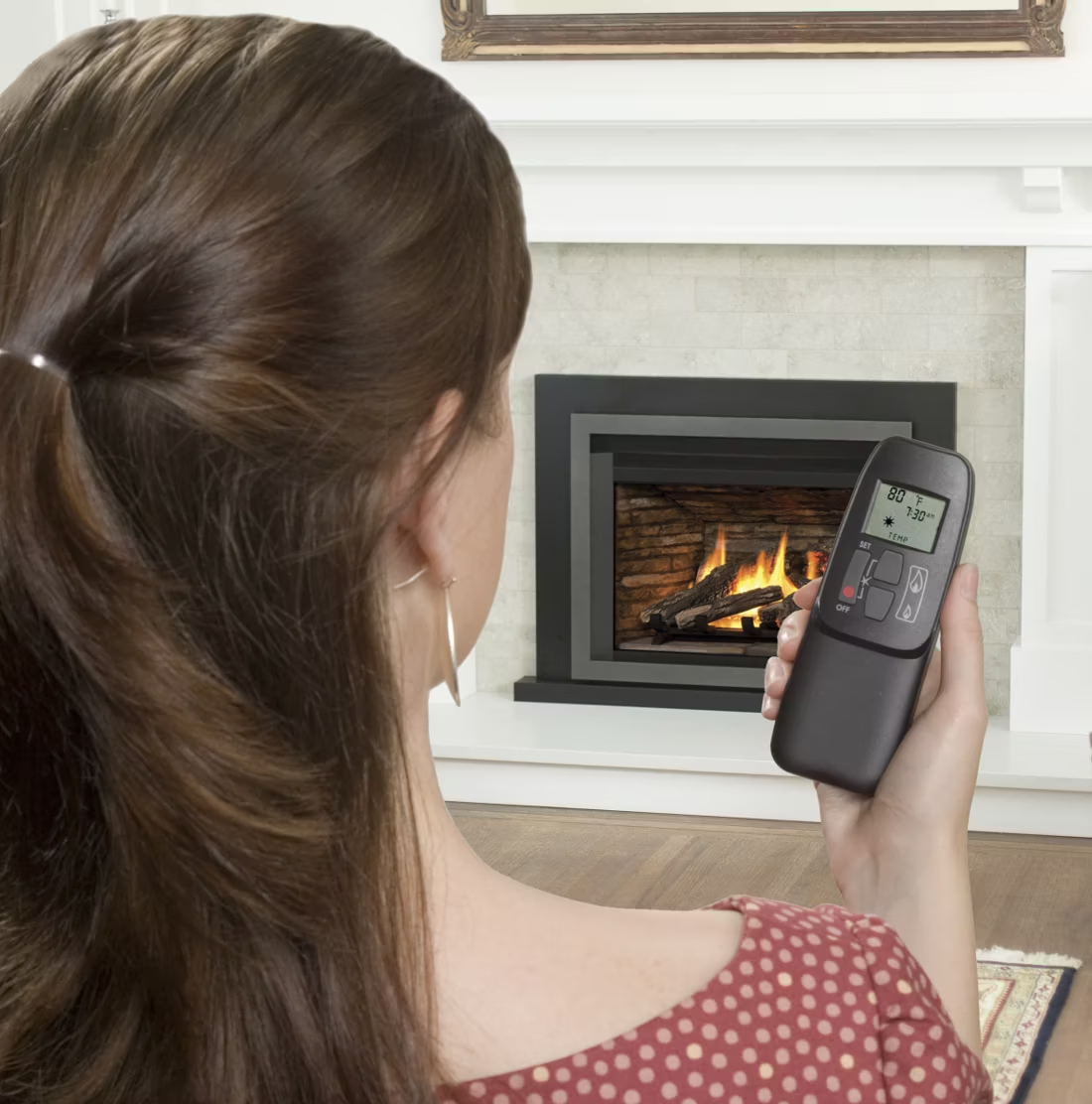
There's no widespread natural gas main line running through most of Martin County's hollows, so propane is the fuel that actually gets gas fireplaces installed here—supplied by regional propane dealers rather than a city utility. That means the calculus is a little different than in a town with piped gas: tank placement, line runs, and delivery access all factor into a project. The payoff is the same regardless—a sealed, direct-vent gas fireplace or insert that lights instantly, doesn't need daily tending, and in the right models, keeps running through a winter power outage without you doing anything but flipping a switch.
Three steps. No salesperson until you're ready.
Tell us about your project
Your zip code, your situation, and the fuel you're leaning toward—or let the answers point you to one.
See what's actually available
The brands dealers within 100 miles genuinely carry—real options, never a catalog mirage.
Get your dealer & Project Guide
A trusted local dealer, plus the free Project Guide & Parts List that names every component of the job.
Frequently Asked Questions
How much does a gas fireplace installation cost in Martin County?
Most propane fireplace and insert installations in a rural county like Martin run somewhere between $3,500 and $9,000, with the spread driven mostly by two things: whether you're converting an existing masonry fireplace (cheaper, since the chimney already exists as a venting path) versus a new install in a room with no existing hearth, and how far the propane line has to run from the tank. Homes already set up with a propane tank for a furnace or water heater are usually on the lower end. A new tank installation, a long buried line run up a hollow driveway, or venting through a log or block wall adds cost. A local propane and hearth dealer will walk your specific site before quoting.
Can I convert my existing wood fireplace to gas?
Yes, and it's a common project in older Martin County homes with a masonry fireplace built decades ago for wood or coal. A direct-vent or vented gas insert slides into that existing opening, uses a stainless liner run through your current chimney, and hooks to a propane line. You keep the look of the original hearth—often set in local stone or brick—while gaining instant on-off heat and losing the daily wood-hauling and ash cleanup. It's a good fit for homes on tight hollow lots where stacking a winter's worth of oak or hickory isn't practical.
Do I need natural gas to install a gas fireplace, or can I use propane?
In Martin County, propane is the realistic answer for nearly every homeowner—there's no widespread natural gas utility line reaching most addresses in the county, especially outside the immediate Inez area. Every major gas fireplace and insert model can be configured to run on propane instead of natural gas; your installer sets the correct orifice and regulator for propane at the time of install. If you don't already have a propane tank on the property, your installer will coordinate with a local propane supplier to size and place one, which is a normal part of a first-time gas fireplace project out here.
Will my gas fireplace work during a power outage?
This matters more in Martin County than in a lot of places—ice storms and downed lines along the ridge roads can mean outages that stretch for days, not hours. Most gas fireplaces with intermittent pilot ignition (IPI) run on a battery backup and will light and heat normally even with the power out, as long as the batteries are fresh. Valor fireplaces take a different approach: the pilot's thermocouple generates the small amount of electricity the unit needs, so there are no batteries to maintain at all. If backup heat during an outage is a priority for your hollow, ask your local dealer specifically about the ignition system on any model you're considering.
What's the difference between a gas fireplace, gas insert, and gas stove?
A gas fireplace is a fully framed-in, built-in unit—the right choice for new construction or an addition without an existing hearth. A gas insert is built to slide into an existing masonry fireplace opening, which fits a lot of the older housing stock around Inez and the surrounding hollows. A gas stove is a freestanding, cabinet-style unit that sits out on its own hearth pad, similar in footprint to a wood stove, and works well in a room without any existing fireplace or chimney. For most Martin County homes with an old wood-burning fireplace already in place, an insert is the straightforward upgrade.
Do I need a permit to install a gas fireplace in Martin County?
Martin County doesn't maintain the kind of dedicated building-permit office you'd find in a larger Kentucky county, so a lot of the code compliance for a gas fireplace project runs through the propane supplier's licensed gas-fitter rather than a separate county inspection step. That said, requirements can vary by whether your address falls inside Inez city limits or out in unincorporated parts of the county. A local hearth or propane dealer who's installed in your area before will know exactly what's required for your specific address—that local knowledge is one of the bigger reasons to go with an established regional installer rather than a big-box crew unfamiliar with the county.
What's the difference between vented and vent-free gas fireplaces?
Vented (direct-vent) gas fireplaces pull combustion air from outside and exhaust the byproducts back outside through sealed venting—they're the cleanest, safest option and the one most installers in this region default to. Vent-free units burn without any outside venting at all, releasing some moisture and combustion byproducts into the room. Vent-free is legal in Kentucky, but Martin County's damp Zone 4A winters and older, less air-sealed housing stock make added indoor moisture more of a concern than it would be in a newer, tightly built home. For that reason, most local dealers steer homeowners here toward direct-vent units for both comfort and long-term air quality inside the home.
How often should my gas fireplace be serviced?
Plan on an annual inspection, ideally before the first real cold snap rolls through the county. A technician checks the burner, pilot assembly, gas connections, and venting, and cleans the glass and firebox interior. It's a quicker job than a wood chimney sweep, but skipping it isn't worth the risk—and given how weather and road conditions along the hollows can delay a service call once winter sets in, scheduling that inspection in early fall rather than waiting until you actually need the fireplace running is the safer bet for Martin County homes.
Gas vs. wood—which is right for my home?
Wood has deep roots here—oak, hickory, maple, and cherry are all abundant on the ridges, and a wood stove keeps running with zero electricity, which matters when an ice storm takes down power for days. Gas trades that self-sufficiency for convenience: instant heat with no hauling, stacking, or ash cleanup, and (with the right ignition system) it can still run through most outages on battery backup. A fair number of Martin County households end up with both—a wood stove or fireplace for backup heat and the self-sufficient feel of coal-country tradition, and a propane fireplace or insert in the main living area for everyday, no-fuss warmth. Pellet stoves, fed by regional brands like Lignetics or Hamer Pellet Fuel, are a third option worth asking a local dealer about if convenience and cleaner burning matter more than off-grid backup.
What's the difference between an insert and a zero-clearance fireplace?
An insert is a fireplace that slides into a pre-existing wood-burning fireplace—if you don't have one, there's nothing to insert it into. A zero-clearance fireplace is built into a framed wall, which makes it the answer for remodels and new construction. Simple test: existing masonry fireplace means insert; blank or framed wall means zero-clearance.
Why is a fireplace insert so efficient?
An insert does two things: it seals the chimney completely, so you stop losing air you already paid to heat, and it radiates warmth into the room through the firebox and glass. Most add a heat-exchange fan that pulls cool room air underneath, wraps it around the hot firebox, and pushes it back out warm. Your home is more efficient before you've even lit the first fire.
Can I install a fireplace myself?
If you're putting a fire in your house on purpose, it's best to work with an expert. Unless you're genuinely experienced in framing, gas line, vent pipe, and the national code on clearances to combustibles, have a professional do it—and ideally the same company that sells you the fireplace, so warranty, service, and liability all live under one roof.
Does a fireplace add value to my home?
On average, a fireplace adds back to the home about the same amount you spent installing it. Add the monthly savings from heating the rooms you actually use instead of the whole house—often hundreds of dollars a year—and the value case is strong before you even count what a fire does for how your family uses the room.
Find your gas fireplace in Martin County.
Tell us about your home and we'll match you with a trusted local dealer and put together a free Project Guide & Parts List—the exact parts, including the vent kit, for your gas fireplace project in Martin County.
Find Your Fireplace →