
Reliable heat for Marion County winters—without hauling wood.
From Lebanon to Loretto, Raywick to St. Mary, Marion County homeowners are turning to pellet stoves for steady, thermostat-like warmth through the Knobs region's cold snaps—no splitting, stacking, or creosote. I'll match you with a trusted local dealer who can size and install one correctly.
Every Project Starts From One of These Five Situations
A practical fit for the Knobs region.
Marion County sits in the rolling Knobs country of central Kentucky, home to about 7,580 residents spread across Lebanon, Loretto, Raywick, and St. Mary. The climate here (zone 4A) is milder than the true cold-climate counties further north—winter lows average around 24°F and the county sees a moderate winter heating season, a fraction of what a place like Duluth, MN sees, but still enough to make supplemental heat a real line item on the winter budget. The county's hardwood cover of oak, hickory, maple, and cherry has long supported wood heat, including cutting on Daniel Boone National Forest land at $20 per cord during the May-through-October season. Pellet stoves give Marion County homeowners a cleaner, more hands-off way to tap into that same heating tradition.
Marion County has no non-attainment or air quality restrictions, which means pellet appliances here are never subject to burn curtailment—a genuine advantage over counties that see winter inversion advisories. Regional pellet supply is solid: Lignetics, Hamer Pellet Fuel, and Greenway Renewable Energy all distribute through farm supply and hardware retailers across central Kentucky, so fuel isn't hard to find even in a rural county this size. The tradeoff is that pellet stoves need electricity to run the auger and combustion blower, so homeowners who lose power during ice storms should plan for a battery backup or keep a wood option in reserve—something worth discussing with a local installer before you buy.
Three steps. No salesperson until you're ready.
Tell us about your project
Your zip code, your situation, and the fuel you're leaning toward—or let the answers point you to one.
See what's actually available
The brands dealers within 100 miles genuinely carry—real options, never a catalog mirage.
Get your dealer & Project Guide
A trusted local dealer, plus the free Project Guide & Parts List that names every component of the job.
Frequently Asked Questions
How much does a pellet stove installation cost in Marion County?
Most pellet stove installations in Marion County run between roughly $3,000 and $6,500, with the spread coming down to the stove itself, the venting path, and whether an existing fireplace or a fresh wall penetration is used. A pellet insert going into an existing masonry fireplace on Lebanon's older housing stock is typically on the lower end since it reuses the chimney chase. A freestanding pellet stove venting through an exterior wall in a newer home near Loretto or St. Mary runs a bit more once you factor in the wall-thimble kit and exterior termination cap. Ask any local dealer for a firm number after an in-home look at your venting options.
What size pellet stove do I need for my Marion County home?
With winter lows averaging around 24°F and a moderate winter heating season, most Marion County homes don't need the largest catalytic units built for harsher climates—a mid-size pellet stove (rated for 1,200 to 1,800 sq ft) handles a typical farmhouse living area or open main floor comfortably. Larger, older farmhouses around Raywick or St. Mary with less insulation and higher ceilings may need to size up or plan on the stove as supplemental heat alongside an existing furnace rather than a whole-house replacement. A local dealer will walk your square footage, insulation, and floor plan before recommending a model—sizing by square footage alone tends to miss real-world drafts.
Where can I find certified pellet stove installers near me?
Look for installers with NFI (National Fireplace Institute) certification, which covers correct venting, clearance-to-combustible spacing, and hopper/auger setup specific to pellet appliances. Given Marion County's small population, dealer coverage is thinner than in a metro area, so expect installers based in or around Lebanon to also serve Loretto, Raywick, and St. Mary with a modest travel charge for more rural addresses. Buying and installing through the same certified dealer simplifies warranty claims if the igniter, auger motor, or exhaust blower ever needs service.
Pellet stove vs. wood stove—which makes more sense in Marion County?
Wood is deeply practical here—oak, hickory, maple, and cherry are all common on local land, and Daniel Boone National Forest cutting permits run just $20 per cord during the May-to-October season, so self-supplied firewood is genuinely cheap. The tradeoff is the labor: splitting, stacking, hauling, and tending a fire by hand. Pellet stoves trade that labor for convenience—load the hopper, set the thermostat, and let the auger do the rest—at the cost of needing electricity to run. For a Lebanon-area home with reliable power, pellet is often the easier daily-use choice. For a rural property that already has wood on hand and sees frequent winter power blips, a wood stove or insert may still be the safer primary heat source.
Do I need a permit to install a pellet stove in Marion County?
Yes—a building permit is typically required for a new pellet stove installation through the Marion County building department, covering the appliance clearance, hearth pad, and wall or roof venting penetration. Most established local dealers include permitting as part of the installation quote, so you generally aren't the one filing paperwork. Because Marion County has no air quality non-attainment designation, there's no burn-curtailment concern to worry about once the stove is installed and inspected—you're free to run it as needed through the winter.
What's the best pellet stove for Marion County's climate?
Because Marion County's winters are moderate rather than extreme—24°F average lows, not the sub-zero nights you'd see in Fargo, ND or International Falls, MN—most homeowners don't need a top-tier, oversized unit. Mid-range hopper-fed stoves from major manufacturers that a local dealer carries generally have more than enough output for a well-insulated Lebanon or St. Mary home, and pellet supply from Lignetics, Hamer Pellet Fuel, and Greenway Renewable Energy is consistent enough locally that hopper capacity matters more than raw BTU ceiling for most households. If your home is older and drafty, ask your dealer about a slightly larger hopper so you're not refilling multiple times a day during a cold stretch.
How much maintenance does a pellet stove need?
Pellet stoves need more frequent light maintenance than a wood stove but far less heavy work. Plan on emptying the ash pan every few days during regular use, cleaning the burn pot weekly to keep the auger feeding cleanly, and scheduling a full professional service—exhaust blower, gaskets, venting—once a year, ideally before the heating season starts in the fall. Skipping the annual service is the most common reason pellet stoves start jamming or losing efficiency partway through a Marion County winter.
Where can I buy pellet fuel in Marion County?
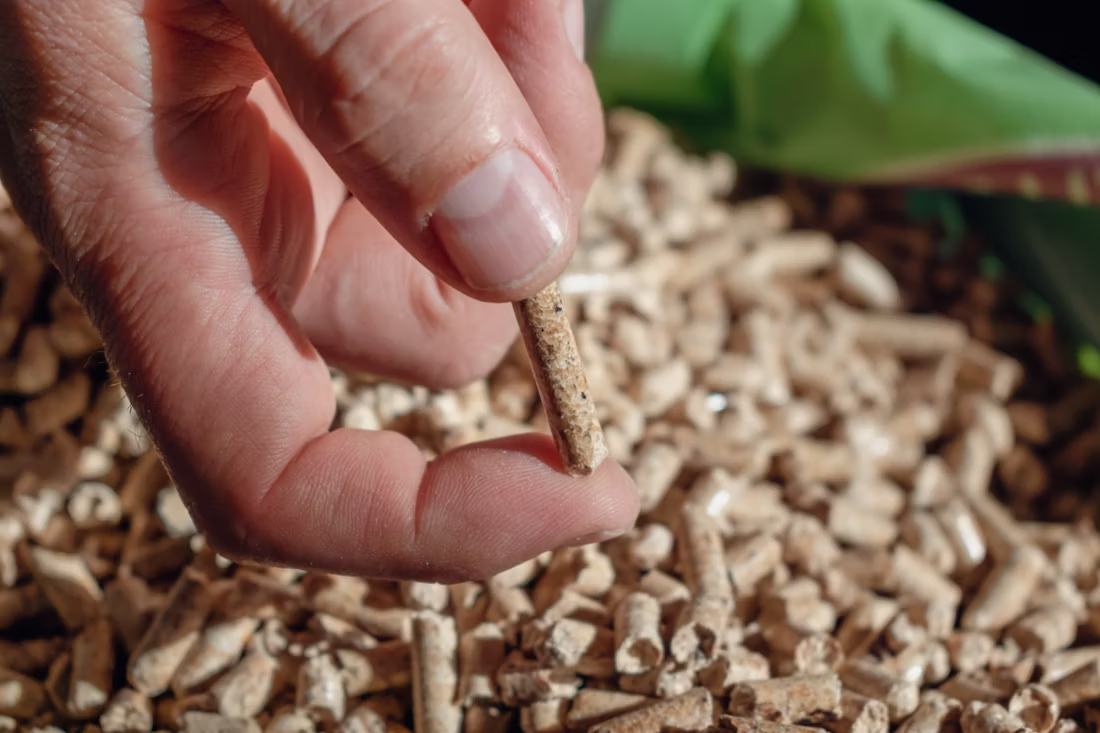
Lignetics, Hamer Pellet Fuel, and Greenway Renewable Energy are the three regional brands most commonly stocked through farm supply and hardware retailers serving central Kentucky, including outlets that reach Lebanon and the surrounding towns. Buying by the ton (typically 50 forty-pound bags) ahead of the season, rather than a few bags at a time, is usually the more economical route and guarantees you've got fuel on hand when a cold stretch hits. Store bags off the ground and away from moisture—Kentucky's humid summers can degrade pellet quality if bags sit in a damp barn or shed.
Pellet stove vs. gas fireplace—which is right for my home?
Gas fireplaces offer instant on-off heat with no fuel handling at all, which is appealing if you want zero maintenance beyond an annual service call. Pellet stoves require more hands-on involvement—filling the hopper, emptying ash—but typically cost less to run per BTU and give you the visual and radiant feel of a real flame that many Marion County homeowners specifically want. If your home already has a natural gas or propane line run for another appliance, gas installation is usually simpler and cheaper up front. If you're starting from scratch and want a heat source that isn't tied to a utility bill, pellet is often the more cost-conscious long-term choice—a local dealer can walk through the real operating cost difference for your specific home.
Why is my open fireplace making my house colder?
Open fireplaces suck—literally. As the fire burns, it consumes air your furnace already paid to heat and pulls it out through the chimney, so the house is actually colder after the fire goes out than before you lit it. An insert fixes this: it seals the chimney, puts fixed glass across the front, and turns that hole in your house into a real heat source.
How often does a pellet stove need cleaning?
A clean pellet stove is a happy pellet stove. Plan on cleaning the burn pot about once a week when you're burning regularly—ash and clinkers gum up the air holes just like a pellet barbecue. Most pellet stove problems trace back to skipped cleaning that nobody explained up front. Some designs make it easy with a trapdoor burn pot: pull a lever and the gunk drops into the ash pan.
What is an in-home preview and do I need one?
It's a visit where a hearth professional measures your space, confirms the model you picked actually works in your home, and walks the specs—framing, gas line, venting, finish work—before anything is ordered. Some details you just can't know until you see the house. Never make a down payment without one; it's the single most-skipped step that burns buyers.
Can I install a fireplace myself?
If you're putting a fire in your house on purpose, it's best to work with an expert. Unless you're genuinely experienced in framing, gas line, vent pipe, and the national code on clearances to combustibles, have a professional do it—and ideally the same company that sells you the fireplace, so warranty, service, and liability all live under one roof.
Pellet Brands Stocked Around Marion County
Manufacturers will point you to the nearest stocking dealer.
Get your Marion County pellet stove Project Guide & Parts List.
Tell me a bit about your home and I'll put together a free Project Guide & Parts List—the exact parts, vent kit, and a matched local dealer for your pellet stove project in Marion County.
Find Your Fireplace →