
Find the right fireplace for your Marion County home.
Wood, gas, pellet, and electric fireplace resources for Lebanon, Loretto, Bradfordsville, and the farms and homesteads across Marion County. Find the right unit and connect with a trusted local hearth retailer.
Every Project Starts From One of These Five Situations
Central Kentucky knob country, with a heating season that rewards the right fuel choice.
Marion County sits in the rolling knob country of central Kentucky, at climate zone 4A with a moderate winter heating season—roughly a third milder than a place like Madison, WI, but still cold enough that winter lows averaging 24°F make a working heat source worth planning for. Hardwood is abundant and cheap here: oak, hickory, maple, and cherry from local farms and woodlots make wood and wood-adjacent heat a practical, low-cost option, and Daniel Boone National Forest to the east offers cutting permits for residents willing to make the drive. There are no local air quality non-attainment issues, so wood burning isn't subject to the curtailment rules you'd see in a smoke-prone basin.
What you'll find on this hub: hearth retailers, service technicians, and fuel suppliers serving every community in the county—from the county seat of Lebanon out to Loretto, Bradfordsville, Raywick, and the rural crossroads in between. Pick your fuel below to drill into specifics—local dealers, installation costs, recommended units, and the resources that match your project. Whether you're heating a farmhouse outside Lebanon or a smaller home near the Loretto distilleries, this is the starting point.
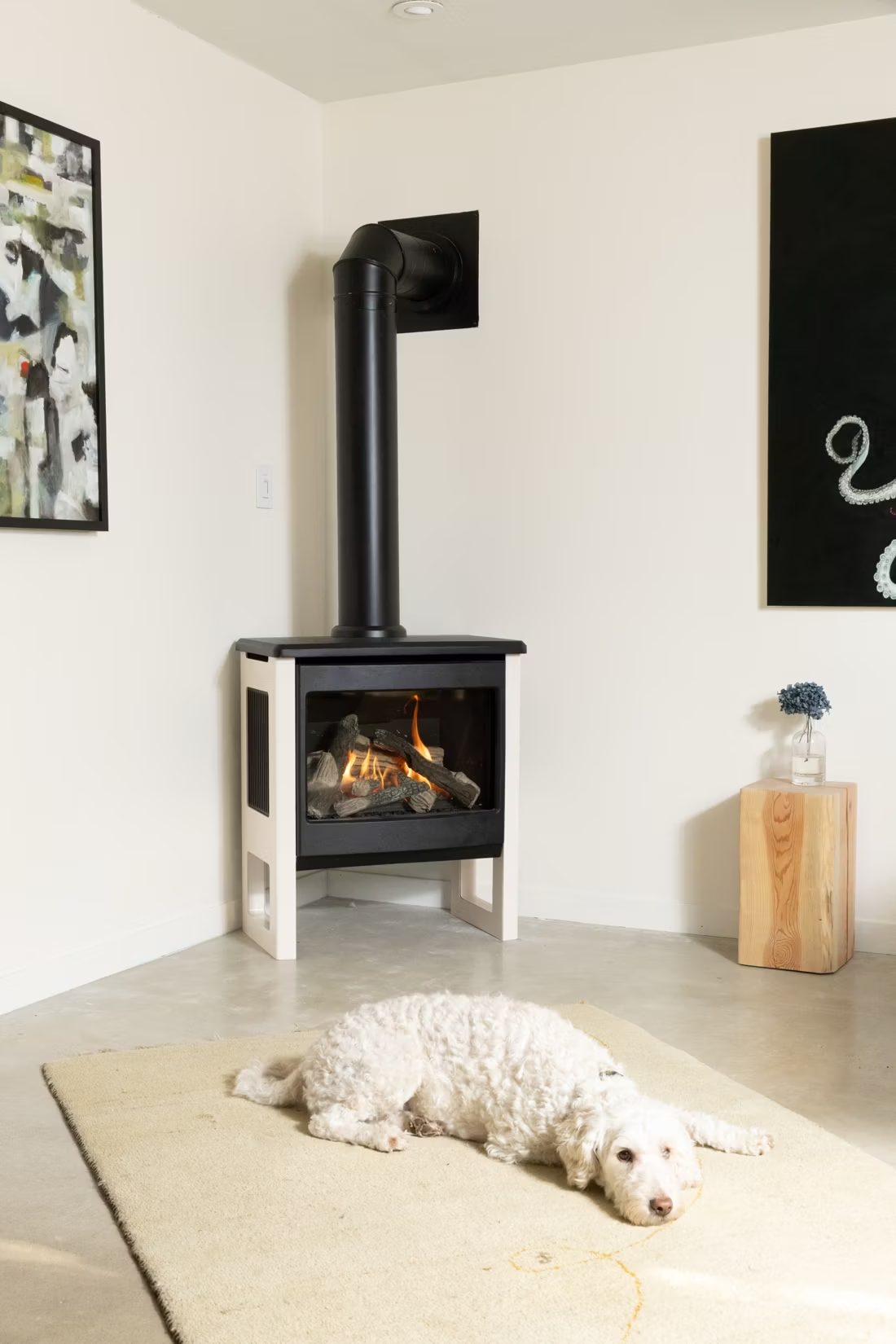
Four fuels. One honest answer for Marion County.
Three steps. No salesperson until you're ready.
Tell us about your project
Your zip code, your situation, and the fuel you're leaning toward—or let the answers point you to one.
See what's actually available
The brands dealers within 100 miles genuinely carry—real options, never a catalog mirage.
Get your dealer & Project Guide
A trusted local dealer, plus the free Project Guide & Parts List that names every component of the job.
Frequently Asked Questions
Which fuel works best in Marion County?
It depends on your home and priorities, but all four fuels have a real place here. Wood is the traditional, low-cost option—oak, hickory, and cherry are plentiful from local farms and woodlots, and a mid-efficiency stove or insert handles the county's moderate winter heating season without trouble. Gas is the convenience pick for homes with propane or natural gas service in Lebanon—instant heat, no wood-splitting, easy to run in a farmhouse den. Pellet is a solid middle ground for homeowners who want wood-style ambiance without the woodpile; Lignetics and Hamer Pellet Fuel both distribute regionally, so supply isn't an issue. Electric works well as supplemental heat in bedrooms or smaller rooms, especially in newer or better-insulated homes, but it's rarely someone's only heat source given the winter lows. Many Marion County households pair wood or a pellet stove as primary heat with gas or electric in secondary rooms.
Do I need a permit to install a fireplace in Marion County?
In most cases, yes. New wood stoves, wood inserts, gas fireplaces, gas inserts, gas stoves, and pellet stoves typically require a building permit through the local jurisdiction—inside Lebanon city limits that's the city building office, and in unincorporated Marion County it runs through the county. Gas installations also need a separate gas line permit and a licensed gas-fitter for the hookup. Electric fireplaces usually skip the permit unless it's a built-in unit requiring new wiring or a dedicated circuit. Most local retailers pull permits as part of the installation, so it's rarely something a homeowner has to sort out solo—worth confirming with your dealer before work starts.
Are there air quality restrictions on wood burning in Marion County?
No. Marion County has no non-attainment status and no winter inversion or wildfire smoke issues that trigger burn curtailments—the kind of thing you'd see in a smoke-basin county out west. That said, new wood stove installs are still expected to meet current EPA emissions standards, and a well-seasoned load of local oak or hickory burns cleaner and more efficiently than green or wet wood regardless of local rules. There's no advisory system to check before lighting a fire here, which simplifies things for wood-burning households.
Can one local hearth retailer handle all four fuel types?
In a county of Marion's size, most hearth retailers that serve Lebanon and the surrounding towns carry a mix of two or three fuel types rather than a full lineup of four, and dealers based in nearby Bardstown or Elizabethtown are often part of the local ecosystem too, since Marion County's population doesn't support a large number of dedicated hearth shops. Wood and gas are the most commonly stocked combination; pellet is often available through the same dealer, while electric fireplaces are sometimes carried more as an accessory line than a core product. If you're comparing fuels, it's worth asking a retailer directly what they carry and installing, since inventory can shift by season.
How does service work in rural areas of Marion County?
Most chimney sweeps and gas/pellet technicians serving Marion County are based in or near Lebanon and travel out to Loretto, Bradfordsville, Raywick, and the farm roads in between. Expect a modest travel fee for the more rural addresses, and know that scheduling in September and October—before the cold sets in—gets you an appointment far more easily than a January call when a chimney fire or gas unit failure needs same-week attention. If you're on a well-traveled county road, that generally shortens the wait; if you're further out toward the Washington County line, plan a little further ahead.
What's the typical cost range for fireplace installation across all fuel types in Marion County?
Ranges vary by fuel, though Marion County tends to run a bit below installation costs in larger nearby markets like Louisville. Wood stove or insert installation: roughly $3,500–$7,500 for a typical setup, more for new chimney construction. Gas fireplace, insert, or stove: roughly $3,500–$8,500 depending on gas line work and venting, less if gas service already reaches the room. Pellet stove or insert: roughly $3,500–$6,000 for most installs. Electric fireplace: $200–$2,500 for the unit itself, plus $300–$1,000 in labor for anything beyond a plug-and-play install. For dealer-specific pricing, see the county + fuel pages above.
Can I install a fireplace myself?
If you're putting a fire in your house on purpose, it's best to work with an expert. Unless you're genuinely experienced in framing, gas line, vent pipe, and the national code on clearances to combustibles, have a professional do it—and ideally the same company that sells you the fireplace, so warranty, service, and liability all live under one roof.
Does a fireplace add value to my home?
On average, a fireplace adds back to the home about the same amount you spent installing it. Add the monthly savings from heating the rooms you actually use instead of the whole house—often hundreds of dollars a year—and the value case is strong before you even count what a fire does for how your family uses the room.
Can a fireplace actually lower my heating bill?
Yes—by creating a comfort zone. A furnace heats every square foot of the house just to warm the one room you're in; a gas fireplace on low burns roughly a sixth of the gas a typical furnace does. Set the furnace around 55–60 degrees as a baseline, then heat the rooms your family actually uses. Families who heat this way commonly save $20–$60 a month.
Wood, gas, pellet, or electric—how do I choose?
Match the fuel to your life, not the other way around. Wood: lowest fuel cost and total power-outage independence, but you're hauling and stacking. Gas: press a button, set a thermostat, no maintenance to speak of. Pellet: wood economics with automatic feeding, in exchange for weekly cleaning and a need for electricity. Electric: plugs in anywhere with honest supplemental heat. Nobody regrets the fuel that fits how they actually live.
Stove and Fireplace Dealers in Marion County
Listings include WhyFire partner dealers, dealers we have verified as authorized for the brands we recommend, and established local businesses that carry hearth products. Every listing shows which one it is. The ones marked Preferred run on WhyFire's software, so they can show you real pricing and book your appointment right here. No manufacturer pays for placement. How we verify dealers →
Custom Fireplaces & Woodworking
Dowell Furniture Co.
Ace Chimney Sweep
Get matched with a Marion County hearth dealer.
Pick your fuel below and we'll match you with a trusted local dealer and send a free Project Guide & Parts List—the exact parts, vent kit, and recommended installer for your Marion County project.
Find Your Fireplace →