
Find your electric fireplace in Marion County.
No chimney, no gas line, no vent work—just plug in or wire in supplemental warmth for homes around Lebanon, Loretto, and the rest of Marion County. Find the right unit and connect with a trusted local dealer.
Every Project Starts From One of These Five Situations
Warmth without a chimney to build.
Marion County sits in the heart of Kentucky's Holy Land region—Lebanon as the county seat, Loretto home to Maker's Mark, and the Abbey of Gethsemani tucked into the countryside between them. At climate zone 4A with about 4,560 heating degree days and average winter lows around 24°F, the county's heating season is real but far milder than what a place like Madison, Wisconsin deals with every winter. Most Marion County homes don't need a stove running around the clock—they need a reliable way to take the edge off a cold room without tearing into walls or running new gas lines.
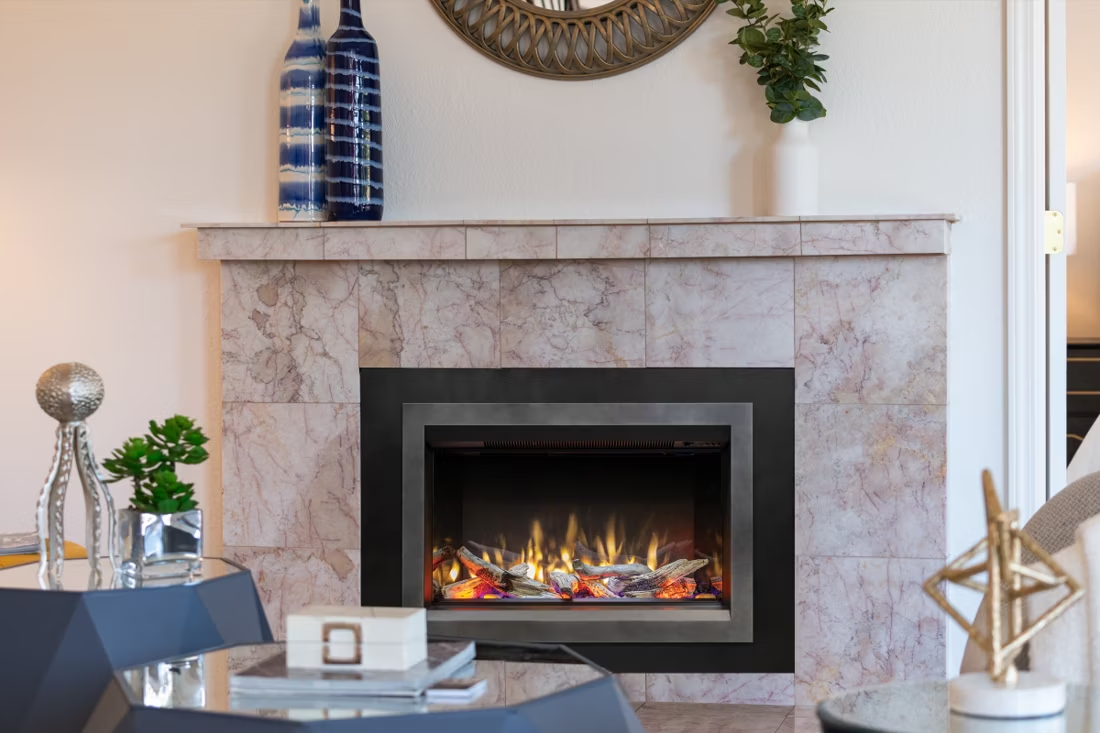
That's where electric fireplaces do their best work. With a population under 8,000 spread across small towns and farmhouses, Marion County doesn't have a big-box hearth store on every corner, and many older homes near downtown Lebanon or out toward Bradfordsville were never built with a masonry chimney or gas service in mind. An electric insert or wall unit plugs into existing wiring (or a new dedicated circuit if you're going bigger), draws power from Salt River Electric Cooperative's local grid, and delivers zone heat to a bedroom, sunroom, or living area the same afternoon it's installed—no permits for venting, no propane tank, no masonry work.
Three steps. No salesperson until you're ready.
Tell us about your project
Your zip code, your situation, and the fuel you're leaning toward—or let the answers point you to one.
See what's actually available
The brands dealers within 100 miles genuinely carry—real options, never a catalog mirage.
Get your dealer & Project Guide
A trusted local dealer, plus the free Project Guide & Parts List that names every component of the job.
Frequently Asked Questions
How much does an electric fireplace installation cost in Marion County?
Simple plug-in electric inserts that slide into an existing fireplace opening or sit on a stand typically run $300 to $900 installed, since they use a standard 120V outlet and require no new wiring. Built-in wall units or larger linear electric fireplaces that need a dedicated 120V or 240V circuit run by an electrician, plus framing or trim work, usually land between $1,200 and $3,500 in Marion County depending on the wall construction and how far the unit sits from the existing electrical panel. Homes in older parts of Lebanon with dated wiring sometimes need panel work first, which adds to the total.
Do I need an electrician to install an electric fireplace?
It depends on the unit. A plug-in electric insert or freestanding stove that draws under 1,500 watts can usually run off an existing 120V household outlet with no electrical work at all. Larger built-in or linear electric fireplaces—especially models over 1,500 watts or units wired for 240V—need a licensed electrician to run a dedicated circuit and, in some cases, pull an electrical permit through the county. A local dealer can tell you within a few minutes which category your chosen unit falls into based on its wattage.
Electric vs. gas fireplace—which makes more sense in Marion County?
Natural gas service is limited outside Lebanon's core, so most rural Marion County homes relying on gas heat are actually running propane, which means a tank, a fuel supplier, and gas line work. Electric skips all of that—it runs off the same Salt River Electric Cooperative service already powering your home, with no tank to refill and no gas-fitter needed for installation. Gas still wins on raw heat output for a larger room, but for supplemental warmth in a bedroom, den, or converted garage, electric is usually the simpler and cheaper path in this county.
Electric vs. wood—which is right for my home?
Marion County has a strong wood-burning tradition, with oak, hickory, maple, and cherry all common in the hardwood forests around the county—the same species that end up in bourbon barrels for the distilleries nearby. Wood stoves keep working during a power outage, which matters here since ice storms occasionally knock out Salt River Electric Cooperative service for a day or more. Electric fireplaces can't provide backup heat during an outage, but they require no wood handling, no chimney cleaning, and no cutting permits from places like the Daniel Boone National Forest. For a primary heat source in a rural home, wood still has an edge; for clean, low-maintenance supplemental warmth in a living room or bedroom, electric is hard to beat.
Do I need a permit to install an electric fireplace in Marion County?
In most cases, no—a plug-in electric insert or freestanding unit that uses an existing outlet doesn't trigger a permit requirement, since there's no venting, gas line, or structural chimney work involved. If your installation requires a new dedicated electrical circuit, a licensed electrician will typically pull an electrical permit through the county as part of the job. This is one of the simplest permitting paths of any hearth fuel, which is part of why electric is popular in Marion County's older homes and rental properties where owners don't want to modify the structure.
Will an electric fireplace actually heat my room, or is it just for looks?
Most electric fireplaces put out around 4,500 to 5,000 BTUs (roughly 1,500 watts), which is enough to noticeably warm a single room of 400 to 1,000 square feet, depending on insulation and ceiling height. They're built as supplemental or zone heat—not a replacement for a home's central furnace—but for Marion County's winters, with average lows around 24°F and a moderate 4,560 heating degree days, that's usually exactly the job people want them to do: take the chill off a den, bedroom, or sunroom without running the whole-house system harder than it needs to.
What are the best electric fireplace brands to look at?
Dimplex, Napoleon, and Amantii are among the most established names in electric fireplace inserts and linear wall units, known for realistic flame effects and reliable heating elements. For a simple stove-style unit, brands like ClassicFlame offer solid entry-level options. The right choice depends more on where the unit is going—insert into an existing opening, flush wall-mount, or freestanding stove—than on chasing a specific brand name. A local dealer carrying multiple lines can show you the flame technology in person, which matters more for electric units than almost any other fuel since the visual is the main selling point alongside the heat.
What's the difference between an electric insert, wall-mount, and freestanding stove?
An electric insert is built to slide into an existing fireplace opening, making it the easiest upgrade for a Marion County home with an old, rarely-used masonry fireplace. A wall-mount or built-in linear unit is designed into a wall—often flush-mounted like a piece of art—and works well in new construction or a remodel where there's no existing fireplace at all. A freestanding electric stove sits on the floor like a traditional wood stove and can go anywhere near an outlet, making it the most flexible option for renters or homes without any existing hearth. Most Marion County homeowners choosing between these decide based on whether they're working with an existing opening or starting from a blank wall.
How much does it cost to run an electric fireplace day-to-day?
At typical Salt River Electric Cooperative residential rates, a standard 1,500-watt electric fireplace costs roughly 15 to 20 cents per hour to run on heat mode—closer to 1 to 2 cents per hour if you're just running the flame effect without the heater engaged. Left on for a few hours each evening through a Marion County winter, that adds up to a modest monthly increase, especially compared to running a whole-house furnace harder to compensate for a cold room. Most local dealers can walk you through the wattage and estimated running cost for the specific model you're considering.
Can I put a TV above my fireplace?
Yes—with an asterisk. Fireplaces are hot and TVs don't like heat. Either put a mantel between them to deflect rising warmth, or choose a fireplace with heat-management technology that creates a cool zone on the wall above—the wall stays around 125 degrees, barely warm, while the room still gets full heat. If you like clean lines and don't want a mantel, heat management is the answer.
Do electric fireplaces actually produce heat?
Yes—most put out around 4,800–5,000 BTUs from a standard outlet, which comfortably warms a bedroom, office, or den as a comfort-zone heater. What they won't do is carry a whole house the way wood, gas, or pellet can. Think of electric as ambiance-first with honest supplemental heat: flames on with no heat in July, flames plus warmth in January.
Can I install a fireplace myself?
If you're putting a fire in your house on purpose, it's best to work with an expert. Unless you're genuinely experienced in framing, gas line, vent pipe, and the national code on clearances to combustibles, have a professional do it—and ideally the same company that sells you the fireplace, so warranty, service, and liability all live under one roof.
What is an in-home preview and do I need one?
It's a visit where a hearth professional measures your space, confirms the model you picked actually works in your home, and walks the specs—framing, gas line, venting, finish work—before anything is ordered. Some details you just can't know until you see the house. Never make a down payment without one; it's the single most-skipped step that burns buyers.
Get your Marion County electric fireplace Project Guide & Parts List.
Tell us a bit about your home and we'll match you with a trusted local dealer and send over a free Project Guide & Parts List—the exact unit, wiring needs, and install plan for your Marion County electric fireplace project.
Find Your Fireplace →