
Steady, thermostat-controlled heat for Lincoln County winters.
From Stanford to Crab Orchard, Hustonville, and Waynesburg, Lincoln County sees real winter cold—average lows near 23°F and a solid winter heating season each year. Find the right pellet stove or insert, and connect with a vetted local dealer who can size and install it correctly.
Every Project Starts From One of These Five Situations
A clean-burning option for Bluegrass region winters.
Lincoln County sits in the rolling hill country of south-central Kentucky, anchored by the county seat of Stanford and smaller communities like Crab Orchard, Hustonville, and Waynesburg. With just over 5,000 residents spread across a mostly rural landscape, the county sees a real winter—Climate Zone 4A, a solid winter heating season, and average lows around 23°F—enough cold to matter for heating bills, but nowhere near the extremes of Upper Midwest towns like Madison, Wisconsin. That moderate-but-genuine cold is exactly the range where pellet stoves perform well: enough heating demand to justify the investment, without needing the largest catalytic wood stoves built for sub-zero nights.
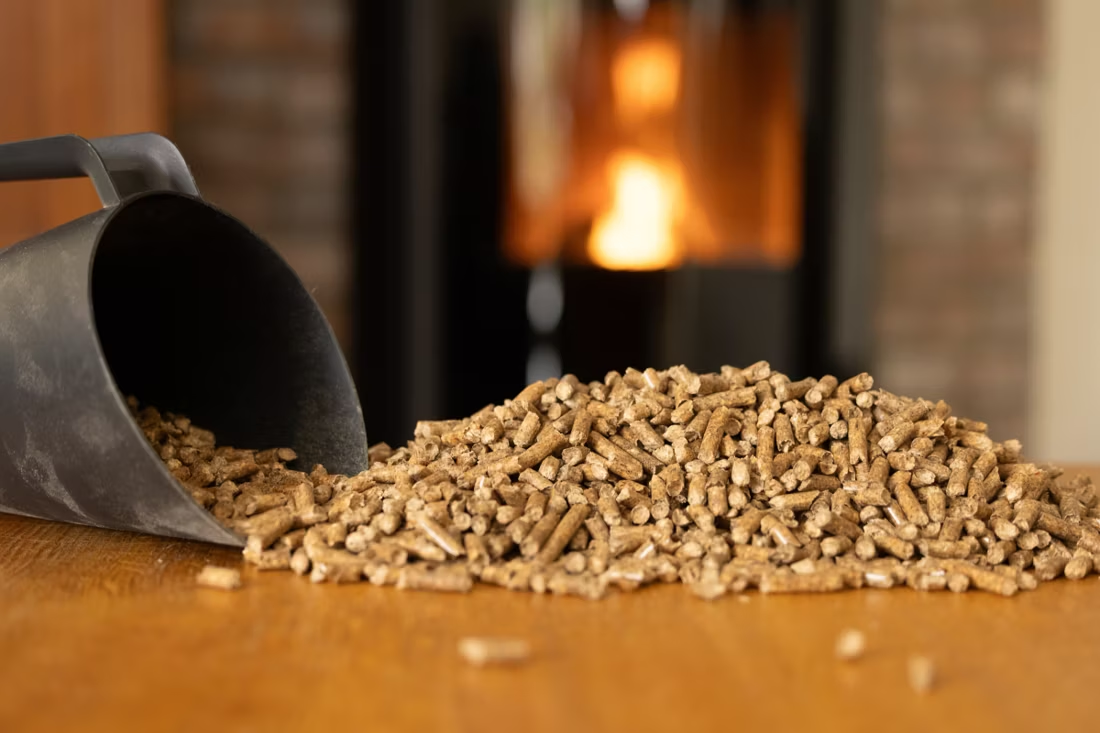
The county's hardwood forests—oak, hickory, maple, and cherry—feed a regional pellet supply chain that includes Lignetics, Hamer Pellet Fuel, and Greenway Renewable Energy, all of which distribute into central Kentucky. Because Lincoln County has no air quality non-attainment designation and no winter inversion concerns, there are no seasonal burn curtailment periods to plan around—pellet stoves can run whenever the weather calls for it. For the county's older farmhouses, manufactured homes, and properties without existing masonry chimneys, a pellet stove's straightforward through-wall venting and thermostat-controlled hopper feed make it one of the simplest heating upgrades available, delivering steady, adjustable heat without the wood-splitting and chimney maintenance that come with a traditional wood stove.
Three steps. No salesperson until you're ready.
Tell us about your project
Your zip code, your situation, and the fuel you're leaning toward—or let the answers point you to one.
See what's actually available
The brands dealers within 100 miles genuinely carry—real options, never a catalog mirage.
Get your dealer & Project Guide
A trusted local dealer, plus the free Project Guide & Parts List that names every component of the job.
Frequently Asked Questions
How much does a pellet stove installation cost in Lincoln County?
Pellet stove installations are generally less expensive than wood stove installs because there's no masonry chimney or Class A pipe involved—most units vent through an exterior wall with a simple pellet vent kit. In Lincoln County, a typical installed cost runs roughly $3,000 to $6,500, depending on the stove size, whether a dedicated electrical circuit is needed for the auger and combustion blower, and how much wall or floor prep is required. Homes without an existing 120V outlet near the install location may see a modest added cost for electrical work. Local dealers carrying stoves fed by regional pellet supply lines can walk through exact pricing during an in-home visit.
What size pellet stove do I need for my home?
Sizing depends on square footage, ceiling height, and how much of the home you want to heat. Given Lincoln County's moderate Zone 4A climate and average winter lows near 23°F, most single-family homes in Stanford, Crab Orchard, or Hustonville do well with a mid-size unit rated for 1,200 to 2,000 square feet as either primary or serious supplemental heat. Older, less-insulated farmhouses common throughout the rural parts of the county may need to size up, while well-insulated newer construction can often get by with a smaller unit. A local dealer will factor in your home's layout and insulation before recommending a specific stove.
Where can I find pellet stove dealers near me in Lincoln County?
Because Lincoln County is small and rural—just over 5,000 residents—dealer options are thinner than in a larger metro county, and many homeowners work with hearth retailers based in nearby Danville or Lexington who service the Stanford area. Look for dealers who install, not just sell, pellet stoves and who are familiar with the venting and electrical requirements specific to your model. A dealer who both sells and installs simplifies warranty coverage if anything needs adjustment after the first heating season.
What's the difference between a pellet stove and a pellet insert?
A pellet stove is a freestanding unit that sits on the floor and vents through a wall or existing chimney—it can go almost anywhere with a nearby power outlet and a path to the outside. A pellet insert is built to slide into an existing masonry fireplace opening, using your current chimney or a liner run through it for venting. For Lincoln County homes with an existing wood-burning fireplace they no longer use, a pellet insert is often the simpler upgrade. Homes without an existing fireplace opening—including many of the county's manufactured and modular homes—are better suited to a freestanding stove.
Do I need a permit to install a pellet stove in Lincoln County?
Most permanently installed pellet stoves require a building permit, and any dedicated electrical circuit work requires an electrical permit as well—check with Lincoln County's code enforcement office before installation. Because the county carries no air quality non-attainment designation, there are no seasonal burn curtailment periods like those seen in western states with winter inversion problems—once your stove is installed and inspected, you're free to run it whenever you want heat. Most dealers who both sell and install pellet stoves will handle the permitting process as part of the job.
What's the best pellet stove for Lincoln County's climate?
Lincoln County's Zone 4A climate and a solid winter heating season call for a mid-range stove rather than the largest cold-climate units built for places like Duluth or International Falls. Popular national brands like Harman, Quadra-Fire, and Englander all offer models in the 40,000-50,000 BTU range that comfortably heat a typical farmhouse or ranch-style home around Stanford, Crab Orchard, or Hustonville. Because regional pellet supply comes through brands like Lignetics, Hamer Pellet Fuel, and Greenway Renewable Energy, it's worth confirming pellet availability locally before settling on a stove—some manufacturers recommend a specific pellet quality, low ash and hardwood-based, for best performance.
How often does a pellet stove need cleaning and maintenance?
Pellet stoves need more frequent light cleaning than wood stoves, but far less than a chimney sweep visit. Plan to empty and clean the ash pot every few days during regular use, clean the burn pot weekly to keep the auger feed and combustion airflow working properly, and schedule a full professional cleaning of the exhaust venting and hopper mechanism once a year—typically before the start of the fall heating season. Since Lincoln County doesn't see the wildfire smoke or winter inversion issues some western counties deal with, there's no added seasonal air-quality maintenance concern here—it's purely about keeping the mechanical components running smoothly.
Where can I buy wood pellets in Lincoln County?
Regional brands including Lignetics, Hamer Pellet Fuel, and Greenway Renewable Energy supply hardwood pellets into central Kentucky, and bags are typically available through farm supply and hardware stores serving Stanford and the surrounding area. Pellets are sold by the 40-pound bag or by the ton, with pricing generally landing in the $250 to $300 per ton range depending on brand and quantity—buying a full ton or more ahead of the season, rather than bag by bag through the winter, usually saves money. Stocking up before the coldest months hit is worth doing, since severe cold snaps can create regional shortages.
Pellet stove vs. wood stove—which is right for my Lincoln County home?
Lincoln County's oak, hickory, maple, and cherry forests make excellent firewood, and self-cut permits through the Daniel Boone National Forest run about $20 per cord during the May-to-October cutting season—a strong option for homeowners with the time, tools, and storage space to season wood. Wood stoves also keep working without electricity, which matters during winter storm outages. Pellet stoves trade that self-sufficiency for convenience: load the hopper, set the thermostat, and let the auger do the rest, with less ash and no splitting or stacking required—but they do need electricity to run the auger and combustion blower, so they're not a fallback during a power outage unless paired with a battery backup. For most in-town homes around Stanford, pellet wins on convenience; for rural properties near the national forest with a wood supply already at hand, wood often makes more sense.
What's the difference between an insert and a zero-clearance fireplace?
An insert is a fireplace that slides into a pre-existing wood-burning fireplace—if you don't have one, there's nothing to insert it into. A zero-clearance fireplace is built into a framed wall, which makes it the answer for remodels and new construction. Simple test: existing masonry fireplace means insert; blank or framed wall means zero-clearance.
Why is a fireplace insert so efficient?
An insert does two things: it seals the chimney completely, so you stop losing air you already paid to heat, and it radiates warmth into the room through the firebox and glass. Most add a heat-exchange fan that pulls cool room air underneath, wraps it around the hot firebox, and pushes it back out warm. Your home is more efficient before you've even lit the first fire.
What is an in-home preview and do I need one?
It's a visit where a hearth professional measures your space, confirms the model you picked actually works in your home, and walks the specs—framing, gas line, venting, finish work—before anything is ordered. Some details you just can't know until you see the house. Never make a down payment without one; it's the single most-skipped step that burns buyers.
Does a fireplace add value to my home?
On average, a fireplace adds back to the home about the same amount you spent installing it. Add the monthly savings from heating the rooms you actually use instead of the whole house—often hundreds of dollars a year—and the value case is strong before you even count what a fire does for how your family uses the room.
Pellet Brands Stocked Around Lincoln County
Manufacturers will point you to the nearest stocking dealer.
Find your pellet stove in Lincoln County, KY.
Tell us about your home and heating goals, and we'll match you with a trusted local dealer and send over a free Project Guide & Parts List—a clear plan for your pellet stove project in Lincoln County, right down to the vent kit.
Find Your Fireplace →