
Warm up Lincoln County without the wood pile or the gas line.
From Stanford to Hustonville, Crab Orchard, and Waynesburg, Lincoln County's winters are real but rarely extreme—which makes electric heat one of the simplest ways to add warmth and ambiance to a room. Find the right unit and get matched with a trusted local dealer.
Every Project Starts From One of These Five Situations
Moderate winters, maximum flexibility.
Lincoln County sits in the Knobs region of central Kentucky, climate zone 4A, with a winter heating season that's moderate for the state and an average winter low around 23°F. That's a meaningfully milder heating load than a county like Bismarck, ND or Duluth, MN—Lincoln County gets cold snaps, but not the sustained sub-zero stretches that demand a whole-home wood or gas system just to keep pipes from freezing. That moderate profile is exactly where electric fireplaces earn their keep: as zone heat for a bedroom, den, or bonus room, and as ambiance in a living room that's already served by central HVAC.
Plenty of Lincoln County homes still burn oak, hickory, maple, and cherry cut under Daniel Boone National Forest permits (about $20 per cord, May through October)—wood heat has deep roots here. But electric fireplaces solve a different problem: no chimney, no venting, no combustion air to worry about, and in most cases no building permit at all for a plug-in unit. Built-in models that need a dedicated circuit typically require an electrical permit through the local building department and a licensed electrician to run the line—a small job compared to a chimney install, and one most local hearth and appliance dealers coordinate directly.
Three steps. No salesperson until you're ready.
Tell us about your project
Your zip code, your situation, and the fuel you're leaning toward—or let the answers point you to one.
See what's actually available
The brands dealers within 100 miles genuinely carry—real options, never a catalog mirage.
Get your dealer & Project Guide
A trusted local dealer, plus the free Project Guide & Parts List that names every component of the job.
Frequently Asked Questions
How much does an electric fireplace installation cost in Lincoln County?
Plug-in electric fireplaces and inserts that use a standard household outlet typically run $150 to $800 for the unit itself, with no real installation cost beyond mounting or setting it into an existing opening. Built-in electric fireplaces or inserts that call for a dedicated 20-amp circuit run higher once you add electrician labor—figure roughly $400 to $1,500 depending on how far the new circuit has to run from your panel. That's a fraction of what a vented gas or wood installation costs in this county, which is part of why electric is a popular choice for a second room or a rental property.
Will an electric fireplace actually heat a room in Lincoln County's winters?
Yes, for the room it's sized for. Most electric fireplaces use a built-in resistance or infrared heater rated to cover somewhere between 400 and 1,500 square feet, which is plenty for a bedroom, den, or open living area—even during a stretch at or below the county's average winter low of 23°F. What electric won't do is replace whole-home heat during a hard cold snap the way a properly sized wood stove or gas system can; think of it as strong supplemental or zone heat rather than a primary furnace replacement.
Do I need a permit to install an electric fireplace in Lincoln County?
Usually not for a plug-in unit—it's no different than plugging in a space heater or a lamp. If you're installing a built-in electric fireplace or insert that requires a new dedicated circuit, that electrical work typically needs a permit through the Lincoln County building department, and the wiring itself should be done by a licensed electrician. Most local dealers who sell built-in units either have an electrician on staff or work with one regularly, so the permitting gets handled as part of the project rather than left for you to sort out.
What's the difference between an electric fireplace, insert, and stove?
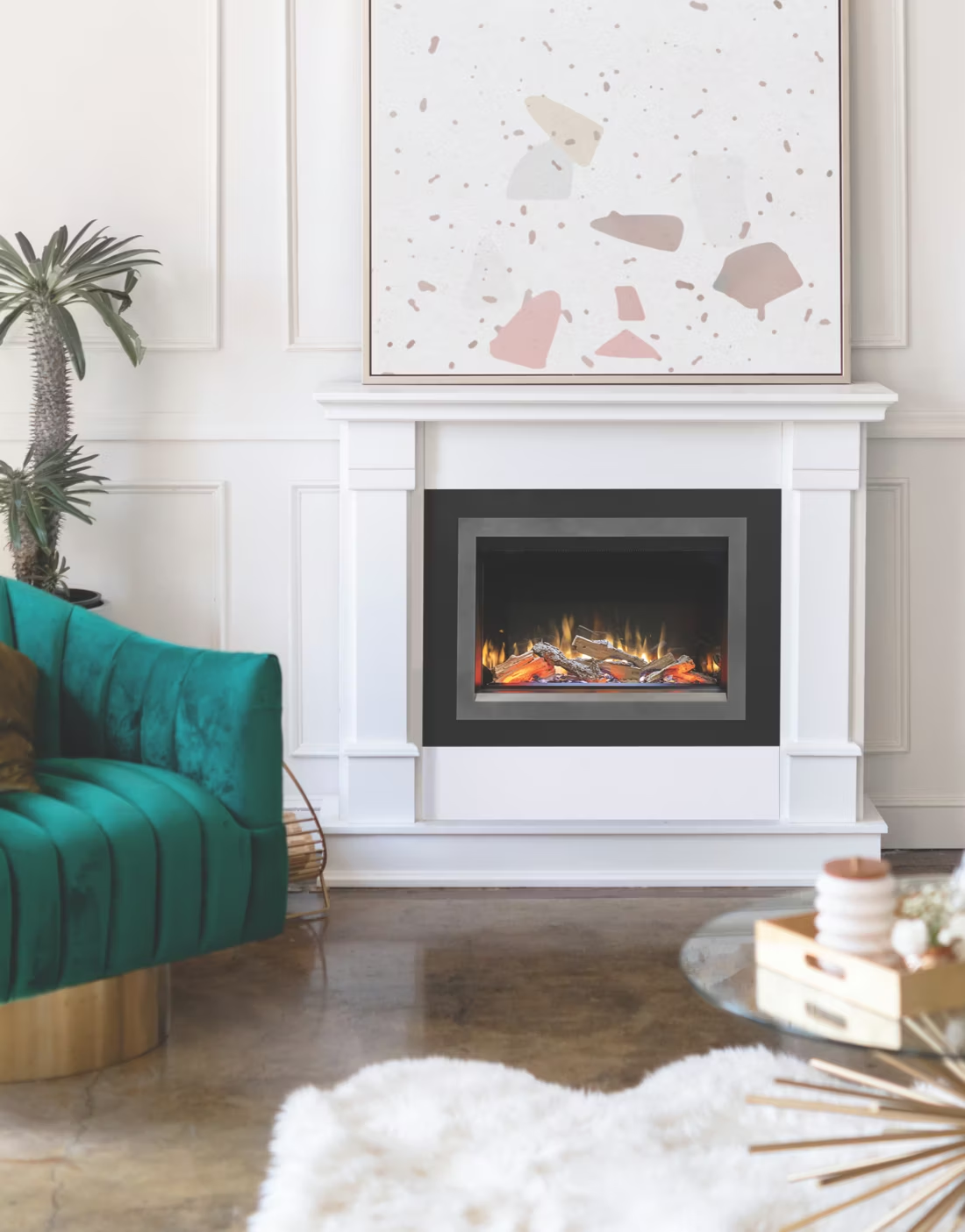
An electric fireplace is typically a wall-mounted or built-in unit designed to look like a framed hearth—good for new construction or a focal-wall remodel. An electric insert is sized to slide into an existing masonry or wood-fireplace opening, which makes it a fast way to convert an old, drafty Lincoln County fireplace into usable heat without touching the chimney. An electric stove is a freestanding cabinet-style unit that sits on the floor like a wood stove but plugs into an outlet—a good fit for a room with no existing fireplace opening and no interest in running new gas or wood venting.
Will my electric fireplace work during a power outage?
No—and this is the honest tradeoff. Electric fireplaces run entirely on household power, so an ice storm or downed line that knocks out electricity takes the fireplace out with it, unlike a wood stove that keeps working regardless of grid status. Rural Lincoln County sees its share of winter ice events, so if backup heat during an outage matters to your household, it's worth keeping a wood stove or a battery-backed gas unit in the mix rather than relying on electric alone for that scenario.
What's the best electric fireplace for Lincoln County's climate?
Given the county's moderate winter climate, most homeowners here don't need maximum BTU output—they need a unit that looks good running with the heater off in mild weather and still puts out real warmth on a 23°F night. Look for models with a true infrared or ceramic heating element (not just a fan blowing across coils) and a realistic flame effect, since in this climate the fireplace often runs for ambiance more hours than it runs for heat. A local dealer can walk you through options sized for a single room versus an open living/dining layout.
Should I get electric or wood heat for my Lincoln County home?
Wood—burned as oak, hickory, maple, or cherry, much of it cut locally under a Daniel Boone National Forest permit—delivers real BTUs, works without power during outages, and suits a household that wants a self-sufficient backup heat source. Electric skips the wood handling, chimney, and permitting almost entirely, installs in an afternoon, and is ideal for a bedroom, den, or secondary living space where convenience matters more than raw heat output or storm-proof backup. Many Lincoln County households run both: wood as a primary or backup heat source, electric for the room where a chimney isn't practical.
Electric vs. gas fireplace—which fits my home better?
Gas—natural gas where lines reach, propane elsewhere in the county—delivers more consistent heat output and the visual presence of a real flame, but it comes with venting, a gas line, and a higher installation cost. Electric skips all of that: no venting, no gas hookup, and in most cases no permit for a plug-in model. For a Lincoln County homeowner adding heat and ambiance to a spare bedroom or finished basement without running new gas line, electric is usually the simpler and cheaper path. For a primary living space where higher heat output matters, gas is often worth the added installation cost.
Can an electric insert go into my existing Lincoln County fireplace?
In most cases, yes. Electric inserts are built in standard sizes meant to slot into existing masonry fireplace openings, and because there's no venting requirement, the install is often just a matter of confirming the opening dimensions and running power to the unit—sometimes through the existing damper area, sometimes via a new outlet behind the surround. It's one of the fastest ways to take an old, unused fireplace in a Stanford or Hustonville-area home and turn it back into a working heat source without chimney work.
Can I put a TV above my fireplace?
Yes—with an asterisk. Fireplaces are hot and TVs don't like heat. Either put a mantel between them to deflect rising warmth, or choose a fireplace with heat-management technology that creates a cool zone on the wall above—the wall stays around 125 degrees, barely warm, while the room still gets full heat. If you like clean lines and don't want a mantel, heat management is the answer.
Do electric fireplaces actually produce heat?
Yes—most put out around 4,800–5,000 BTUs from a standard outlet, which comfortably warms a bedroom, office, or den as a comfort-zone heater. What they won't do is carry a whole house the way wood, gas, or pellet can. Think of electric as ambiance-first with honest supplemental heat: flames on with no heat in July, flames plus warmth in January.
Does a fireplace add value to my home?
On average, a fireplace adds back to the home about the same amount you spent installing it. Add the monthly savings from heating the rooms you actually use instead of the whole house—often hundreds of dollars a year—and the value case is strong before you even count what a fire does for how your family uses the room.
Can a fireplace actually lower my heating bill?
Yes—by creating a comfort zone. A furnace heats every square foot of the house just to warm the one room you're in; a gas fireplace on low burns roughly a sixth of the gas a typical furnace does. Set the furnace around 55–60 degrees as a baseline, then heat the rooms your family actually uses. Families who heat this way commonly save $20–$60 a month.
Find your electric fireplace in Lincoln County.
Tell us a bit about your home and we'll put together a free Project Guide & Parts List—the exact parts for your electric fireplace project and a trusted local Lincoln County dealer to install it.
Find Your Fireplace →