
Steady, hands-off heat for the high plains of Wallace County.
For Sharon Springs and the rest of Wallace County's wind-swept farm and ranch country, a pellet stove delivers consistent, thermostat-controlled heat without depending on scarce local timber. We'll match you with a trusted local dealer who can size and install it right.
Every Project Starts From One of These Five Situations
Consistent heat without depending on scattered timber.
Wallace County sits on the High Plains of far western Kansas, near the Colorado line, with just over 1,000 residents spread across open wheat and grazing land centered on Sharon Springs. The climate here—zone 5A—brings genuinely cold, windy winters and hot, dry summers, the kind of exposure that makes steady indoor heat matter. But unlike forested regions, Wallace County has almost no natural timberland. The oak, hickory, and osage orange that do grow here are mostly planted windbreaks and shelterbelt rows and river-bottom stands, not the kind of continuous forest that supports a reliable firewood supply at scale.
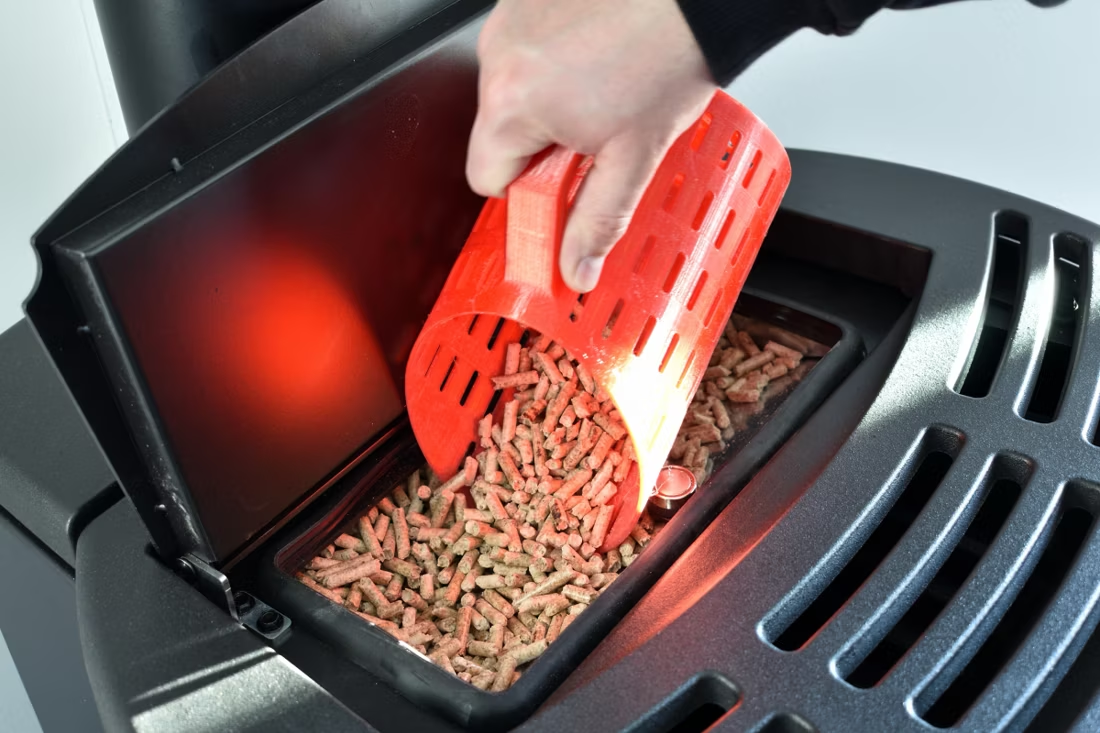
That gap is exactly where pellet heat fits. Bagged pellets from regional producers like Lignetics and Indeck Energy Services can be delivered or picked up without anyone needing to fell, split, season, or haul cordwood off a shelterbelt. A pellet stove or insert gives Wallace County homes a thermostat-controlled, consistently burning heat source that's far less labor-intensive than wood—a real advantage on a working farm or ranch where time during winter months is already stretched thin. And because Wallace County has no air quality non-attainment issues or winter inversion concerns, there's no local burn-ban regulatory friction to navigate.
Three steps. No salesperson until you're ready.
Tell us about your project
Your zip code, your situation, and the fuel you're leaning toward—or let the answers point you to one.
See what's actually available
The brands dealers within 100 miles genuinely carry—real options, never a catalog mirage.
Get your dealer & Project Guide
A trusted local dealer, plus the free Project Guide & Parts List that names every component of the job.
Frequently Asked Questions
How much does a pellet stove installation cost in Wallace County?
A freestanding pellet stove typically runs $3,000 to $6,000 installed, including the stove, venting, and a basic hearth pad, while a pellet insert going into an existing masonry fireplace usually lands in the $4,000 to $7,000 range once venting liner work is included. Because Wallace County is sparsely populated, the closest full-service hearth dealers are often in Goodland, Colby, or across the state line near Burlington, Colorado—so expect a modest trip charge folded into the estimate versus what a homeowner in a larger Kansas city might pay. Ask any dealer serving Sharon Springs for a firm in-home quote before committing.
What size pellet stove do I need for a Wallace County home?
Most homes in Wallace County are modest single-story farmhouses or ranch homes, and a mid-size pellet stove rated for 1,500 to 2,000 square feet handles the majority of them comfortably, especially when used to supplement a propane furnace rather than replace it outright. Larger or older farmhouses with less insulation, or homes that want the pellet stove as primary heat through a High Plains winter, often do better sizing up. Wind exposure matters more here than in sheltered towns—a stove that would be adequate in a wooded lot elsewhere may need to run harder against Wallace County's near-constant winter wind. A local dealer can size this properly during an in-home visit rather than guessing off square footage alone.
Where can I buy pellets in a rural county like Wallace?
Pellet fuel isn't sold on every corner in a county this size, so most Wallace County homeowners plan ahead and buy pellets by the pallet (roughly a ton, in 40-pound bags) rather than picking up a bag or two at a time. Regional producers like Lignetics and Indeck Energy Services supply much of the Midwest, and dealers who sell pellet stoves in the Sharon Springs area typically also stock or can order pallets for pickup or delivery. Given the distances involved out here, it's worth asking your dealer about a fall bulk order rather than waiting until a cold snap to restock—and plan on dry, off-ground indoor storage since High Plains wind and blowing dust can degrade pellets left outdoors.
Pellet stove vs. burning local wood—which makes more sense in Wallace County?
Wallace County's wood supply is real but limited—oak, hickory, and osage orange grow mostly in windbreak rows and river-bottom stands rather than continuous forest, so a homeowner relying on cordwood as primary heat is often trading off distance, landowner permission, and the labor of cutting and hauling from scattered sources. A pellet stove sidesteps all of that: bagged fuel from producers like Lignetics arrives by pallet and burns at a consistent rate with far less daily tending. For a family with access to hedge rows they're already clearing anyway, wood can still make sense as a supplement. For most other homes in the county, pellet's fuel-supply reliability is the bigger draw.
Will a pellet stove work if the power goes out during a High Plains storm?
Not without a backup power source. Pellet stoves rely on electricity to run the auger that feeds fuel and the fan that distributes heat, so a grid outage stops the stove even with a full hopper. This matters more in Wallace County than in a city, since winter storms on the High Plains can knock out rural electric co-op service for extended stretches, and response times for outlying farms and ranches are longer than in town. Many pellet-stove households in the county pair their unit with a small generator or battery backup sized to run the stove's electronics through an outage—ask your dealer what wattage your specific model needs.
Do I need a permit to install a pellet stove in Wallace County?
Requirements vary by whether you're inside Sharon Springs city limits or out in unincorporated Wallace County, and enforcement in a county this rural tends to be lighter than in urban areas—but a permit is still the right call for insurance and resale purposes even where it isn't strictly enforced. Most pellet stove and insert installations require a straightforward building permit covering clearances and venting termination. A local installer who regularly works this part of western Kansas will know exactly what the county building office expects and can usually handle the paperwork as part of the install.
How much maintenance does a pellet stove need compared to a wood stove?
Considerably less than wood. Pellet stoves need the ash pan emptied every few days to weekly depending on use, the burn pot scraped clean periodically, and an annual professional service to check the auger motor, exhaust fan, and venting—no chimney sweep or creosote removal involved since pellet venting runs cooler and cleaner than a wood-burning flue. For a Wallace County household running a stove through a full winter as supplemental or primary heat, that lighter maintenance load is one of the more practical advantages over cutting and burning cordwood from local windbreaks.
What pellet stove brands are available to Wallace County homeowners?
Fuel-wise, Lignetics and Indeck Energy Services are the regional pellet producers most commonly stocked by dealers serving this part of Kansas. On the appliance side, national manufacturers like Harman, Englander, and Quadra-Fire are the brands most western Kansas hearth dealers carry and service, since parts and warranty support are more readily available for them across a wide rural service area. A local dealer can tell you which specific models they stock and, more importantly, which ones they can actually service without a long drive—that servicing reality matters more out here than which brand name is on the stove.
Pellet stove vs. propane heater—which fits Wallace County better?
Propane is the dominant heating fuel across rural western Kansas, and most Wallace County homes already have a propane furnace or tank in place, so a propane space heater or fireplace is often the path of least resistance. A pellet stove earns its place as a genuine alternative or supplement because pellet fuel isn't subject to the same price swings propane sees during high-demand cold snaps, and running a pellet stove in the main living area can meaningfully cut propane consumption over a winter. The tradeoff is that pellet stoves need electricity to operate, while some propane heaters don't. Many Wallace County households end up running both—propane as the whole-home backbone, pellet in the room where the family spends the most time.
Why is a fireplace insert so efficient?
An insert does two things: it seals the chimney completely, so you stop losing air you already paid to heat, and it radiates warmth into the room through the firebox and glass. Most add a heat-exchange fan that pulls cool room air underneath, wraps it around the hot firebox, and pushes it back out warm. Your home is more efficient before you've even lit the first fire.
Why is my open fireplace making my house colder?
Open fireplaces suck—literally. As the fire burns, it consumes air your furnace already paid to heat and pulls it out through the chimney, so the house is actually colder after the fire goes out than before you lit it. An insert fixes this: it seals the chimney, puts fixed glass across the front, and turns that hole in your house into a real heat source.
What is an in-home preview and do I need one?
It's a visit where a hearth professional measures your space, confirms the model you picked actually works in your home, and walks the specs—framing, gas line, venting, finish work—before anything is ordered. Some details you just can't know until you see the house. Never make a down payment without one; it's the single most-skipped step that burns buyers.
Can a fireplace actually lower my heating bill?
Yes—by creating a comfort zone. A furnace heats every square foot of the house just to warm the one room you're in; a gas fireplace on low burns roughly a sixth of the gas a typical furnace does. Set the furnace around 55–60 degrees as a baseline, then heat the rooms your family actually uses. Families who heat this way commonly save $20–$60 a month.
Pellet Brands Stocked Around Wallace County
Manufacturers will point you to the nearest stocking dealer.
Find your pellet stove in Wallace County.
Tell us about your home near Sharon Springs and we'll match you with the right pellet stove or insert, plus a free Project Guide & Parts List with the exact venting and parts your local dealer will need to get it installed.
Find Your Fireplace →