
Simple, plug-in heat for Wallace County's wide-open winters.
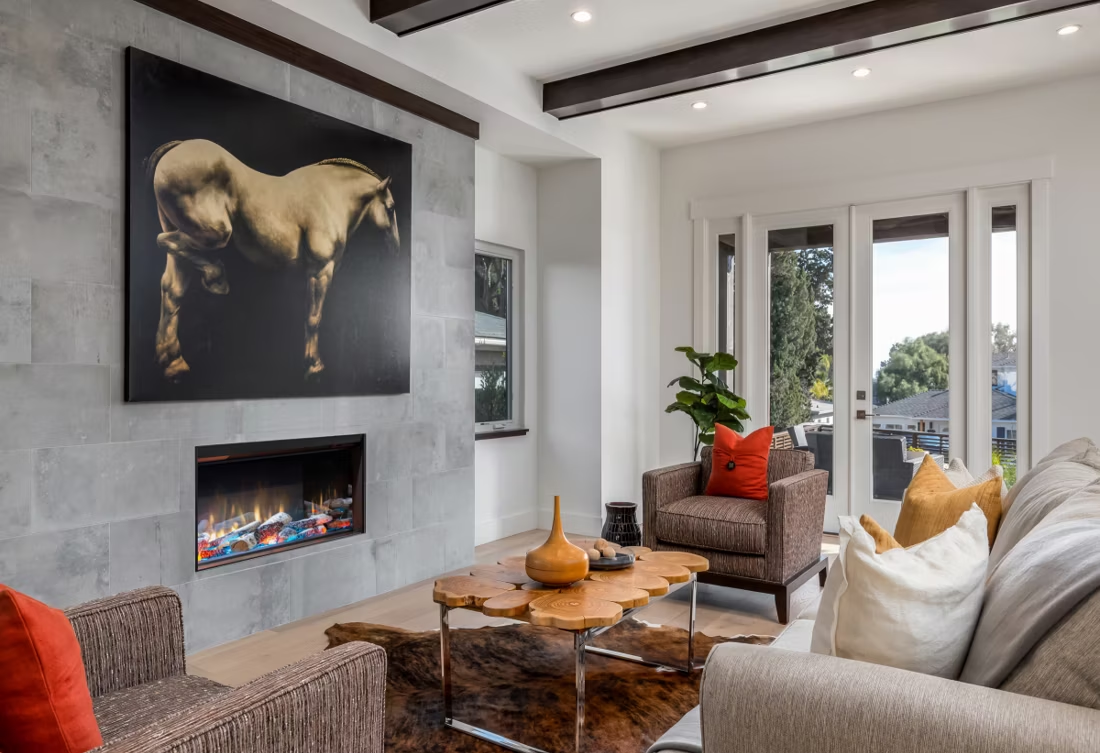
From Sharon Springs to Weskan, electric fireplaces give High Plains homes a low-hassle way to add warmth and ambiance without a chimney, a gas line, or a building crew. Find the right unit and connect with a trusted local dealer.
Every Project Starts From One of These Five Situations
Zone heat that skips the venting and the wait.
Wallace County sits on the far western edge of Kansas, right up against the Colorado line, where the Smoky Hill River cuts through dryland wheat and cattle country at around 3,400 feet of elevation. With just over a thousand residents spread across Sharon Springs, Weskan, and the surrounding farms, this is climate zone 5A country—cold, wind-driven winters where single-digit lows and relentless High Plains gusts do more to chill a house than the thermometer alone suggests. Older farmhouses here were built for a different era of insulation, and a lot of families lean on wood—oak, hickory, and tough, dense osage orange are all common locally—or propane as primary heat, with electric fireplaces filling the gap for supplemental warmth in a den or living room.
The appeal of electric in a county this rural and this small isn't complicated: no chimney, no gas line, no combustion permit, and no need to schedule a crew from out of town for venting work. A built-in unit or insert plugs into a standard or dedicated circuit and starts producing heat immediately—a real advantage in a county where the nearest hearth showroom is likely a drive to Goodland, Colby, or Oakley rather than a shop in Sharon Springs itself. Electric won't replace wood or propane as your storm-day backup, since it depends on power from Wheatland Electric Cooperative staying up—but for daily zone heat, manufactured or modular housing, and rooms where running a flue just isn't practical, it's a straightforward fit.
Three steps. No salesperson until you're ready.
Tell us about your project
Your zip code, your situation, and the fuel you're leaning toward—or let the answers point you to one.
See what's actually available
The brands dealers within 100 miles genuinely carry—real options, never a catalog mirage.
Get your dealer & Project Guide
A trusted local dealer, plus the free Project Guide & Parts List that names every component of the job.
Frequently Asked Questions
How much does an electric fireplace installation cost in Wallace County?
Most electric fireplace projects in Wallace County run between $400 and $1,800. A plug-in wall-mount or freestanding unit on the low end needs little more than a standard outlet and some mounting hardware. A built-in electric fireplace with custom framing, trim, and a mantel—common when homeowners want it to look like a real hearth—sits at the higher end, especially if an electrician needs to run a dedicated 20-amp circuit. Because there's no venting or gas work involved, electric installs are consistently the least expensive and fastest hearth project available in the county.
Do I need a permit to install an electric fireplace in Wallace County?
In most cases, no—a plug-in electric fireplace that uses an existing outlet doesn't trigger a building permit, since there's no venting, gas line, or structural chimney work involved. If you're having a built-in unit wired to a new dedicated circuit, that electrical work should go through a licensed electrician, and depending on whether you're inside Sharon Springs city limits or in unincorporated Wallace County, an electrical permit may be required through the applicable building office. Ask your installer to confirm before work starts—it's a five-minute question that avoids problems later.
Will my electric fireplace still work if the power goes out?
No—and this is worth being direct about. Electric fireplaces run entirely on grid power, so if Wheatland Electric Cooperative service drops during an ice storm or high-wind event (not uncommon on the exposed High Plains around Sharon Springs and Weskan), your electric fireplace goes dark along with everything else. That's why a lot of Wallace County households treat electric as their everyday, low-maintenance heat source and keep a wood stove or propane heater on hand as true storm-day backup. If year-round self-sufficiency during outages is the priority, wood or propane is the better primary choice—electric is best thought of as convenient supplemental heat.
What size electric fireplace do I need for my home?
Sizing an electric fireplace comes down to the room, not the whole house—these units are built for zone heating, not central heat. A 1,500-watt unit (the common max output for most residential models) will comfortably warm a 400- to 600-square-foot living room or den, which covers most single rooms in the older farmhouses and ranch-style homes common around Wallace County. For larger open-concept spaces, or drafty older construction with single-pane windows, you may want a larger insert or a second unit rather than relying on one fireplace to cover the whole footprint. A local dealer can walk through your specific room during a consultation.
What's the difference between an electric fireplace, insert, and stove?
An electric fireplace is typically a wall-mount or built-in unit designed to look like a framed hearth, often installed into a niche or custom mantel surround. An electric insert is built to slide into an existing masonry or wood-burning fireplace opening, giving an old, unused hearth new life without any chimney work. An electric stove is a freestanding cabinet-style unit meant to mimic a wood stove's look, useful where you want a standalone piece rather than a built-in look. For Wallace County homes with an old, rarely used masonry fireplace, an insert is often the simplest upgrade—for new construction or a room without an existing hearth, a built-in fireplace or freestanding stove works better.
What should I look for in an electric fireplace for a windy, cold-climate home?
For older, drafty farmhouses common around Sharon Springs and Weskan, prioritize units with the full 1,500-watt heater option (some lower-end models cap out lower) and a thermostat with a wide adjustable range, since High Plains wind can push indoor temperatures down fast even with the furnace running. Look for a fan-forced heater rather than a purely radiant unit if you want the heat to actually reach across a larger room. Realistic flame technology is mostly a cosmetic choice at that point—worth comparing in person, since some models look far more convincing than others.
Where can I find a dealer to install an electric fireplace near Wallace County?
Wallace County's population is small enough that there isn't a dedicated hearth showroom in Sharon Springs itself—most residents end up working with dealers based in Goodland, Colby, or Oakley who cover the western Kansas region and are used to making the drive out for installs. That's exactly the kind of local matchmaking Find My Fireplace exists to handle: rather than guessing which regional dealer actually services your address, we match you with a trusted installer who covers Wallace County and hand you a free plan for the project before you ever pick up the phone.
Electric vs. wood—which makes more sense for a Wallace County home?
Wood—often oak, hickory, or dense osage orange cut locally—has long been the practical backup heat source in this part of Kansas, since it works with zero dependence on the power grid during storms and pairs with the self-sufficient ethos common on farms and ranches out here. Electric fireplaces can't match that independence, but they win on convenience: no ash, no wood handling, no chimney maintenance, and instant on-off operation for daily use in a living room or den. Many Wallace County homeowners run electric for everyday ambiance and zone heat, with a wood stove or propane appliance held in reserve for when Wheatland Electric Cooperative service is interrupted.
Is an electric fireplace a good fit for a manufactured or mobile home?
Yes—electric fireplaces are one of the few hearth options that install cleanly in manufactured and modular housing, which make up a meaningful share of the housing stock in a small agricultural county like Wallace. Because there's no chimney, no roof penetration, and no combustion air requirement, a plug-in or built-in electric unit avoids the structural complications that come with wood or gas appliances in factory-built homes. Confirm electrical capacity with your dealer or an electrician before adding a higher-wattage built-in unit, since older mobile home panels sometimes have limited headroom for new circuits.
Can I put a TV above my fireplace?
Yes—with an asterisk. Fireplaces are hot and TVs don't like heat. Either put a mantel between them to deflect rising warmth, or choose a fireplace with heat-management technology that creates a cool zone on the wall above—the wall stays around 125 degrees, barely warm, while the room still gets full heat. If you like clean lines and don't want a mantel, heat management is the answer.
Does an electric fireplace need a vent or chimney?
No—that's its superpower. An electric fireplace needs a wall and an outlet, period. No vent pipe, no gas line, no clearances to design around, which is why it works in bedrooms, offices, apartments, and walls where venting a gas or wood unit would be impractical or impossible. Installation is typically the simplest and least expensive of any fireplace type.
Can I install a fireplace myself?
If you're putting a fire in your house on purpose, it's best to work with an expert. Unless you're genuinely experienced in framing, gas line, vent pipe, and the national code on clearances to combustibles, have a professional do it—and ideally the same company that sells you the fireplace, so warranty, service, and liability all live under one roof.
Can a fireplace actually lower my heating bill?
Yes—by creating a comfort zone. A furnace heats every square foot of the house just to warm the one room you're in; a gas fireplace on low burns roughly a sixth of the gas a typical furnace does. Set the furnace around 55–60 degrees as a baseline, then heat the rooms your family actually uses. Families who heat this way commonly save $20–$60 a month.
Find your electric fireplace in Wallace County.
Tell us a bit about your home in Sharon Springs, Weskan, or elsewhere in Wallace County, and we'll match you with a trusted local dealer and a free Project Guide & Parts List—the exact parts, including any framing or electrical needs, for your electric fireplace project.
Find Your Fireplace →