
Built to Handle Wind, Cold, and Wide-Open Plains.
Wood, gas, pellet, and electric fireplace resources for Sharon Springs, Wallace, and every ranch and farmstead in between. Find the right unit for the High Plains and connect with a trusted local hearth retailer.
Every Project Starts From One of These Five Situations
Heating a High Plains county of just over a thousand people.
Wallace County sits at Kansas's western edge against the Colorado line, shortgrass prairie running flat to the horizon at roughly 3,400 feet. It's Climate Zone 5A country—the same continental cold that grips Bismarck, ND, with wind that cuts through a house far faster than the thermometer alone suggests. Homesteaders here planted osage orange (hedge) as windbreaks more than a century ago, and that same dense, high-BTU hedge wood still gets split for stoves today, alongside oak and hickory pulled from the Smoky Hill River bottoms. With a population just over 1,000, this is one of the least densely populated counties in the state—which shapes everything from permitting to service calls.
What you'll find on this hub: hearth retailers, service technicians, and fuel suppliers reaching Sharon Springs (the county seat), the town of Wallace, and the ranches and farmsteads scattered across the county's open miles. Piped natural gas doesn't reach most rural Wallace County properties, so propane is the practical gas option for most homes here. Pick your fuel below to see local dealers, install costs, and the specifics that fit a High Plains property—whether you're heating a Sharon Springs farmhouse or a place well off the highway.
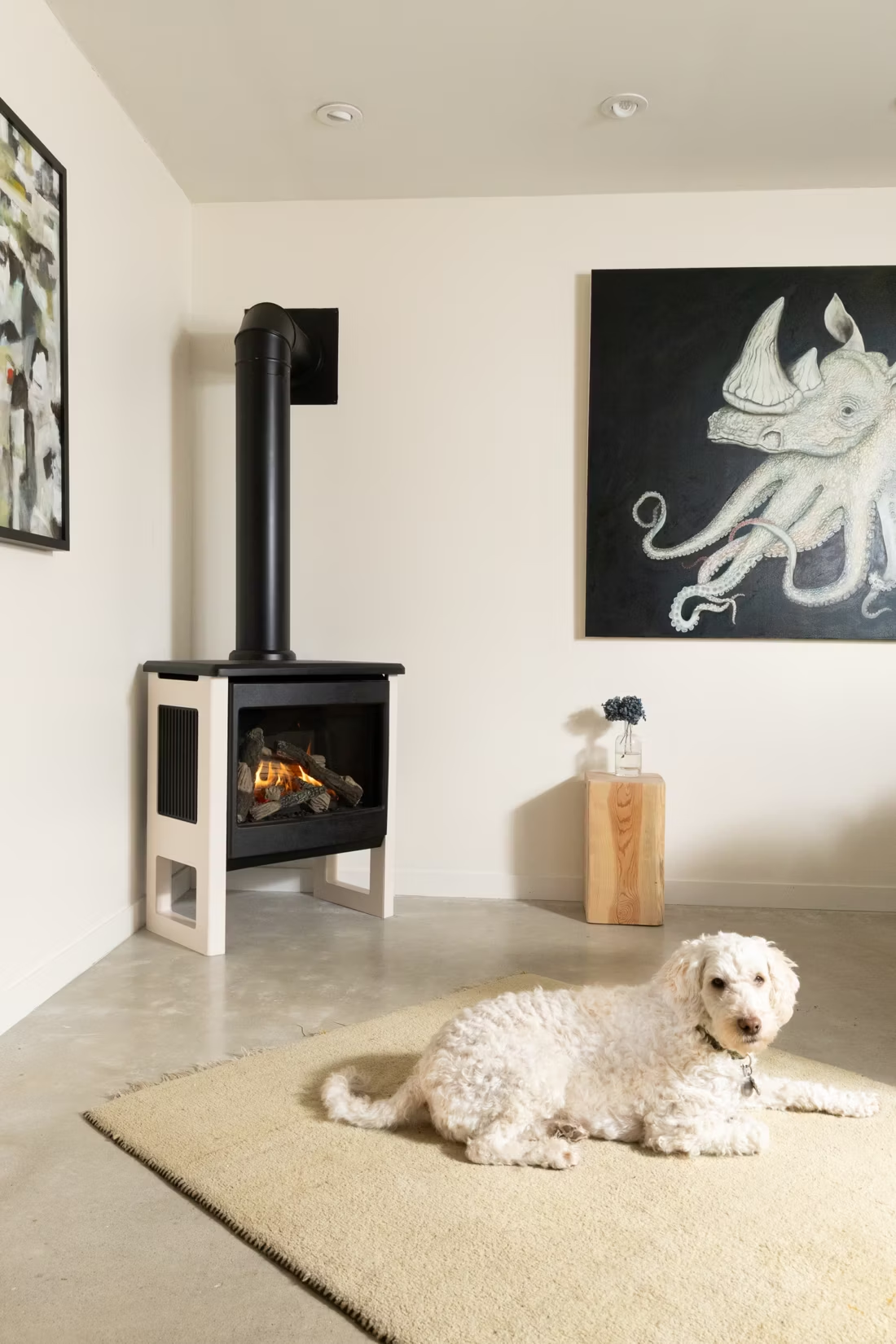
Four fuels. One honest answer for Wallace County.
Three steps. No salesperson until you're ready.
Tell us about your project
Your zip code, your situation, and the fuel you're leaning toward—or let the answers point you to one.
See what's actually available
The brands dealers within 100 miles genuinely carry—real options, never a catalog mirage.
Get your dealer & Project Guide
A trusted local dealer, plus the free Project Guide & Parts List that names every component of the job.
Frequently Asked Questions
Which fuel works best in Wallace County?
It depends on your property and how remote it is. Wood remains a strong, practical choice here—osage orange (hedge) burns hot and long, a legacy of the windbreak rows planted across the county generations ago, and oak and hickory from the river bottoms round out the woodpile. Gas in Wallace County almost always means propane rather than piped natural gas, since municipal gas lines don't reach most rural stretches—propane fireplaces and inserts give you instant, hands-off heat without hauling wood. Pellet works fine mechanically, but pellet supply (Lignetics, Indeck Energy Services) usually means trucked-in bags from regional distributors, so a stocked garage or shed matters more here than in denser counties. Electric is a solid supplemental option for a bedroom or den, though with the wind-driven storms that can knock out rural power, it shouldn't be your only heat source in January.
Do I need a permit to install a fireplace in Wallace County?
Usually, though the process is lighter-touch than in a larger county. Wallace County doesn't have the zoning infrastructure of an urban county, but gas and propane installations still require a licensed gas-fitter or propane technician for the connection and tank work, and any new wood stove or insert should meet current EPA emissions standards. The best first call is the Wallace County Clerk's office in Sharon Springs to confirm what's required for your specific address—rural parcels and the towns of Sharon Springs and Wallace can have different requirements. Most propane and hearth retailers who serve the county are used to walking rural customers through this and will typically handle the paperwork as part of the install.
Are there air quality restrictions on wood burning in Wallace County?
No—Wallace County has no air quality non-attainment designation and no burn-restriction days. With just over 1,000 residents spread across a large, wind-swept stretch of prairie, there's neither the population density nor the topography (no basin, no inversion-prone valleys) that causes the smoke buildup you see in places like the Klamath Basin or Salt Lake City. You're free to burn wood without seasonal curtailment concerns. That said, an EPA-certified stove still burns hedge and oak more efficiently and with less visible smoke than an old uncertified unit, which matters for your own chimney and neighbors even without a regulatory mandate.
Can one local hearth retailer handle all four fuel types?
Within Wallace County itself, dedicated hearth retailers are scarce simply because of the population—most residents end up working with dealers based in larger regional hubs like Goodland or Colby, a reasonable drive east or north, and those retailers commonly stock wood, propane/gas, pellet, and electric units under one roof. If you're near Sharon Springs or the town of Wallace, expect your installer to be making a service trip rather than operating a storefront next door—which is normal for a county this size and doesn't mean lower-quality work, just more advance scheduling.
How does service work in rural areas of Wallace County?
Plan ahead. Technicians serving Wallace County typically travel in from Goodland, Colby, or other western Kansas towns, and with ranches and farmsteads spread across hundreds of square miles, a single service call can mean an hour or more of driving each way—expect a travel fee built into rural quotes. Fall (September–October) is the easier window to book before winter wind and snow start affecting gravel-road access; mid-winter storm days can delay emergency calls. If you're on propane, keep an eye on tank levels ahead of forecasted cold snaps, since delivery trucks are working the same wide routes as service techs.
What's the typical cost range for fireplace installation across all fuel types in Wallace County?
Expect ranges similar to other rural western Kansas counties, with rural travel sometimes adding to labor. Wood stove or insert: roughly $4,000–$8,500 for a typical install, more if new chimney or hearth work is needed. Propane fireplace, insert, or stove: roughly $4,000–$9,000, with tank setup or line work affecting the low versus high end. Pellet stove or insert: roughly $4,000–$7,000, plus factoring in a reliable pellet supply chain since bags are trucked in rather than sold locally on every corner. Electric fireplace: $200–$3,000 for the unit itself, with $400–$1,000 in labor for anything beyond a plug-and-play install. A local dealer serving your part of the county can give you a firm number once they've seen your chimney, gas access, or electrical panel.
Can I install a fireplace myself?
If you're putting a fire in your house on purpose, it's best to work with an expert. Unless you're genuinely experienced in framing, gas line, vent pipe, and the national code on clearances to combustibles, have a professional do it—and ideally the same company that sells you the fireplace, so warranty, service, and liability all live under one roof.
Can a fireplace actually lower my heating bill?
Yes—by creating a comfort zone. A furnace heats every square foot of the house just to warm the one room you're in; a gas fireplace on low burns roughly a sixth of the gas a typical furnace does. Set the furnace around 55–60 degrees as a baseline, then heat the rooms your family actually uses. Families who heat this way commonly save $20–$60 a month.
I know I want a fireplace—where do I actually start?
Do two things today: snap a photo of the wall or fireplace you want to transform, and take a tape measure to the space—width, height, depth. Those two artifacts answer most of a hearth professional's first questions. Then settle fuel (wood, gas, pellet, or electric) and set a realistic budget: $3,900–$5,500 covers fireplace, vent, and basic install for most homes.
Does a fireplace add value to my home?
On average, a fireplace adds back to the home about the same amount you spent installing it. Add the monthly savings from heating the rooms you actually use instead of the whole house—often hundreds of dollars a year—and the value case is strong before you even count what a fire does for how your family uses the room.
Stove and Fireplace Dealers in Wallace County
Listings include WhyFire partner dealers, dealers we have verified as authorized for the brands we recommend, and established local businesses that carry hearth products. Every listing shows which one it is. The ones marked Preferred run on WhyFire's software, so they can show you real pricing and book your appointment right here. No manufacturer pays for placement. How we verify dealers →
Plains Heating & Air Conditioning
Cheyenne Wells Lumber Co
Bird's Alternatives
Find your fireplace project in Wallace County.
Tell us about your home near Sharon Springs or Wallace and we'll match you with a trusted local dealer and send a free Project Guide & Parts List—the exact parts, including the vent kit, and the dealer we recommend for your project.
Find Your Fireplace →