
Steady heat for Sheridan County's high plains winters.
Automated, low-maintenance heat for Hoxie, Selden, Grinnell, Studley, and the farmsteads scattered across Sheridan County's wheat and cattle country. Find the right pellet stove or insert, and connect with a trusted local dealer.
Every Project Starts From One of These Five Situations
Automated warmth for a county with more wind than trees.
Sheridan County sits on the High Plains of northwest Kansas, a wide, wind-scoured landscape of wheat fields and cattle ground where fewer than 1,600 people spread across nearly 900 square miles. Winters here run cold and dry, with climate zone 5A conditions and wind chills that can rival Bismarck, North Dakota on the worst days. Native tree cover is thin—most of the oak, hickory, and osage orange in the county grow in planted shelterbelts and farmstead windbreaks rather than dense woodlots, which is part of why pellet heat has found a real foothold here.
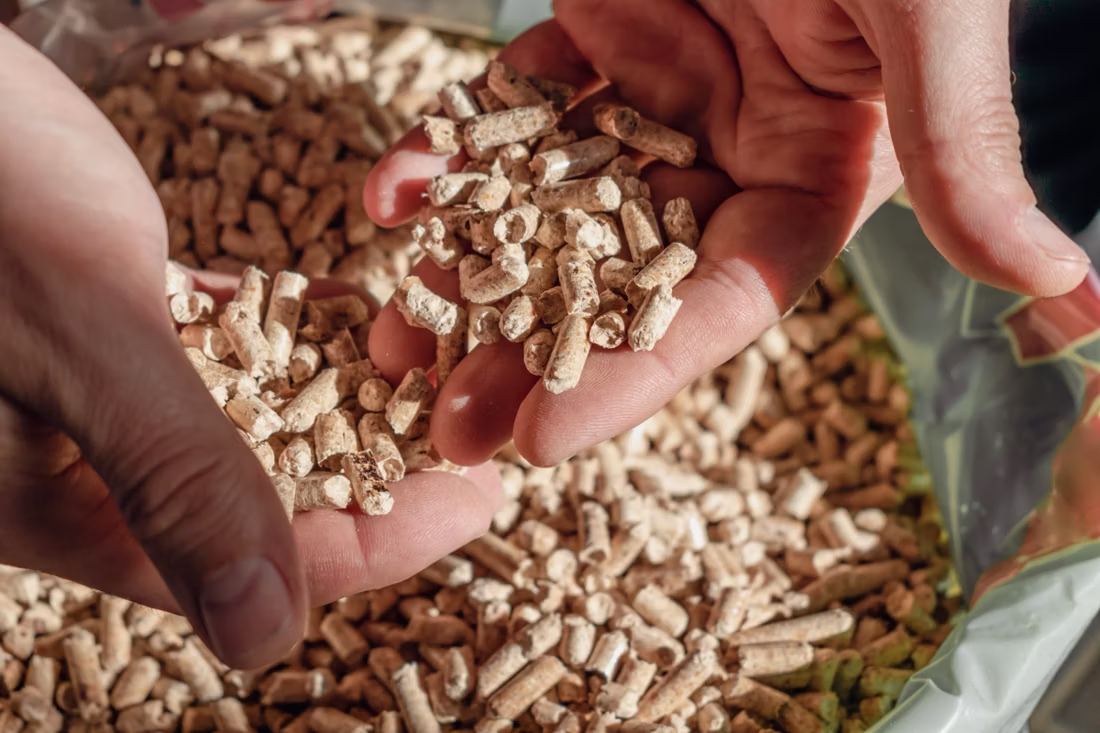
Bagged pellets from regional producers like Lignetics and Indeck Energy Services move through farm co-ops and feed stores across northwest Kansas, giving Sheridan County households a fuel source that doesn't depend on cutting and hauling cordwood from scarce local timber. A pellet stove's automated hopper and thermostat also suit the rhythm of farm life—set it and it holds a steady temperature while you're out checking cattle or running equipment during wheat harvest. With no air quality non-attainment issues or burn restrictions in the county, pellet heat here is mostly a question of convenience and efficiency rather than regulation.
Three steps. No salesperson until you're ready.
Tell us about your project
Your zip code, your situation, and the fuel you're leaning toward—or let the answers point you to one.
See what's actually available
The brands dealers within 100 miles genuinely carry—real options, never a catalog mirage.
Get your dealer & Project Guide
A trusted local dealer, plus the free Project Guide & Parts List that names every component of the job.
Frequently Asked Questions
How much does a pellet stove installation cost in Sheridan County?
Most pellet stove installations run in the neighborhood of $3,000 to $6,500 once you account for the unit, PL venting through an exterior wall, and a hearth pad if your floor isn't already protected. Because Sheridan County's population is small—just over 1,500 people spread across the county—most homeowners work with dealers based in Colby or Hays who travel out to Hoxie, Selden, Grinnell, and the surrounding farmsteads for installation. Expect a modest trip charge factored into the quote, and ask about it up front.
What size pellet stove do I need for my home?
Sizing depends on square footage, ceiling height, and how exposed your home is to Sheridan County's wind. A small pellet stove (under 1,000 sq ft) suits a farmhouse room or a modest single-story home; a medium unit (1,000-1,800 sq ft) handles most main living areas; larger units cover open-plan or poorly insulated older farmhouses common in the county. Because wind-driven cold pulls heat out of drafty older construction faster than still-air cold, homes with older single-pane windows or uninsulated additions often need to size up a step. A local dealer will size your space during an in-home visit rather than by square footage alone.
Where can I find pellet stove dealers near Sheridan County?
With Sheridan County's population under 1,600, there isn't a hearth shop in Hoxie itself—most residents work with certified dealers in Colby (about 20 miles west) or Hays (roughly 70 miles southeast), both of which regularly service northwest Kansas farm country. These dealers stock stoves compatible with the bagged pellet fuel already moving through local co-ops and feed stores, and most will make the drive out to Selden, Studley, Grinnell, or Grainfield for installation and service calls.
Pellet stove vs. wood stove—which makes more sense in Sheridan County?
Wood stoves rely on cordwood, and Sheridan County's tree cover is mostly planted shelterbelt oak, hickory, and osage orange rather than dense forest—workable if you have access to a windbreak that needs thinning, but not the abundant public timber you'd find in a forested state. Pellet stoves sidestep that entirely: bagged pellets from Lignetics or Indeck Energy Services arrive by pallet through local co-ops, load into a hopper, and burn on a thermostat with far less daily tending. The tradeoff is that pellet stoves need electricity to run the auger and blower, so they won't provide heat during a power outage the way a wood stove will—worth weighing given how exposed the county is to winter wind events that can knock out rural power lines.
Do I need a permit to install a pellet stove in Sheridan County?
Most pellet stove installations require a building permit, and in a county this size that typically means a visit to the courthouse in Hoxie, where county building and zoning matters are handled. Because pellet stoves vent through a smaller PL-rated pipe rather than a full masonry chimney, permitting and inspection tend to be simpler and faster than a wood stove or fireplace install. Your dealer can usually tell you exactly what the county will want to see before they start work.
What's the best pellet stove for Sheridan County's climate?
Lignetics and Indeck Energy Services are the pellet fuel brands most commonly stocked at co-ops and feed stores serving northwest Kansas, so it makes sense to choose a stove that burns their standard-size pellets efficiently—most modern units from major manufacturers handle this without issue. For Sheridan County's wind-driven cold, look for a stove with a strong-output rating and a reliable auger feed system; models with adjustable burn rates let you dial down fuel use on milder days and run hard during the hard cold spells that come through with a north wind. A local dealer can match a specific model to your home's square footage and insulation.
How much maintenance does a pellet stove need?
Pellet stoves need the ash pan emptied every few days during regular use and the burn pot scraped clean weekly to keep combustion efficient. Because pellet stoves vent through small-diameter PL pipe rather than a full chimney, there's no annual chimney sweep the way there is for wood—but the venting and hopper mechanism should still get a professional inspection once a year, ideally before the start of the winter heating season. Sheridan County's low humidity and lack of any air quality restrictions mean maintenance here is mostly about the stove itself, not outside regulatory requirements.
Where can I buy pellet fuel in Sheridan County?
Bagged pellets from producers like Lignetics and Indeck Energy Services typically move through farm co-ops and feed stores across northwest Kansas rather than dedicated hearth retailers, given the county's small population. Expect to pay somewhere in the $250 to $320 per ton range, generally sold by the pallet (usually 50 forty-pound bags per ton). Because Sheridan County is rural, it's worth buying a season's supply early in the fall—waiting until a cold snap hits can mean a drive to Colby or Hays if local stock runs low.
Pellet stove vs. electric heat—which is right for my home?
Both technically require electricity to run—a pellet stove needs power for its auger and blower, and electric heaters or baseboards need it for the heating element itself—so neither is a true off-grid backup during an outage. Where they differ is heat output and cost: a pellet stove burns fuel that runs roughly $250-$320 a ton and puts out substantial radiant and convective heat for the cost, while electric heat draws directly off your utility bill and can get expensive fast during a stretch of Sheridan County's coldest wind-chill days. For whole-room or whole-home heating through a long plains winter, pellet generally wins on operating cost; for a small supplemental space or occasional use, electric may be simpler.
What's the difference between an insert and a zero-clearance fireplace?
An insert is a fireplace that slides into a pre-existing wood-burning fireplace—if you don't have one, there's nothing to insert it into. A zero-clearance fireplace is built into a framed wall, which makes it the answer for remodels and new construction. Simple test: existing masonry fireplace means insert; blank or framed wall means zero-clearance.
How often does a pellet stove need cleaning?
A clean pellet stove is a happy pellet stove. Plan on cleaning the burn pot about once a week when you're burning regularly—ash and clinkers gum up the air holes just like a pellet barbecue. Most pellet stove problems trace back to skipped cleaning that nobody explained up front. Some designs make it easy with a trapdoor burn pot: pull a lever and the gunk drops into the ash pan.
How much should I budget for a fireplace?
For an average home—covering the fireplace, the vent pipe, and basic installation—a budget between $3,900 and $5,500 gives you a lot of options across wood, gas, and pellet. By the time you add finish work, gas line, and electrical, the average complete installation lands between $5,000 and $12,000 all-in. In a remodel or new build, a good rule is to put about 2.5% of the total project cost toward the fireplace.
What is an in-home preview and do I need one?
It's a visit where a hearth professional measures your space, confirms the model you picked actually works in your home, and walks the specs—framing, gas line, venting, finish work—before anything is ordered. Some details you just can't know until you see the house. Never make a down payment without one; it's the single most-skipped step that burns buyers.
Pellet Brands Stocked Around Sheridan County
Manufacturers will point you to the nearest stocking dealer.
Find your pellet stove in Sheridan County.
Tell us a bit about your home and we'll match you with the right pellet stove or insert, plus a free Project Guide & Parts List—the exact parts, including the vent kit, and a recommended local dealer for your Sheridan County installation.
Find Your Fireplace →