
Find the right hearth for Sheridan County winters.
Wood, gas, pellet, and electric fireplace resources for Hoxie and every rural community across Sheridan County. Find the right unit for your home and connect with a trusted local hearth retailer.
Every Project Starts From One of These Five Situations
High-plains heating on Kansas's western edge.
Sheridan County sits on the high plains of northwest Kansas, a Climate Zone 5A region where winter winds sweep unobstructed across the wheat and cattle country between Hoxie and the county line. With just over 1,500 residents spread across roughly 900 square miles, this is farm-and-ranch country—the kind of place where a woodstove is as much about outage insurance as ambiance, and where oak, hickory, and osage orange (hedge) split from shelterbelt trimmings and farmstead windbreaks still fuel plenty of woodpiles. Cold fronts here can rival what Bismarck ND sees, and rural electric co-op lines strung across long distances mean winter outages happen. A wood or pellet stove that doesn't need grid power to run is a practical hedge, not just a comfort choice.
What you'll find on this hub: hearth retailers, service technicians, and fuel suppliers serving Sheridan County—from Hoxie out to the farmsteads and unincorporated communities along US-24 and the county roads. Pick your fuel below to drill into specifics—local dealers, installation costs, recommended units, and the resources that match your project. Whether you're heating a farmhouse outside Selden or a home in Hoxie itself, this is the starting point.
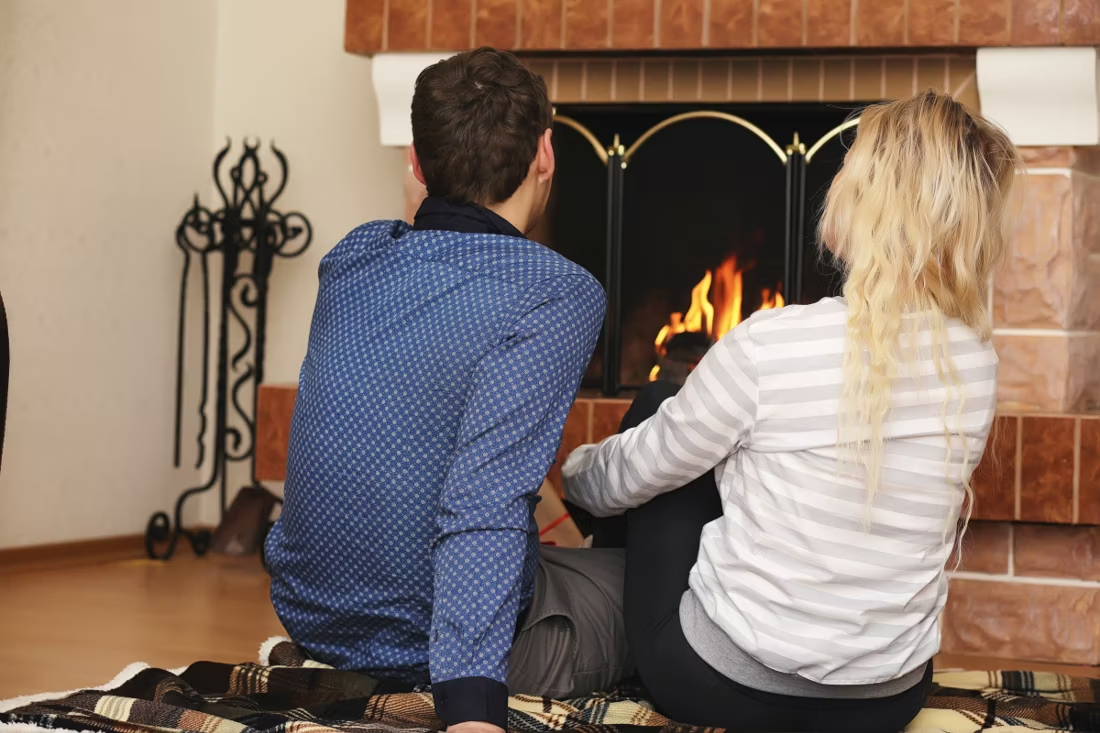
Four fuels. One honest answer for Sheridan County.
Three steps. No salesperson until you're ready.
Tell us about your project
Your zip code, your situation, and the fuel you're leaning toward—or let the answers point you to one.
See what's actually available
The brands dealers within 100 miles genuinely carry—real options, never a catalog mirage.
Get your dealer & Project Guide
A trusted local dealer, plus the free Project Guide & Parts List that names every component of the job.
Frequently Asked Questions
Which fuel works best in Sheridan County?
It depends on your home and how much you're relying on the stove for backup heat. Wood is the traditional choice out here—oak, hickory, and osage orange from shelterbelt and farmstead trees are widely available and burn hot and long, and a wood stove keeps working when rural electric co-op power goes out in an ice storm. Pellet is a strong middle option—less physical labor than splitting and stacking wood, with Lignetics and Indeck Energy Services pellets both distributed through the regional supply chain, though most pellet stoves still need electricity to run the auger and blower, which matters if outages are a concern for your property. Gas—typically propane out here, since natural gas mains are limited in rural Sheridan County—gives you instant, hands-off heat and works well as a primary heater in town or as a supplemental unit on a farmstead. Electric fireplaces are best treated as supplemental ambiance or zone heat, not a primary source, given how exposed this county is to grid disruptions in winter storms. Many households here end up running wood or propane as the primary heat source with electric or pellet in secondary rooms.
Do I need a permit to install a fireplace in Sheridan County?
Most new wood stove, wood insert, gas fireplace, gas insert, gas stove, and pellet stove installations require a building permit, and gas hookups need a separate line permit handled by a licensed gas fitter. In a county this rural, permitting is typically handled through the Sheridan County building or zoning office, and enforcement in unincorporated areas can vary by location—your installer will know the local process and can usually pull the permit as part of the job. Electric fireplaces generally don't require a permit unless you're doing a built-in installation with new wiring or a dedicated circuit. If you're unsure whether your project needs a permit, ask the retailer or technician doing the install before work begins—it's a normal part of their process, not an extra step you have to chase down yourself.
Are there air quality restrictions on wood burning in Sheridan County?
No—Sheridan County has no air quality non-attainment designations or wood-burning curtailment programs. Unlike basin or valley communities where winter inversions trap smoke, the open high-plains terrain here doesn't create the same conditions, and there's no local advisory system asking residents to limit burning on bad-air days. New wood stove installations still need to meet current EPA emissions standards, which is standard nationwide, but you won't run into curtailment restrictions or burn bans tied to local air quality the way you might in a more enclosed valley setting.
Can one local hearth retailer handle all four fuel types?
In a county with under 2,000 residents, don't expect a large multi-fuel showroom inside Sheridan County itself. Most homeowners here work with retailers based in larger regional trade centers—Colby, Hays, or similar-sized towns within driving distance—that stock wood, gas, and pellet units and travel out to Hoxie and the surrounding farmsteads for installs. Fewer of those retailers carry a deep electric fireplace lineup, since electric units are more often bought as standalone appliances rather than through a full-service hearth install. If you want to compare fuels side by side, plan on a drive to see working displays, or ask your retailer what they can bring out on a mobile consultation.
How does service work in a rural county like Sheridan?
Most technicians covering Sheridan County are based outside the county and travel in on a route basis, often bundling stops in Hoxie with nearby communities to make the trip worthwhile. Expect a modest trip fee for service calls, and expect scheduling to run tighter than in a metro area—pre-season appointments in late summer and early fall are far easier to book than a mid-January emergency call after a stove fails during a cold front. Given how exposed this county is to winter storms and rural power outages, it's worth scheduling your annual chimney sweep or gas inspection early, keeping a spare thermocouple or battery pack on hand for gas units with electronic ignition, and treating wood as a genuine backup heat plan if your primary system is electric or propane-fed.
What's the typical cost range for fireplace installation across all fuel types in Sheridan County?
Costs in a rural county like this often run a bit higher than metro averages once you factor in technician travel time. Wood stove or insert installation: roughly $4,500–$9,500 for a typical install, more for new chimney construction. Gas fireplace, insert, or stove: roughly $4,500–$11,500, with propane tank setup or line work adding to the low end of that range if it's a first-time propane installation. Pellet stove or insert: roughly $4,500–$7,800 typical. Electric fireplace: $200–$3,000 for the unit itself, plus $400–$1,200 in labor for anything beyond a plug-and-play setup. For fuel-specific numbers tied to actual local pricing, see the county + fuel pages above.
Can I install a fireplace myself?
If you're putting a fire in your house on purpose, it's best to work with an expert. Unless you're genuinely experienced in framing, gas line, vent pipe, and the national code on clearances to combustibles, have a professional do it—and ideally the same company that sells you the fireplace, so warranty, service, and liability all live under one roof.
Wood, gas, pellet, or electric—how do I choose?
Match the fuel to your life, not the other way around. Wood: lowest fuel cost and total power-outage independence, but you're hauling and stacking. Gas: press a button, set a thermostat, no maintenance to speak of. Pellet: wood economics with automatic feeding, in exchange for weekly cleaning and a need for electricity. Electric: plugs in anywhere with honest supplemental heat. Nobody regrets the fuel that fits how they actually live.
What is an in-home preview and do I need one?
It's a visit where a hearth professional measures your space, confirms the model you picked actually works in your home, and walks the specs—framing, gas line, venting, finish work—before anything is ordered. Some details you just can't know until you see the house. Never make a down payment without one; it's the single most-skipped step that burns buyers.
How much should I budget for a fireplace?
For an average home—covering the fireplace, the vent pipe, and basic installation—a budget between $3,900 and $5,500 gives you a lot of options across wood, gas, and pellet. By the time you add finish work, gas line, and electrical, the average complete installation lands between $5,000 and $12,000 all-in. In a remodel or new build, a good rule is to put about 2.5% of the total project cost toward the fireplace.
Stove and Fireplace Dealers in Sheridan County
Listings include WhyFire partner dealers, dealers we have verified as authorized for the brands we recommend, and established local businesses that carry hearth products. Every listing shows which one it is. The ones marked Preferred run on WhyFire's software, so they can show you real pricing and book your appointment right here. No manufacturer pays for placement. How we verify dealers →
Bird's Alternatives
Plains Heating & Air Conditioning
Heartland Building Center
Find your fireplace in Sheridan County.
Pick your fuel below and we'll match you with a trusted local dealer plus a free Project Guide & Parts List—the exact parts, vent kit included, and the dealer we recommend for your Sheridan County project.
Find Your Fireplace →