
Electric heat that works in every Sheridan County farmhouse.
No chimney, no gas line, no venting to route through a 100-year-old farmhouse wall—just a unit that plugs in or wires into a dedicated circuit and heats the room you're actually using, from Hoxie to Selden to Studley.
Every Project Starts From One of These Five Situations
Zone heat for a county with more farmland than furnace budget.
Sheridan County sits in Kansas climate zone 5A, out on the high plains where the wind has nothing to slow it down between here and the Nebraska line—wind chill on a January night can feel closer to Fargo, ND than to Wichita. With a population under 1,600 spread across Hoxie, Selden, and Studley plus the ranches and farmsteads between them, a lot of the housing stock here is older, drafty, and heated room-by-room rather than whole-house. Electric fireplaces fit that reality well: no combustion, no flue, no clearance-to-combustibles headaches in a house where the walls weren't built with a hearth in mind.
There's no natural gas infrastructure to speak of in most of rural Sheridan County, and propane delivery adds a recurring cost that a lot of homeowners would rather skip for a supplemental heat source. Electric service in the county runs through the local rural electric cooperative, and a dedicated 120V or 240V circuit is usually all an installer needs to get a built-in unit running. For a spare bedroom, a sunroom addition, a shop office, or just taking the edge off a farmhouse living room without firing up the whole furnace, electric is often the simplest and cheapest fix available in the county.
Three steps. No salesperson until you're ready.
Tell us about your project
Your zip code, your situation, and the fuel you're leaning toward—or let the answers point you to one.
See what's actually available
The brands dealers within 100 miles genuinely carry—real options, never a catalog mirage.
Get your dealer & Project Guide
A trusted local dealer, plus the free Project Guide & Parts List that names every component of the job.
Frequently Asked Questions
How much does an electric fireplace installation cost in Sheridan County?
A plug-in electric insert or freestanding unit runs $300 to $700 installed—often just setting the unit in place and plugging it into an existing outlet. A built-in wall unit or mantel-surround fireplace that needs a dedicated 240V circuit run by an electrician typically lands between $800 and $1,500, depending on how far the unit sits from the home's electrical panel. Older farmhouses with knob-and-tube or outdated panel wiring sometimes need a panel upgrade first, which adds to the total—a local electrician can tell you quickly whether your existing service can handle a dedicated circuit.
Do I need a permit to install an electric fireplace in Sheridan County?
For a plug-in unit that uses an existing outlet, no permit is typically required—there's no venting, no gas line, and nothing structural involved. For a built-in unit that requires new wiring or a dedicated circuit, an electrical permit is the standard requirement, and most licensed electricians working in Sheridan County pull that permit as part of the job. Because the county is largely rural and unincorporated outside Hoxie, Selden, and Studley, permit requirements can vary slightly by whether you're inside city limits—your installer will know which office to file with.
Can an electric fireplace actually heat a room in a Sheridan County winter?
Most electric fireplace inserts put out 4,600 to 5,200 BTU (roughly 1,500 watts), which is enough to noticeably warm a single room—a living room, a bedroom, or a converted porch—especially as supplemental heat alongside a central furnace or propane system. On the coldest plains nights, when wind chill drops well below zero, an electric unit isn't going to carry an entire drafty farmhouse on its own, but it's effective for the room you're actually sitting in, which is often the more practical goal for older homes with uneven insulation.
What happens to my electric fireplace during a power outage?
It won't run—electric fireplaces need power to operate, full stop, and that matters in Sheridan County where ice storms and high-wind events occasionally knock out rural electric co-op service for hours at a time. If backup heat during outages is a real concern for your household, it's worth pairing an electric unit (for everyday convenience) with a wood stove or propane heater that can run independent of the grid. Several homeowners in the county keep exactly that combination—electric for daily use, wood for when the lines go down.
Electric vs. wood—which makes more sense for my home?
Wood is still a practical choice in Sheridan County—oak, hickory, and osage orange are all common locally and burn hot and long, and a wood stove keeps working when the co-op lines are down. Electric wins on convenience: no wood splitting, no ash, no chimney to maintain, and a unit that can go into a room with zero clearance concerns, including a mobile home or a room addition where running a flue isn't practical. A lot of Sheridan County households end up with both—wood as the primary or backup heat source, electric for a bedroom, office, or sunroom where daily convenience matters more than raw output.
Electric vs. pellet stove—which is right for me?
Pellet stoves, using bagged pellets from brands like Lignetics or Indeck Energy Services, put out real heat and burn cleaner than cordwood, but they need electricity to run the auger and blower anyway—so they don't offer the outage-proof advantage some homeowners assume. If you're already accepting that a heat source needs grid power, an electric fireplace is simpler: no pellet bags to store, no hopper to load, no ash pan to empty, and a much lower upfront cost. Pellet stoves make more sense if you want higher BTU output for a larger space and don't mind the fuel handling.
Who provides electric service in Sheridan County, and does it affect installation?
Electric service across rural Sheridan County runs through the local electric cooperative, which most homeowners here are already familiar with for general household power. For a plug-in fireplace, service capacity is rarely an issue. For a built-in unit needing a dedicated 240V circuit, your electrician will check your panel's available capacity—older farmhouse panels sometimes need an upgrade before adding a new circuit, which is worth flagging before you buy a unit expecting a same-day install.
Where can I find a dealer who installs electric fireplaces near Sheridan County?
With a county population under 1,600, there isn't a hearth retailer with a storefront in Hoxie or Selden—most homeowners here work with dealers based in Hays, Colby, or Goodland who serve the surrounding rural counties, including Sheridan. Find My Fireplace matches you with a trusted dealer who actually covers this part of northwest Kansas, rather than pointing you to a big-box listing that doesn't service rural addresses.
What's the difference between an electric insert, a wall-mount unit, and a mantel package?
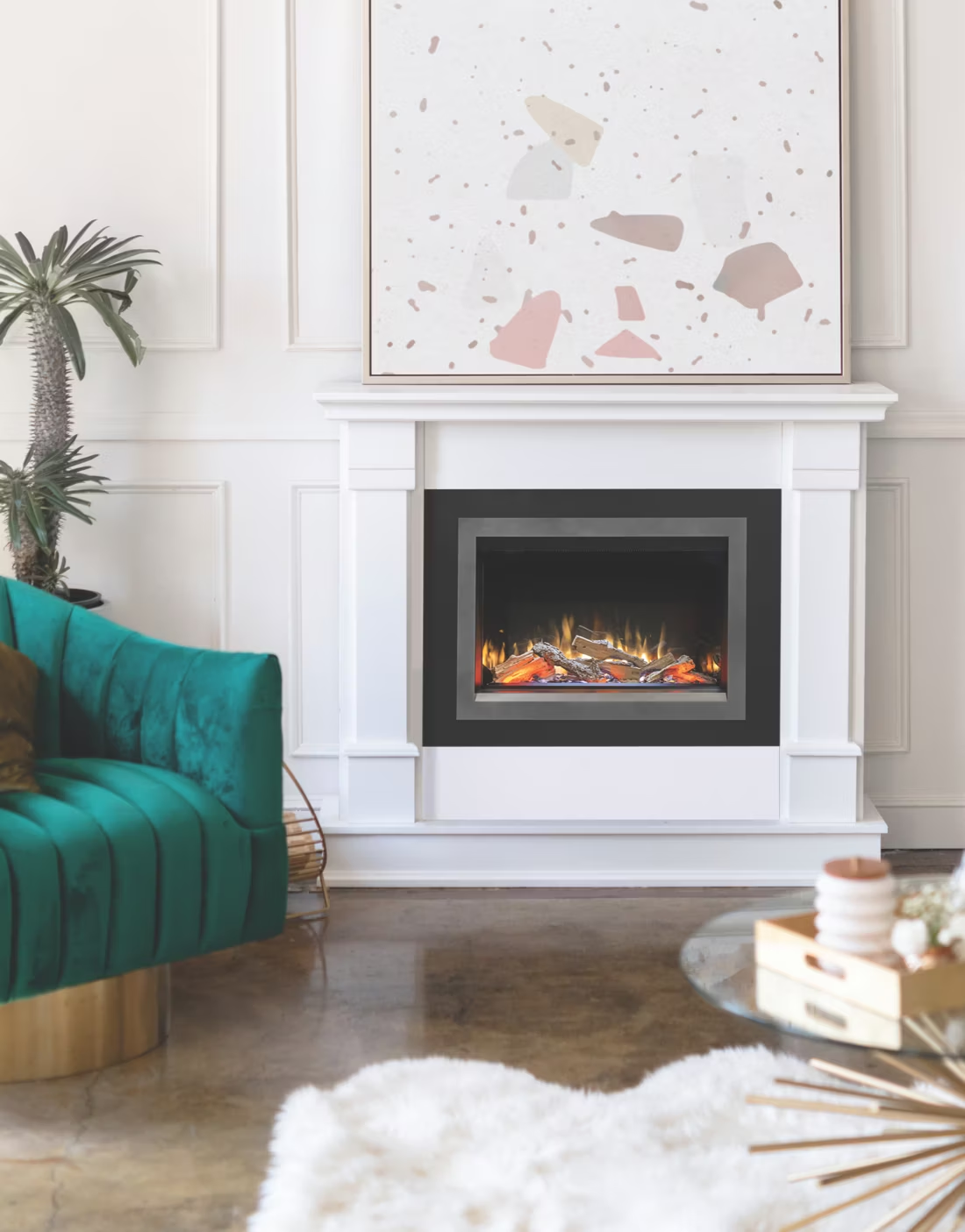
An electric insert is built to slot into an existing fireplace opening—a good option if you have an old wood-burning fireplace you want to convert without touching the masonry. A wall-mount unit is a flat, low-profile heater installed directly into or on a wall, popular in newer construction or remodeled rooms without an existing hearth. A mantel package pairs an electric insert with a surrounding mantel and surround, giving you the visual of a full fireplace in a room that never had one. For Sheridan County's mix of older farmhouses and newer outbuildings or additions, all three show up regularly—the right choice comes down to whether you're converting an existing opening or starting from a bare wall.
Does an electric fireplace need a vent or chimney?
No—that's its superpower. An electric fireplace needs a wall and an outlet, period. No vent pipe, no gas line, no clearances to design around, which is why it works in bedrooms, offices, apartments, and walls where venting a gas or wood unit would be impractical or impossible. Installation is typically the simplest and least expensive of any fireplace type.
Can I put a TV above my fireplace?
Yes—with an asterisk. Fireplaces are hot and TVs don't like heat. Either put a mantel between them to deflect rising warmth, or choose a fireplace with heat-management technology that creates a cool zone on the wall above—the wall stays around 125 degrees, barely warm, while the room still gets full heat. If you like clean lines and don't want a mantel, heat management is the answer.
What is an in-home preview and do I need one?
It's a visit where a hearth professional measures your space, confirms the model you picked actually works in your home, and walks the specs—framing, gas line, venting, finish work—before anything is ordered. Some details you just can't know until you see the house. Never make a down payment without one; it's the single most-skipped step that burns buyers.
How much should I budget for a fireplace?
For an average home—covering the fireplace, the vent pipe, and basic installation—a budget between $3,900 and $5,500 gives you a lot of options across wood, gas, and pellet. By the time you add finish work, gas line, and electrical, the average complete installation lands between $5,000 and $12,000 all-in. In a remodel or new build, a good rule is to put about 2.5% of the total project cost toward the fireplace.
Get your Sheridan County electric fireplace project mapped out.
Tell us about your home and we'll send a free Project Guide & Parts List—the right unit, the exact parts, and a trusted local dealer who actually covers rural Sheridan County.
Find Your Fireplace →