
Pellet heat is rare in Scott County—let's find what actually fits your home.
Out on the High Plains around Scott City, propane and electric do most of the heavy lifting. If you're still set on a pellet stove, we'll help you figure out whether it's realistic here—and match you with a dealer who can actually keep it fed.
Every Project Starts From One of These Five Situations
Propane and wood have deep roots in Scott County—pellet stoves don't, yet.
Scott County sits on the open High Plains of western Kansas, home to about 4,177 people spread across wheat and cattle country around Scott City. Winters here are real—an average low near 16°F and a long, demanding heating season put the county in Climate Zone 5A, colder than most of Kansas but nowhere near the extremes of Fargo, ND or International Falls, MN. Wind exposure is constant across the open prairie, and that, combined with near-universal propane infrastructure on area farmsteads, has shaped how this county heats its homes: bulk propane tanks and electric heat pumps through the rural co-op are the default, not solid-fuel appliances.
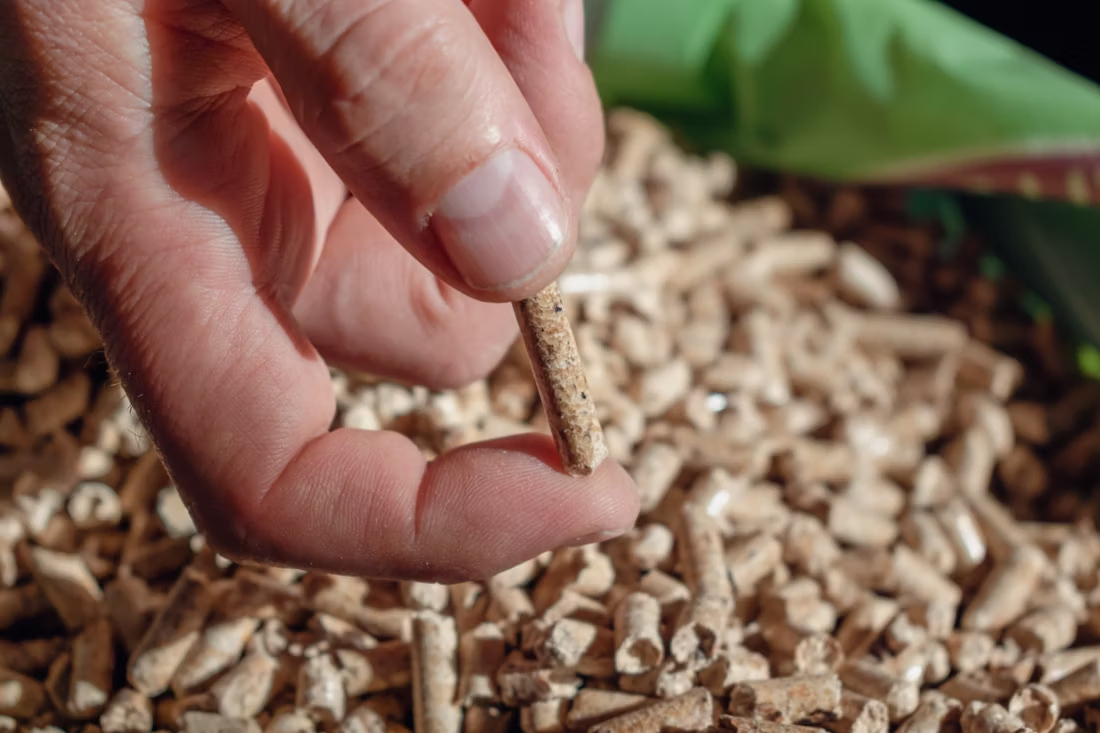
Both wood and pellet stoves carry a not-applicable relevance flag for Scott County, and that's not an accident. Farmstead shelterbelts here produce plenty of oak, hickory, and osage orange, and some households still burn a cord or two in an old wood stove out of habit—but pellet appliances never really took hold. There's no local retail pipeline for bagged pellets the way there is in Wichita or the Kansas City metro; the nearest volume comes from regional producers like Lignetics and Indeck Energy Services, and getting bags or bulk totes out to Scott City usually means a special order through a farm and ranch supply store in Garden City or Dodge City rather than a shelf you can walk up to. If you still want pellet heat—for ambiance, a specific room, or a secondary heat source—it's possible, but it takes planning that a propane or electric install simply doesn't require. That's exactly the kind of thing a local dealer should walk you through before you buy an appliance you can't reliably feed.
Three steps. No salesperson until you're ready.
Tell us about your project
Your zip code, your situation, and the fuel you're leaning toward—or let the answers point you to one.
See what's actually available
The brands dealers within 100 miles genuinely carry—real options, never a catalog mirage.
Get your dealer & Project Guide
A trusted local dealer, plus the free Project Guide & Parts List that names every component of the job.
Frequently Asked Questions
Are pellet stoves actually a good fit for a Scott County home?
For most homes here, no—not as a primary heat source. Propane is the dominant fuel across Scott County's farms and in Scott City itself, and electric service through the local rural co-op is reliable enough that pellet stoves haven't developed the retail or service network you'd find in a place like Wichita. That said, a pellet stove can still work as a supplemental unit in a single room if you're comfortable ordering pellets by the pallet in advance rather than picking up a few bags on a whim. The honest answer is: confirm you have a workable pellet supply chain before you commit to the appliance, not after.
What does a pellet stove installation cost in Scott County?
There's no well-established local benchmark for pellet installs here the way there is for propane furnaces or gas fireplace inserts, simply because so few get installed. Elsewhere in the region, a freestanding pellet stove with venting typically runs a few thousand dollars installed, but pricing in Scott County will depend heavily on whether a dealer is willing to travel from Garden City or Dodge City and what venting your home needs. Get a specific, written quote from a local pro rather than assuming a regional average applies to your project.
Why don't more Scott County homes burn wood or pellets for heat?
Propane got here first and never lost ground. Nearly every farmstead in Scott County already has a bulk propane tank feeding a forced-air furnace, and the local rural electric cooperative keeps outages relatively rare compared to more storm-prone regions. Add in the open, wind-exposed terrain of the High Plains—which makes outdoor wood storage and handling less convenient than in a wooded area—and you get a county where solid-fuel heat, wood or pellet, stayed a minor habit rather than a mainstream choice, even though local shelterbelts produce plenty of oak, hickory, and osage orange.
Where can I actually buy pellets near Scott City?
Don't expect to find bagged pellets on a shelf at the local hardware store. Regional producers like Lignetics and Indeck Energy Services supply much of the Midwest, but in far western Kansas that product typically arrives through farm and ranch supply outlets in Garden City or Dodge City, often by special order or pallet. If you're serious about a pellet appliance, ask your installer to help you set up a standing order before your first cold snap—running out mid-winter with no local backup is the real risk here, not the appliance itself.
Will a pellet stove keep working if the power goes out?
No—pellet stoves depend on electricity to run the auger and combustion blower, so a power outage shuts them down just like a propane furnace's electric ignition and blower would. In Scott County, where winter ice can occasionally knock out rural electric co-op lines, a pellet stove isn't a reliable outage backup. If emergency heat during power loss matters to you, a wood stove or a propane appliance with a battery-backed ignition is a more dependable choice for this area.
What heating options actually make sense for a Scott County home?
Propane and electric cover the vast majority of heating here, and for good reason: propane delivery infrastructure is mature across western Kansas farm country, and the rural electric cooperative provides steady service even through harsh prairie winters. A propane fireplace or insert gives you the instant-on convenience homeowners here already expect from their furnace, without introducing a fuel supply chain—pellets—that doesn't really exist locally yet. Wood remains a viable supplemental option for households with existing shelterbelt timber, but pellet stoves are the one category where Scott County genuinely lags behind more urban parts of the state.
If I still want a pellet stove, what should I ask a dealer?
Start with sourcing, not the appliance itself. Ask how the dealer plans to keep you supplied—whether that's a standing order through a Garden City or Dodge City farm supply store, a direct arrangement with a regional producer like Lignetics, or seasonal bulk delivery. Then confirm venting requirements for your specific home and get a firm, written installed price rather than a rough estimate, since so few installs happen locally that there's no default pricing to fall back on. A dealer who can answer the supply question clearly is one worth trusting with the install.
How cold does it actually get in Scott County, and does that change the fuel decision?
Winter lows average around 16°F, and the county sees a long, demanding heating season each year—a real Climate Zone 5A winter, colder than most of Kansas, though far short of the brutal lows you'd see in Bismarck, ND or Duluth, MN. That level of cold doesn't push homeowners toward pellet stoves the way it might elsewhere; it just reinforces reliance on the propane furnace already sized for the house. A pellet stove here tends to be a lifestyle choice for a specific room rather than a response to the climate itself.
Pellet stove vs. propane fireplace—which should I actually choose?
For nearly every Scott County home, a propane fireplace or insert is the more practical choice: the fuel is already delivered to your property, the appliance ties into infrastructure you already maintain, and local dealers are set up to service it without any special sourcing. A pellet stove can still deliver a nice ambiance and supplemental warmth in a den or living room, but only if you're willing to manage pellet deliveries yourself, since there's no casual retail supply nearby. If convenience and long-term reliability matter more than the specific look of a pellet fire, propane is the fit for this county.
How often does a pellet stove need cleaning?
A clean pellet stove is a happy pellet stove. Plan on cleaning the burn pot about once a week when you're burning regularly—ash and clinkers gum up the air holes just like a pellet barbecue. Most pellet stove problems trace back to skipped cleaning that nobody explained up front. Some designs make it easy with a trapdoor burn pot: pull a lever and the gunk drops into the ash pan.
Are pellet stoves loud?
They make some noise—there are two fans running plus an auger motor that turns as it feeds pellets. But there's a real range: premium models are engineered quiet, and the best offer a whisper-quiet mode you can comfortably watch TV next to. If noise matters in your room, ask to hear a stove running before you buy—it's a five-minute test that saves years of annoyance.
Can a fireplace actually lower my heating bill?
Yes—by creating a comfort zone. A furnace heats every square foot of the house just to warm the one room you're in; a gas fireplace on low burns roughly a sixth of the gas a typical furnace does. Set the furnace around 55–60 degrees as a baseline, then heat the rooms your family actually uses. Families who heat this way commonly save $20–$60 a month.
How much should I budget for a fireplace?
For an average home—covering the fireplace, the vent pipe, and basic installation—a budget between $3,900 and $5,500 gives you a lot of options across wood, gas, and pellet. By the time you add finish work, gas line, and electrical, the average complete installation lands between $5,000 and $12,000 all-in. In a remodel or new build, a good rule is to put about 2.5% of the total project cost toward the fireplace.
Pellet Brands Stocked Around Scott County
Manufacturers will point you to the nearest stocking dealer.
Find out if pellet heat actually makes sense for your Scott County home.
Tell us about your home and we'll give you a straight answer on pellet fuel in Scott County—including sourcing reality—plus a free Project Guide & Parts List with the exact parts, vent kit, and a matched local dealer for whichever fuel truly fits.
Find Your Fireplace →