
Add warmth to your Scott County home without a chimney or gas line.
From Scott City to the farmsteads scattered across the High Plains, electric fireplaces give you real supplemental warmth with a plug-in unit or a simple 240-volt circuit—no masonry, no venting, no propane delivery to schedule. Find the right unit and connect with a trusted local dealer.
Every Project Starts From One of These Five Situations
The easiest fireplace upgrade for Scott County homes.
Scott County sits on the High Plains of western Kansas, home to about 4,177 people spread between Scott City and the farm and ranch properties that surround it. Winters here average lows around 16°F with roughly 5,518 heating degree days—real cold, though milder overall than the Dakota or Minnesota winters of places like Bismarck or Fargo. What western Kansas does bring is wind, open exposure, and long stretches of rural acreage where the nearest natural gas main may not reach. That combination is exactly where electric fireplaces earn their place.
Most homes outside Scott City proper are served by a rural electric cooperative rather than a large investor-owned utility, and many rely on propane tanks for primary heat rather than piped natural gas. An electric fireplace sidesteps both issues—no propane delivery schedule, no gas line to run, and no masonry chimney to build or maintain. It slots into a farmhouse addition, a converted sunroom, a mobile home, or a finished basement with nothing more than an outlet or a dedicated circuit, delivering zone heat to the room you actually live in without touching your furnace setup.
Three steps. No salesperson until you're ready.
Tell us about your project
Your zip code, your situation, and the fuel you're leaning toward—or let the answers point you to one.
See what's actually available
The brands dealers within 100 miles genuinely carry—real options, never a catalog mirage.
Get your dealer & Project Guide
A trusted local dealer, plus the free Project Guide & Parts List that names every component of the job.
Frequently Asked Questions
How much does an electric fireplace installation cost in Scott County?
Electric fireplaces are the least expensive hearth option to install because there's no venting, gas line, or masonry work involved. A plug-in insert or wall-mounted unit typically runs $300 to $1,500 installed. A built-in electric fireplace that requires a dedicated 240-volt circuit—the better choice if you want it to double as a real supplemental heat source rather than just a flame-effect unit—usually runs $2,500 to $3,500 once you factor in the electrician's time to run a new circuit, which matters in older Scott County farmhouses where panel capacity can be tight.
Do I need a permit to install an electric fireplace in Scott County?
A simple plug-in electric fireplace generally doesn't require a permit—it's treated like any other appliance you plug into an outlet. If you're installing a built-in unit that needs new wiring or a dedicated circuit, that electrical work typically does require a permit through the county, and it needs to be pulled by a licensed electrician regardless of whether the fireplace itself is permitted. Ask your installer whether your specific model and circuit needs trigger a permit before work starts.
Will an electric fireplace actually heat a room during a Scott County winter?
Yes, within its intended role. Most electric fireplaces put out 4,600 to 5,200 BTU (roughly 1,500 watts)—enough to comfortably heat a single room of 300 to 400 square feet, which covers most additions, bedrooms, and sunrooms even when overnight lows drop into the teens. What an electric unit won't do is replace your furnace during a hard arctic front. Think of it as zone heat for the room you spend the most time in, letting you turn the thermostat down elsewhere in the house—not a standalone whole-home heat source for Scott County's coldest stretches.
What happens to my electric fireplace during a power outage?
It goes dark, along with everything else on the circuit. That's the one real trade-off compared to wood or vent-free propane options, and it's worth thinking through given that ice and high wind on the open plains can knock out rural electric cooperative service for hours at a time. If backup heat during outages matters to your household, pair an electric fireplace with a propane space heater or generator plan rather than relying on it as your sole cold-weather backup.
Where can I find someone to install an electric fireplace near me?
Scott County itself is small—most hearth retailers and electricians who serve the area are based in nearby regional hubs like Garden City or Dodge City, both within an hour's drive of Scott City. For a simple plug-in unit, any local electrician can confirm your outlet is adequate. For a built-in unit needing new circuit work, look for an electrician experienced with dedicated appliance circuits, and ask whether they've handled electric fireplace installs specifically—the clearance and framing requirements differ from a standard outlet job.
What's the difference between an electric insert, a wall-mount, and an electric stove?
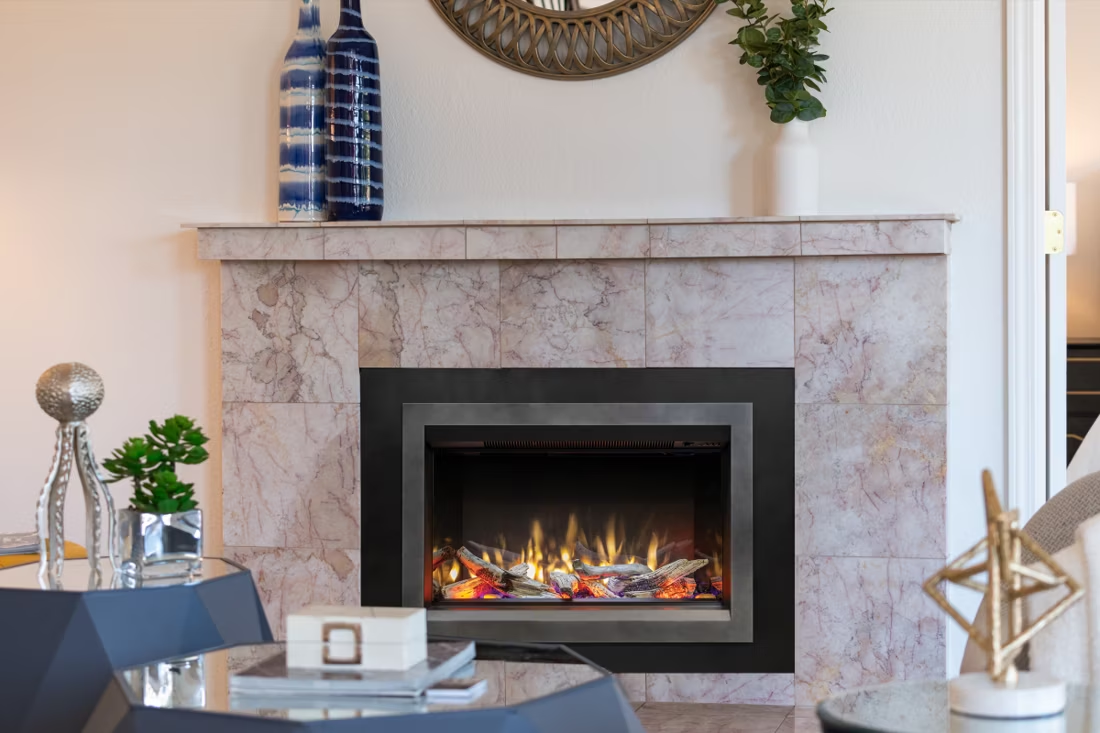
An electric insert is built to slide into an existing fireplace opening, giving an old masonry or wood-burning fireplace a clean, no-mess upgrade. A wall-mount unit hangs on a wall like a large flat panel and works well in additions or rooms without an existing hearth. An electric stove is a freestanding cabinet-style unit that mimics the look of a wood stove—a popular choice for farmhouse or cabin-style rooms in Scott County where the aesthetic matters as much as the heat. All three run on the same basic electric heating elements; the choice comes down to your room layout and the look you want.
I have oak and osage orange trees on my property—why isn't wood heat a bigger option here?
Scott County does have hardwoods worth burning—oak, hickory, and osage orange (hedge) trees planted generations ago as windbreaks across the High Plains all make good firewood. But wood-burning stoves and inserts are essentially absent from the local hearth market here: there's no dealer network stocking or installing wood appliances, and the county's open, wind-exposed farm landscape doesn't carry the same wood-heating culture you'd find in a forested region. If you're set on a wood-burning look, most local homeowners end up choosing a gas or electric unit styled like a wood stove instead—you get the aesthetic without needing an installer nobody in the area actually offers.
Should I get electric or gas instead, since I already have propane?
If your property already has a propane tank and line run to the house, a gas fireplace or insert will typically put out more heat per unit and can be sized to handle a larger room or even supplemental whole-house heat. Electric makes more sense when you want heat in a space that isn't already plumbed for gas—a new addition, a detached space, or a room where running a gas line would mean tearing into walls or slab. Several Scott County homes end up with both: propane gas in the main living area, electric in a secondary room where adding gas isn't practical.
How long do electric fireplaces last, and do they need maintenance?
A quality electric fireplace typically lasts 10 to 15 years with minimal upkeep—no chimney sweeping, no annual gas line inspection, no ash to haul. Maintenance is limited to occasionally cleaning the glass front and checking that the fan and heating element are free of dust, which matters more in farm settings where grain dust and field debris can accumulate indoors. LED flame components may eventually need replacing, but that's a straightforward part swap rather than a service call.
Can I put a TV above my fireplace?
Yes—with an asterisk. Fireplaces are hot and TVs don't like heat. Either put a mantel between them to deflect rising warmth, or choose a fireplace with heat-management technology that creates a cool zone on the wall above—the wall stays around 125 degrees, barely warm, while the room still gets full heat. If you like clean lines and don't want a mantel, heat management is the answer.
Does an electric fireplace need a vent or chimney?
No—that's its superpower. An electric fireplace needs a wall and an outlet, period. No vent pipe, no gas line, no clearances to design around, which is why it works in bedrooms, offices, apartments, and walls where venting a gas or wood unit would be impractical or impossible. Installation is typically the simplest and least expensive of any fireplace type.
What is an in-home preview and do I need one?
It's a visit where a hearth professional measures your space, confirms the model you picked actually works in your home, and walks the specs—framing, gas line, venting, finish work—before anything is ordered. Some details you just can't know until you see the house. Never make a down payment without one; it's the single most-skipped step that burns buyers.
Does a fireplace add value to my home?
On average, a fireplace adds back to the home about the same amount you spent installing it. Add the monthly savings from heating the rooms you actually use instead of the whole house—often hundreds of dollars a year—and the value case is strong before you even count what a fire does for how your family uses the room.
Find your electric fireplace in Scott County.
Tell us a bit about your home and we'll put together a free Project Guide & Parts List—the right electric fireplace or insert for your space, the exact parts you'll need, and a match with a trusted local dealer who can install it.
Find Your Fireplace →