
Steady, thermostat-controlled heat for southwest Kansas winters.
With 4,924 heating degree days and winter lows averaging 19°F, Meade County's High Plains winters are cold enough to matter but short enough that most homeowners want heat that turns on and off without splitting a rick of oak first. I'll match you with a trusted local dealer who knows which fuel line—Kansas Gas Service in town or propane out on the farmstead—actually reaches your address.
Every Project Starts From One of These Five Situations
Heat that runs whether the wind's blowing or not.
Meade County covers a wide, thinly populated stretch of southwest Kansas—about 3,093 residents spread across the towns of Meade, Fowler, and Plains and the farmland between them. At 4,924 heating degree days and a climate zone of 4A, the winters here are real but noticeably shorter and milder than the northern Plains—nowhere near the 8,900-plus HDD winters of Bismarck, ND or the deep cold of Fargo, ND. That means a lot of homes get by with a fireplace that carries the shoulder seasons and the occasional hard cold snap rather than months of continuous burning, and a direct-vent gas unit that lights instantly and holds a set temperature fits that pattern well.
Kansas Gas Service runs natural gas mains through Meade and the county's other incorporated towns, so in-town homeowners can typically tie a new fireplace or insert into an existing gas line. Outside those town limits—on the farmsteads and rural sections that make up most of the county's land area—propane from a local bulk supplier is the standard fuel, delivered to a tank set on the property. Either way, sealed-combustion direct-vent fireplaces handle Meade County's open, windy High Plains exposure well, since they draw combustion air from outside through a fixed pipe instead of relying on a chimney draft that can be pushed around by a stiff south wind.
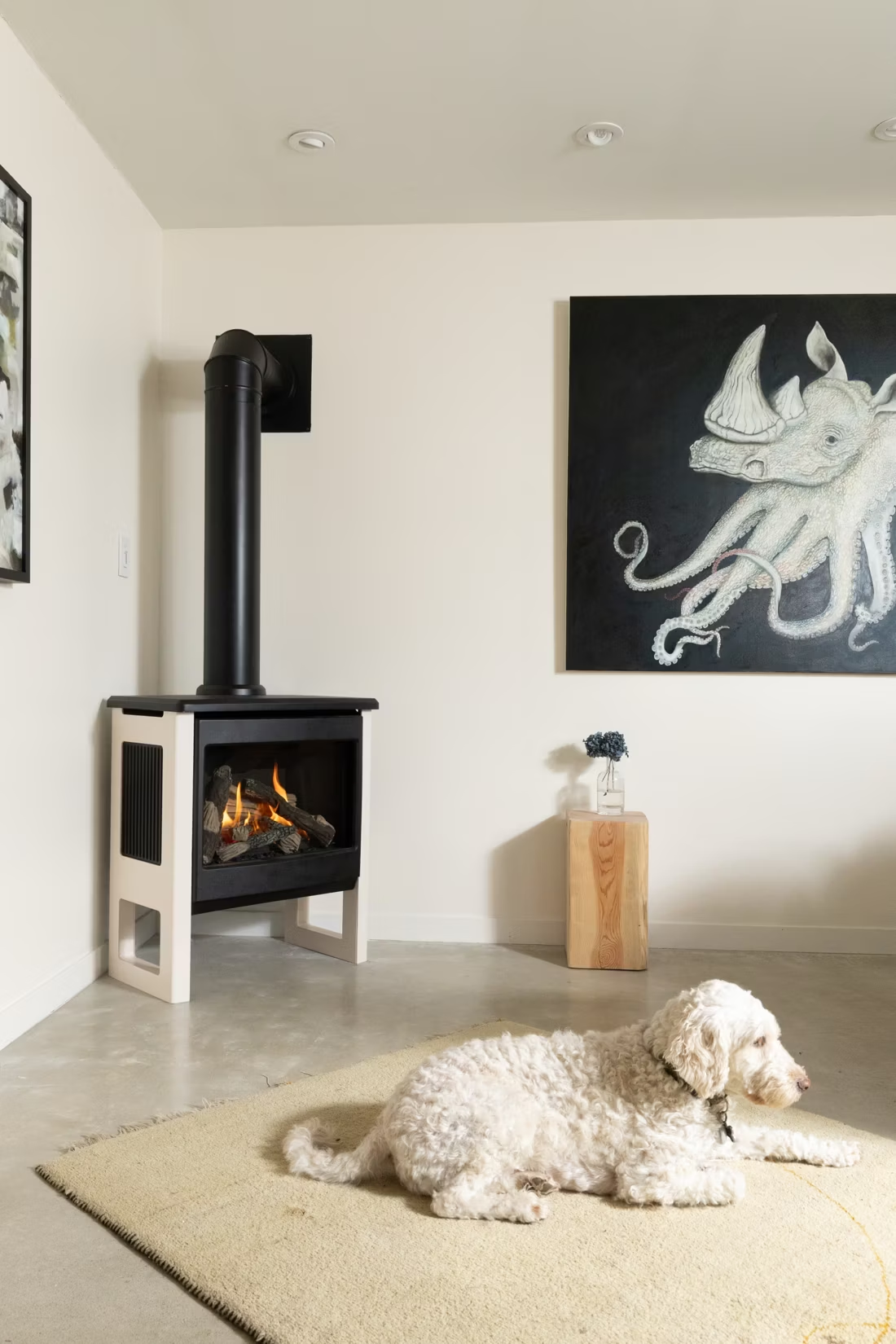
Three steps. No salesperson until you're ready.
Tell us about your project
Your zip code, your situation, and the fuel you're leaning toward—or let the answers point you to one.
See what's actually available
The brands dealers within 100 miles genuinely carry—real options, never a catalog mirage.
Get your dealer & Project Guide
A trusted local dealer, plus the free Project Guide & Parts List that names every component of the job.
Frequently Asked Questions
How much does a gas fireplace installation cost in Meade County?
Gas fireplace installations generally run in the $4,000 to $9,000 range, though where you land in that range depends heavily on your setup. Dropping a direct-vent insert into an existing masonry fireplace with a gas line already nearby is the least expensive path. A new build-in fireplace for a remodel, or a rural home that needs a propane tank set and a longer buried line run out from the house, will cost more. Homes on the far edges of the county—well out toward the Fowler or Plains grain elevators—may also see a small travel charge from installers based closer to Meade or Dodge City.
Can I convert my existing wood fireplace to gas?
Yes, and it's a common upgrade in older Meade County farmhouses that were originally built around a wood-burning firebox for oak, hickory, or osage orange. A gas insert seals into the existing masonry opening and vents up through a stainless liner run inside your current chimney, so the fireplace keeps its original look while gaining instant, controllable heat. Cost depends mainly on whether the home is already on natural gas in town or needs a propane line run in the country—expect the propane version to cost somewhat more due to the added line work.
Do I need natural gas, or can I run a fireplace on propane?
Either works fine, and most gas fireplaces can be configured for one fuel or the other with the correct orifice kit. Kansas Gas Service serves natural gas within Meade, Fowler, and Plains, so homes in those towns can often tie into an existing line if the house already has gas heat or a gas water heater. Once you're out on county roads among the wheat and cattle operations that make up most of Meade County, there's no gas main, and propane from a regional supplier off an on-site tank is the standard setup—the same fuel most rural homes already use for their furnace or range.
Will my gas fireplace still work if the power goes out?
Most will, with the right ignition system. Units with intermittent pilot ignition (IPI) run on a battery backup that kicks in automatically when power drops, so the fireplace still lights on demand. Some models, like Valor, use a self-powered pilot assembly that generates its own electricity and needs no battery at all. That distinction is worth asking about in Meade County, where High Plains ice storms and straight-line wind events can knock out rural electric service for a stretch—a fireplace that still runs on demand is a real backup heat source, not just a decoration.
What's the difference between a gas fireplace, gas insert, and gas stove?
A gas fireplace is a fully framed-in unit, the right choice for new construction or a full remodel. A gas insert slides into an existing wood-burning firebox and uses the current chimney as its vent chase—the common route for older Meade or Plains homes upgrading a masonry fireplace. A gas stove is a freestanding cabinet unit that sits out on the floor like a wood stove but runs on gas, which works well in a room, shop, or manufactured home that has no existing chimney to reuse. A local dealer can look at your space and tell you which configuration actually applies.
Do I need a permit to install a gas fireplace in Meade County?
Yes. New gas fireplace installations need a building permit through Meade County's building department, along with a gas line permit if new piping is being run to the appliance. The gas line work itself has to be done by a licensed gas-fitter, which is why most homeowners go through a full-service hearth dealer rather than a handyman install—the dealer coordinates the gas hookup, the venting, and the inspection sign-off as one job instead of you juggling separate trades.
Should I get a vented or vent-free gas fireplace?
Meade County has no listed air quality concerns, so vent-free units are legal here and some homeowners consider them for a small addition or a room without existing venting. That said, most local dealers still recommend direct-vent (sealed combustion) fireplaces for the county's typical exposure—pulling combustion air from outside and exhausting it back out through a sealed pipe keeps performance consistent even on the region's windier days, and it avoids adding any combustion byproducts or humidity to the living space, which matters in tightly built farmhouses.
How often should a gas fireplace be serviced in Meade County?
Plan on an annual inspection before the cold sets in, usually in October ahead of Meade County's short but real heating season. A technician checks the burner, pilot or ignition system, gas connections, and venting, and cleans the glass. In rural parts of the county, it's also worth having the technician check the outside vent termination for grain dust, chaff, or grass buildup blown in from nearby fields, since that can restrict airflow on a direct-vent unit faster than in a typical suburban setting.
Gas vs. wood—which makes more sense for a Meade County home?
Wood has a long, practical history here—oak, hickory, and dense, hot-burning osage orange (originally planted across the county as hedge rows) are all locally available and burn well in a standard stove. Wood also keeps working with no electricity, which matters during a rural power outage. Gas trades that self-sufficiency for convenience: instant heat at a thermostat setting, no ash to manage, and a unit that runs the same whether you're in town on Kansas Gas Service or out on a farmstead propane tank. For a primary living space where daily, no-fuss heat matters most, gas is usually the simpler call; many Meade County households still keep a wood stove in a shop or secondary space as backup.
Why is my open fireplace making my house colder?
Open fireplaces suck—literally. As the fire burns, it consumes air your furnace already paid to heat and pulls it out through the chimney, so the house is actually colder after the fire goes out than before you lit it. An insert fixes this: it seals the chimney, puts fixed glass across the front, and turns that hole in your house into a real heat source.
What's the difference between an insert and a zero-clearance fireplace?
An insert is a fireplace that slides into a pre-existing wood-burning fireplace—if you don't have one, there's nothing to insert it into. A zero-clearance fireplace is built into a framed wall, which makes it the answer for remodels and new construction. Simple test: existing masonry fireplace means insert; blank or framed wall means zero-clearance.
Does a fireplace add value to my home?
On average, a fireplace adds back to the home about the same amount you spent installing it. Add the monthly savings from heating the rooms you actually use instead of the whole house—often hundreds of dollars a year—and the value case is strong before you even count what a fire does for how your family uses the room.
How much should I budget for a fireplace?
For an average home—covering the fireplace, the vent pipe, and basic installation—a budget between $3,900 and $5,500 gives you a lot of options across wood, gas, and pellet. By the time you add finish work, gas line, and electrical, the average complete installation lands between $5,000 and $12,000 all-in. In a remodel or new build, a good rule is to put about 2.5% of the total project cost toward the fireplace.
Get your free Project Guide & Parts List for a gas fireplace in Meade County.
Tell me a bit about your home—in town on the gas main or out on propane—and I'll match you with a trusted local dealer and send over a free Project Guide & Parts List: the exact equipment, vent kit, and recommended installer for your gas fireplace project, no big-box guesswork.
Find Your Fireplace →