
Find the right electric fireplace for your Meade County home.
No gas line, no chimney, no wood to haul—just plug-in warmth and ambiance for homes across Meade County, from town to the farmsteads out past Fowler and Plains.
Every Project Starts From One of These Five Situations
Simple heat for a county built around self-reliance.
Meade County sits in south-central Kansas at Climate Zone 4A, with a moderate winter heating season and average winter lows near 19°F—a real but manageable cold, nowhere close to the sub-zero stretches you'd see in Bismarck, ND or Fargo, but still enough that supplemental heat matters in older homes with drafty additions or unheated sunrooms. With a population of just over 3,000 spread across the county's farms and small towns, most homes here are older, rural, and often served by electrical panels that were never designed with a big HVAC retrofit in mind.
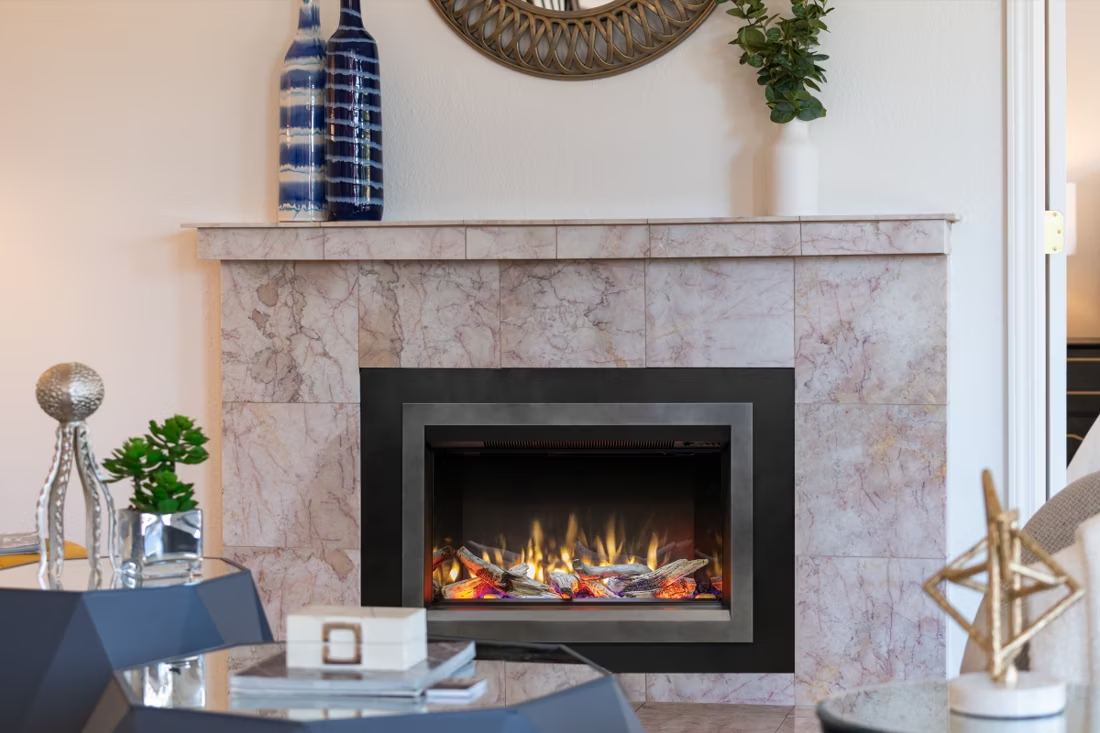
That's exactly where electric fireplaces earn their place. There's no chimney to maintain, no gas line to run out to a farmhouse that's not on a natural gas main, and no wood to split and stack—a real consideration in a county where oak, hickory, and osage orange are the common local hardwoods but not everyone wants to manage a woodpile every winter. An electric insert or built-in unit plugs into a standard outlet or a dedicated 20-amp circuit, delivers real supplemental heat to a single room, and gives you the look of a fire without the maintenance. For many Meade County homeowners, it's the easiest single upgrade to add warmth and resale appeal to a bedroom, den, or finished basement.
Three steps. No salesperson until you're ready.
Tell us about your project
Your zip code, your situation, and the fuel you're leaning toward—or let the answers point you to one.
See what's actually available
The brands dealers within 100 miles genuinely carry—real options, never a catalog mirage.
Get your dealer & Project Guide
A trusted local dealer, plus the free Project Guide & Parts List that names every component of the job.
Frequently Asked Questions
How much does an electric fireplace installation cost in Meade County?
Most electric fireplace installations in Meade County run $400 to $1,200. A plug-in insert or wall-mounted unit that uses an existing standard outlet sits at the low end. Built-in units that require a dedicated 20-amp circuit—common in older farmhouses where the existing wiring wasn't sized for a space heater-class appliance—run toward the higher end once an electrician is involved. Recessed or wall-mounted models set into existing fireplace openings fall in between, mostly depending on trim carpentry.
Do I need an electrician to install an electric fireplace?
It depends on the unit. Many electric fireplaces and inserts are designed to plug into a standard 120V outlet—no electrician required, and you can often do it yourself once the unit is on-site. But if you're installing a larger built-in model, running a new dedicated circuit, or working in a Meade County farmhouse with older knob-and-tube or undersized panel wiring, an electrician should handle the circuit work before the unit goes in. A local dealer can tell you which category your chosen unit falls into before you buy.
Can an electric fireplace actually heat a room, or is it just for looks?
Most electric fireplaces include a real heater—typically a 1,500-watt element that puts out around 5,000 BTUs, enough to noticeably warm a single room in the 250–400 square foot range. That's a meaningful supplement in a Meade County home with a moderate winter heating season and cold snaps in the high teens, especially in a bonus room, converted porch, or bedroom that the central furnace struggles to keep up with. It won't replace a furnace for the whole house, but it can let you turn the thermostat down and heat only the room you're using, which adds up over a Kansas winter.
Do I need a permit to install an electric fireplace in Meade County?
For a plug-in unit using an existing outlet, no permit is typically needed—it's treated like any other appliance. If your installation involves new electrical wiring, such as adding a dedicated circuit or a new outlet for a built-in unit, that work generally falls under standard electrical permitting through the county. Your electrician will know exactly what's required and typically pulls any necessary permit as part of the job, so this isn't something you need to manage yourself.
What's the difference between an electric insert and a built-in electric fireplace?
An electric insert is designed to slide into an existing fireplace opening—a good option if your Meade County home has an old, unused wood-burning fireplace you'd rather not maintain a chimney for. A built-in electric fireplace is a standalone unit designed to be framed into a wall, often used in new construction, a basement remodel, or a room that never had a fireplace at all. Inserts are typically the faster, lower-cost project since they reuse an existing opening; built-ins give more design flexibility but usually mean some carpentry and possibly new wiring.
How much does it cost to run an electric fireplace?
A typical 1,500-watt electric fireplace costs roughly 15 to 25 cents per hour to run at full heat, depending on your local electric rate—cheaper if you only run the flame effect without the heater. For a Meade County homeowner using one for a few hours most winter evenings, that's a modest addition to a monthly bill, and it's often less than what you'd spend running a portable space heater of the same wattage, since a well-built fireplace insert is more efficient about directing heat into the room rather than losing it around the unit.
Will my electric fireplace work during a power outage?
No—electric fireplaces require power to run, so they won't provide heat or ambiance during an outage. This is worth thinking through carefully in Meade County, where rural stretches between towns can see longer outage restoration times after an ice storm or high-wind event than you'd get in town. If backup heat during outages is a priority for your household, a wood stove or a propane unit is a better primary choice, with an electric fireplace serving as a secondary, everyday-convenience option rather than your emergency heat plan.
Is an electric fireplace a good option for an older Meade County farmhouse?
Often, yes—with one caveat. Electric fireplaces are one of the simplest ways to add supplemental heat and updated style to an older farmhouse without touching the chimney, running a gas line, or committing to woodstove maintenance. The caveat is the electrical panel: many older rural homes in the county have older panels or wiring that wasn't sized for a modern appliance load, so a built-in unit on a dedicated circuit may call for a panel check first. A local dealer or electrician can look at your existing service and tell you quickly whether you're good to go or need an upgrade.
Electric vs. wood—which makes more sense for my Meade County home?
Wood is the traditional choice in this part of Kansas, where oak, hickory, and osage orange are all common and burn well, and a wood stove keeps working even if the power goes out during a winter storm. Electric is the lower-effort option—no wood to split or haul, no chimney to sweep, and installation is often a same-day job for a plug-in unit. For a primary heat source in a drafty older home, wood or a hybrid approach still has real advantages here. For ambiance, a supplemental heat boost in one room, or a low-maintenance addition to a newer or well-insulated home, electric is hard to beat.
Can I put a TV above my fireplace?
Yes—with an asterisk. Fireplaces are hot and TVs don't like heat. Either put a mantel between them to deflect rising warmth, or choose a fireplace with heat-management technology that creates a cool zone on the wall above—the wall stays around 125 degrees, barely warm, while the room still gets full heat. If you like clean lines and don't want a mantel, heat management is the answer.
Do electric fireplaces actually produce heat?
Yes—most put out around 4,800–5,000 BTUs from a standard outlet, which comfortably warms a bedroom, office, or den as a comfort-zone heater. What they won't do is carry a whole house the way wood, gas, or pellet can. Think of electric as ambiance-first with honest supplemental heat: flames on with no heat in July, flames plus warmth in January.
Can a fireplace actually lower my heating bill?
Yes—by creating a comfort zone. A furnace heats every square foot of the house just to warm the one room you're in; a gas fireplace on low burns roughly a sixth of the gas a typical furnace does. Set the furnace around 55–60 degrees as a baseline, then heat the rooms your family actually uses. Families who heat this way commonly save $20–$60 a month.
Does a fireplace add value to my home?
On average, a fireplace adds back to the home about the same amount you spent installing it. Add the monthly savings from heating the rooms you actually use instead of the whole house—often hundreds of dollars a year—and the value case is strong before you even count what a fire does for how your family uses the room.
Get your free Project Guide & Parts List for Meade County.
Tell us a bit about your home and we'll match you with a trusted local dealer, plus a free Project Guide & Parts List spelling out exactly what your electric fireplace project needs.
Find Your Fireplace →