
Wood, gas, pellet, or electric—matched to a Meade County dealer who can install it.
Fireplace and stove resources for Meade, Fowler, Plains, and the farmsteads between them—where winter lows average 19°F and the county logs roughly 4,924 heating degree days a year. Pick your fuel and get matched with a trusted local hearth retailer.
Every Project Starts From One of These Five Situations
Heating Meade County's farms and small towns through High Plains winters.
Meade County sits in the southwest corner of Kansas, just north of the Oklahoma Panhandle—roughly 1,050 square miles of wheat ground, cattle pasture, and old shelterbelt hedgerows, home to about 3,093 people spread mostly across the unincorporated countryside and the towns of Meade, Fowler, and Plains. Winters here run cold but not brutal: winter lows average 19°F, and the county logs around 4,924 heating degree days a year—Arctic fronts sweep down off the Rockies and the Canadian Plains with little to block them, so a hard freeze can arrive fast even without much snow on the ground. Firewood supply leans on what actually grows here—oak and hickory from farm woodlots and creek bottoms, plus osage orange (hedge), the dense, slow-burning wood originally planted across Kansas as windbreaks and now prized locally for holding a coal bed overnight.
This hub covers hearth retailers, service technicians, and fuel suppliers across the whole county—the county seat of Meade, the grain-elevator town of Fowler, and Plains along US-54, plus the farmsteads in between. Pick a fuel below to see local dealers, typical installation costs, and the units that make sense for a Meade County home, whether you're heating a farmhouse on the section lines or a place in town.
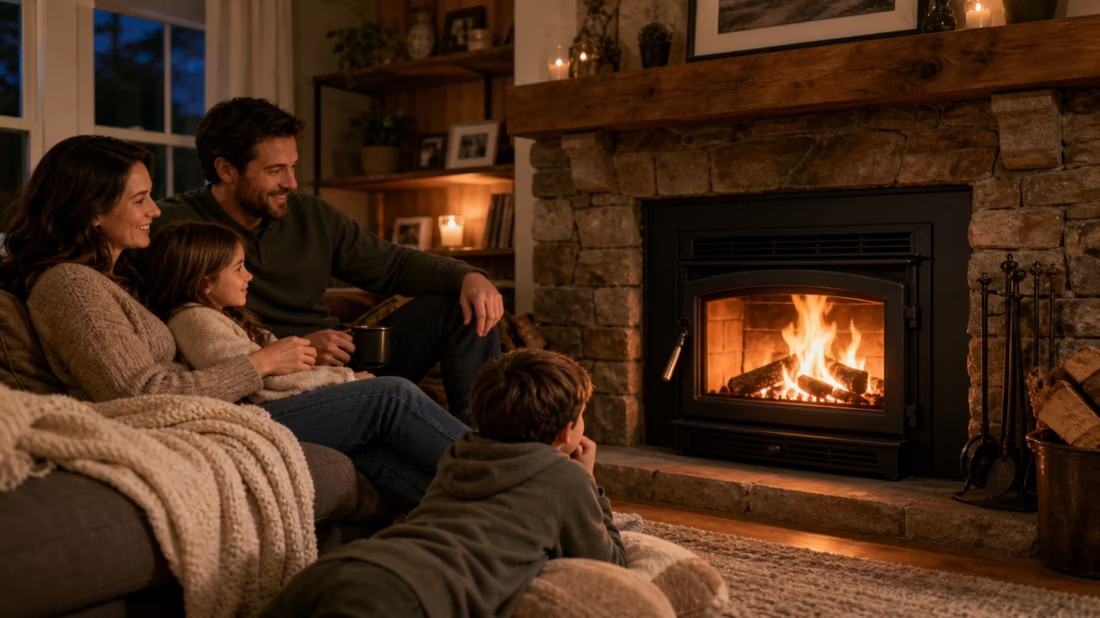
Four fuels. One honest answer for Meade County.
Three steps. No salesperson until you're ready.
Tell us about your project
Your zip code, your situation, and the fuel you're leaning toward—or let the answers point you to one.
See what's actually available
The brands dealers within 100 miles genuinely carry—real options, never a catalog mirage.
Get your dealer & Project Guide
A trusted local dealer, plus the free Project Guide & Parts List that names every component of the job.
Frequently Asked Questions
Which fuel works best in Meade County?
It depends on where you live and what you're heating. Wood is a practical choice on rural properties with woodlots or hedgerow access—oak and hickory burn clean and hot, and osage orange (hedge) holds a coal bed longer than almost anything else that grows on the Plains, which matters on nights when the wind is out of the north and the temperature drops fast. Propane is the standard fuel for most farmsteads outside city limits, since municipal natural gas service is generally limited to homes inside Meade, Fowler, and Plains—check with your local utility or propane supplier before assuming either is available at your address. Pellet stoves are a solid middle ground for homeowners who want wood heat without cutting and hauling; regional supply includes Lignetics and Indeck Energy Services. Electric fireplaces work well as supplemental heat in a den or bedroom but aren't built to be the primary heat source through a 19°F January night. Most Meade County homes end up mixing fuels—wood or propane as the workhorse, electric or pellet for the rooms that need a little extra.
Do I need a permit to install a fireplace in Meade County?
In most cases, yes, for wood, gas, and pellet installations that involve new venting, a chimney, or a gas line. If you're inside city limits—Meade, Fowler, or Plains—permits are typically handled through the town's building office; outside city limits, permits go through the Meade County building department. Gas installations also need a licensed gas-fitter for the line work, whether you're on propane or in-town natural gas service. Electric fireplaces are usually permit-free for plug-in units, though a built-in electric fireplace hardwired to a new circuit may need an electrical permit. Most local hearth dealers pull the permit as part of the installation quote, so you're not usually filing the paperwork yourself.
Are there air quality restrictions on wood burning in Meade County?
No—Meade County has no air quality nonattainment designation and no winter inversion pattern like the mountain basins farther west deal with. The open, flat terrain of southwest Kansas disperses smoke well, so there's no burn-ban or advisory-day system here. That said, EPA 2020 NSPS emissions standards still apply to new wood stove sales and installations nationwide, so any new unit you buy will be a certified, cleaner-burning stove regardless of local air quality conditions.
Can one local hearth retailer handle all four fuel types?
With Meade County's population under 3,100, the county doesn't support a large number of dedicated hearth retailers, so most homeowners work with either a Meade-based dealer who carries two or three fuel types, or a multi-fuel retailer out of a larger regional hub like Dodge City who services rural southwest Kansas as part of a standard route. If you want to compare wood, gas, pellet, and electric side by side in a showroom, a regional multi-fuel dealer is usually the better bet; if you already know your fuel, a closer local installer can often move faster and knows the county's permitting process well.
How does service work in rural areas of Meade County?
Nearly all of Meade County is rural by definition, so most chimney sweeps, gas techs, and pellet service providers are based outside the county and travel in on a route—often covering Meade, Fowler, and Plains plus surrounding farmsteads in a single trip. Expect a modest trip charge for the drive, and expect easier scheduling in late summer and early fall (August–October) than during a January cold snap when everyone's furnace and fireplace calls come in at once. If you're on a remote farmstead, it's worth booking your annual chimney sweep or gas inspection before the first hard freeze rather than waiting for a problem.
What's the typical cost range for fireplace installation across all fuel types in Meade County?
Costs run in line with typical rural Kansas pricing, though a farm property with a longer chimney run or extra propane line length can push toward the higher end. Wood stove or insert: roughly $4,000–$8,500 installed, depending on chimney work. Gas fireplace, insert, or stove: roughly $4,000–$9,500, with propane line length and venting driving most of the range. Pellet stove or insert: roughly $4,000–$7,000. Electric fireplace: $200–$2,500 for the unit itself, plus $300–$1,000 in labor for anything beyond a simple plug-in installation. A local dealer can give you an exact number once they've seen your chimney, gas access, or panel.
How much should I budget for a fireplace?
For an average home—covering the fireplace, the vent pipe, and basic installation—a budget between $3,900 and $5,500 gives you a lot of options across wood, gas, and pellet. By the time you add finish work, gas line, and electrical, the average complete installation lands between $5,000 and $12,000 all-in. In a remodel or new build, a good rule is to put about 2.5% of the total project cost toward the fireplace.
Can I install a fireplace myself?
If you're putting a fire in your house on purpose, it's best to work with an expert. Unless you're genuinely experienced in framing, gas line, vent pipe, and the national code on clearances to combustibles, have a professional do it—and ideally the same company that sells you the fireplace, so warranty, service, and liability all live under one roof.
Does a fireplace add value to my home?
On average, a fireplace adds back to the home about the same amount you spent installing it. Add the monthly savings from heating the rooms you actually use instead of the whole house—often hundreds of dollars a year—and the value case is strong before you even count what a fire does for how your family uses the room.
What is an in-home preview and do I need one?
It's a visit where a hearth professional measures your space, confirms the model you picked actually works in your home, and walks the specs—framing, gas line, venting, finish work—before anything is ordered. Some details you just can't know until you see the house. Never make a down payment without one; it's the single most-skipped step that burns buyers.
Stove and Fireplace Dealers in Meade County
Listings include WhyFire partner dealers, dealers we have verified as authorized for the brands we recommend, and established local businesses that carry hearth products. Every listing shows which one it is. The ones marked Preferred run on WhyFire's software, so they can show you real pricing and book your appointment right here. No manufacturer pays for placement. How we verify dealers →
Builders FirstSource-Garden City, Ks
Get your Meade County Project Guide & Parts List.
Tell us your fuel and your address in Meade County, and we'll match you with a trusted local dealer and send a free Project Guide & Parts List—the exact parts, including the vent kit, and the dealer who can install it.
Find Your Fireplace →