
Set the thermostat and let the hopper do the work in Linn County.
From Mound City to La Cygne, Pleasanton to Blue Mound, pellet heat gives eastern Kansas farmhouses a clean, automated alternative to splitting and stacking wood. Find the right stove and connect with a trusted local dealer.
Every Project Starts From One of These Five Situations
Consistent heat without the woodpile.
Linn County sits in the timbered bottomland of eastern Kansas along the Missouri border, where oak, hickory, and dense osage orange grow thick along the Marais des Cygnes River corridor. With just 5,653 people spread across Mound City, La Cygne, Pleasanton, Blue Mound, Prescott, Centerville, and the surrounding farmland, most homes here are older acreages and farmhouses rather than dense subdivisions. At 4,982 heating degree days and an average winter low around 18°F, the county sees a real four-to-five-month heating season—colder than the Kansas City metro just to the north, though nothing like the sustained deep freeze of Fargo, ND or International Falls, MN.
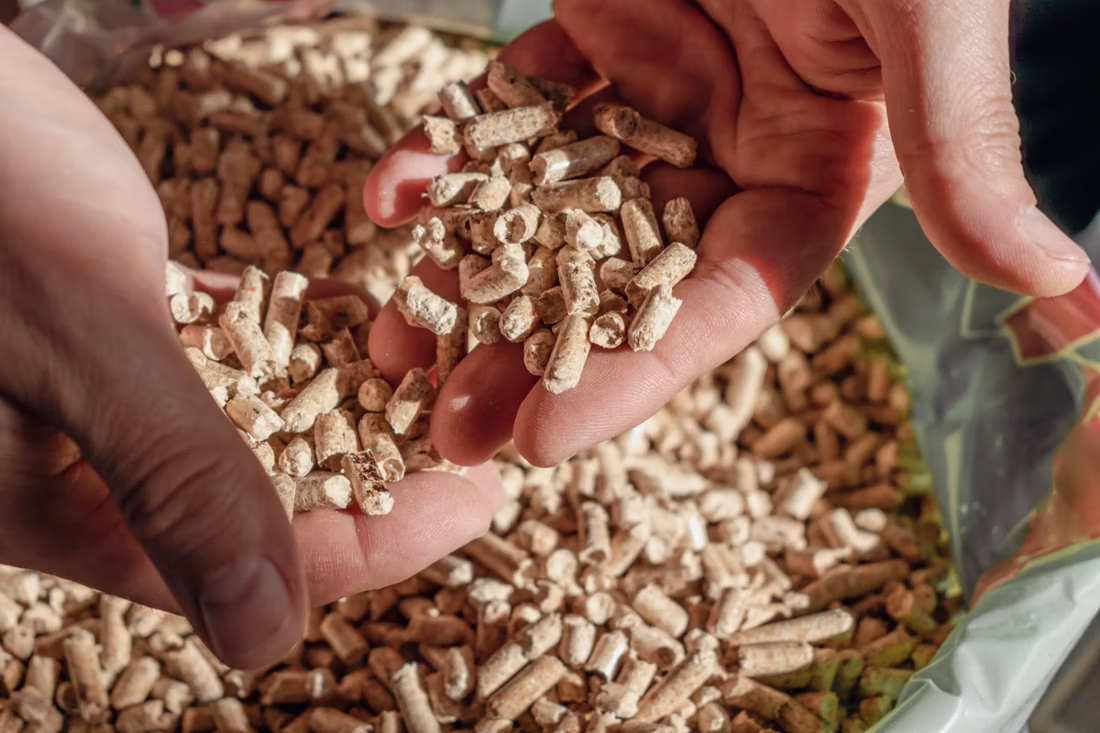
Plenty of Linn County families have access to their own hardwood—a stand of oak or a fence line of osage orange is common on rural property here—but not everyone has the time, equipment, or storage space to process it into firewood every year. That's where pellet heat fits in: load a hopper with bagged pellets from regional suppliers like Lignetics or Indeck Energy Services, set the thermostat, and let the auger feed the fire automatically. With no local air-quality restrictions or burn curtailment periods to work around, a pellet stove here runs on convenience and consistency rather than compliance—steady, thermostatically controlled heat for a farmhouse, a converted mudroom, or a shop building on the property.
Three steps. No salesperson until you're ready.
Tell us about your project
Your zip code, your situation, and the fuel you're leaning toward—or let the answers point you to one.
See what's actually available
The brands dealers within 100 miles genuinely carry—real options, never a catalog mirage.
Get your dealer & Project Guide
A trusted local dealer, plus the free Project Guide & Parts List that names every component of the job.
Frequently Asked Questions
How much does a pellet stove installation cost in Linn County?
A typical freestanding pellet stove installation in this part of eastern Kansas runs roughly $3,500 to $6,500, depending on the unit, whether you're venting through an exterior wall or an existing chimney, and whether a hearth pad or electrical circuit needs to be added. Older farmhouses without a nearby outlet or with plaster walls sometimes run toward the higher end once electrical and wall-penetration work are factored in. A pellet insert going into an existing masonry fireplace is usually a more contained job, since the chimney chase already exists for the vent liner. Local dealers can give a firm number after seeing the install location.
What size pellet stove do I need for my home?
Most Linn County homes are older farmhouses or modest single-story houses rather than large new-construction floor plans, so a mid-size pellet stove (rated for roughly 1,000–2,000 sq ft) covers the main living area in the majority of cases. Homes with less insulation—common in older farmhouse stock along the county's rural roads—may want to size up slightly to keep pace on the coldest nights near the 18°F average winter low. If you're heating a detached shop, garage, or bonus room instead of the whole house, a smaller unit sized to that specific space is usually the better call than oversizing a stove meant for the main house.
Where do I buy pellet fuel in a rural county like Linn?
Since Linn County is largely farmland and small towns rather than a retail hub, most homeowners either buy pellets by the ton (roughly 50 forty-pound bags on a pallet) from a regional supplier like Lignetics or Indeck Energy Services, or pick up bags during trips into Kansas City, Ottawa, or Nevada, Missouri, where hearth retailers stock a wider range of brands. Buying by the pallet at the start of the season is common practice here—it avoids repeat trips and locks in pricing before winter demand pushes prices up. Whichever route you choose, plan for dry, covered storage in a barn, garage, or shed, since pellets that absorb moisture will jam an auger and burn poorly.
Do I need a permit to install a pellet stove in Linn County?
Most pellet stove installations require a building permit, which in Linn County is handled through the county courthouse in Mound City for anyone outside city limits, or through the local town office for installations inside Pleasanton, La Cygne, or one of the other incorporated towns. The permit process is generally straightforward for pellet appliances since they vent through a smaller-diameter pipe than wood stoves and don't require full masonry chimney work. A local installer familiar with the county's process can usually pull the permit as part of the job, so you're not tracking down paperwork yourself.
Pellet stove or wood stove—which makes more sense on a Linn County property?
If you already have standing oak, hickory, or osage orange on your property and the equipment (and time) to process it, a wood stove can mean essentially free heat for the cost of your own labor. A pellet stove trades that self-sufficiency for convenience—no splitting, no stacking, no creosote buildup to sweep, and a more even, thermostat-controlled heat output. The tradeoff is electricity: a pellet stove's auger and blower need power to run, so during the ice storms that occasionally knock out rural power lines in eastern Kansas, a pellet stove without a battery backup goes cold, while a wood stove keeps burning. Many Linn County households that lean pellet for daily convenience still keep a wood-burning backup or a battery backup unit on hand for outages.
What happens to my pellet stove during a power outage?
A standard pellet stove will shut down when the power drops, since the hopper auger and combustion blower both run on electricity. In rural Linn County, where ice and wind can take down lines for a stretch during winter storms, that's worth planning around. Battery backup units—either a dedicated UPS sized for the stove's draw or a small home battery system—can keep a pellet stove running through a multi-hour outage. If backup power isn't in the budget, some households keep a wood stove or fireplace as a secondary heat source specifically for outage situations, which is a common setup on properties that already have hardwood on hand.
How much does pellet fuel cost to run all winter?
Bagged pellets in the eastern Kansas region typically run in the $230–$300 per ton range, and a well-insulated home using a pellet stove as a primary heat source through a Linn County winter often burns two to three tons in a season, with less-insulated farmhouses running higher. Buying a full season's supply early—before the coldest months push demand up—is a common way local homeowners manage cost. Since delivery routes for pallet-quantity orders can be limited this far from a metro hub, many households plan around a single early-fall order from a supplier like Lignetics or Indeck Energy Services rather than restocking bag by bag all winter.
What pellet stove brands are actually available through local dealers?
Rural eastern Kansas dealers most commonly carry mainstream, widely-serviced pellet stove brands—think Harman, England's Stove Works (Englander), and US Stove Company—because parts and service support are more reliably available for these brands at this distance from a major metro dealer network. Pellet fuel itself, separate from the stove hardware, is commonly sourced regionally from Lignetics or Indeck Energy Services. Ask any dealer you're considering about their parts and service turnaround specifically, since a stove that's easy to get serviced locally matters more here than it might in a city with several competing hearth shops.
How much maintenance does a pellet stove actually need?
Pellet stoves need more routine attention than a wood stove but far less than you'd expect—daily or every-few-days ash removal from the burn pot, a weekly glass and hopper wipe-down, and a full professional cleaning and inspection once a year, usually before the heating season starts in the fall. The exhaust venting and combustion blower should be checked annually as well, since pellet ash is fine and can accumulate in ways that reduce efficiency over time. For a household running a pellet stove as primary heat through a full Linn County winter, staying current on that annual service is what keeps the auger and igniter running reliably through the coldest stretch.
How often does a pellet stove need cleaning?
A clean pellet stove is a happy pellet stove. Plan on cleaning the burn pot about once a week when you're burning regularly—ash and clinkers gum up the air holes just like a pellet barbecue. Most pellet stove problems trace back to skipped cleaning that nobody explained up front. Some designs make it easy with a trapdoor burn pot: pull a lever and the gunk drops into the ash pan.
Why is a fireplace insert so efficient?
An insert does two things: it seals the chimney completely, so you stop losing air you already paid to heat, and it radiates warmth into the room through the firebox and glass. Most add a heat-exchange fan that pulls cool room air underneath, wraps it around the hot firebox, and pushes it back out warm. Your home is more efficient before you've even lit the first fire.
Can I install a fireplace myself?
If you're putting a fire in your house on purpose, it's best to work with an expert. Unless you're genuinely experienced in framing, gas line, vent pipe, and the national code on clearances to combustibles, have a professional do it—and ideally the same company that sells you the fireplace, so warranty, service, and liability all live under one roof.
What is an in-home preview and do I need one?
It's a visit where a hearth professional measures your space, confirms the model you picked actually works in your home, and walks the specs—framing, gas line, venting, finish work—before anything is ordered. Some details you just can't know until you see the house. Never make a down payment without one; it's the single most-skipped step that burns buyers.
Pellet Brands Stocked Around Linn County
Manufacturers will point you to the nearest stocking dealer.
Find your pellet stove in Linn County.
Tell us about your home and heating goals, and we'll match you with a trusted local dealer plus a free Project Guide & Parts List—the exact parts, including the vent kit, for your pellet stove project in Linn County.
Find Your Fireplace →