
Find the right electric fireplace for your Linn County home.
No venting, no chimney, no wood to split—just zone heat and ambiance for the long, cold winters Linn County sees every year. Get matched with a trusted local dealer.
Every Project Starts From One of These Five Situations
A low-hassle heat option for a rural county built on wood.
Linn County sits in eastern Kansas, climate zone 4A, with winter lows averaging around 18°F and a heating season that runs long by regional standards. Most homes here—from Mound City to Pleasanton to La Cygne—lean on wood heat from local oak, hickory, and osage orange, a tradition that fits a county with plenty of farmland and timber lots to draw from. Electric fireplaces don't compete with that tradition for whole-home heat, but they've become a common second unit: a bedroom, a sunroom, a finished basement, or a rental property where running a flue isn't practical.
The appeal in a county this rural is straightforward: no chimney to build, no gas line to run, and no permit delays waiting on a county inspector to make the drive out. An electric insert or wall-mount plugs into a standard outlet (or a dedicated 240V circuit for larger units) and delivers instant supplemental heat the same afternoon it's installed. For outbuildings, additions, or older farmhouses where extending ductwork or a chimney isn't worth the cost, electric fills the gap cleanly.
Three steps. No salesperson until you're ready.
Tell us about your project
Your zip code, your situation, and the fuel you're leaning toward—or let the answers point you to one.
See what's actually available
The brands dealers within 100 miles genuinely carry—real options, never a catalog mirage.
Get your dealer & Project Guide
A trusted local dealer, plus the free Project Guide & Parts List that names every component of the job.
Frequently Asked Questions
How much does an electric fireplace installation cost in Linn County?
Most electric fireplace installations in Linn County run $400 to $1,200. A plug-in insert or wall-mounted unit on the low end needs little more than a standard outlet and a mounting bracket. Built-in units set into a wall or existing mantel surround cost more once framing, trim work, and sometimes a dedicated 240V circuit are factored in. Because there's no venting or gas line involved, electric is consistently the least expensive fireplace fuel to install in the county—a real advantage for rural properties where a service call from La Cygne or Pleasanton adds travel time to any job.
Will an electric fireplace actually heat my room, or is it just for looks?
Most electric fireplace inserts include a built-in heater rated around 4,600 to 5,000 BTU, enough to noticeably warm a single room—a bedroom, den, or finished basement space—especially useful during Linn County's colder stretches when overnight lows sit near 18°F. It won't replace a furnace or a wood stove as whole-home heat, but as a zone heater for one room, or as backup warmth if the power to your furnace's blower motor is fine but you want supplemental comfort, it does real work. Units can also run flame-only with the heater off during Kansas summers, which is a feature wood and gas units don't offer.
Do I need a permit to install an electric fireplace in Linn County?
Generally no—plug-in electric fireplace inserts and wall-mounted units don't require a building permit since there's no venting, gas line, or structural chimney work involved. If your installation requires a new dedicated 240V circuit for a larger built-in unit, an electrician may need to pull an electrical permit through the county, which any licensed installer will handle as part of the job. This is one of the simplest fireplace permitting situations in the county compared to wood or gas installations.
What's the difference between an electric insert, a wall-mount, and a built-in electric fireplace?
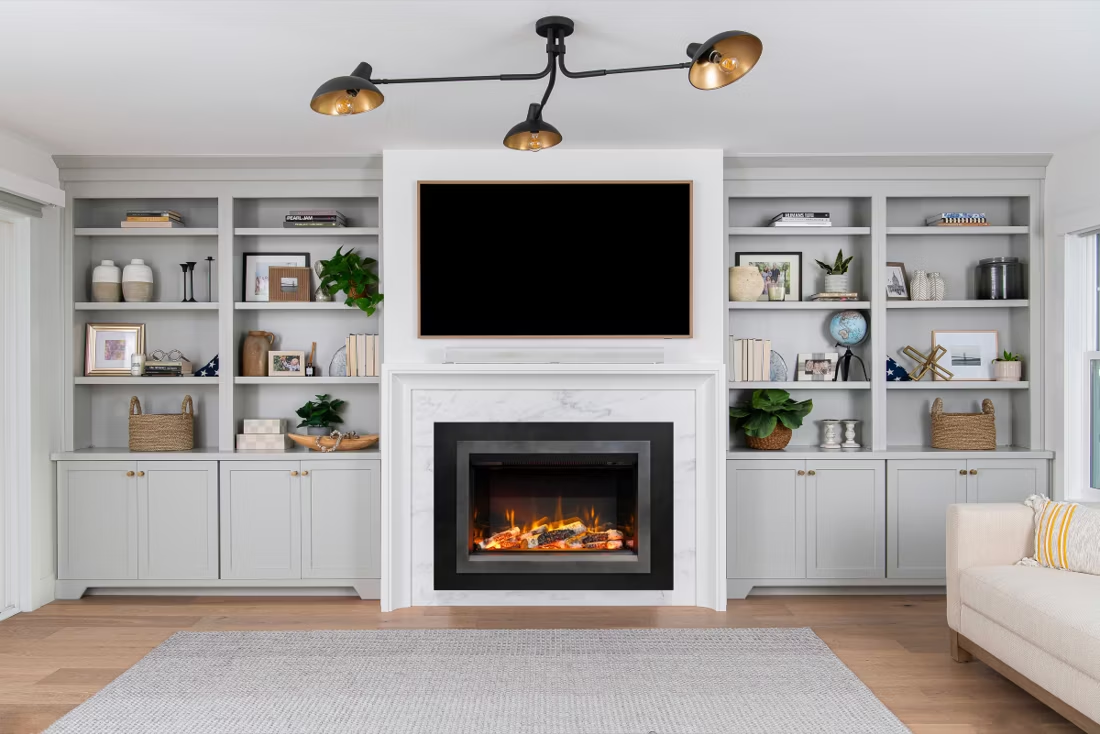
An electric insert is built to slide into an existing fireplace opening—a good fit if you have an old, unused masonry fireplace you want to bring back to life without chimney work. A wall-mount hangs directly on a wall like a large flat-screen TV and plugs into a standard outlet, popular in additions or rooms without any existing fireplace. A built-in electric fireplace is framed into a wall or custom mantel surround for a more permanent, finished look, often wired to a dedicated circuit. For Linn County's older farmhouses with existing but unused fireplaces, an insert is usually the simplest option; for newer additions or outbuildings, a wall-mount is often the most practical.
Can an electric fireplace run during a power outage?
No—electric fireplaces require power to operate, both for the heater and the flame effect, so they go dark during an outage. This matters in Linn County, where rural power lines can be slower to restore after ice storms or spring severe weather than in more urban parts of eastern Kansas. Homeowners who want a backup heat source for outages typically pair an electric fireplace in their main living space with a wood stove or wood-burning fireplace elsewhere in the house—a common setup here given the local supply of oak and hickory firewood.
How does an electric fireplace compare to a wood stove for a Linn County home?
Wood stoves and fireplaces burning local oak, hickory, or osage orange remain the more common choice for serious heat output and off-grid resilience in Linn County—they don't need electricity and can carry a rural home through a multi-day winter outage. Electric fireplaces trade that resilience for convenience: no wood to split or stack, no ash to clean, no chimney to maintain, and a much lower installed cost. For a primary heat source in an older farmhouse, wood typically wins. For a second room, a rental unit, or a low-maintenance ambiance piece in a home that already has a furnace, electric is usually the better fit.
Does an electric fireplace need any maintenance?
Very little. There's no chimney to sweep, no gas line to inspect, and no creosote to worry about. Basic upkeep is limited to occasionally dusting the unit, replacing the heater's air filter if the model has one, and swapping LED light components on the rare occasion they fail—most manufacturers rate these for 20,000-plus hours of use. This low-maintenance profile is part of why electric units work well for rental properties and second homes scattered across rural Linn County, where a homeowner may not be checking on the unit every week.
Can I install an electric fireplace myself, or do I need a professional?
A basic plug-in insert or wall-mount unit is genuinely DIY-friendly for anyone comfortable with a stud finder and a level—no gas fitter or chimney sweep required. That said, a local dealer can make sure the unit is properly sized for your room, help with wall-mount height and clearance to combustibles, and handle any electrical work if you're adding a dedicated 240V circuit for a larger built-in. Given how few true hearth retailers serve a county this size, a local dealer visit is also the easiest way to see the unit's flame effect in person before buying.
What size electric fireplace do I need for my room?
As a rough guide, a 30 to 40-inch electric insert or wall-mount suits a bedroom or small den, while a 50 to 60-inch unit is more appropriate for an open living room or great room. Heater output matters more than looks for actual warmth—most standard units cap out around 4,600 to 5,000 BTU regardless of screen size, so a larger unit mainly buys you a bigger flame display rather than more heat. For Linn County's older homes with less insulation than newer construction, don't expect a single electric unit to offset a drafty room's heat loss entirely; it works best as supplemental warmth alongside your existing furnace.
Can I put a TV above my fireplace?
Yes—with an asterisk. Fireplaces are hot and TVs don't like heat. Either put a mantel between them to deflect rising warmth, or choose a fireplace with heat-management technology that creates a cool zone on the wall above—the wall stays around 125 degrees, barely warm, while the room still gets full heat. If you like clean lines and don't want a mantel, heat management is the answer.
Do electric fireplaces actually produce heat?
Yes—most put out around 4,800–5,000 BTUs from a standard outlet, which comfortably warms a bedroom, office, or den as a comfort-zone heater. What they won't do is carry a whole house the way wood, gas, or pellet can. Think of electric as ambiance-first with honest supplemental heat: flames on with no heat in July, flames plus warmth in January.
How much should I budget for a fireplace?
For an average home—covering the fireplace, the vent pipe, and basic installation—a budget between $3,900 and $5,500 gives you a lot of options across wood, gas, and pellet. By the time you add finish work, gas line, and electrical, the average complete installation lands between $5,000 and $12,000 all-in. In a remodel or new build, a good rule is to put about 2.5% of the total project cost toward the fireplace.
Can a fireplace actually lower my heating bill?
Yes—by creating a comfort zone. A furnace heats every square foot of the house just to warm the one room you're in; a gas fireplace on low burns roughly a sixth of the gas a typical furnace does. Set the furnace around 55–60 degrees as a baseline, then heat the rooms your family actually uses. Families who heat this way commonly save $20–$60 a month.
Get your Linn County electric fireplace Project Guide & Parts List.
Tell us about your room and we'll put together a free Project Guide & Parts List for your electric fireplace project—sized right, with the exact parts needed, and matched with a trusted local dealer serving Linn County.
Find Your Fireplace →