
Reliable gas heat for Haskell County's high plains winters.
From Sublette to Satanta and the farmsteads between, Haskell County homes lean on propane and gas for dependable winter heat. Find the right fireplace, insert, or stove, and connect with a trusted local dealer.
Every Project Starts From One of These Five Situations
Instant heat without hauling wood.
Haskell County sits on the open high plains of southwest Kansas—flat wheat and cattle country with roughly 2,257 residents spread between Sublette, the county seat, Satanta, and the farmsteads that fill the space between. Winters here average a low around 20°F with roughly 4,463 heating degree days per year, cold enough for real heating demand but not the brutal, weeks-long deep freeze of the northern plains. Wind is the bigger factor day to day—sustained gusts across open ground make drafty older farmhouses harder to hold heat in, which is a big part of why gas and propane appliances have become the practical choice for supplemental and zone heat in this county.
Natural gas pipeline service is limited in rural Haskell County—where it exists, it tends to be concentrated in town limits around Sublette. Outside of that, propane is the standard fuel, delivered by regional co-ops and suppliers serving farmsteads and outlying homes throughout the county. Either way, a direct-vent gas fireplace or insert gives you heat at the flip of a switch, works as backup warmth during the ice storms and high-wind power outages that hit the plains most winters, and doesn't require the wood supply chain that's genuinely thin out here.
Three steps. No salesperson until you're ready.
Tell us about your project
Your zip code, your situation, and the fuel you're leaning toward—or let the answers point you to one.
See what's actually available
The brands dealers within 100 miles genuinely carry—real options, never a catalog mirage.
Get your dealer & Project Guide
A trusted local dealer, plus the free Project Guide & Parts List that names every component of the job.
Frequently Asked Questions
How much does a gas fireplace installation cost in Haskell County?
Expect a typical gas fireplace or insert installation in Haskell County to run somewhere between $3,500 and $9,000, depending on the unit, whether a new gas line or propane tank hookup is needed, and the venting path. A direct-vent insert going into an existing masonry fireplace with gas already run to the house sits toward the lower end. New construction, a fresh propane tank set, or long gas line runs out to a rural farmstead push costs toward the higher end—and outlying properties outside Sublette or Satanta may see a modest travel charge added by the installer. A local dealer will give you a firm number after seeing the site.
Can I convert an old wood-burning fireplace to gas?
Yes, and it's a common project in Haskell County's older farmhouses. Many of these homes have a masonry fireplace that was rarely used for wood heat to begin with—wood-burning appliances and firewood supply are genuinely thin on the ground in this part of southwest Kansas, despite scattered oak, hickory, and osage orange growing in shelterbelts and hedgerows. Converting that fireplace to a gas insert, using the existing chimney with a stainless liner, typically runs $4,000 to $8,500 depending on whether you're on propane or in-town natural gas. It keeps the look of the original fireplace while giving you heat you'll actually use.
Should I plan on natural gas or propane for my gas fireplace?
Most of Haskell County will be planning on propane. Natural gas pipeline service is limited to parts of Sublette; outside town limits, and across most of the county's rural homes and farmsteads, propane delivered by local co-ops is the standard fuel. Gas fireplace units can be configured for either fuel—your installer sets the correct orifice and regulator—so the appliance choice isn't limited by which fuel you're on. If you don't already have a propane tank, your dealer can coordinate that with a local supplier as part of the install.
Will my gas fireplace still work if the power goes out?
Most modern gas fireplaces will, which matters in a county where ice storms and high winds regularly knock out power for a day or more. Units with intermittent pilot ignition (IPI) run on AA battery backup that kicks in automatically when the power drops—the fireplace lights and operates normally off the batteries. Valor fireplaces take a slightly different approach: the pilot's thermocouple generates its own electricity, so there are no batteries to remember at all. For a rural Haskell County home where a storm might mean the power's out overnight, that's worth asking your local dealer about directly.
What's the difference between a gas fireplace, insert, and stove?
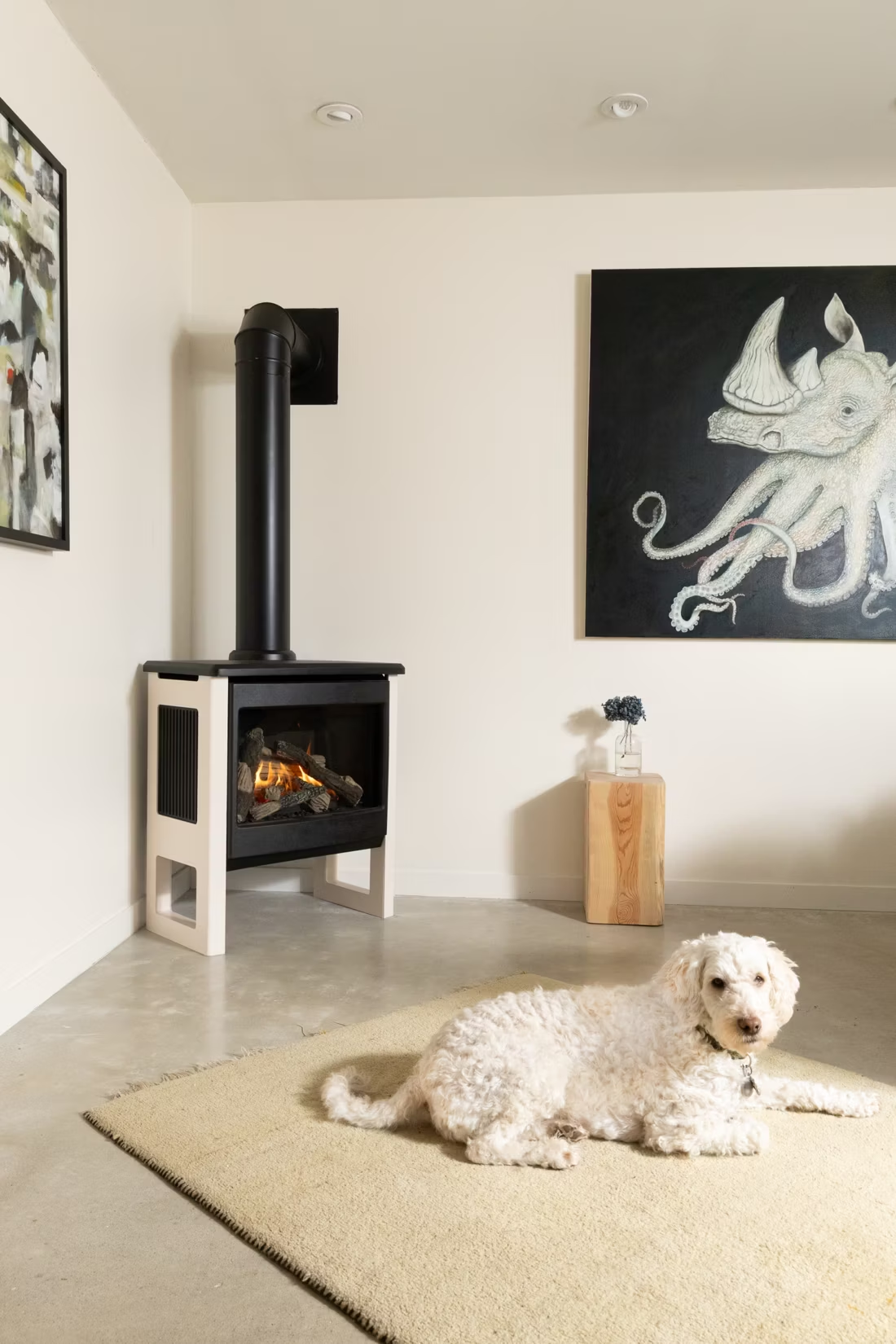
A gas fireplace is a built-in unit installed into a framed wall or new construction. A gas insert drops into an existing masonry fireplace opening, using the chimney as the vent path—the common choice for Haskell County's older farmhouses with an existing but rarely-used fireplace. A gas stove is a freestanding cabinet-style unit that sits on the floor and can go almost anywhere with the right clearances, which makes it a good option for shops, additions, or homes without an existing fireplace or chimney at all.
Do I need a permit to install a gas fireplace in Haskell County?
Generally yes—a building permit and a gas line permit are typically required for new gas fireplace or insert installations, handled through the Haskell County building department based in Sublette. The gas line portion has to be done by a licensed gas-fitter, which is one of the reasons it's worth using a dealer who coordinates the gas work, venting, and inspection together rather than juggling separate trades yourself for a rural install.
Should I get a vented or vent-free gas fireplace?
Vented (direct-vent) units draw combustion air from outside and exhaust it back outside through a sealed pipe—they're the safest option and the one most dealers recommend for full-time heating use. Vent-free units burn fuel directly into the room and are legal in Kansas, but they release some moisture and combustion byproducts indoors and come with strict room-sizing rules. On the open plains, wind exposure is also a real consideration for any vented unit—your installer needs to size and place the vent termination correctly so wind gusts don't affect the draft. For most Haskell County homes, a direct-vent unit is the more reliable choice.
How often does a gas fireplace need to be serviced?
Plan on an annual inspection, ideally before the first cold snap each fall. A technician checks the burner, pilot assembly, gas connections, and venting, and cleans the glass and interior. This is quick compared to wood-stove chimney work, but it matters—especially for propane-fed units in Haskell County where a service call from town can mean some lead time if you wait until a unit is already acting up mid-winter.
Should I consider wood heat instead of gas in Haskell County?
For most homes here, no—wood-burning stoves and inserts are uncommon in Haskell County, and it's an honest gap worth naming. While oak, hickory, and osage orange grow in local shelterbelts and hedgerows, there's little firewood supply infrastructure or dealer support for wood-burning appliances on this part of the high plains. Gas and propane, by contrast, are well established, well supported by local installers, and don't depend on a cordwood supply chain that doesn't really exist out here. A handful of rural landowners with their own timber still burn wood for ambiance or backup, but it's the exception, not the rule.
What's the difference between an insert and a zero-clearance fireplace?
An insert is a fireplace that slides into a pre-existing wood-burning fireplace—if you don't have one, there's nothing to insert it into. A zero-clearance fireplace is built into a framed wall, which makes it the answer for remodels and new construction. Simple test: existing masonry fireplace means insert; blank or framed wall means zero-clearance.
Why is my open fireplace making my house colder?
Open fireplaces suck—literally. As the fire burns, it consumes air your furnace already paid to heat and pulls it out through the chimney, so the house is actually colder after the fire goes out than before you lit it. An insert fixes this: it seals the chimney, puts fixed glass across the front, and turns that hole in your house into a real heat source.
Does a fireplace add value to my home?
On average, a fireplace adds back to the home about the same amount you spent installing it. Add the monthly savings from heating the rooms you actually use instead of the whole house—often hundreds of dollars a year—and the value case is strong before you even count what a fire does for how your family uses the room.
Can I install a fireplace myself?
If you're putting a fire in your house on purpose, it's best to work with an expert. Unless you're genuinely experienced in framing, gas line, vent pipe, and the national code on clearances to combustibles, have a professional do it—and ideally the same company that sells you the fireplace, so warranty, service, and liability all live under one roof.
Find your gas fireplace in Haskell County.
Tell us a bit about your home and we'll match you with a trusted local dealer and send over your free Project Guide & Parts List—the exact parts, including the vent kit, for your gas fireplace project in Haskell County.
Find Your Fireplace →