
Warm up fast on Haskell County's coldest nights.
No chimney, no gas line, no permit headaches—just plug-in warmth for Sublette, Satanta, and the farms and ranches in between. Find the right electric fireplace and connect with a trusted local dealer.
Every Project Starts From One of These Five Situations
Electric heat that just plugs in and works.
Haskell County sits on the high plains of southwest Kansas, between Garden City and Liberal along US-83, with Sublette as the county seat and just over 2,257 residents spread across mostly flat, wide-open farmland. Winters here bring a moderate heating season with an average low near 20°F—cold enough for a hard freeze most nights from December through February, but without the extended sub-zero stretches you'd see farther north in places like Bismarck or Fargo. Air quality here isn't a constraint, and while oak, hickory, and osage orange grow in the county's shelterbelts and along the Cimarron River bottoms, wood heat never took hold the way it did in more forested parts of the state—there's little local infrastructure for cutting, splitting, or selling firewood at scale, and the same goes for pellet fuel: brands like Lignetics and Indeck Energy Services are available regionally, but pellet stoves remain a rare sight in Haskell County homes.
That's where electric fireplaces fit naturally into the picture. With no chimney, no gas line, and no combustion byproducts to vent, an electric insert or built-in unit installs in almost any room—including the manufactured and mobile homes common throughout Sublette and Satanta—without the permitting hurdles that come with a wood or gas appliance. Most Haskell County homes rely on propane or natural gas for primary heat, and an electric fireplace works well alongside that system: supplemental warmth for a sunroom, a converted garage, or a farmhouse addition, without asking a furnace to do more work than it needs to. It's also one of the few heating upgrades a homeowner in a county this size can get installed without waiting on a specialty contractor to drive in from Garden City or Dodge City.
Three steps. No salesperson until you're ready.
Tell us about your project
Your zip code, your situation, and the fuel you're leaning toward—or let the answers point you to one.
See what's actually available
The brands dealers within 100 miles genuinely carry—real options, never a catalog mirage.
Get your dealer & Project Guide
A trusted local dealer, plus the free Project Guide & Parts List that names every component of the job.
Frequently Asked Questions
How much does an electric fireplace installation cost in Haskell County?
A plug-in freestanding electric fireplace or a simple insert that runs off a standard 120-volt outlet typically costs $300 to $900 for the unit itself, with no dedicated electrical work required. A built-in electric fireplace or a larger insert that needs a dedicated 20-amp circuit runs higher—usually $1,500 to $3,500 once you add an electrician's labor, since Haskell County has few electricians based locally and most installers travel in from Garden City or Liberal. Because there's no venting, no chimney, and no gas line to run, electric installations are consistently the least expensive hearth upgrade available in the county.
Do I need a permit to install an electric fireplace in Haskell County?
Most plug-in electric fireplaces don't require any permit—they use a standard outlet just like a space heater or window air conditioner. If you're installing a built-in unit that needs new wiring or a dedicated circuit, that electrical work should go through the Haskell County building office, and it's typically handled directly by the licensed electrician doing the installation. Unlike wood or gas appliances, there's no combustion venting to inspect, which keeps the permitting process short.
Will an electric fireplace actually heat a room in Haskell County's winters?
Most electric fireplaces produce 5,000 to 9,000 BTUs—enough to comfortably heat a single room of 300 to 400 square feet, but not enough to serve as the sole heat source for a whole farmhouse during a January cold snap when lows sit near 20°F. In Haskell County, electric fireplaces work best as supplemental or zone heat: warming up a living room, bedroom, or addition while your propane furnace or gas system handles the rest of the house. If you're hoping to heat an entire structure with electric alone, a ducted heat pump or resistance system is a better fit than a fireplace-style unit.
Electric vs. gas fireplace—which makes more sense for my home?
Gas fireplaces put out significantly more heat and give you a real flame, which matters if you want a fireplace that can genuinely contribute to your heating bill during a cold Haskell County winter—but they require either a natural gas line or a propane tank, plus venting and a building permit. Electric fireplaces skip all of that: no fuel line, no vent, no permit hassle, and a fraction of the install cost. For older farmhouses without existing gas infrastructure, or for manufactured homes around Sublette and Satanta where running new gas lines isn't practical, electric is usually the simpler and cheaper choice. For homes that already have gas service and want a fireplace that pulls real heating weight, gas is worth the extra investment.
What about a wood stove instead of electric?
Wood stoves are uncommon in Haskell County. The county's high plains landscape is mostly treeless cropland and pasture, so firewood has to be trucked in rather than sourced locally, and there's little dealer infrastructure for wood-burning equipment or chimney service in the area. A handful of rural properties with mature oak or osage orange windbreaks still burn wood for backup heat, but for most homeowners here, electric or gas is the far more practical route to a working fireplace.
What styles of electric fireplace are available?
Options include freestanding stove-style units that plug in and sit anywhere in a room, wall-mounted linear units that hang like a flat-screen TV, and insert-style units built into an existing mantel, cabinet, or framed wall opening. For older Haskell County homes with an existing masonry or wood-burning fireplace opening that's no longer in use, an electric insert is often the easiest retrofit—it slides into the existing opening and plugs into a nearby outlet without any demolition.
Will my electric fireplace keep working during a power outage?
No—electric fireplaces are entirely dependent on grid power, and rural electric service in a county this sparsely populated (Haskell County has just over 2,257 residents) can be slower to restore after an ice storm or high-wind event common on the southwest Kansas plains. If reliable backup heat during outages is a priority, plan on keeping a propane heater or generator on hand rather than relying on the electric fireplace as your storm-day fallback.
Can I install an electric fireplace in a manufactured or mobile home?
Yes, and it's one of the more common electric fireplace installations in Haskell County given how many manufactured and modular homes are in and around Sublette and Satanta. Look for a unit that's UL-listed for use in manufactured housing—most major electric fireplace brands offer models rated for this—and confirm the electrical circuit can handle the draw if you're going with a built-in unit rather than a simple plug-in model.
Where do I find a dealer to install an electric fireplace near me?
Haskell County itself doesn't have a dedicated hearth retailer given the county's population of just over 2,257, so most homeowners work with dealers based in Garden City or Liberal who cover the surrounding region, including Sublette and Satanta. Find My Fireplace matches you with a trusted local dealer who knows what's realistic for Haskell County homes—whether that's a plug-in unit or a built-in installation—and provides a free Project Guide & Parts List so you know exactly what you need before the dealer shows up.
Can I put a TV above my fireplace?
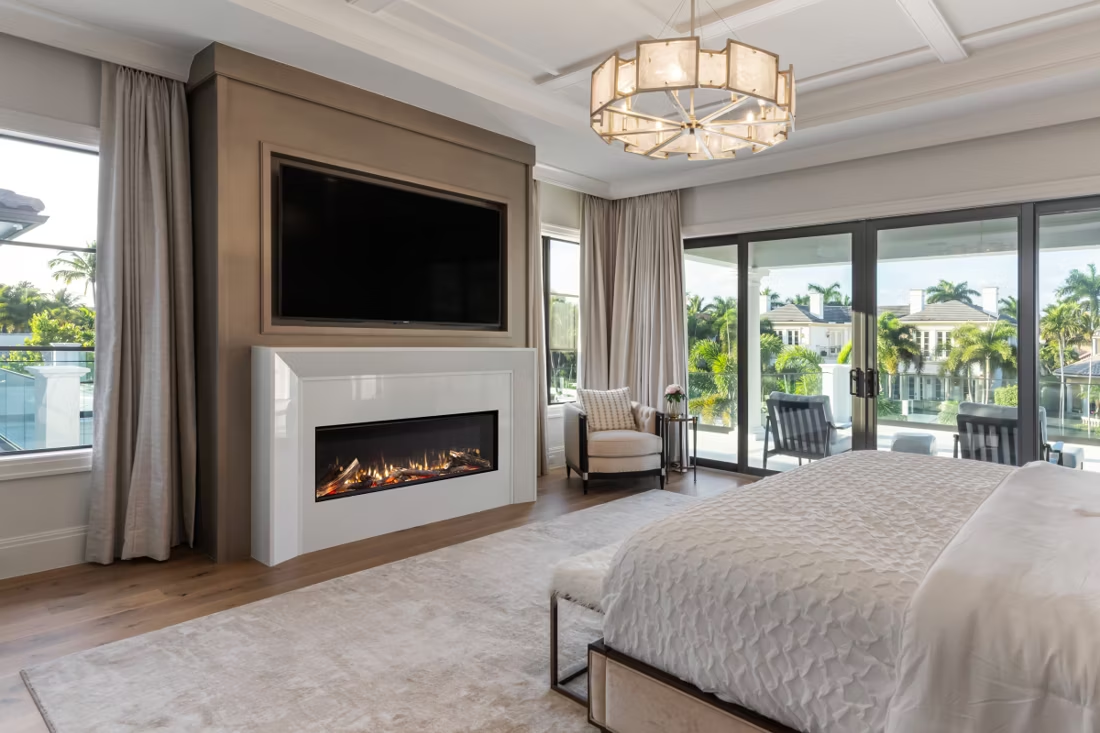
Yes—with an asterisk. Fireplaces are hot and TVs don't like heat. Either put a mantel between them to deflect rising warmth, or choose a fireplace with heat-management technology that creates a cool zone on the wall above—the wall stays around 125 degrees, barely warm, while the room still gets full heat. If you like clean lines and don't want a mantel, heat management is the answer.
Does an electric fireplace need a vent or chimney?
No—that's its superpower. An electric fireplace needs a wall and an outlet, period. No vent pipe, no gas line, no clearances to design around, which is why it works in bedrooms, offices, apartments, and walls where venting a gas or wood unit would be impractical or impossible. Installation is typically the simplest and least expensive of any fireplace type.
What is an in-home preview and do I need one?
It's a visit where a hearth professional measures your space, confirms the model you picked actually works in your home, and walks the specs—framing, gas line, venting, finish work—before anything is ordered. Some details you just can't know until you see the house. Never make a down payment without one; it's the single most-skipped step that burns buyers.
Can I install a fireplace myself?
If you're putting a fire in your house on purpose, it's best to work with an expert. Unless you're genuinely experienced in framing, gas line, vent pipe, and the national code on clearances to combustibles, have a professional do it—and ideally the same company that sells you the fireplace, so warranty, service, and liability all live under one roof.
Find your electric fireplace in Haskell County.
Tell us about your home and we'll match you with the right electric fireplace or insert, plus a free Project Guide & Parts List, and connect you with a trusted local dealer serving Haskell County.
Find Your Fireplace →