
Find your fireplace in Haskell County.
Gas and electric fireplaces are the practical choice across Haskell County's treeless high plains—from Sublette to Satanta. Wood and pellet units exist here too, but they're the exception, not the rule. This hub connects you with the local dealers who actually stock and install what works in this county.
Every Project Starts From One of These Five Situations
Gas-field heating on the high plains of Haskell County, Kansas.
Haskell County sits atop the Hugoton Gas Field, one of the largest natural gas reserves in North America—a fact that shapes how the county heats, even though most rural homes here run on delivered propane rather than a piped municipal line. Winters average a low around 20°F, with a heating season that runs a solid four to five months, placing the county in Climate Zone 4A: cold enough for a genuine four-to-five month heating season, but far milder than the deep-freeze winters of Fargo, North Dakota or Duluth, Minnesota. The landscape is flat, windswept, and largely treeless. Oak, hickory, and osage orange do grow here, but mostly as Dust Bowl-era shelterbelt plantings and fence-line hedgerows rather than harvestable forest—which is a big reason wood heat never took hold the way it did in more forested parts of the country.
With a county population of just 2,257, spread across Sublette, Satanta, and the farmland between them, most households heat with propane-fired gas appliances or electric units, and that's what this hub focuses on. Wood stoves and pellet stoves are technically available but genuinely uncommon—we say so plainly rather than pretend otherwise. Below, you'll find local retailers, service techs, and fuel suppliers covering the county, plus a full directory of Haskell County towns.
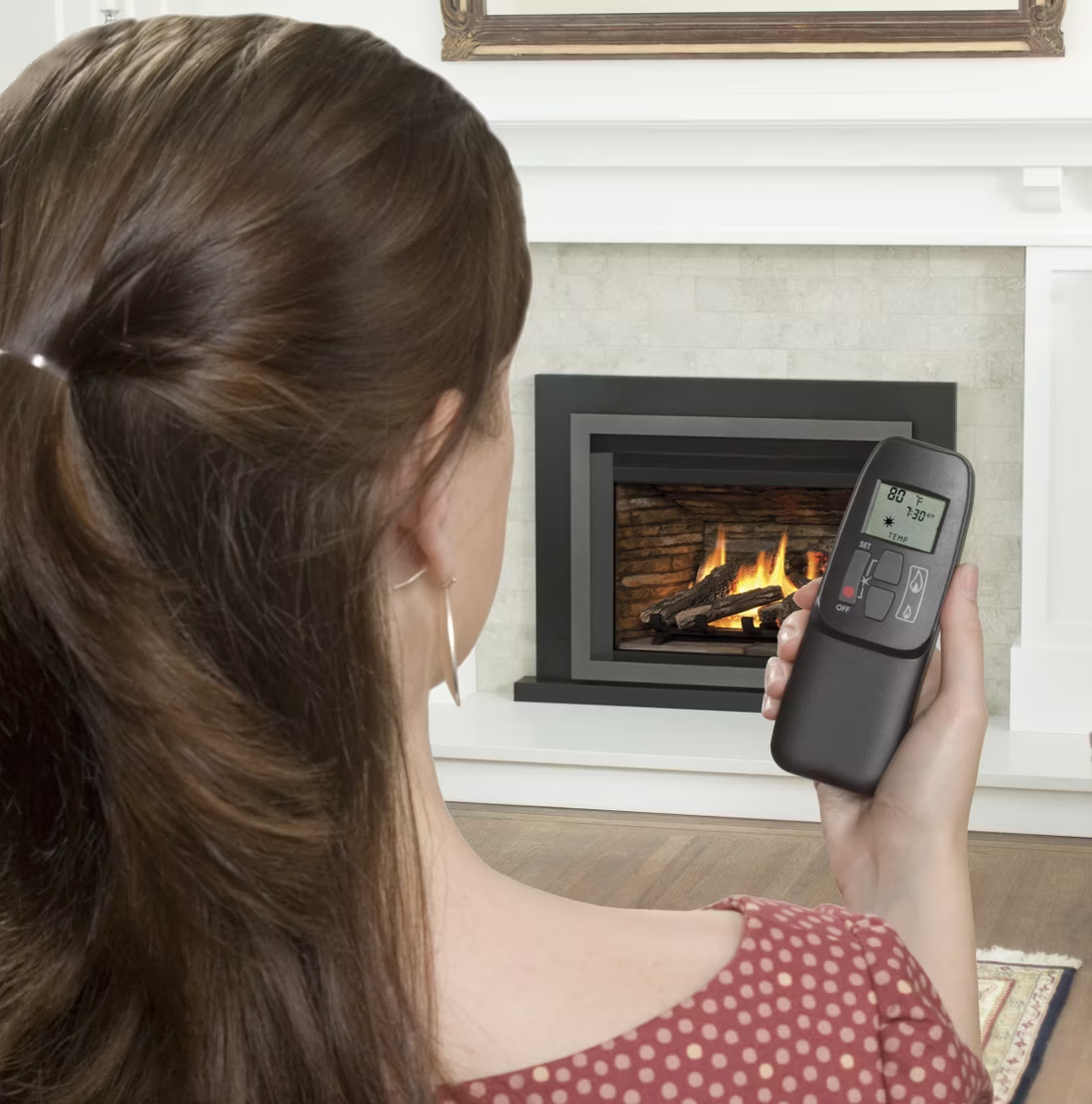
Four fuels. One honest answer for Haskell County.
Three steps. No salesperson until you're ready.
Tell us about your project
Your zip code, your situation, and the fuel you're leaning toward—or let the answers point you to one.
See what's actually available
The brands dealers within 100 miles genuinely carry—real options, never a catalog mirage.
Get your dealer & Project Guide
A trusted local dealer, plus the free Project Guide & Parts List that names every component of the job.
Frequently Asked Questions
Which fuel works best in Haskell County?
For most homes here, it's gas or electric. Haskell County sits on the Hugoton Gas Field, but that doesn't mean piped natural gas reaches every farmhouse—most rural homes run on delivered propane, which makes propane gas fireplaces and inserts the go-to choice for real heat output during the county's four-to-five-month heating season. Electric fireplaces are common as supplemental heat in bedrooms and additions, or where a homeowner wants ambiance without venting work. Wood stoves are genuinely rare—the county is flat, windswept prairie with no forest to speak of, and the oak, hickory, and osage orange that do grow locally are mostly shelterbelt trees, not a firewood supply. Pellet stoves are similarly uncommon; pellets from Lignetics or Indeck Energy Services have to be trucked in, and few local retailers stock them. If you want the look of a wood fire without the wood-supply problem, a vented gas log set is the more realistic answer here.
Do I need a permit to install a fireplace in Haskell County?
Usually, yes, though the process depends on where in the county you live. If your home is within Sublette or Satanta city limits, permitting typically runs through that city's building office; outside the cities, it falls to the county building authority. Gas fireplace and insert installs generally require a permit plus a licensed propane or gas fitter to handle the line connection and pressure testing—this matters more here than in cities with municipal gas, since almost every hookup is a propane tank-to-appliance run rather than a tap into an existing main. Electric fireplaces that plug into an existing outlet usually don't need a permit; built-in electric units that require new wiring or a dedicated circuit do. Local retailers who serve the county typically handle the paperwork as part of the installation.
Is wood-burning fireplace installation common in Haskell County?
Not really, and we'll say so directly rather than oversell it. Haskell County is flat, treeless high plains—there's no national forest or commercial timber nearby, and the oak, hickory, and osage orange that grow here are mostly old shelterbelt rows planted after the Dust Bowl to break the wind, not a firewood resource anyone is cutting at scale. A small number of homeowners still install wood stoves for a backup heat source during outages or for the appeal of a real fire, and it can work fine if you're willing to source cordwood from outside the county. But for most Haskell County households, propane gas or electric is the more practical and more commonly installed option.
What about pellet stoves—are they worth considering here?
They're an option, but not a common one in Haskell County. Pellet supply isn't local—brands like Lignetics and Indeck Energy Services would need to be trucked in from outside the region, and few if any area retailers keep pellets in stock for walk-in purchase, which turns pellet ownership into a supply-chain project rather than a convenience. Compare that to propane, which local fuel dealers already deliver on a regular route through Sublette and Satanta, and it's easy to see why most homeowners here choose gas or electric instead. If you already burn pellets for another reason (like a detached shop) a pellet stove can make sense, but for primary home heat it's the exception, not the rule.
How does hearth retailer and service coverage work with such a small county population?
With just 2,257 residents countywide, Haskell County doesn't support a dedicated hearth showroom on its own—most homeowners in Sublette and Satanta end up working with retailers and service techs based in Garden City or Liberal, both roughly a half-hour drive away, who cover the rural southwest Kansas region. Expect a modest trip charge for in-home consultations and service calls, and expect to schedule ahead—techs covering a wide rural territory often batch appointments by area rather than run same-day service. Scheduling propane appliance service before the fall heating season starts is the easiest way to avoid a midwinter wait.
What's the typical cost range for a gas or electric fireplace installation in Haskell County?
Propane gas fireplace, insert, or stove installs typically run $4,000–$9,500, with cost driven mainly by how much new gas line work is needed between the tank and the appliance—a straightforward hookup near an existing line runs toward the low end. Electric fireplaces are the least expensive entry point: $200–$2,500 for the unit itself, plus $300–$1,000 in labor for anything beyond a simple plug-in, such as a built-in with a dedicated circuit. Wood stove installs, when a homeowner does go that route, run $4,000–$8,000 including chimney work, but they're the least common installation type in the county. Pellet stove installs land in a similar range to wood, generally $4,500–$7,000, though very few local retailers install them regularly.
What is an in-home preview and do I need one?
It's a visit where a hearth professional measures your space, confirms the model you picked actually works in your home, and walks the specs—framing, gas line, venting, finish work—before anything is ordered. Some details you just can't know until you see the house. Never make a down payment without one; it's the single most-skipped step that burns buyers.
Can I install a fireplace myself?
If you're putting a fire in your house on purpose, it's best to work with an expert. Unless you're genuinely experienced in framing, gas line, vent pipe, and the national code on clearances to combustibles, have a professional do it—and ideally the same company that sells you the fireplace, so warranty, service, and liability all live under one roof.
Can a fireplace actually lower my heating bill?
Yes—by creating a comfort zone. A furnace heats every square foot of the house just to warm the one room you're in; a gas fireplace on low burns roughly a sixth of the gas a typical furnace does. Set the furnace around 55–60 degrees as a baseline, then heat the rooms your family actually uses. Families who heat this way commonly save $20–$60 a month.
How much should I budget for a fireplace?
For an average home—covering the fireplace, the vent pipe, and basic installation—a budget between $3,900 and $5,500 gives you a lot of options across wood, gas, and pellet. By the time you add finish work, gas line, and electrical, the average complete installation lands between $5,000 and $12,000 all-in. In a remodel or new build, a good rule is to put about 2.5% of the total project cost toward the fireplace.
Stove and Fireplace Dealers in Haskell County
Listings include WhyFire partner dealers, dealers we have verified as authorized for the brands we recommend, and established local businesses that carry hearth products. Every listing shows which one it is. The ones marked Preferred run on WhyFire's software, so they can show you real pricing and book your appointment right here. No manufacturer pays for placement. How we verify dealers →
Builders FirstSource-Garden City, Ks
Premier Homes
Find your fireplace dealer in Haskell County.
Tell us about your home in Sublette, Satanta, or the surrounding farmland, and we'll match you with a trusted local dealer and send you a free Project Guide & Parts List—the exact parts, including the vent kit, and the right propane or electric fireplace for your project.
Find Your Fireplace →