
Find a pellet stove built for Gray County's wind-swept winters.
From Cimarron to Ingalls, Montezuma, and Copeland, Gray County's open high plains bring steady wind and average winter lows near 18°F. A pellet stove delivers consistent, thermostat-controlled heat without splitting cordwood—find the right unit and a trusted local dealer to install it.
Every Project Starts From One of These Five Situations
Consistent heat without the wood pile.
Gray County is farm and ranch country—roughly 3,550 people spread across Cimarron, Ingalls, Montezuma, and Copeland, with most of the county given over to wheat, sorghum, and cattle. Winters here sit in climate zone 4A with a long, cold heating season and an average winter low near 18°F, and the flat, treeless terrain means wind does as much to make a house feel cold as the thermometer does. Homes along the Arkansas River bottom near Cimarron have access to oak and hickory, and the hedge rows of osage orange planted across the county as windbreaks generations ago still supply some of the hottest-burning firewood in Kansas—but many households are moving toward pellet stoves for the convenience of a hopper-fed, thermostatically controlled fire that doesn't require splitting or hauling.
Pellet fuel for the region typically comes from producers like Lignetics and Indeck Energy Services, sold by the ton and easy to stack dry in a garage or mudroom rather than under a tarp outside. Because Gray County has no wood-smoke air quality restrictions or burn-curtailment days, there's no regulatory hurdle to running a pellet stove daily through the winter. For farmhouses that rely on propane for central heat—common in rural Gray County where there's no natural gas main—a pellet stove in the main living area is a practical way to cut propane usage and add a backup heat source that doesn't depend on a full propane delivery.
Three steps. No salesperson until you're ready.
Tell us about your project
Your zip code, your situation, and the fuel you're leaning toward—or let the answers point you to one.
See what's actually available
The brands dealers within 100 miles genuinely carry—real options, never a catalog mirage.
Get your dealer & Project Guide
A trusted local dealer, plus the free Project Guide & Parts List that names every component of the job.
Frequently Asked Questions
How much does a pellet stove installation cost in Gray County?
Pellet stove and insert installations here typically run in the $3,000 to $6,000 range, depending on whether you're installing a freestanding stove on a new hearth pad or a pellet insert into an existing masonry fireplace. Because pellet stoves vent through a small-diameter horizontal pipe rather than a full masonry chimney, installs are usually simpler and less expensive than a wood stove install. The main added cost in older Gray County farmhouses is often running a dedicated 110V outlet near the unit, since the hopper auger and combustion blower both need continuous power. Get a firm number from a local installer after they've looked at your hearth, wall type, and electrical panel.
What size pellet stove do I need for a Gray County farmhouse?
Sizing depends on square footage, ceiling height, and how well-insulated the home is—and a lot of Gray County's older farmhouses were built before modern insulation standards, which pushes sizing up. As a rough guide for this climate zone (4A, with a long, cold heating season), a small pellet stove handles a single large room or a well-sealed addition, a medium unit covers most main living areas in a typical farmhouse, and a large hopper-fed stove can serve as primary heat for an open-plan home. Wind exposure on the open plains also matters more here than it would in a sheltered town lot—a local dealer will factor that into the recommendation rather than sizing off square footage alone.
What's the difference between a pellet stove and a pellet insert?
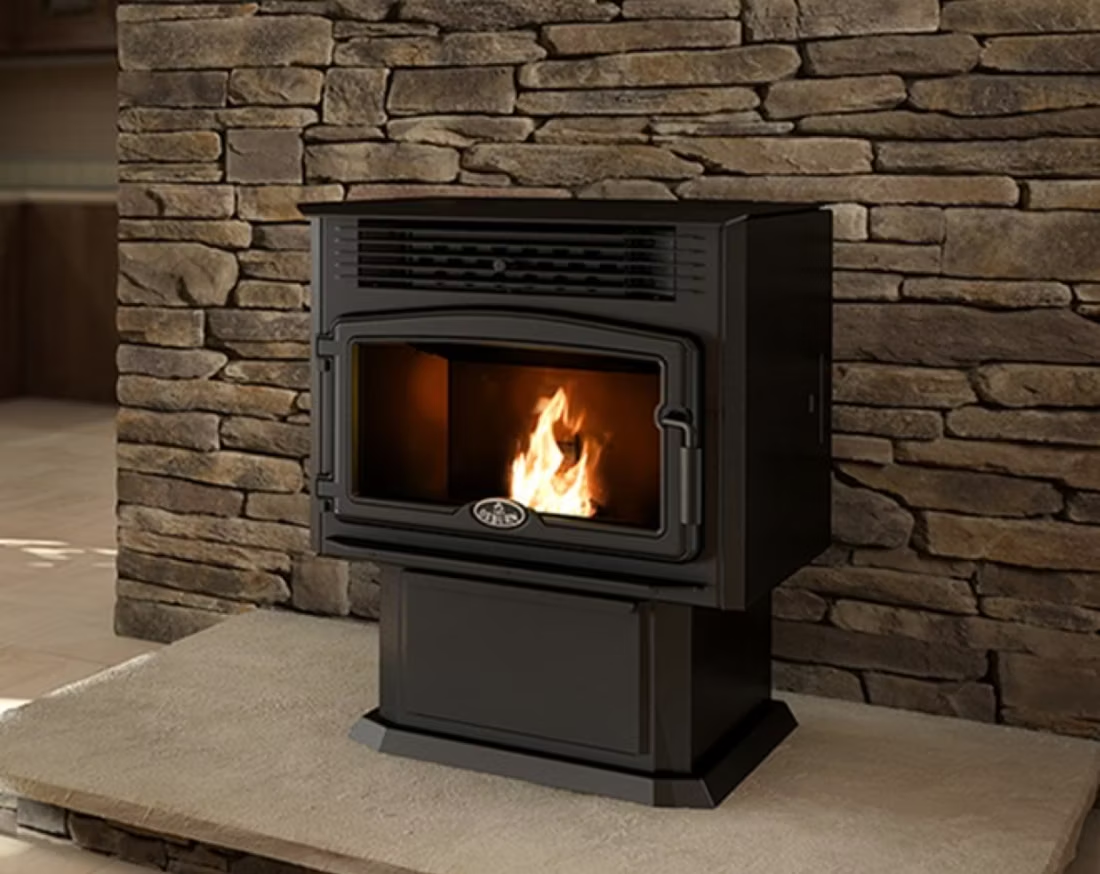
A pellet stove is a freestanding, boxy unit that sits on a hearth pad and vents through a wall or existing chimney chase—it can go almost anywhere in a home, including a room with no fireplace at all. A pellet insert is built to slide into an existing masonry fireplace opening, using the chimney chase as a raceway for the smaller vent pipe. For Gray County homes with an older wood fireplace that's rarely used, an insert is often the better fit because it reuses the existing masonry and hearth. For homes without an existing fireplace—including many newer builds around Cimarron and Ingalls—a freestanding stove is the simpler install.
Do I need a permit to install a pellet stove in Gray County?
Most jurisdictions require a building permit for a new pellet stove installation, covering hearth clearances and the electrical circuit for the unit, and Gray County is no exception—check with the county building permit office before work starts. Because a pellet stove's vent pipe is smaller and cooler-running than a wood stove's chimney, inspections tend to move faster than a full wood-burning install. Most local dealers who sell and install pellet stoves in this area handle the permit paperwork as part of the job, so it's worth asking upfront whether that's included in your quote.
Will a pellet stove still work if the power goes out?
Not without a battery backup. Pellet stoves depend on an electric auger to feed fuel and a blower to distribute heat and exhaust, so a standard unit shuts down the moment power drops—worth knowing in a county where wind and ice can knock out rural electric service for hours at a time. Some manufacturers offer an optional battery backup or generator hookup that keeps the auger and igniter running through a short outage. If reliable heat during outages is a priority for your Gray County property, ask your local dealer about backup options, or consider pairing a pellet stove with a wood-burning unit that needs no electricity at all.
Where do I buy pellets, and how should I store them?
Wood pellets for this region typically come from producers like Lignetics and Indeck Energy Services, sold in 40-pound bags by the pallet (usually 50 bags, or one ton, per pallet). Buying a season's supply—roughly 2 to 3 tons for a home relying on pellet heat as a significant heat source through a Gray County winter—before the coldest months hit is the safest approach, since local supply can tighten in a hard winter. Pellets need to stay bone dry, so store them in a garage, shed, or mudroom rather than outdoors, even under a tarp; damp pellets swell, jam the auger, and won't feed properly.
How much maintenance does a pellet stove need?
Pellet stoves need more routine attention than a gas fireplace but far less than a wood-burning chimney. Plan on emptying the ash pan every few days during regular use, wiping the glass weekly, and vacuuming the burn pot and hopper area every couple of weeks. Once a year—usually at the end of the season—the venting, blower, and igniter should get a full professional cleaning and inspection, which also keeps the manufacturer's warranty valid. Homes running the stove as a primary heat source through a full Gray County winter will need more frequent ash removal than a home using it just for supplemental evening heat.
Pellet stove vs. wood stove—which makes more sense in Gray County?
Wood is deeply practical here if you have access to a windbreak row of osage orange or river-bottom oak and hickory along the Arkansas—hedge in particular burns hot and long, and free or low-cost firewood is a real option for a lot of Gray County properties. But wood means splitting, hauling, and an annual chimney sweep. Pellet stoves trade that labor for the convenience of a hopper you load every day or two and a thermostat that holds a steady temperature, at the cost of needing electricity to run. If your property already has good firewood access and you don't mind the work, wood often wins on fuel cost. If convenience and steady, even heat matter more, pellet is usually the better fit—and either option is worth discussing with a local dealer who installs both.
Are there tax credits or rebates for installing a pellet stove?
Yes—the federal biomass stove tax credit (Section 25C) covers 30% of the cost of a qualifying pellet stove or insert rated at 75% efficiency or higher, including installation costs, up to $2,000 per year. Most pellet stoves sold by mainstream manufacturers today meet that efficiency threshold, but it's worth confirming the specific model's rating with your dealer and keeping the manufacturer's certification statement for tax filing. Kansas doesn't currently layer a state-level rebate on top of the federal credit, so the 25C credit is the primary incentive available to Gray County homeowners.
Why is my open fireplace making my house colder?
Open fireplaces suck—literally. As the fire burns, it consumes air your furnace already paid to heat and pulls it out through the chimney, so the house is actually colder after the fire goes out than before you lit it. An insert fixes this: it seals the chimney, puts fixed glass across the front, and turns that hole in your house into a real heat source.
How often does a pellet stove need cleaning?
A clean pellet stove is a happy pellet stove. Plan on cleaning the burn pot about once a week when you're burning regularly—ash and clinkers gum up the air holes just like a pellet barbecue. Most pellet stove problems trace back to skipped cleaning that nobody explained up front. Some designs make it easy with a trapdoor burn pot: pull a lever and the gunk drops into the ash pan.
Can a fireplace actually lower my heating bill?
Yes—by creating a comfort zone. A furnace heats every square foot of the house just to warm the one room you're in; a gas fireplace on low burns roughly a sixth of the gas a typical furnace does. Set the furnace around 55–60 degrees as a baseline, then heat the rooms your family actually uses. Families who heat this way commonly save $20–$60 a month.
What is an in-home preview and do I need one?
It's a visit where a hearth professional measures your space, confirms the model you picked actually works in your home, and walks the specs—framing, gas line, venting, finish work—before anything is ordered. Some details you just can't know until you see the house. Never make a down payment without one; it's the single most-skipped step that burns buyers.
Pellet Brands Stocked Around Gray County
Manufacturers will point you to the nearest stocking dealer.
Find your pellet stove in Gray County.
Tell us about your home and heating goals, and we'll match you with a trusted local dealer serving Gray County—plus a free Project Guide & Parts List with the exact parts, including the vent kit, for your pellet stove project.
Find Your Fireplace →