
Zone heat and ambiance for Gray County homes—no chimney required.
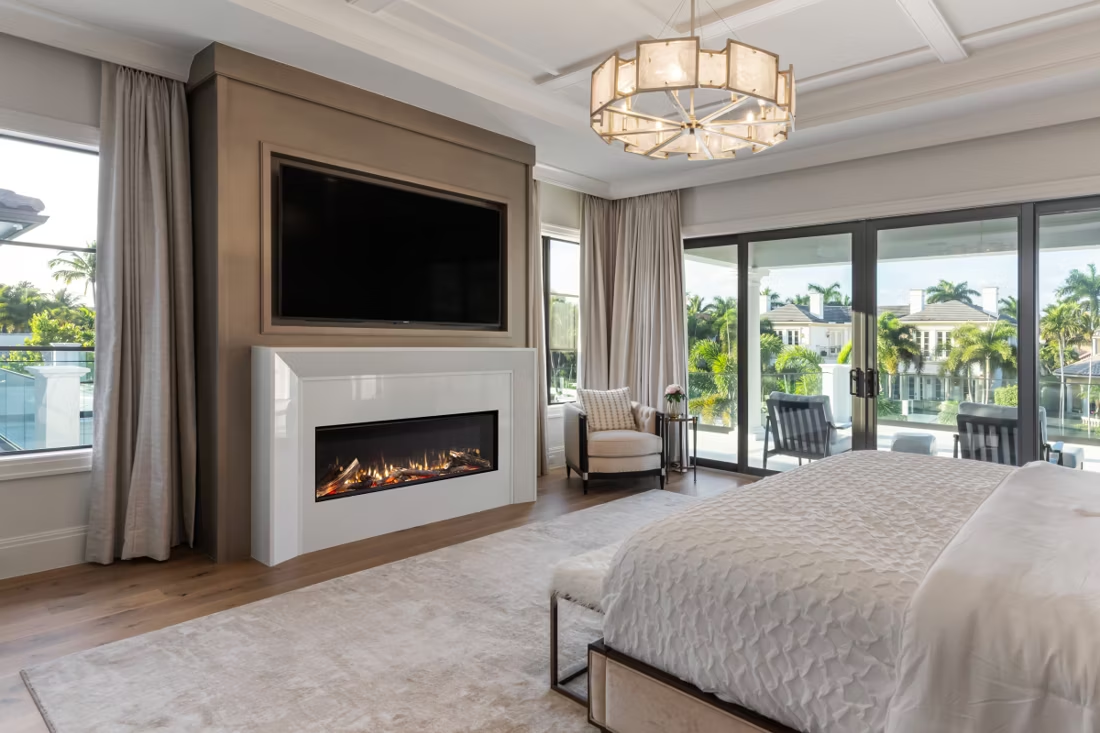
From Cimarron to Ingalls to Copeland, Gray County homeowners are adding electric fireplaces for supplemental warmth and instant ambiance—no gas line, no masonry, no venting. Find the right unit and connect with a trusted local dealer.
Every Project Starts From One of These Five Situations
Supplemental heat that plugs in and works instantly.
Gray County sits in the High Plains of southwest Kansas, where winters bring an average low around 18°F and a long, cold heating season each year—enough cold to matter, but not the kind of extreme that demands wood or gas as a household's only heat source. Most Gray County homes lean on propane or electric furnaces for whole-house heat, which leaves a real opening for electric fireplaces and inserts as supplemental heat in living rooms, additions, and the older farmhouses scattered across the county's grain and cattle country.
Electric service throughout Gray County runs through Victory Electric Cooperative Association, and because electric fireplaces plug into a standard outlet (or hardwire in for larger built-ins), there's no gas line to run and no chimney or vent to build—a meaningful advantage for the older rural homes and mobile homes common around Ingalls and Copeland, where retrofitting venting is expensive or simply impractical. The result is fast, clean zone heat for a bedroom, sunroom, or den, paired with a realistic flame that works even on nights when running the central furnace harder isn't worth the propane cost.
Three steps. No salesperson until you're ready.
Tell us about your project
Your zip code, your situation, and the fuel you're leaning toward—or let the answers point you to one.
See what's actually available
The brands dealers within 100 miles genuinely carry—real options, never a catalog mirage.
Get your dealer & Project Guide
A trusted local dealer, plus the free Project Guide & Parts List that names every component of the job.
Frequently Asked Questions
How much does an electric fireplace installation cost in Gray County?
A plug-in electric insert or freestanding unit typically runs $400 to $1,200 installed in Gray County, with most of that cost tied to the unit itself rather than labor—many models require nothing more than an existing outlet. Built-in wall units or larger mantel packages that need a dedicated 120V or 240V circuit run toward the higher end of that range once an electrician is involved. Because there's no venting, masonry, or gas line work, electric installs are consistently the least expensive hearth option available to Gray County homeowners, which is part of why they're common in rental properties and older farmhouses around Cimarron and Montezuma.
What size electric fireplace do I need for my home?
Electric fireplaces are rated for supplemental zone heat, not whole-house heating, so sizing comes down to the room rather than the square footage of the entire house. A 1,500-watt insert or mantel unit will comfortably take the edge off a bedroom or den in the long, cold winters Gray County sees each year, while larger built-in units with dual heaters can handle an open living room. For the older, less-insulated farmhouses common outside Cimarron and Ingalls, expect the unit to supplement—not replace—your existing propane or electric furnace on the coldest nights when the low dips near 18°F.
Where can I find electric fireplace dealers near me in Gray County?
Given Gray County's population of under 4,000 spread across Cimarron, Ingalls, Copeland, and Montezuma, most residents end up working with a hearth retailer based in a larger nearby market and traveling to the county for install, or ordering through a dealer who services southwest Kansas broadly. A local retailer familiar with Victory Electric Cooperative's service territory can confirm whether your home's wiring supports a hardwired built-in unit versus a simpler plug-in model, and can install a wall unit or mantel package in an afternoon since there's no venting or gas work involved.
What's the difference between an electric fireplace, insert, and mantel?
An electric insert is built to slide into an existing masonry fireplace opening, replacing an unused wood-burning firebox with a heat source and flame effect—a common upgrade for the older farmhouses around Gray County that have a fireplace nobody uses anymore. A mantel package is a freestanding cabinet-style unit that includes its own surround and doesn't require an existing opening. A built-in wall unit is framed into a wall like a TV and typically needs a dedicated circuit. For most Gray County homes without an existing fireplace, a mantel package is the simplest option; homes with an old wood fireplace usually do best with an insert.
Do I need a permit to install an electric fireplace in Gray County?
A plug-in electric fireplace or insert generally doesn't require a permit since there's no gas line, venting, or structural chimney work involved. If you're adding a built-in wall unit that requires a new dedicated electrical circuit, an electrician will typically pull an electrical permit through the Gray County Building Department in Cimarron as part of that work—but this is a much lighter lift than the building and gas permits required for wood or gas installations in the county.
Is an electric fireplace enough heat for a Gray County winter?
Not as a primary heat source. With average winter lows around 18°F and a long, cold heating season, Gray County homes need a furnace—propane is the standard fuel outside city gas service, and electric heat pumps or furnaces cover the rest. An electric fireplace is best understood as targeted supplemental heat: it can meaningfully warm a single room and let you turn down the thermostat elsewhere, and it gives you a working fire during a power outage only if you have a generator, since electric units obviously require power. For year-round ambiance with real supplemental warmth in one room, that's exactly where electric fireplaces earn their keep.
How much maintenance does an electric fireplace need?
Very little compared to wood or gas—there's no chimney to sweep, no gas line to inspect, and no combustion byproducts to worry about. Periodically dust the heater vents and wipe down the glass or lens covering the flame effect, and check that the unit's fan isn't clogged if it's installed in a dusty environment, which is worth noting for the grain and cattle country surrounding Cimarron and Ingalls. Most electric fireplace warranties run several years on the heating element, and a malfunctioning unit is typically a straightforward parts swap rather than a service call.
Can I run an electric fireplace during a power outage?
No—electric fireplaces require power to run both the heating element and the flame effect, so they go dark during an outage just like any other electric appliance. For Gray County homes where winter outages tied to ice storms or high plains wind events are a real concern, a wood stove or a propane heater with battery-ignition provides backup heat that an electric fireplace can't. Many Gray County households pair an electric fireplace for everyday zone heat and ambiance with a wood stove or propane furnace as their outage-proof backup—oak, hickory, and osage orange are all common local firewood species if wood is part of that backup plan.
Electric vs. propane fireplace—which is right for my Gray County home?
Propane fireplaces and inserts produce real, substantial heat and can be sized to genuinely warm a room even on the coldest Gray County nights, but they require a gas line or tank, venting, and a higher upfront installation cost. Electric fireplaces install almost anywhere with no venting, cost far less upfront, and offer a realistic flame effect, but they're limited to lighter supplemental heat and won't run without power. Since most of Gray County relies on propane rather than natural gas for home heating already, adding an electric fireplace in a secondary room is often the more practical, lower-cost choice, while a propane insert makes more sense as a genuine backup heat source in a primary living space.
Can I put a TV above my fireplace?
Yes—with an asterisk. Fireplaces are hot and TVs don't like heat. Either put a mantel between them to deflect rising warmth, or choose a fireplace with heat-management technology that creates a cool zone on the wall above—the wall stays around 125 degrees, barely warm, while the room still gets full heat. If you like clean lines and don't want a mantel, heat management is the answer.
Does an electric fireplace need a vent or chimney?
No—that's its superpower. An electric fireplace needs a wall and an outlet, period. No vent pipe, no gas line, no clearances to design around, which is why it works in bedrooms, offices, apartments, and walls where venting a gas or wood unit would be impractical or impossible. Installation is typically the simplest and least expensive of any fireplace type.
What is an in-home preview and do I need one?
It's a visit where a hearth professional measures your space, confirms the model you picked actually works in your home, and walks the specs—framing, gas line, venting, finish work—before anything is ordered. Some details you just can't know until you see the house. Never make a down payment without one; it's the single most-skipped step that burns buyers.
Can a fireplace actually lower my heating bill?
Yes—by creating a comfort zone. A furnace heats every square foot of the house just to warm the one room you're in; a gas fireplace on low burns roughly a sixth of the gas a typical furnace does. Set the furnace around 55–60 degrees as a baseline, then heat the rooms your family actually uses. Families who heat this way commonly save $20–$60 a month.
Find your electric fireplace in Gray County.
Tell us a bit about your home and we'll put together a free Project Guide & Parts List for your electric fireplace project—the right unit, the exact parts, and a trusted local dealer to install it.
Find Your Fireplace →