
Reliable gas heat for Gray County winters.
From Cimarron to Ingalls, Montezuma, and the open farm sections in between, a gas fireplace gives you instant, dependable warmth without the wood-hauling. We'll match you with a local dealer who knows the difference between a town gas line and a farmstead propane tank.
Every Project Starts From One of These Five Situations
Instant heat for high-plains cold snaps.
Gray County sits on the High Plains of southwest Kansas, with the county seat of Cimarron and small communities like Ingalls, Montezuma, Copeland, and Ensign spread across roughly 866 square miles of wheat and cattle country. At about 3,557 residents countywide, most homes are either in one of these small towns or scattered along section-line roads on working farms. Winters here average lows near 18°F, with a moderate winter heating load—milder overall than the deep-cold plains further north (Bismarck, ND has nearly double the winter heating load), but the flat, treeless terrain means wind chill does most of the work, cutting through drafty older farmhouses and making steady zone heat genuinely useful, not just decorative.
Gas service in Gray County follows the same pattern as most rural southwest Kansas counties: incorporated towns like Cimarron and Ingalls typically have natural gas lines available, while homes out on the farmsteads and unincorporated stretches of the county run on propane, delivered and stored in a tank on the property. The county has no air quality restrictions or burn-ban curtailment periods to navigate, which simplifies the picture considerably compared to mountain or basin counties—the main decisions here are fuel source (natural gas vs. propane), venting path, and whether you're retrofitting an existing fireplace or building new.
Three steps. No salesperson until you're ready.
Tell us about your project
Your zip code, your situation, and the fuel you're leaning toward—or let the answers point you to one.
See what's actually available
The brands dealers within 100 miles genuinely carry—real options, never a catalog mirage.
Get your dealer & Project Guide
A trusted local dealer, plus the free Project Guide & Parts List that names every component of the job.
Frequently Asked Questions
How much does a gas fireplace installation cost in Gray County?
For a home already on a natural gas line in Cimarron or Ingalls, converting an existing masonry fireplace to a direct-vent gas insert typically runs $3,500 to $7,000, depending on the unit and whether a stainless liner is needed for the chimney. For farmstead properties running on propane, add the cost of a tank if one isn't already in place—that can push a comparable project toward $8,000 to $11,000 once you factor in the tank installation, line run from tank to house, and venting work. A new built-in gas fireplace for a remodel or new construction, with fresh gas line and framing, generally lands in the same higher range. A local dealer will give you a firm number after seeing the house and the fuel source you're working with.
Can I convert my existing wood fireplace to gas?
Yes, and it's a common project for older farmhouses in Gray County that still have a working masonry fireplace and chimney. A gas insert slides into the existing firebox, and a stainless liner runs the length of the chimney to vent it safely—you keep the look of the original fireplace but get real, adjustable heat output instead of a drafty open hearth. Whether you run natural gas or propane to the insert depends on what's already plumbed to the house; propane conversions are more common outside Cimarron and Ingalls city limits, where there's no gas main to tap into.
Do I need natural gas, or should I plan on propane?
It depends on where your house sits. Inside Cimarron or Ingalls, you may already have a natural gas hookup for your furnace or water heater, in which case adding a fireplace is a straightforward tie-in. Out on a farmstead or in unincorporated parts of Gray County, propane is the default—you'll either use an existing tank or have a regional propane supplier set a new one. Nearly every gas fireplace model on the market can be configured for either fuel; your installer sets the correct orifice and regulator for whichever you're running.
Will my gas fireplace still work if the power goes out?
Most direct-vent gas fireplaces with intermittent pilot ignition (IPI) include a battery backup—typically standard AA batteries inside the unit—that keeps the fireplace lighting and running even when the grid is down. That matters in Gray County, where winter ice and high plains wind events can knock power out for hours at a time in rural areas far from the nearest line crew. Some brands, like Valor, go a step further and generate their own electricity off the pilot's thermocouple, so there's no battery to remember at all. Worth asking your local dealer about the ignition system on any unit you're considering, especially if you're on a farmstead with less reliable grid access.
What's the difference between a gas fireplace, gas insert, and gas stove?
A gas fireplace is a fully built-in unit, framed into a wall—the right call for new construction or a major remodel. A gas insert drops into an existing masonry fireplace and uses the chimney as its vent path, which is the common route for older Gray County farmhouses with a fireplace they want to modernize. A gas stove is a freestanding unit, similar in footprint to a wood stove, that can go almost anywhere with the right clearances and venting—useful in a home with no existing fireplace and no interest in framing one in. Most homeowners with an existing hearth do best with an insert; new builds usually go with a built-in unit.
Do I need a permit to install a gas fireplace in Gray County?
Generally yes, though the process depends on whether your property is inside an incorporated town or out in the unincorporated county. Homes within Cimarron or Ingalls city limits typically pull permits through the town office, while rural farmstead installations go through Gray County. The gas line portion of the work should always be done by a licensed installer regardless of jurisdiction—a reputable local dealer will know exactly which office to file with for your address and will usually handle the paperwork as part of the install.
What's the difference between vented and vent-free gas fireplaces?
Vented gas fireplaces—direct-vent or B-vent—pull combustion air from outside and exhaust the combustion byproducts back outside through a sealed pipe. Vent-free units burn directly into the room without any exterior venting, which is more fuel-efficient on paper but releases some moisture and combustion gases indoors. Kansas allows vent-free units, but for Gray County's exposed, wind-heavy sites, direct-vent is usually the more practical choice—a qualified installer will also make sure the exterior vent termination is placed away from prevailing wind and any spot where blowing snow could obstruct it, which matters more here than in sheltered terrain.
How often should my gas fireplace be serviced?
An annual inspection is the standard recommendation for any gas appliance, including direct-vent fireplaces and inserts—a technician checks the burner, pilot assembly, gas connections, and venting, and cleans the glass and interior. Given Gray County's small population, dedicated hearth service techs are more likely to be based out of Dodge City just to the east and travel in for appointments, so it's worth scheduling service in the off-season (late summer) rather than waiting until the first cold snap when everyone's calling at once.
Gas vs. wood—which makes more sense for a Gray County home?
Wood still has a following in Gray County, particularly on farms with shelterbelt trees to clear—osage orange (hedge) is a local favorite for its dense, long, hot burn, along with oak and hickory where available. Wood also keeps working with no electricity, which matters during ice-related outages. Gas trades that self-sufficiency for convenience: no hauling, splitting, or ash cleanup, consistent heat at the flip of a switch, and a cleaner look. For most in-town homes in Cimarron or Ingalls, and for farmhouses that want reliable zone heat without adding another chore to a working operation, gas is usually the more practical fit—some households keep both, gas for daily use and wood as backup.
Why is a fireplace insert so efficient?
An insert does two things: it seals the chimney completely, so you stop losing air you already paid to heat, and it radiates warmth into the room through the firebox and glass. Most add a heat-exchange fan that pulls cool room air underneath, wraps it around the hot firebox, and pushes it back out warm. Your home is more efficient before you've even lit the first fire.
Can I put a TV above my fireplace?
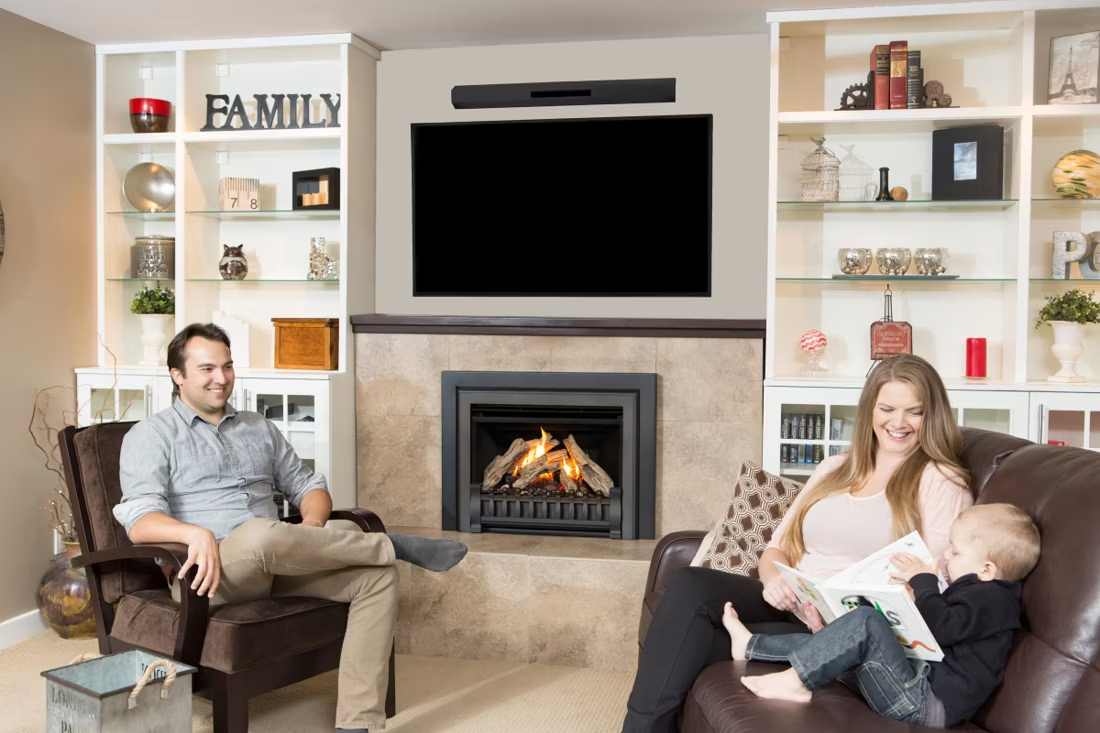
Yes—with an asterisk. Fireplaces are hot and TVs don't like heat. Either put a mantel between them to deflect rising warmth, or choose a fireplace with heat-management technology that creates a cool zone on the wall above—the wall stays around 125 degrees, barely warm, while the room still gets full heat. If you like clean lines and don't want a mantel, heat management is the answer.
Can I install a fireplace myself?
If you're putting a fire in your house on purpose, it's best to work with an expert. Unless you're genuinely experienced in framing, gas line, vent pipe, and the national code on clearances to combustibles, have a professional do it—and ideally the same company that sells you the fireplace, so warranty, service, and liability all live under one roof.
Can a fireplace actually lower my heating bill?
Yes—by creating a comfort zone. A furnace heats every square foot of the house just to warm the one room you're in; a gas fireplace on low burns roughly a sixth of the gas a typical furnace does. Set the furnace around 55–60 degrees as a baseline, then heat the rooms your family actually uses. Families who heat this way commonly save $20–$60 a month.
Find your gas fireplace in Gray County.
Tell us a bit about your home—town gas or propane, existing fireplace or new build—and we'll send you a free Project Guide & Parts List with the right unit, vent kit, and a trusted local dealer to install it.
Find Your Fireplace →