
Find a pellet stove dealer who actually covers Comanche County.
Consistent, low-maintenance heat for Coldwater, Protection, and the ranch country between them. We match you with a trusted local dealer who can size the unit and get it installed right.
Every Project Starts From One of These Five Situations
A steady, low-fuss heat source for a small, spread-out county.
Comanche County sits in south-central Kansas—climate zone 4A, with roughly 1,255 residents spread across a county of small towns and a lot of open ranchland between Coldwater and Protection. Winters are cold enough to matter but nowhere near the extremes of a place like Bismarck ND or Fargo ND, which means a pellet stove sized correctly for a Comanche County home doesn't have to work as hard as one in the northern plains—but it still needs to be sized and vented correctly to earn its keep.
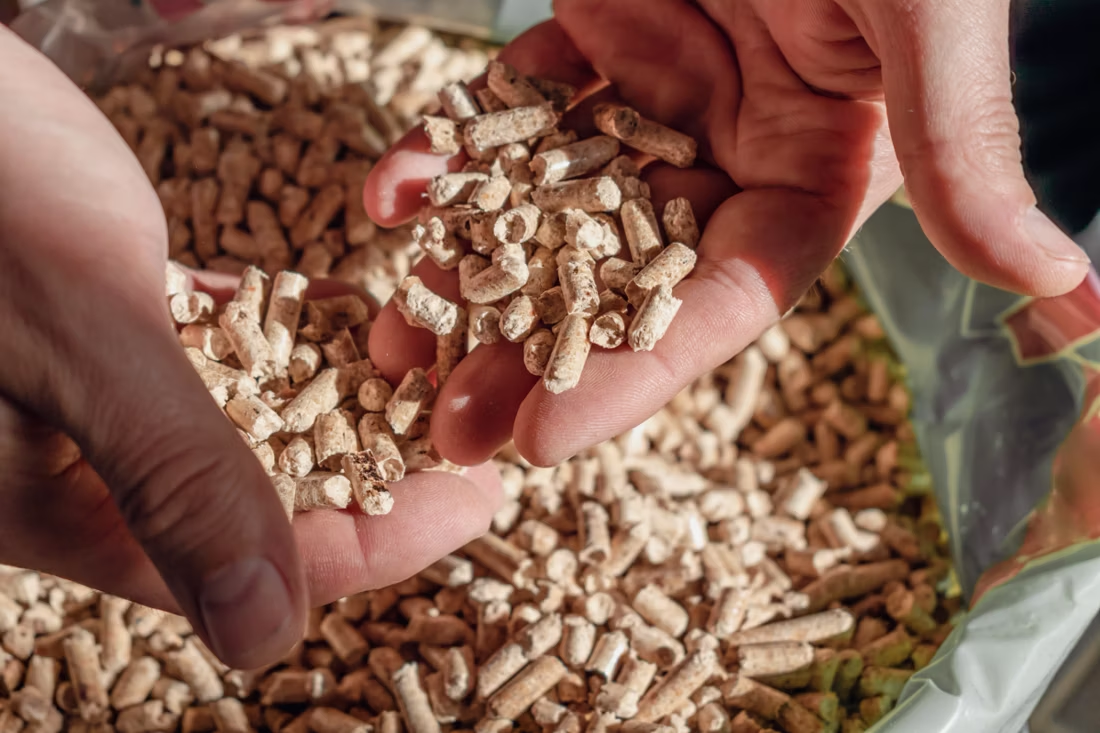
With no air quality restrictions on burning in the county, pellet stoves here are chosen less for regulatory reasons and more for convenience: load the hopper, set the thermostat, and let it run without the daily upkeep of splitting and stacking oak, hickory, or osage orange—the wood species most common locally. Pellet fuel from regional suppliers like Lignetics and Indeck Energy Services is generally easier to keep on hand in a rural county than firewood delivery, especially for households without easy access to a wood lot. A local dealer can tell you what's actually stocked nearby and what pellet quality performs best in a given stove.
Three steps. No salesperson until you're ready.
Tell us about your project
Your zip code, your situation, and the fuel you're leaning toward—or let the answers point you to one.
See what's actually available
The brands dealers within 100 miles genuinely carry—real options, never a catalog mirage.
Get your dealer & Project Guide
A trusted local dealer, plus the free Project Guide & Parts List that names every component of the job.
Frequently Asked Questions
How much does a pellet stove installation cost in Comanche County?
Pellet stove and insert installations in Comanche County typically run in the same range seen across rural Kansas—roughly $4,500 to $7,500 depending on the unit, whether it's a freestanding stove or an insert into an existing fireplace, and how much venting work is required. Because Comanche County is sparsely populated, expect your dealer's estimate to account for some travel time if you're out toward Protection or further from Coldwater. A local dealer will give you a firm number after seeing your home and chimney or wall configuration.
Where do I buy pellets in Comanche County, and how much do they cost?
Comanche County doesn't have the pellet retail density of a larger metro, so most homeowners plan ahead and order pellets by the ton or in bulk pallets rather than picking up single bags as needed. Lignetics and Indeck Energy Services are the regional brands most commonly available to dealers serving this part of Kansas, and your local dealer can tell you which supplier delivers reliably out here and what a ton typically runs. Buying early in the fall, before the cold sets in, is the standard move for rural households who don't want to make a supply run mid-winter storm.
Do I need a permit to install a pellet stove in Comanche County?
Most rural Kansas counties, including Comanche, have lighter permitting requirements than urban jurisdictions, but you should still confirm with the county building office before installation, especially if the project involves new venting through an exterior wall or roof. A local dealer who regularly installs in the area will know exactly what Comanche County expects and typically handles the paperwork as part of the job, so you're not left figuring out jurisdiction on your own.
What size pellet stove do I need for my Comanche County home?
Sizing depends on square footage, insulation, and ceiling height more than anything else. In a 4A climate zone like Comanche County, most well-insulated homes under 1,500 square feet do fine with a small to mid-size pellet stove, while larger farmhouses or homes with open floor plans may need a bigger unit to hold even heat through the coldest stretches. Older rural homes with less insulation than a newer build will often need to size up. A local dealer will walk the space and size it properly rather than guessing off square footage alone—oversizing leads to short-cycling, undersizing leaves cold rooms.
Will my pellet stove work if the power goes out?
No—pellet stoves rely on electricity to run the auger that feeds fuel and the blower that distributes heat, so a power outage shuts the unit down. For a rural county like Comanche where outages can happen during winter storms and take a while to resolve given the distances involved, some homeowners pair a pellet stove with a backup generator, or keep a wood-burning option as well. Ask your local dealer about battery backup options for the auger motor if outage risk is a real concern for your property.
Pellet stove vs. wood stove—which makes more sense in Comanche County?
Wood is abundant here—oak, hickory, and osage orange are all common locally, and many rural properties have access to a wood lot or standing timber, which keeps fuel cost low if you're willing to cut and split it yourself. Pellet stoves trade that self-sufficiency for convenience: no splitting, less ash, steadier heat output, and easier operation for anyone who doesn't want the daily work of tending a fire. With no air quality restrictions in the county, the choice really comes down to lifestyle—pellet suits homeowners who want low-maintenance heat and don't mind planning pellet deliveries ahead of winter, while wood suits those with fuel access and a willingness to do the labor.
How often does a pellet stove need cleaning and maintenance?
Pellet stoves need the ash pan emptied every few days to weekly depending on use, the burn pot cleaned regularly to keep the flame healthy, and a full professional service annually to check the auger, blower motor, and venting. Comanche County homeowners running a pellet stove as a primary heat source through a full Kansas winter should plan on that annual service before the coldest months, similar to servicing any other heating appliance. A local dealer or service technician can handle the deeper cleaning and inspection that goes beyond routine ash removal.
Is natural gas or propane a factor in choosing between pellet and gas heat in Comanche County?
Rural counties like Comanche often rely on propane rather than piped natural gas, and propane delivery in a sparsely populated county can mean planning ahead for tank fill-ups, similar to planning pellet deliveries. That similarity is part of why some homeowners here weigh pellet stoves against propane-fueled gas inserts rather than natural gas units—both fuels require some degree of stocking up ahead of need. A local dealer can walk through both options side by side for your specific home and access to propane service.
What pellet stove brands and models work well in a 4A climate like Comanche County?
Comanche County's winters are moderate compared to the northern plains, so an oversized, high-output unit generally isn't necessary. Mid-range pellet stoves and inserts sized for spaces under 2,000 square feet handle most homes here without running at maximum output constantly, which extends the life of the auger and blower components. Your local dealer will know which models pair well with the pellet supply actually available through regional suppliers like Lignetics and Indeck Energy Services, which matters as much as the stove brand itself.
Why is a fireplace insert so efficient?
An insert does two things: it seals the chimney completely, so you stop losing air you already paid to heat, and it radiates warmth into the room through the firebox and glass. Most add a heat-exchange fan that pulls cool room air underneath, wraps it around the hot firebox, and pushes it back out warm. Your home is more efficient before you've even lit the first fire.
Why is my open fireplace making my house colder?
Open fireplaces suck—literally. As the fire burns, it consumes air your furnace already paid to heat and pulls it out through the chimney, so the house is actually colder after the fire goes out than before you lit it. An insert fixes this: it seals the chimney, puts fixed glass across the front, and turns that hole in your house into a real heat source.
Can a fireplace actually lower my heating bill?
Yes—by creating a comfort zone. A furnace heats every square foot of the house just to warm the one room you're in; a gas fireplace on low burns roughly a sixth of the gas a typical furnace does. Set the furnace around 55–60 degrees as a baseline, then heat the rooms your family actually uses. Families who heat this way commonly save $20–$60 a month.
Can I install a fireplace myself?
If you're putting a fire in your house on purpose, it's best to work with an expert. Unless you're genuinely experienced in framing, gas line, vent pipe, and the national code on clearances to combustibles, have a professional do it—and ideally the same company that sells you the fireplace, so warranty, service, and liability all live under one roof.
Pellet Brands Stocked Around Comanche County
Manufacturers will point you to the nearest stocking dealer.
Get your free pellet stove Project Guide & Parts List for Comanche County.
Tell us about your home and we'll match you with a trusted local dealer and send a free plan—the right pellet stove or insert, the vent kit it needs, and the dealer who can install it.
Find Your Fireplace →