
Find the right hearth for your Comanche County home.
Wood, gas, pellet, and electric fireplace resources for Coldwater, Protection, Wilmore, and the farms and ranches spread across Comanche County. Connect with a trusted local retailer who can source and install what actually works in this county's oak-and-hedgewood country.
Every Project Starts From One of These Five Situations
Southern Great Plains heat for a county of 1,255.
Comanche County sits in Climate Zone 4A on the southern Kansas plains, near the Oklahoma line—winters bring hard freezes and biting wind across open country, while summers run hot and dry. Wood heat has deep roots here: oak and hickory grow along the Mule Creek and Medicine Lodge River bottoms, and osage orange—the old hedge-row tree planted for fence lines a century ago—is prized locally as some of the hottest, longest-burning firewood you can split, a byproduct of decades of hedgerow removal on area farms. There are no air quality non-attainment designations or wood-burning curtailment concerns here, which is unusual compared to more populated counties and means burn-day restrictions simply aren't part of the picture.
With a population of just 1,255 spread across the county, Comanche isn't home to a dense cluster of hearth showrooms—most local retailers and technicians who service Coldwater, Protection, and Wilmore cover a wide rural radius, and natural gas service is limited outside town limits, so propane is the common alternative to wood and electric. Pick your fuel below to see local dealer coverage, realistic installation costs, and the resources that fit a rural Kansas home, whether you're heating a farmhouse near Wilmore or a place in town off the Coldwater square.
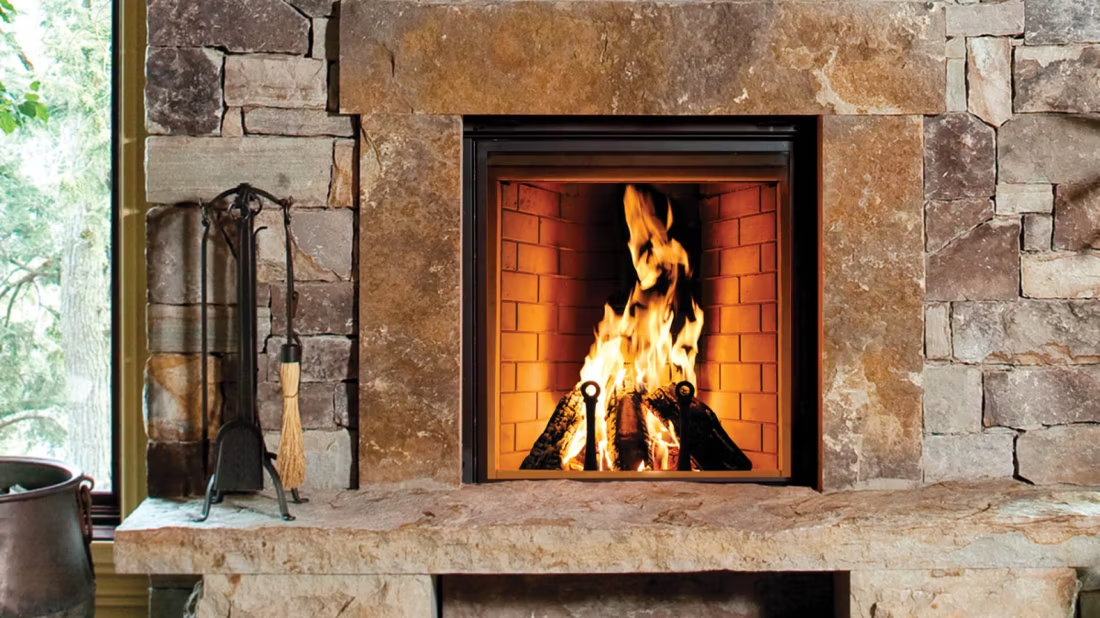
Four fuels. One honest answer for Comanche County.
Three steps. No salesperson until you're ready.
Tell us about your project
Your zip code, your situation, and the fuel you're leaning toward—or let the answers point you to one.
See what's actually available
The brands dealers within 100 miles genuinely carry—real options, never a catalog mirage.
Get your dealer & Project Guide
A trusted local dealer, plus the free Project Guide & Parts List that names every component of the job.
Frequently Asked Questions
Which fuel works best in Comanche County?
It depends on the home and how remote it is. Wood remains a strong, practical choice here—oak and hickory are locally abundant, and osage orange from old hedge rows burns hotter and longer than almost anything else in the region, which matters when you're heating through a windy Kansas cold front. Gas works well in Coldwater and Protection where propane delivery is reliable, offering instant heat without hauling wood. Pellet is a solid middle option—Lignetics and Indeck Energy Services both distribute into this part of Kansas, so bagged fuel isn't hard to source even in a county this small. Electric is best treated as supplemental heat for a bedroom or den rather than a primary source, given how cold winter nights get on the open plains. Many Comanche County households end up pairing wood or pellet as primary heat with propane or electric as backup.
Do I need a permit to install a fireplace in Comanche County?
In most cases, yes—new wood stoves, inserts, gas appliances, and pellet stoves typically require a building permit, and gas installations need a licensed propane or gas fitter for the line work. For rural Comanche County, that permitting runs through the county courthouse in Coldwater, the county seat. Electric fireplaces are usually exempt unless the installation involves a built-in unit with new wiring or a dedicated circuit. Given how spread out the county is, most local retailers handle the permit paperwork as part of a full installation, so you typically aren't filing it yourself.
Is osage orange good firewood, and is wood burning regulated in Comanche County?
Osage orange, sometimes called hedge or bois d'arc, is some of the densest, hottest-burning firewood available in the country—it's a big reason old hedgerows planted across this part of Kansas got repurposed for stove wood once fencing changed. It burns hot enough that it's often mixed with oak or hickory rather than burned alone in an older stove. As for regulation, Comanche County has no air quality non-attainment designation and no local wood-burning curtailment program, which is notable compared to more populated Kansas counties—there's no seasonal burn advisory system to check before loading the stove.
Can one local retailer handle all four fuel types in a county this small?
With a population of 1,255, Comanche County doesn't support the kind of dedicated multi-fuel showroom you'd find in a larger Kansas town. Most homeowners here end up working with a retailer based in a nearby trade center that travels into Coldwater, Protection, and Wilmore for consultations and installs—and coverage by fuel type varies dealer to dealer. If you want to compare wood, gas, pellet, and electric side by side, it's worth confirming ahead of time which fuels a given retailer actually stocks and installs regularly versus which they'd need to special-order.
How does installation and service work in a county this sparsely populated?
Expect technicians and installers to be based outside the county and to schedule Comanche County stops around a broader rural route—a chimney sweep or gas tech covering this part of southern Kansas often serves several small counties on the same swing. Travel fees for service calls are common, and scheduling ahead of the heating season (late summer through early fall) generally gets you a faster appointment than waiting for a mid-winter breakdown. Given the distances involved, it's worth keeping basic backup supplies on hand—dry split wood, spare batteries for a gas unit's ignition system—in case a hard freeze coincides with a delayed service visit.
What's the typical cost range for fireplace installation across all fuel types in Comanche County?
Costs run in line with rural Kansas norms, though travel distance from the installing dealer can add to the total. Wood stove or insert installation typically runs $4,000–$8,500, more with new chimney work. Gas fireplace, insert, or stove installation runs roughly $4,000–$10,000, with propane line work factored in since natural gas service is limited outside town centers. Pellet stove or insert installation generally falls between $4,000–$7,000. Electric fireplaces range from $200–$3,000 for the unit itself, plus $400–$1,200 in labor for anything beyond a simple plug-in setup. Ask any retailer you're considering whether their quote includes travel time—in a county this size, it often does.
What is an in-home preview and do I need one?
It's a visit where a hearth professional measures your space, confirms the model you picked actually works in your home, and walks the specs—framing, gas line, venting, finish work—before anything is ordered. Some details you just can't know until you see the house. Never make a down payment without one; it's the single most-skipped step that burns buyers.
Does a fireplace add value to my home?
On average, a fireplace adds back to the home about the same amount you spent installing it. Add the monthly savings from heating the rooms you actually use instead of the whole house—often hundreds of dollars a year—and the value case is strong before you even count what a fire does for how your family uses the room.
Can I install a fireplace myself?
If you're putting a fire in your house on purpose, it's best to work with an expert. Unless you're genuinely experienced in framing, gas line, vent pipe, and the national code on clearances to combustibles, have a professional do it—and ideally the same company that sells you the fireplace, so warranty, service, and liability all live under one roof.
How much should I budget for a fireplace?
For an average home—covering the fireplace, the vent pipe, and basic installation—a budget between $3,900 and $5,500 gives you a lot of options across wood, gas, and pellet. By the time you add finish work, gas line, and electrical, the average complete installation lands between $5,000 and $12,000 all-in. In a remodel or new build, a good rule is to put about 2.5% of the total project cost toward the fireplace.
Stove and Fireplace Dealers in Comanche County
Listings include WhyFire partner dealers, dealers we have verified as authorized for the brands we recommend, and established local businesses that carry hearth products. Every listing shows which one it is. The ones marked Preferred run on WhyFire's software, so they can show you real pricing and book your appointment right here. No manufacturer pays for placement. How we verify dealers →
Home Lumber & Supply
Rube's
Find your fireplace in Comanche County.
Tell us your fuel and your project, and we'll match you with a trusted local dealer and send a free Project Guide & Parts List—the exact parts, including the vent kit, and the retailer best positioned to install it near you.
Find Your Fireplace →